
Chef Juliette
Flan aux Carottes
A pale short-paste shell holds silken, lightly sweet carrot purée beneath neat glazed half-discs, their butter syrup catching the light: a classical tart poised between vegetable course and sweet.
A cooking platform built around craft, culture, and the stories behind what we eat.
Created by Chef Juliette
Based on No. 2432, Fritters “à la Grand-mère”, from Le Guide Culinaire (1907) by Auguste Escoffier
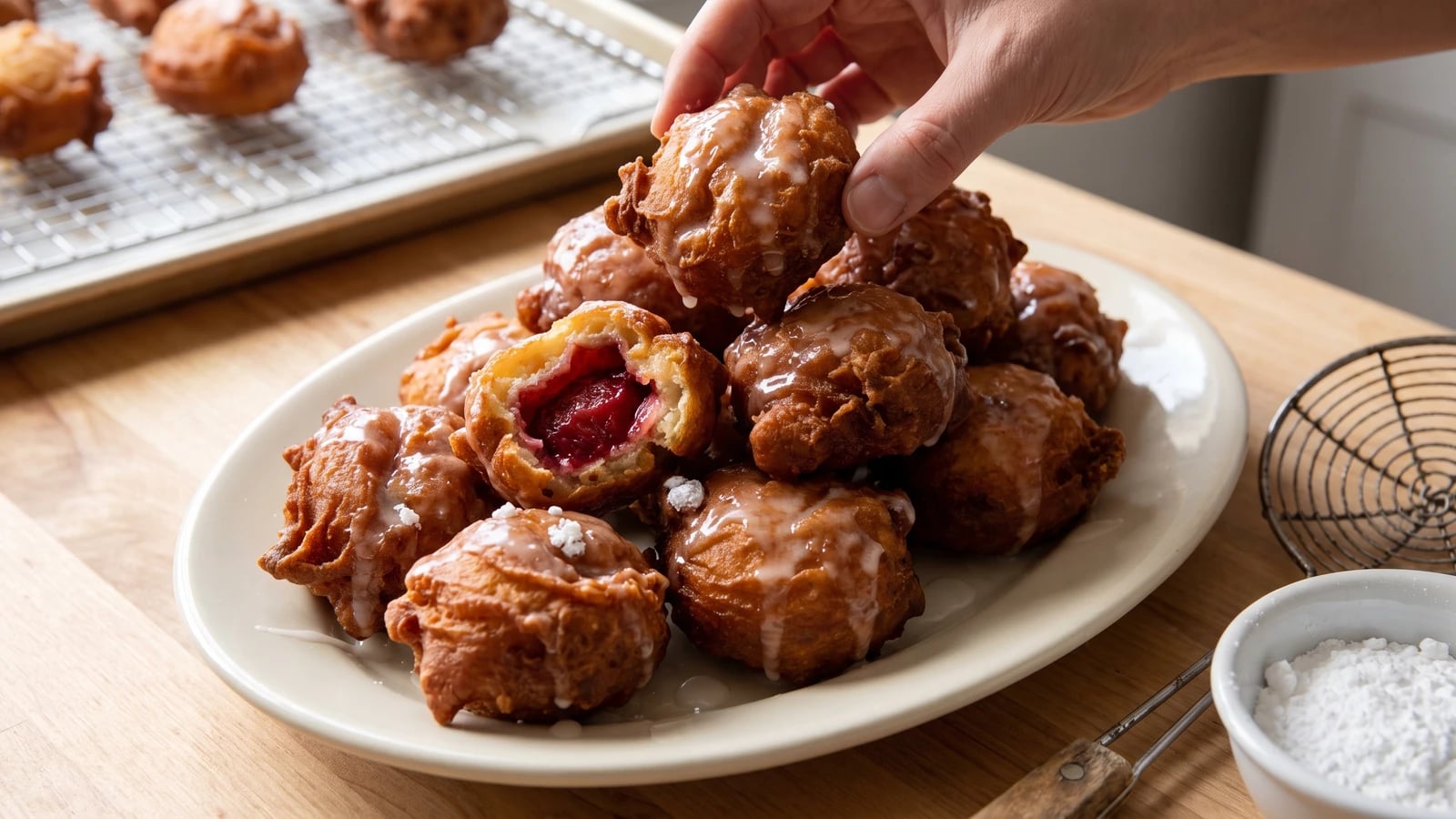
A slab of stewed fruit, reduced until it stands firm, cut, battered, fried, and glazed with sugar: Grandmother’s thrift made crisp at the edges and melting at the center.
Beignets à la Grand-mère (Grandmother’s fruit fritters) teach one severe little lesson: fruit can be fried only after it has stopped behaving like a sauce. Reduce the stewed fruit until a spoon furrow stays open and a mound holds itself; then the center remains tender inside the golden batter instead of running into the fat.
The book’s entry assumed trays of set fruit, a vat of hot fat, and a fierce oven ready beside service. For one cook, that becomes one 20 cm tray, a deep saucepan, and the household broiler, with a small measure of Batter for Oven-glazed Fruit Fritters (No. 234) kept as the separate preparation the canon intended. The large service batch is scaffolding and can go. The half-inch layer, fermented batter, plenty of fat, and fierce sugar glaze are the dish, so they stay. One cook, one stove, one evening.
The finished fritter should be deeply golden, its icing sugar melted into a thin glassy coat, with a soft, concentrated fruit center that stays exactly where you put it. The reduction decides everything. Take it further than feels sensible before you touch the tray.
Beignets à la Grand-mère belong to the French household table and cuisine bourgeoise rather than to one province; the name signals thrift with cooked fruit, not a regional larder. The method traveled from the domestic pot into the classical repertoire, where cooks set reduced fruit into a neat slab and coated it with fermented batter for service. Its surprising mark is the fierce-oven finish: the fritters are not simply dusted with sugar, because the icing sugar is melted into a delicate glaze.
Quantity
3 cups (720 ml / 750 g)
smooth or finely crushed
Quantity
1 tablespoon (15 ml / 15 g)
for moistening the tray
Quantity
1¼ cups (300 ml / 330 g) Batter for Oven-glazed Fruit Fritters (No. 234)
prepared and ready to use
Quantity
6 cups (1.4 L / 1.3 kg)
for deep-frying
Quantity
½ cup (120 ml / 60 g)
sifted
| Ingredient | Quantity |
|---|---|
| stewed fruitsmooth or finely crushed | 3 cups (720 ml / 750 g) |
| cold waterfor moistening the tray | 1 tablespoon (15 ml / 15 g) |
| Batter for Oven-glazed Fruit Frittersprepared and ready to use | 1¼ cups (300 ml / 330 g) Batter for Oven-glazed Fruit Fritters (No. 234) |
| neutral frying fat, such as refined peanut or sunflower oilfor deep-frying | 6 cups (1.4 L / 1.3 kg) |
| icing sugarsifted | ½ cup (120 ml / 60 g) |
Put the stewed fruit in a wide saucepan and cook it over medium-low heat, scraping the bottom and sides often with a flexible spatula. Reduce it from 3 cups to about 2 cups, 25 to 35 minutes depending on the fruit. It is ready when a spatula drawn across the pan leaves a path open for several seconds and a spoonful stands in a mound instead of spreading. If the fruit sputters, lower the heat and continue; haste scorches the sugar before the water can leave. If it catches, transfer the clean fruit above the darkened layer to another pan without scraping the bottom, then finish the reduction there.
Moisten a 20 cm square shallow metal tray with the cold water, then tip out any puddle so only a fine film remains. Spread the reduced fruit into an even layer ½ inch (1.25 cm) thick, pressing it firmly into the corners and smoothing the top. Let it cool for 20 minutes, then refrigerate uncovered for at least 4 hours, or overnight, until completely cold and firm. Water, not oil, is faithful here: it helps release the fruit without putting a greasy layer beneath the batter.
Moisten a thin knife or bench scraper and cut the fruit slab into 16 squares, rectangles, or diamonds, wiping and wetting the blade between cuts. Lift each piece with a small offset spatula and return the pieces to the cold while you prepare the frying station. If the edges slump, the fruit is too warm or still contains too much water. Chill it for 20 minutes; if it remains soft, scrape everything back into the saucepan, reduce it for another 5 to 10 minutes, then spread and chill it again. Ça se rattrape.
Set a wire rack over a rimmed tray, and place a second clean, broiler-safe tray nearby. Position an oven rack about 15 cm below the broiler and heat the broiler to high. Pour the frying fat into a heavy 4 L saucepan, filling it no more than halfway, and heat it to 175 to 180°C (350 to 355°F). Keep the temperature in that range: cooler fat makes a heavy coating, while overheated fat colors the batter before the fruit center warms. Keep a fitted lid nearby and never leave hot fat unattended.
Pour the finished Batter for Oven-glazed Fruit Fritters (No. 234) into a deep bowl. Lower one cold fruit piece into it, turn to cover every surface, and let the excess fall back into the bowl before sliding the piece carefully into the hot fat. Fry 3 or 4 at a time, turning once, until evenly deep gold, about 2 to 3 minutes. Let the fat recover its temperature between batches. If the coating slips away, stop and chill the remaining fruit again, blot away any beads of surface moisture, and resume with one test piece. Lift each finished fritter to the rack for 20 seconds, transfer it to the clean broiler tray, and immediately sift icing sugar generously over the top.
Once all the fritters are fried, turn off the heat beneath the fat and move the covered pan to a cool rear burner. Set the sugared fritters beneath the broiler for 15 to 30 seconds, watching without interruption, until the icing sugar melts into a translucent, glassy coat with a few pale caramel spots. This fierce heat is the home equivalent of the book’s service oven. If the glaze looks patchy, pull the tray out, sift a little more sugar over the bare places, and return it for 5 to 10 seconds. Sugar moves quickly from glazed to burnt, so the cook stays beside it.
Let the fritters stand for 3 to 5 minutes, just long enough for the sugar glaze to set and the fruit center to stop being dangerously hot. Pile them generously on a platter and serve warm. The coating should give lightly under the teeth before the soft fruit center appears. Cooking well is not cooking fancy. À table!
1 serving (about 240g)
Culinary guides, cultural storytelling, and the editorial depth that makes cooking meaningful.
Discover Culinary ExplorerChef Juliette
A pale short-paste shell holds silken, lightly sweet carrot purée beneath neat glazed half-discs, their butter syrup catching the light: a classical tart poised between vegetable course and sweet.
Chef Juliette
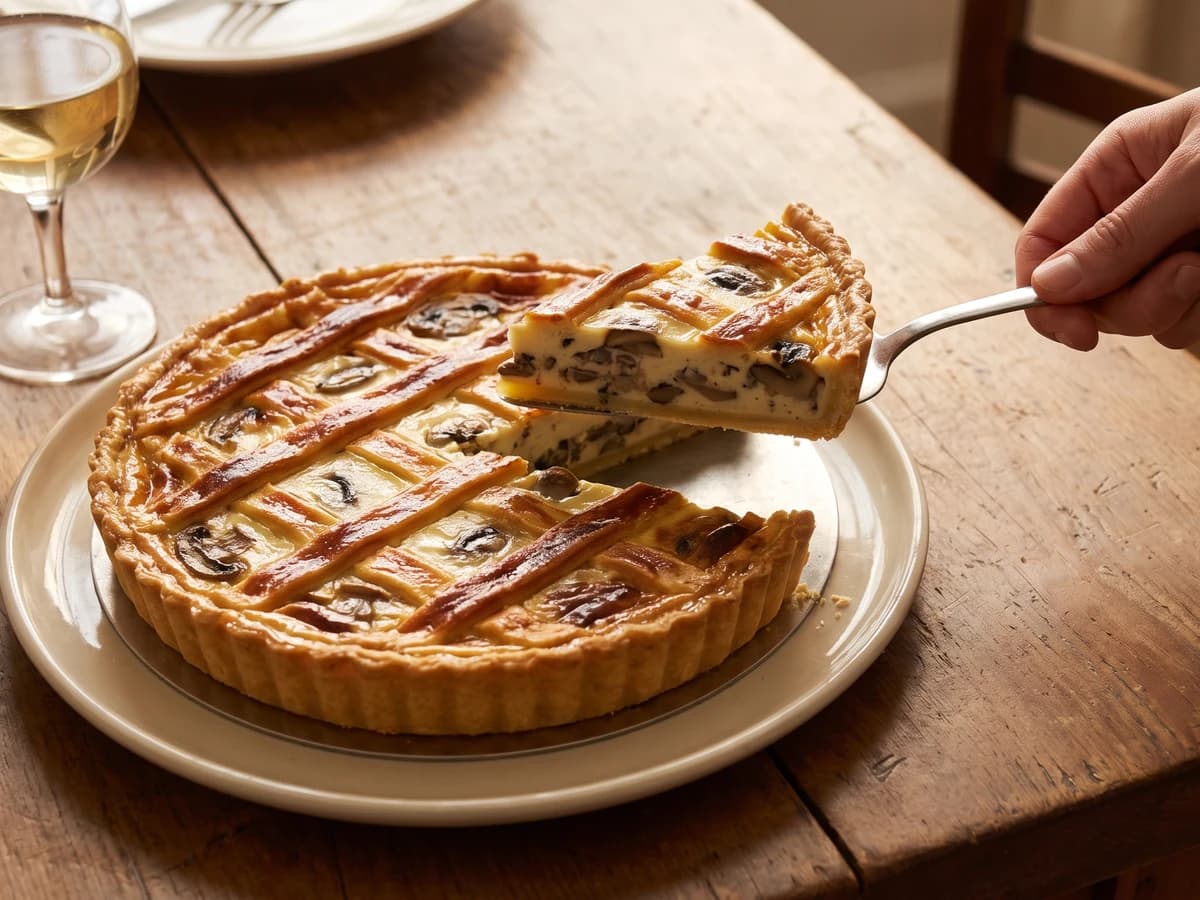
A hot mushroom flan under a butter-gold lattice, with cream reduced close around barely opened caps and a crisp short-paste base protected by one discipline: cool the filling completely.

Chef Juliette
Four little mushroom flans, latticed and gilded, baked hard and fast until butter-gold: a classical garnish scaled to the meat it accompanies and served before its crispness has time to fade.
Chef Juliette
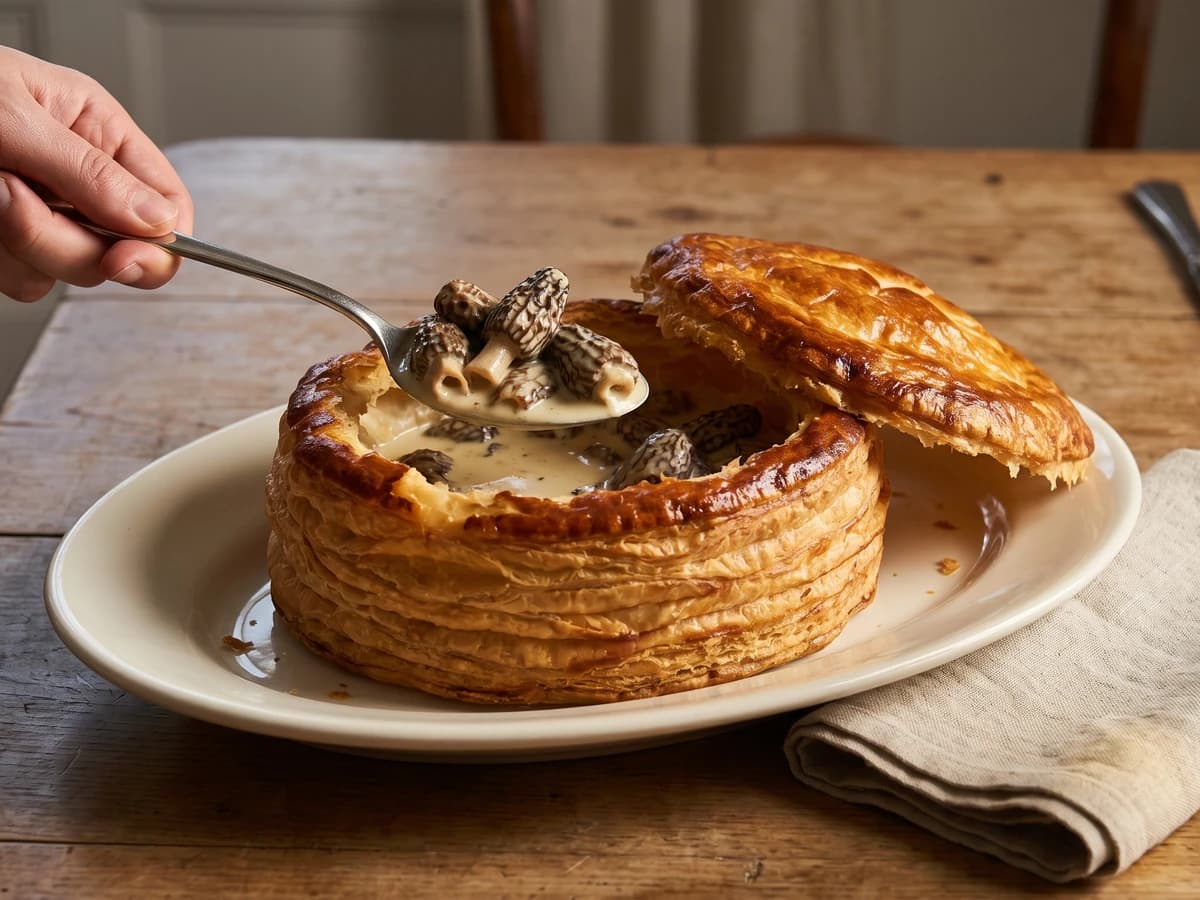
Morels surrender their liquor, then take it back as a glossy cream-and-butter sauce inside burnished puff pastry. The lesson is simple and absolute: reduce with patience, then heat gently and never boil.