
Chef Juliette
Flan aux Carottes
A pale short-paste shell holds silken, lightly sweet carrot purée beneath neat glazed half-discs, their butter syrup catching the light: a classical tart poised between vegetable course and sweet.
A cooking platform built around craft, culture, and the stories behind what we eat.
Created by Chef Juliette
Based on No. 234, Batter for Oven-glazed Fruit Fritters, from Le Guide Culinaire (1907) by Auguste Escoffier
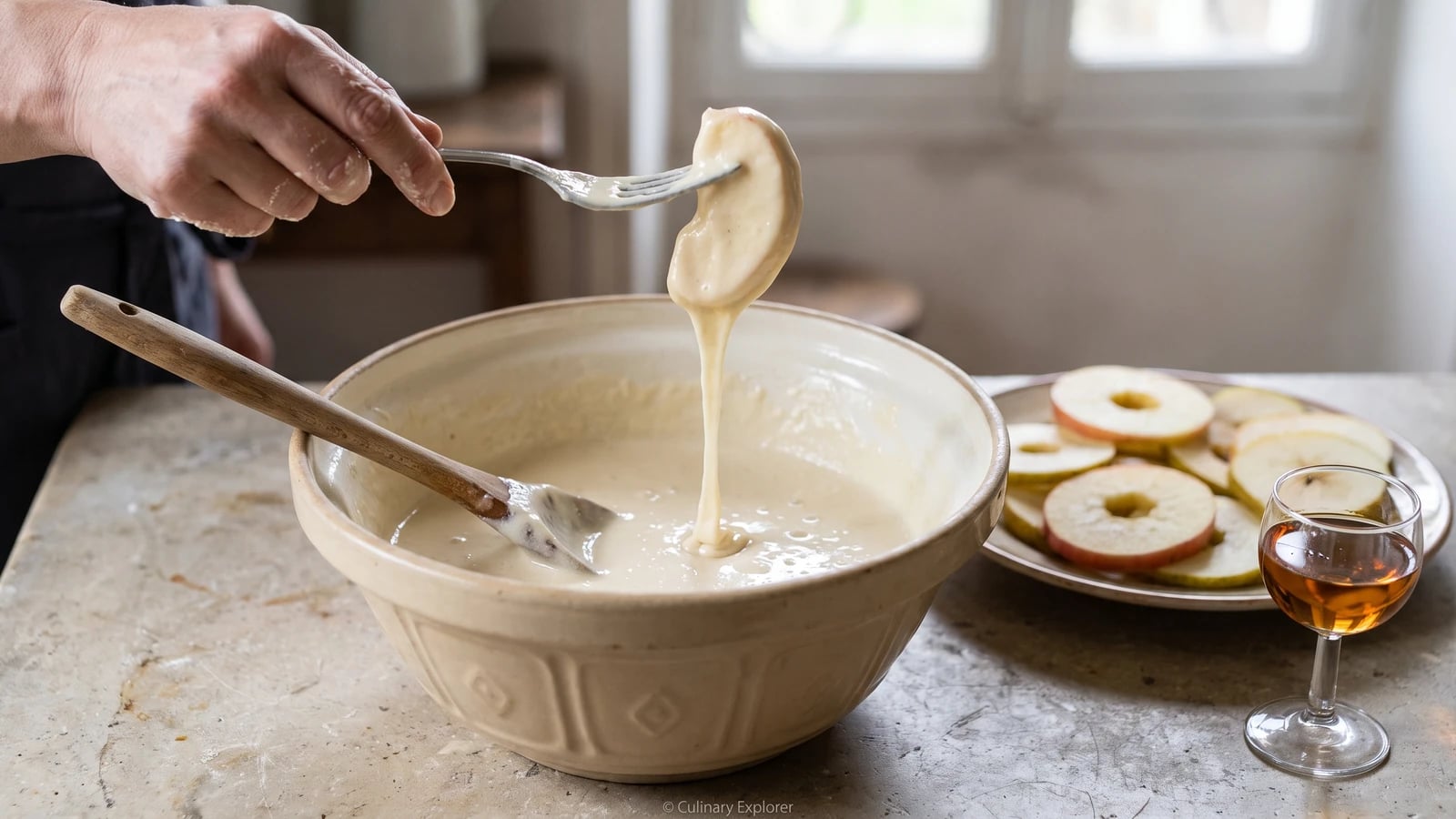
Pâte à frire teaches the judgment behind every fine fruit fritter: add water until the batter clings in a smooth veil, rest it warm, then stir once before dipping.
Pâte à frire pour beignets de fruits glacés au four teaches one indispensable judgment: the correct batter is neither a dough nor a pourable cream. It must cling to the fruit in an opaque veil, then fall from the wooden spoon in a slow, broad ribbon. Learn that consistency and the vague old instruction, "the necessary quantity of water," becomes useful rather than mysterious.
The original assumed a pastry kitchen with a reliably lukewarm corner, a cook who judged water by eye, and enough diners to absorb a batter beginning with a pound of flour. Here every fixed quantity is halved for four servings, while the variable water is given a practical starting point and range. The brigade quantity is scaffolding and can go. The order of mixing, the warm fermentation, and the final stir are the dish, so they stay. One cook, one stove, one evening.
No commercial yeast appears in the source, and I haven't inserted one. The warm rest hydrates the flour, softens the batter, and allows a little natural aeration; its expansion during cooking comes chiefly from the egg and moisture. Watch the ribbon rather than the clock alone. That is the step that decides whether the fruit emerges neatly coated or wearing its batter in patches.
Sweet fruit beignets belong to the French bourgeois dessert table and to classical pastry kitchens, where firm fruit was dipped, fried, sugared, and passed beneath a salamander. "Oven-glazed" names that fierce top-heat finish, not a batter baked from raw; a home broiler is its honest equivalent. This formula traveled as a working base rather than a regional specialty, prepared before service and stirred with a wooden spoon just before the fruit entered it.
Quantity
1 7/8 cups (445 ml / 227 g)
Quantity
1 tablespoon (15 ml / 14 g)
Quantity
1/8 teaspoon (0.6 ml / 1 g)
Quantity
1
at room temperature
Quantity
3/4 to 1 cup (180 to 240 ml / 180 to 240 g)
24 to 27°C / 75 to 80°F, as needed, minus the volume of any brandy used
Quantity
1 tablespoon plus 1/2 teaspoon (17.5 ml / 14 g)
Quantity
1 tablespoon (15 ml / 14 g)
replace the same volume of water
| Ingredient | Quantity |
|---|---|
| plain flour | 1 7/8 cups (445 ml / 227 g) |
| neutral oil, such as sunflower or grapeseed | 1 tablespoon (15 ml / 14 g) |
| fine salt | 1/8 teaspoon (0.6 ml / 1 g) |
| large eggat room temperature | 1 |
| lukewarm water24 to 27°C / 75 to 80°F, as needed, minus the volume of any brandy used | 3/4 to 1 cup (180 to 240 ml / 180 to 240 g) |
| granulated sugar | 1 tablespoon plus 1/2 teaspoon (17.5 ml / 14 g) |
| brandy (optional)replace the same volume of water | 1 tablespoon (15 ml / 14 g) |
Choose a gently warm place around 24 to 27°C / 75 to 80°F. A turned-off microwave or oven containing a mug of hot tap water makes a steady little chamber; never switch the appliance on. The batter needs warmth, not cooking, and excessive heat will set the egg around the edges.
Put the flour in a medium bowl. Work in the oil and salt with a sturdy wooden spoon, then add the egg and beat until it is completely absorbed. The mixture will look ragged and much too stiff. It is exactly right; the water comes next, and adding it gradually is how you keep the batter smooth.
If using brandy, pour it into a measuring jug and add enough lukewarm water to make 3/4 cup (180 ml) total liquid. Beat this into the flour mixture a little at a time, then beat in the sugar, preserving the source's sequence. Add more water as necessary, up to 1 cup (240 ml) total liquid, until the batter falls from the spoon in a broad ribbon and leaves an opaque coating behind. Flour differs, so the last spoonful belongs to your judgment. If you add too much and the batter runs from the spoon like milk, wait ten minutes for the flour to hydrate. If it is still loose, ça se rattrape: work a spoonful of batter into a spoonful of flour to make a smooth paste, then beat that paste back into the bowl. Press stubborn lumps through a fine-mesh sieve rather than whipping the batter furiously.
Cover the bowl and leave it in the prepared warm place for 45 to 60 minutes. The batter should relax, flow more evenly, and may show a few pinprick bubbles, but do not wait for a dramatic rise. The source specifies no added yeast, so none has been inserted; this controlled warm rest is its home-kitchen equivalent. Keep the batter at room temperature for no longer than two hours in total because it contains raw egg.
Stir the rested batter with the wooden spoon immediately before using it, exactly as the original directs. Immerse prepared fruit that has been blotted thoroughly dry, lift it, and let the excess fall back in one slow ribbon. If the coating pulls away in bare patches, dry the fruit again before changing the batter; surface water is usually the culprit. Use the coated fruit at once in the frying and oven-glazing procedure called for by its fritter recipe.
1 serving (about 130g)
Culinary guides, cultural storytelling, and the editorial depth that makes cooking meaningful.
Discover Culinary ExplorerChef Juliette
A pale short-paste shell holds silken, lightly sweet carrot purée beneath neat glazed half-discs, their butter syrup catching the light: a classical tart poised between vegetable course and sweet.
Chef Juliette
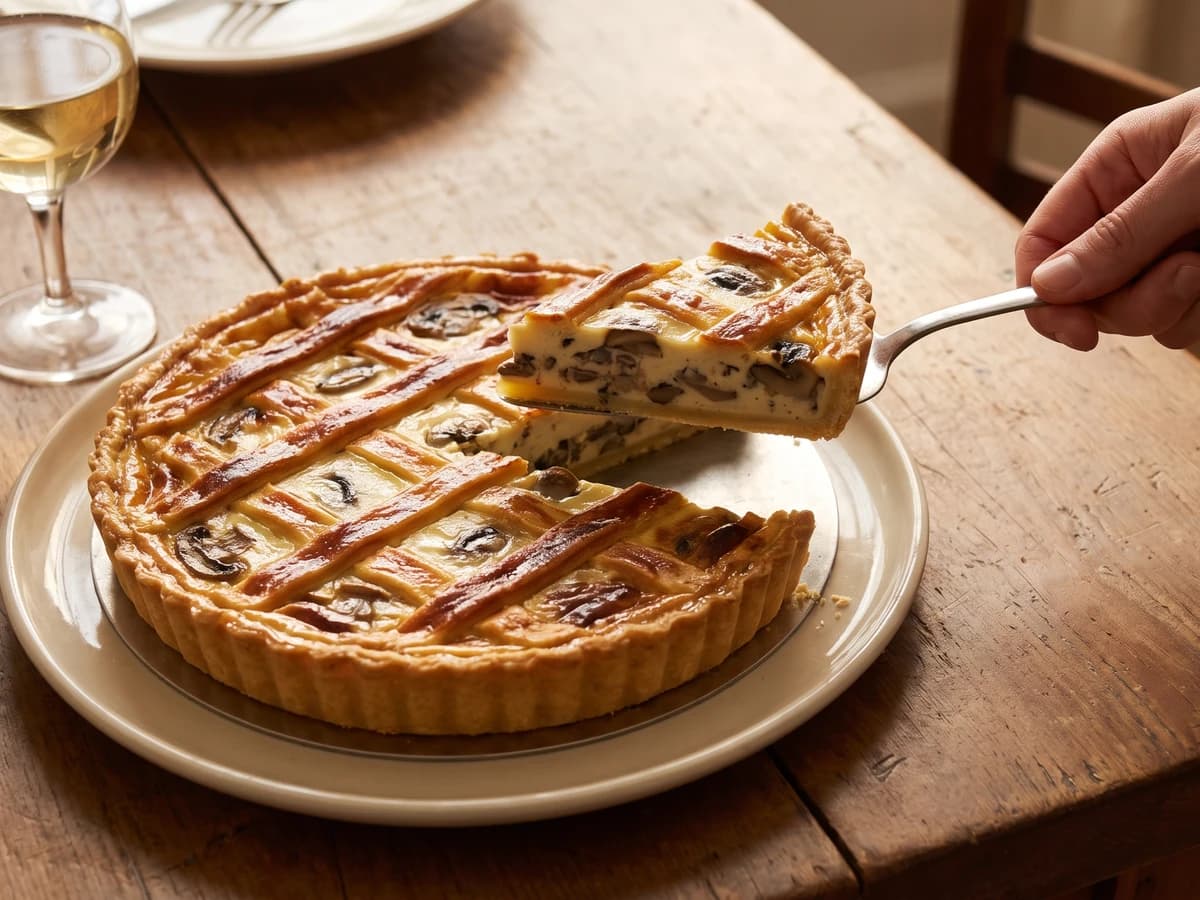
A hot mushroom flan under a butter-gold lattice, with cream reduced close around barely opened caps and a crisp short-paste base protected by one discipline: cool the filling completely.

Chef Juliette
Four little mushroom flans, latticed and gilded, baked hard and fast until butter-gold: a classical garnish scaled to the meat it accompanies and served before its crispness has time to fade.
Chef Juliette
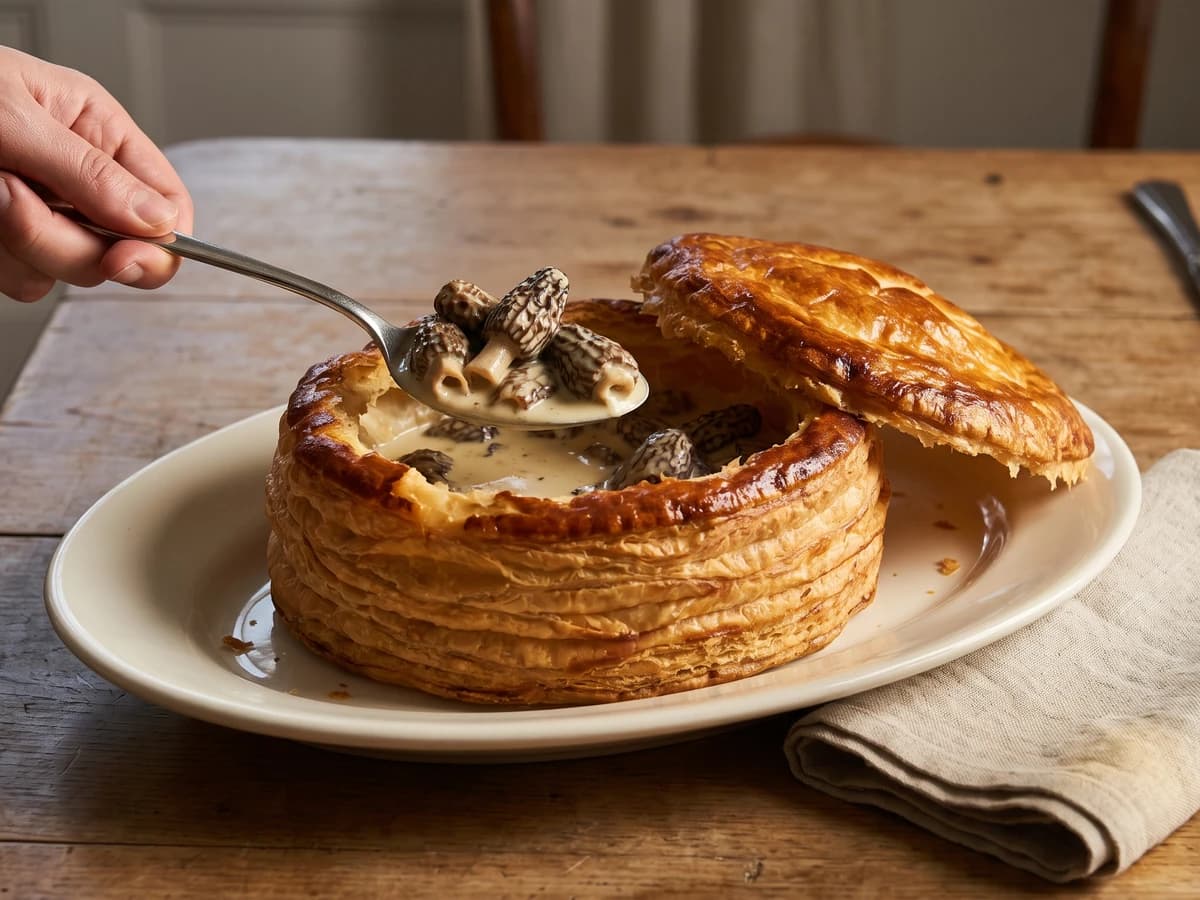
Morels surrender their liquor, then take it back as a glossy cream-and-butter sauce inside burnished puff pastry. The lesson is simple and absolute: reduce with patience, then heat gently and never boil.