
Chef Juliette
Flan aux Carottes
A pale short-paste shell holds silken, lightly sweet carrot purée beneath neat glazed half-discs, their butter syrup catching the light: a classical tart poised between vegetable course and sweet.
A cooking platform built around craft, culture, and the stories behind what we eat.
Created by Chef Juliette
Based on No. 2427, Ordinary Souffléd Fritters, from Le Guide Culinaire (1907) by Auguste Escoffier
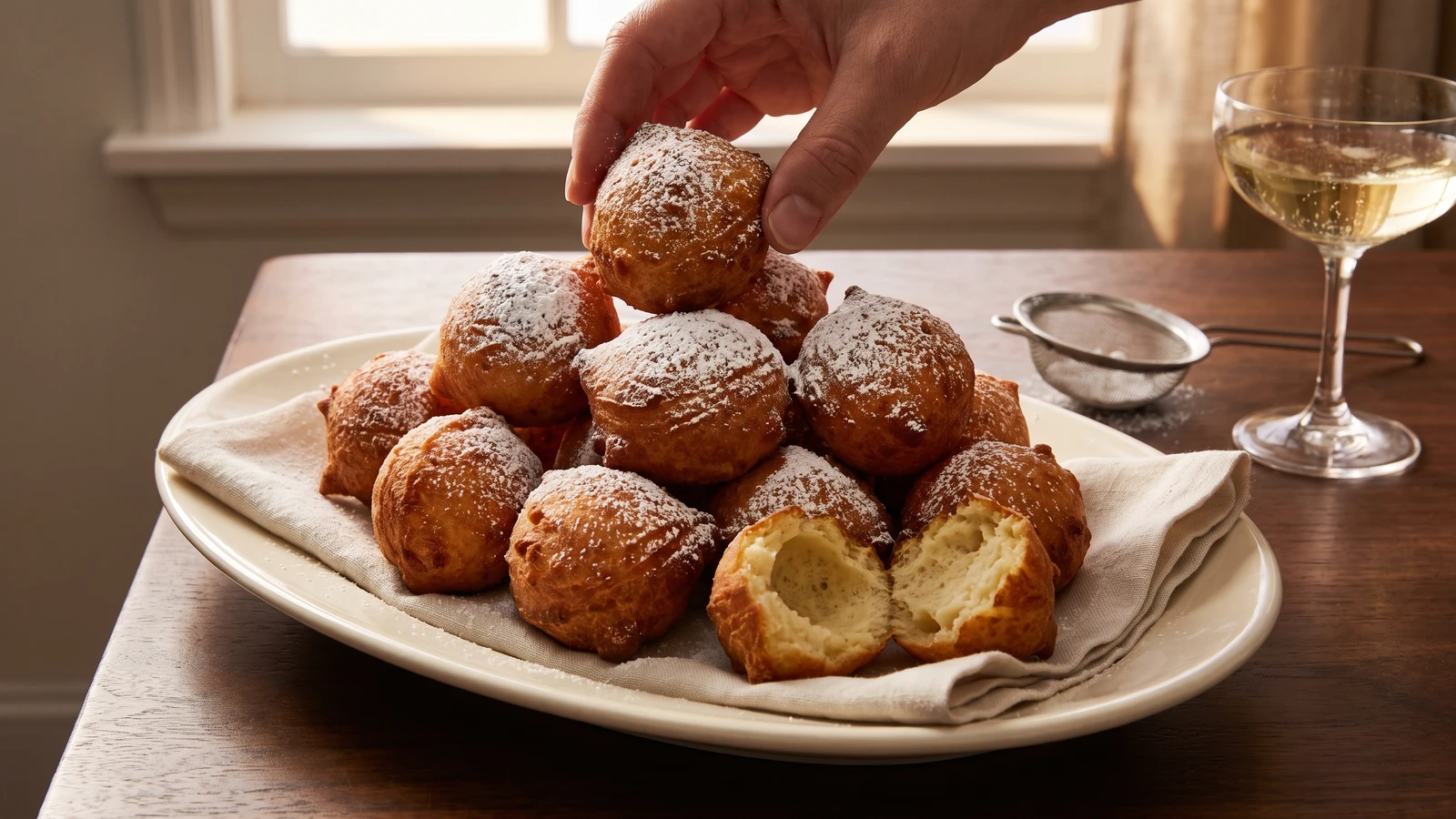
Walnut-sized pâte à choux enters moderate fat, swells hollow as the heat rises, and emerges crisp, light, and dusted with sugar. The lesson is simple: temperature must follow the fritter.
Beignets soufflés ordinaires (ordinary souffléd fritters) teach one true thing: the fat must begin moderate and grow hotter only as the choux swells. Start too hot and the shell browns before the centre can open; hold the heat too low and the fritters drink fat instead of rising. Temperature follows the fritter, never the other way round.
A saucier, a perpetual stockpot, and a salamander have no work in this recipe. The professional luxury the original did assume was a pastry cook tending a broad bath of fat by eye and feeding a dining room from a brigade-sized bowl of paste. At home, that becomes 360 grams of finished choux, a four-quart saucepan, and a clip-on thermometer. The quantity changed because a home pan must not be crowded; the order and rising-heat method remain. One cook, one stove, one evening.
The napkin-lined serving dish was service scaffolding, so a wire rack handles the draining more cleanly at home. The gradual increase in heat is the dish itself, and it stays. Watch the first two minutes closely: the fritters must expand before they colour.
Beignets soufflés belong to the pâtisserie kitchens and bourgeois dining rooms of Paris, where pâte à choux moved from the oven into frying fat and arrived at table beneath a veil of sugar. The method passed into the national entremets repertoire, with flavourings changing from kitchen to kitchen while the rising-heat fry remained constant. Soufflé here names the paste's expansion; these are not egg-white soufflés transferred from a ramekin to a frying pan.
Quantity
1 scant 1½ cups (350 ml / about 360 g) Ordinary Pâte à Choux (No. 2373)
supple and orange-flower scented as directed in its formula
Quantity
1½ quarts (1.4 litres / about 1.3 kg)
for frying
Quantity
¼ cup (60 ml / 30 g)
sifted
| Ingredient | Quantity |
|---|---|
| fresh Ordinary Pâte à Chouxsupple and orange-flower scented as directed in its formula | 1 scant 1½ cups (350 ml / about 360 g) Ordinary Pâte à Choux (No. 2373) |
| refined sunflower or peanut oilfor frying | 1½ quarts (1.4 litres / about 1.3 kg) |
| icing sugarsifted | ¼ cup (60 ml / 30 g) |
Measure the Ordinary Pâte à Choux (No. 2373) into a bowl while it is still supple enough to hold a rounded spoonful without running. If it has been chilled and feels stiff, let it stand for 10 to 15 minutes; cold paste enters the fat sluggishly and delays the rise. Set a wire rack over a tray, place the icing sugar in a small sieve, and keep both beside the stove.
Pour the oil into a heavy four-quart saucepan, leaving more than half the pan empty for safe bubbling. Clip on the thermometer and heat the oil to 300°F (150°C). This is the moderate starting heat prescribed by the original method, now made visible on a home stove rather than judged by a pastry cook's eye.
Lightly oil two teaspoons. Scoop a rounded tablespoon (15 ml / about 18 g) of choux, roughly the size of a small walnut, and use the second spoon to ease it into the oil close to the surface. Add only five or six portions per batch. Crowding pulls down the temperature, glues the fritters together, and leaves them greasy.
Hold the oil between 300°F and 310°F (150°C and 155°C) for the first 2 minutes, nudging apart any fritters that touch. As they swell, gradually increase the burner so the oil reaches 350°F (175°C) over the next 3 minutes. Turn the fritters gently as they expand to two or three times their original size. If they begin bronzing while still small and dense, turn off the burner for 30 seconds and keep them moving, then resume at gentler heat. Ça se rattrape. Expansion must come before colour.
Once fully swollen, keep the oil between 340°F and 350°F (170°C and 175°C) and fry for another 3 to 4 minutes, turning often, until the fritters are evenly golden, crisp outside, and surprisingly light when lifted. Split one from the first batch: the centre should be hollow with no streak of wet paste. If it is damp, give the remaining fritters another minute before draining.
Lift the fritters with a spider or slotted spoon, pause over the pan until the dripping stops, then spread them in one layer on the rack. Let the oil return to 300°F (150°C) before starting the next batch. Dust the fritters generously with icing sugar while warm and carry them to the table at once. Crisp shell, hollow centre, sugar on your fingers. À table!
1 serving (about 90g)
Culinary guides, cultural storytelling, and the editorial depth that makes cooking meaningful.
Discover Culinary ExplorerChef Juliette
A pale short-paste shell holds silken, lightly sweet carrot purée beneath neat glazed half-discs, their butter syrup catching the light: a classical tart poised between vegetable course and sweet.
Chef Juliette
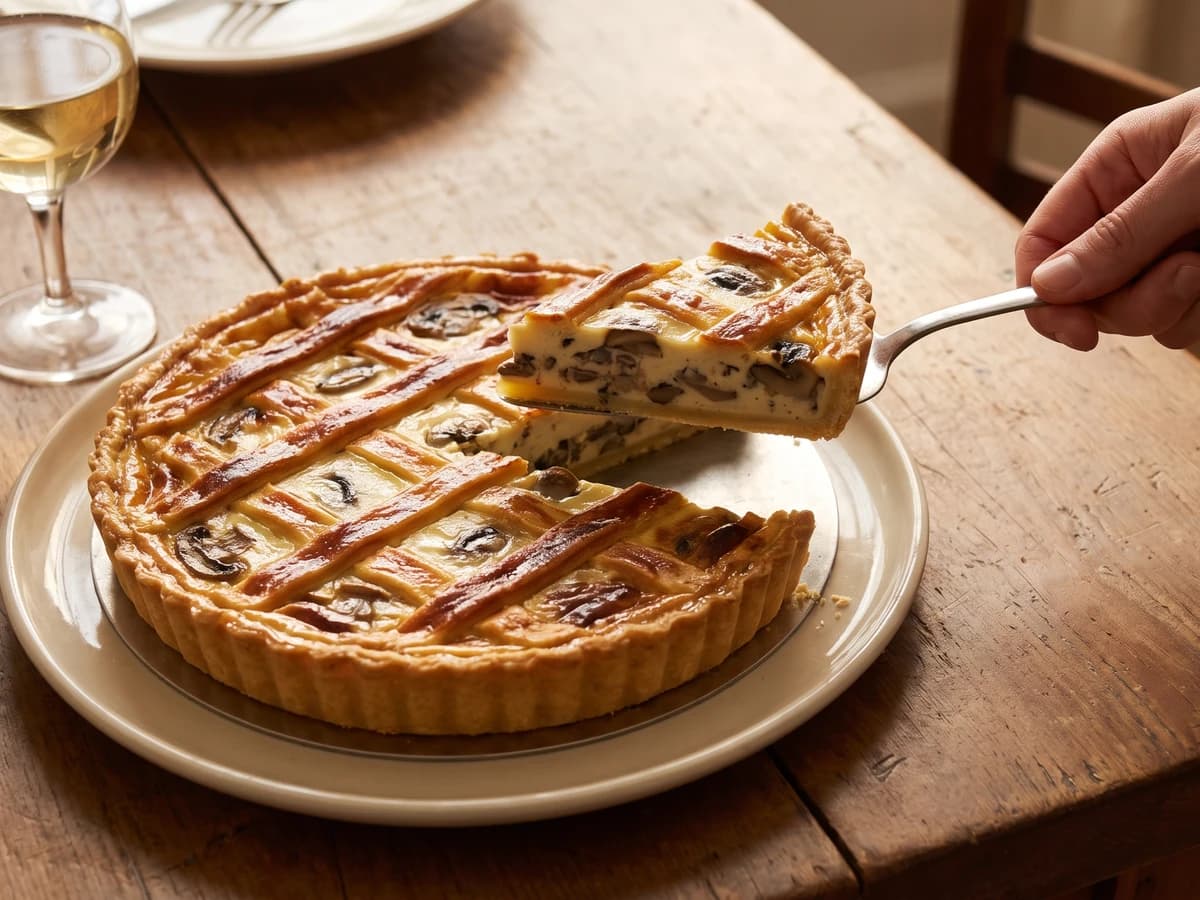
A hot mushroom flan under a butter-gold lattice, with cream reduced close around barely opened caps and a crisp short-paste base protected by one discipline: cool the filling completely.

Chef Juliette
Four little mushroom flans, latticed and gilded, baked hard and fast until butter-gold: a classical garnish scaled to the meat it accompanies and served before its crispness has time to fade.
Chef Juliette
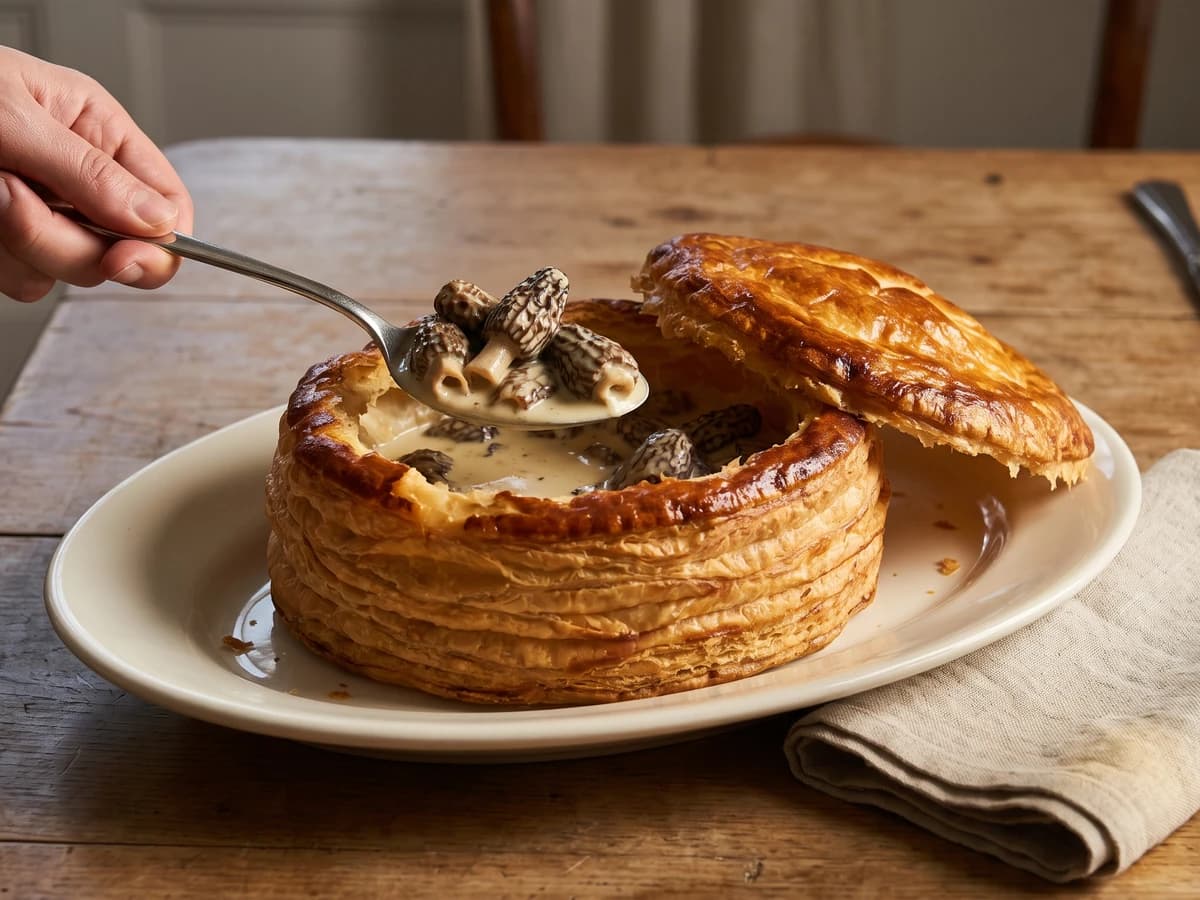
Morels surrender their liquor, then take it back as a glossy cream-and-butter sauce inside burnished puff pastry. The lesson is simple and absolute: reduce with patience, then heat gently and never boil.