
Chef Juliette
Flan aux Carottes
A pale short-paste shell holds silken, lightly sweet carrot purée beneath neat glazed half-discs, their butter syrup catching the light: a classical tart poised between vegetable course and sweet.
A cooking platform built around craft, culture, and the stories behind what we eat.
Created by Chef Juliette
Based on No. 2422, Flower Fritters, from Le Guide Culinaire (1907) by Auguste Escoffier
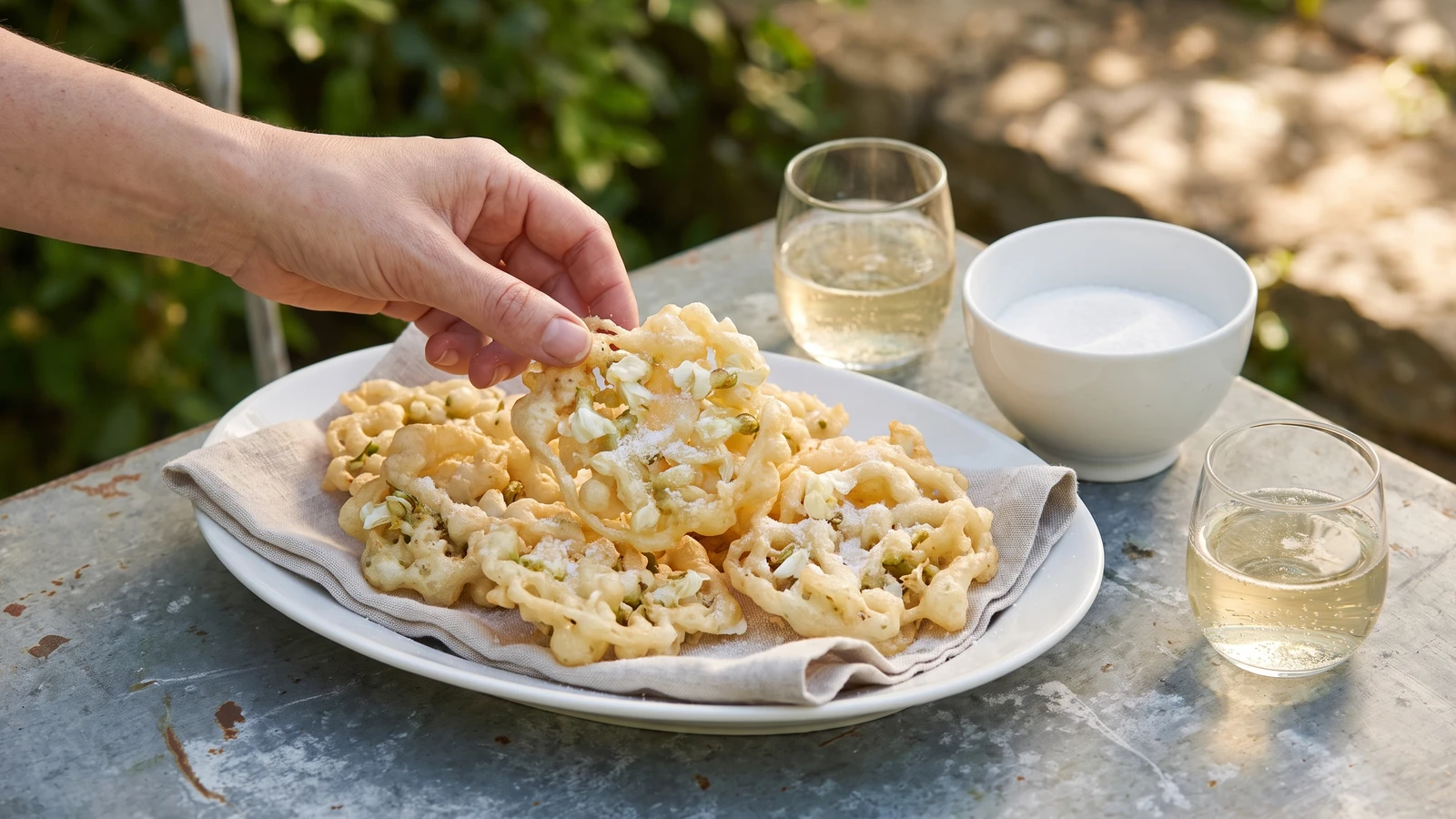
Acacia blossom clusters, newly opened and fragrant, meet Cognac, sugar, a light fermented batter, and hot fat. The lesson is timing: fresh flowers and properly heated oil make a crisp, perfumed celebration fritter.
Beignets de fleurs d’acacia (acacia flower fritters) teach that frying begins before the fat is heated: the flower must be newly opened. A fresh raceme holds its little white corollas in the batter and perfumes it; a tired one folds into the oil and gives you a greasy knot. Freshness, then temperature. Those are the two gates.
The original recipe assumed a large bowl of fermented batter held in a warm corner, plenty of hot fat ready for service, and enough hands to fry a brigade quantity without interruption. At home, you reach for a finished bowl of Batter for Oven-glazed Fruit Fritters (No. 234), a heavy 5-quart pot, a clip-on thermometer, and twelve clusters. The large batch is scaffolding and has been reduced; the rack replaces the napkin for draining. The 30-minute maceration, the fermented batter, and abundant hot fat are the dish itself, so they stay. One cook, one stove, one evening.
Sugar and Cognac draw the blossom’s perfume forward, then the batter becomes a pale golden lace around each cluster. Hold the oil at 350°F (175°C), fry only two at a time, and let the temperature recover between batches. Make certain the flowers are dry before maceration and let the Cognac drip away before battering; that is the step that decides whether the crust clings.
Beignets de fleurs d’acacia belong to late-spring household cooking across the Rhône corridor and neighboring eastern districts, particularly the Lyonnais and Dauphiné, where fragrant racemes could travel from hedgerow to frying pan the day they opened. The classical kitchen carried that seasonal method into its fritter repertoire and applied it likewise to elderflower, lily, and vegetable-marrow blossom. The acacia named by French cooks is usually Robinia pseudoacacia, the black locust or false acacia, rather than a member of the warm-climate Acacia genus.
Quantity
12 clusters (about 3½ oz / 100 g)
positively identified and gently inspected
Quantity
2 tablespoons (30 ml / 25 g)
Quantity
2 tablespoons (30 ml / 28 g)
Quantity
1½ cups (360 ml / about 380 g) Batter for Oven-glazed Fruit Fritters (No. 234)
prepared and fermented as directed
Quantity
6⅓ cups (1.5 liters / 1.38 kg)
for frying
Quantity
¼ cup (60 ml / 50 g)
for finishing
| Ingredient | Quantity |
|---|---|
| freshly opened, untreated black locust flower clusterspositively identified and gently inspected | 12 clusters (about 3½ oz / 100 g) |
| superfine sugar | 2 tablespoons (30 ml / 25 g) |
| Cognac or another French grape brandy | 2 tablespoons (30 ml / 28 g) |
| Batter for Oven-glazed Fruit Frittersprepared and fermented as directed | 1½ cups (360 ml / about 380 g) Batter for Oven-glazed Fruit Fritters (No. 234) |
| refined sunflower or peanut oilfor frying | 6⅓ cups (1.5 liters / 1.38 kg) |
| superfine sugarfor finishing | ¼ cup (60 ml / 50 g) |
Use only newly opened, fragrant clusters with firm white corollas and no browned edges. Shake them gently over the sink to dislodge insects, then remove any leaves. Avoid washing unless it is truly necessary, since wet flowers shed their batter and make hot fat spit. If they must be rinsed, spread them on clean towels and let them dry completely before proceeding.
Lay the clusters in a shallow nonreactive dish, keeping the stems attached as handles. Sprinkle them evenly with the 2 tablespoons of sugar, drizzle over the Cognac, and turn them once with gentle fingers. Leave them for exactly 30 minutes. The sugar and brandy should perfume and lightly soften the flowers, not drown them; a longer maceration makes the corollas collapse.
Set a wire rack over a sheet pan. Pour the oil into a heavy 5-quart pot, filling it no more than one-third full, and bring it to 350°F (175°C). Stir the finished Batter for Oven-glazed Fruit Fritters (No. 234) with a wooden spoon immediately before using it, as its own preparation directs. Keep the thermometer clipped where it measures the oil rather than touching the pan floor.
Lift one cluster by its stem and let the Cognac mixture drip away for several seconds. Immerse the flower end in the batter, turn it gently to coat every corolla, then let the excess fall back into the bowl. Lower no more than two clusters into the fat at once. Fry until puffed and pale gold, about 60 to 90 seconds on the first side and 45 to 60 seconds after turning. Let the oil return to 350°F (175°C) between batches. If the batter slides away, stop, let the flowers drain more thoroughly, stir the batter, and restore the oil temperature before trying again. Ça se rattrape. Pale, greasy fritters mean the oil was too cool; rapid darkening means it was too hot.
Lift each fritter with a spider or slotted spoon and drain it on the rack for about 45 seconds. A rack replaces the brigade napkin at this stage because air preserves the crisp lace instead of holding oil against it. While the surface is still warm, sprinkle generously with the finishing sugar. Arrange the fritters in one layer on a clean, linen-lined platter, never stacked, and serve immediately. The stems are handles, not part of the eating. À table!
1 serving (about 125g)
Culinary guides, cultural storytelling, and the editorial depth that makes cooking meaningful.
Discover Culinary ExplorerChef Juliette
A pale short-paste shell holds silken, lightly sweet carrot purée beneath neat glazed half-discs, their butter syrup catching the light: a classical tart poised between vegetable course and sweet.
Chef Juliette
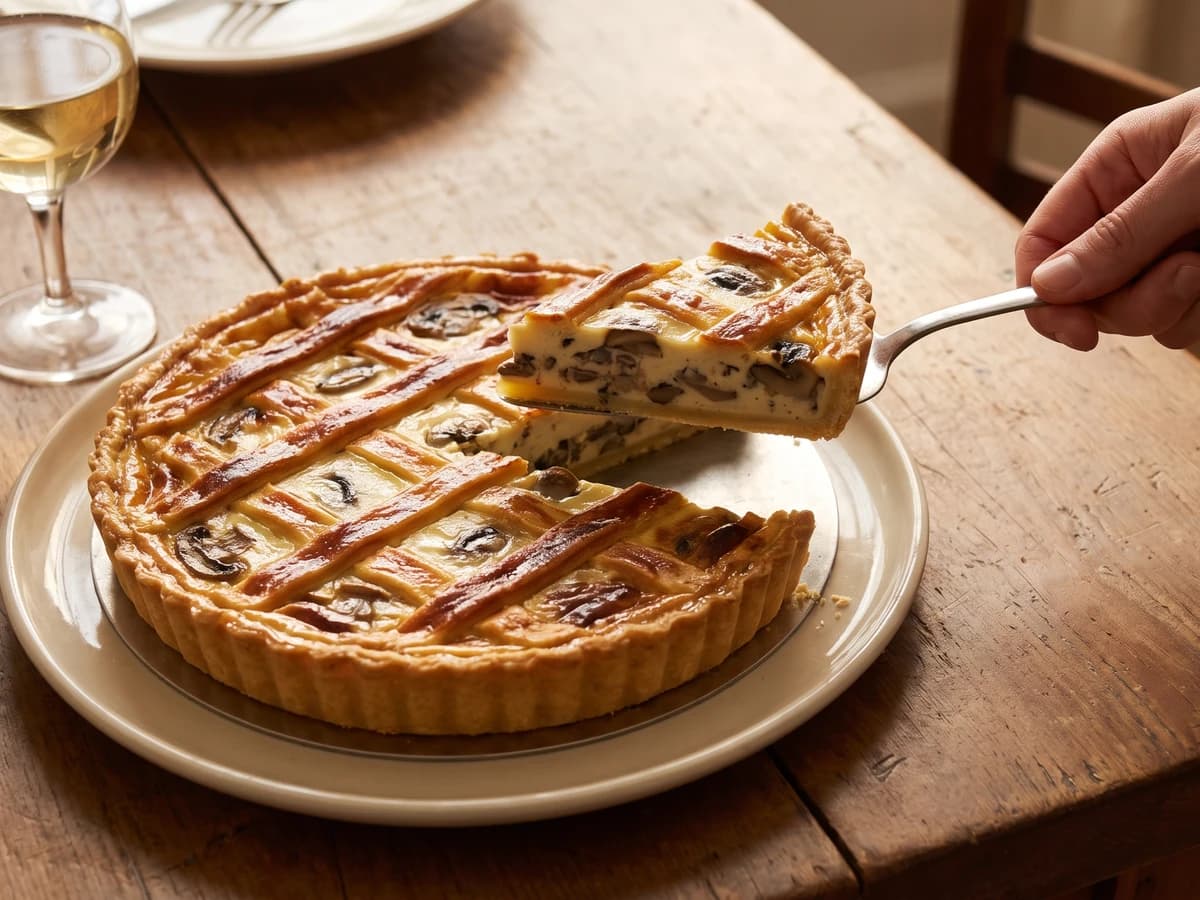
A hot mushroom flan under a butter-gold lattice, with cream reduced close around barely opened caps and a crisp short-paste base protected by one discipline: cool the filling completely.

Chef Juliette
Four little mushroom flans, latticed and gilded, baked hard and fast until butter-gold: a classical garnish scaled to the meat it accompanies and served before its crispness has time to fade.
Chef Juliette
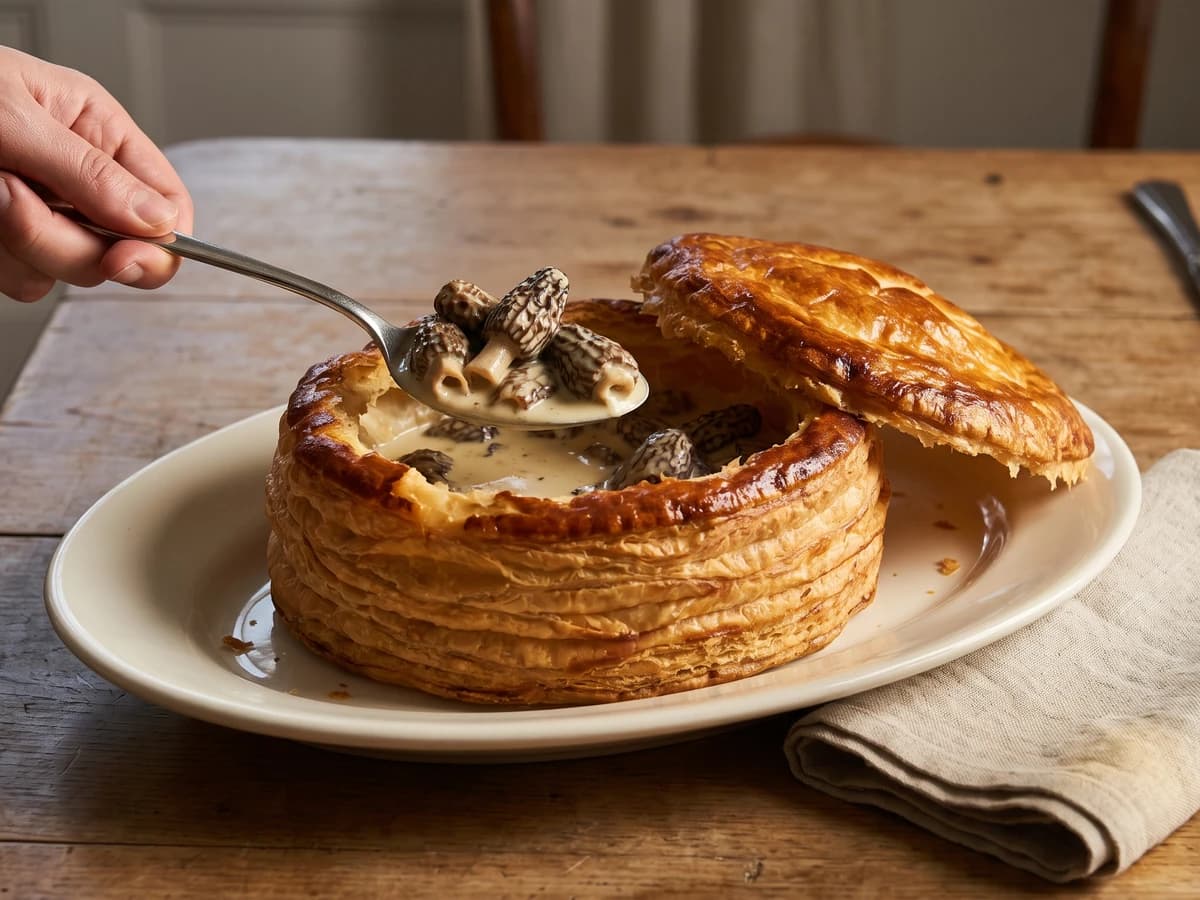
Morels surrender their liquor, then take it back as a glossy cream-and-butter sauce inside burnished puff pastry. The lesson is simple and absolute: reduce with patience, then heat gently and never boil.