
Chef Juliette
Flan aux Carottes
A pale short-paste shell holds silken, lightly sweet carrot purée beneath neat glazed half-discs, their butter syrup catching the light: a classical tart poised between vegetable course and sweet.
A cooking platform built around craft, culture, and the stories behind what we eat.
Created by Chef Juliette
Based on No. 2421, Aqueous-fruit Fritters, from Le Guide Culinaire (1907) by Auguste Escoffier
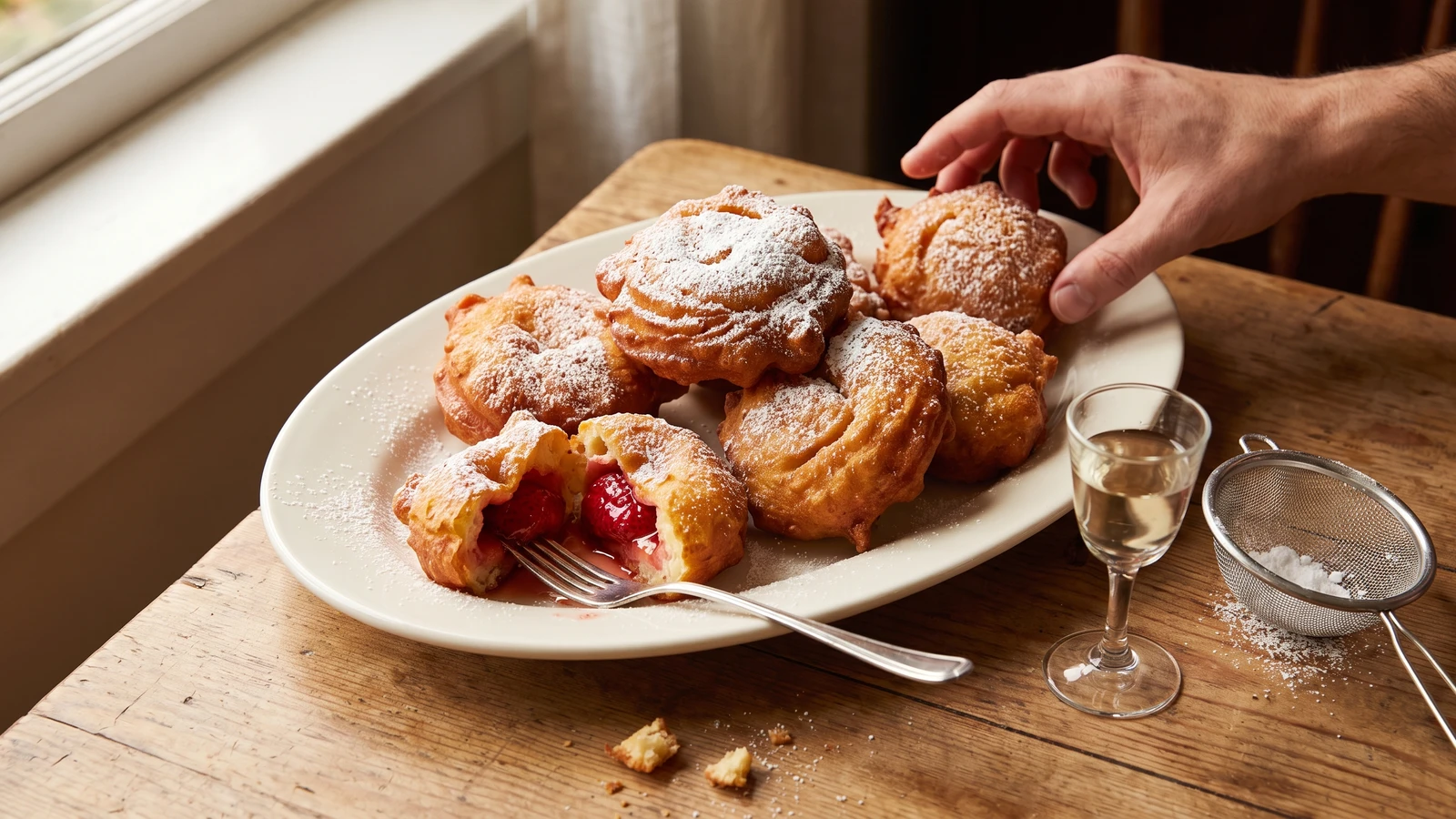
Whole strawberries, cold with kirsch and plenty of sugar, disappear beneath a light batter and emerge crisp, golden, and fragrant: a generous lesson in managing fruit, moisture, and very hot fat.
Beignets de fruits aqueux (aqueous-fruit fritters) teach one essential principle: watery fruit must be protected before it meets hot fat. Sugar the strawberries copiously, then give them their cold kirsch maceration. The sugar isn't a flourish. Without it, the heat sharpens the fruit's acidity and a sweet berry emerges unpleasantly tart.
The original preparation assumed a cold station packed with ice, a fryer held ready for service, brigade quantities of batter, lace paper for the platter, and a dredger waiting in another hand. For one cook, one stove, one evening, the honest equivalents are a refrigerator, twelve berries, a heavy pot with a thermometer, a rack over absorbent paper, and a fine sieve. Neutral frying oil replaces the unspecified fat because it holds the required heat cleanly. I have cut the service scaffolding, not the dish: the kirsch, the thirty-minute maceration, the prepared batter, and the very hot fat all stay.
Done properly, each fritter has a crisp golden shell around a warm berry still bright with kirsch, with icing sugar settling into every ridge. Don't heat the fat until the strawberries have spent their full thirty minutes beneath that generous coat of sugar. That protection is the step that decides the dish.
Beignets de fruits aqueux belong to the Parisian classical repertory, where fruit fritters passed from household and fête frying into the organized service of the grandes cuisines. The label fruits aqueux is technical rather than regional: it groups juicy fruits whose acidity becomes more pronounced during frying, which is why copious sugar before the kirsch bath is part of the method, not decoration. The same family includes raspberries, red currants, cherries, oranges, and tangerines, with tangerines quartered and peeled raw so their segments remain distinct.
Quantity
12 (about 1 lb / 450 g)
Quantity
1/2 cup (120 ml / 100 g)
Quantity
2 tablespoons (30 ml / 28 g)
Quantity
1 1/2 cups (360 ml / about 360 g) Batter for Oven-glazed Fruit Fritters (No. 234)
prepared according to its own entry
Quantity
2 quarts (1.9 L / about 1.7 kg), or enough to fill the pot no more than one-third full
Quantity
1/4 cup (60 ml / 30 g)
| Ingredient | Quantity |
|---|---|
| large, somewhat firm strawberries | 12 (about 1 lb / 450 g) |
| granulated sugar | 1/2 cup (120 ml / 100 g) |
| kirsch | 2 tablespoons (30 ml / 28 g) |
| Batter for Oven-glazed Fruit Frittersprepared according to its own entry | 1 1/2 cups (360 ml / about 360 g) Batter for Oven-glazed Fruit Fritters (No. 234) |
| high-heat neutral frying oil | 2 quarts (1.9 L / about 1.7 kg), or enough to fill the pot no more than one-third full |
| icing sugar | 1/4 cup (60 ml / 30 g) |
Rinse the strawberries only if needed, then dry them completely. Remove the leafy caps with the shallowest possible cut so the berries remain whole and firm. Arrange them in one layer in a shallow dish, turn them through the granulated sugar until every surface is heavily coated, and sprinkle over the kirsch. Cover and refrigerate for thirty minutes, turning once halfway through. The sugar will draw out a ruby syrup, but it also protects the berries from tasting sour after frying, so don't reduce it.
Set a wire rack over a tray lined with absorbent paper, and place the icing sugar in a fine sieve. Pour the oil into a deep, heavy pot, leaving plenty of empty space above it, then heat to 375°F (190°C). Keep the pot stable and its handles turned inward. Very hot fat is the method here, but crowding the pot or letting wet syrup fall into it invites splashing.
Lift the strawberries from their syrup and let them drain on a rack for three to five minutes. Don't rinse away the sugar and kirsch. Stir the Batter for Oven-glazed Fruit Fritters (No. 234) with a wooden spoon as directed in its own entry, then lower each berry into it and turn until completely enclosed. Let the excess batter fall back into the bowl in a slow ribbon. A bare patch lets juice escape into the fat, so cover the fruit all the way around.
Lower three coated strawberries into the fat one at a time, releasing each close to the surface. Fry for ninety seconds to two minutes, turning gently, until the shells are evenly puffed and deep golden. Let the oil return to 375°F (190°C) before adding the next batch. If the coating slides off before frying, the berry is too wet. Ça se rattrape: lift it from the batter, drain and blot it lightly, then coat it again. If the oil falls below 350°F (175°C), stop adding fruit and let it recover, or the batter will drink the fat instead of setting crisp.
Lift each fritter onto the rack and leave it for one minute so excess fat falls away without softening the underside. Transfer the fritters to a warm platter in a single layer and sift the icing sugar generously over them. Serve within five minutes, while the shells are crisp and the strawberries remain warm and fragrant with kirsch. Never pile them, or their own moisture softens the batter. À table!
1 serving (about 230g)
Culinary guides, cultural storytelling, and the editorial depth that makes cooking meaningful.
Discover Culinary ExplorerChef Juliette
A pale short-paste shell holds silken, lightly sweet carrot purée beneath neat glazed half-discs, their butter syrup catching the light: a classical tart poised between vegetable course and sweet.
Chef Juliette
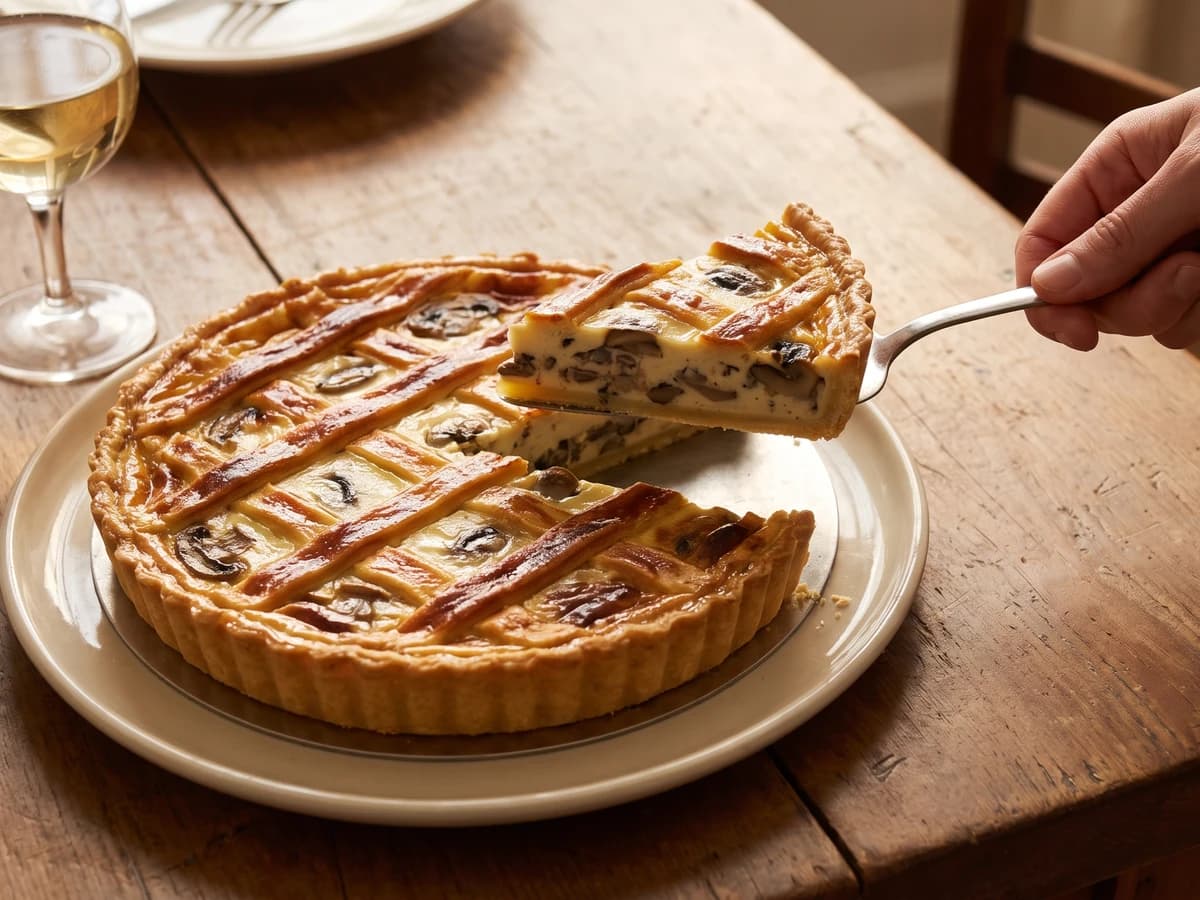
A hot mushroom flan under a butter-gold lattice, with cream reduced close around barely opened caps and a crisp short-paste base protected by one discipline: cool the filling completely.

Chef Juliette
Four little mushroom flans, latticed and gilded, baked hard and fast until butter-gold: a classical garnish scaled to the meat it accompanies and served before its crispness has time to fade.
Chef Juliette
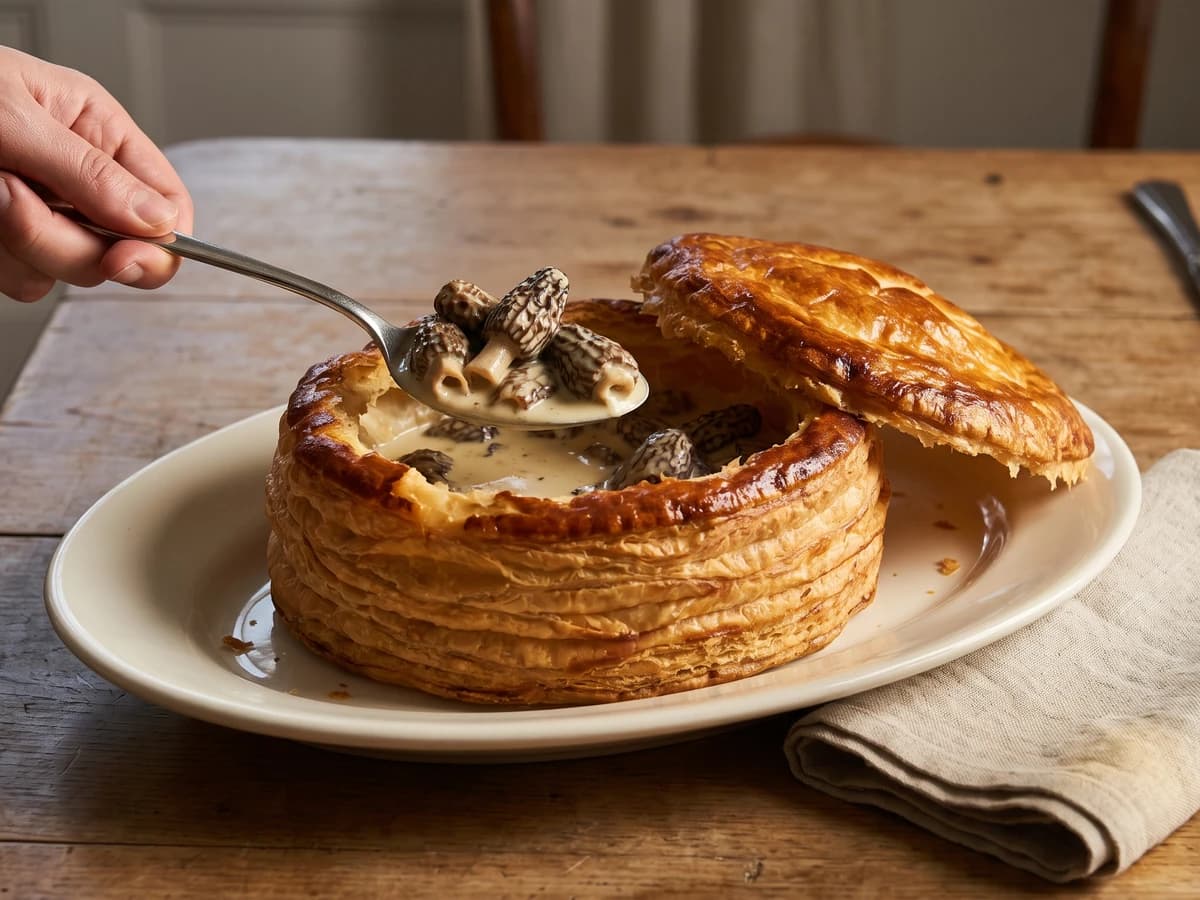
Morels surrender their liquor, then take it back as a glossy cream-and-butter sauce inside burnished puff pastry. The lesson is simple and absolute: reduce with patience, then heat gently and never boil.