
Chef Juliette
Flan aux Carottes
A pale short-paste shell holds silken, lightly sweet carrot purée beneath neat glazed half-discs, their butter syrup catching the light: a classical tart poised between vegetable course and sweet.
A cooking platform built around craft, culture, and the stories behind what we eat.

Created by Chef Juliette
Based on No. 2420, Fritters of Fruit with Firm Pulps, from Le Guide Culinaire (1907) by Auguste Escoffier
Apricot halves soaked in kirsch, wrapped in light batter, fried gold, then sugared and flashed beneath fierce heat: the dessert that proves a crisp coating begins with fruit dried absolutely well.
Beignets de fruits à chair ferme (fritters of firm-fleshed fruit) teach one thing before all others: batter clings only to fruit that is dry. The apricots may spend an hour drinking kirsch and sugar, but before they meet the batter their surfaces must be blotted until no shine remains. Miss that and the coating slips into the fat; get it right and each half emerges golden, crisp outside, and tender within.
The original formula assumed a brigade-sized preparation of Batter for Oven-glazed Fruit Fritters (No. 234), a fryer waiting at the pass, and a salamander fierce enough to melt icing sugar on command. At home, sixteen apricot halves, a heavy saucepan, and the household broiler do the same work. A wire rack replaces the draining napkin because it keeps the undersides crisp; the clean folded napkin returns for serving. The large quantity and dedicated station were brigade scaffolding. The hour of maceration, exact drying, hot-fat frying, immediate sugaring, and glazing are the dish and must stay.
The finished beignets should arrive in a loose golden pile, their thin sugar crust gleaming and the kirsch held inside the warm fruit. This is generous dinner-party food, completed while everyone is still at the table. One cook, one stove, one evening. Dry every curve and cut face until no moisture remains. That is the step that decides the beignet.
Beignets de fruits à chair ferme belong to the French classical entremets table, where orchard fruit was macerated, battered, fried, and finished only moments before service. Their salamander glaze marks the passage from household fritter to grand-kitchen dessert, melting icing sugar into a delicate crust under fierce heat. The formula belongs to the national canon rather than one province, with apricot, apple, pear, peach, and banana treated as members of the same family according to firmness and season.
Quantity
8 (about 1 lb 2 oz / 500 g)
halved and pitted
Quantity
2 tablespoons (30 ml / 25 g)
Quantity
1/4 cup (60 ml / 55 g)
Quantity
1 1/2 cups (360 ml / 360 g) Batter for Oven-glazed Fruit Fritters (No. 234)
Quantity
6 cups (1.4 L / 1.3 kg)
for frying
Quantity
1/2 cup (120 ml / 60 g)
sifted
| Ingredient | Quantity |
|---|---|
| firm-ripe apricotshalved and pitted | 8 (about 1 lb 2 oz / 500 g) |
| superfine sugar | 2 tablespoons (30 ml / 25 g) |
| kirsch, brandy, or rum | 1/4 cup (60 ml / 55 g) |
| prepared fruit-fritter batter | 1 1/2 cups (360 ml / 360 g) Batter for Oven-glazed Fruit Fritters (No. 234) |
| refined peanut or sunflower oilfor frying | 6 cups (1.4 L / 1.3 kg) |
| icing sugarsifted | 1/2 cup (120 ml / 60 g) |
Arrange the apricot halves cut-side up in one layer in a shallow dish. Sprinkle them evenly with the superfine sugar, pour over the kirsch, brandy, or rum, and turn each half so every surface is moistened. Leave them to macerate for 1 hour, turning once halfway through. They should become fragrant and slightly yielding while retaining their shape. Keep the dish and bottle away from the stove, especially if you cook over gas.
Set a wire rack over a rimmed sheet pan for draining, then place a second bare sheet pan near the broiler for glazing. Position the broiler rack about 6 inches (15 cm) from the heat and turn the broiler to high. Pour the frying oil into a heavy 3 to 4-quart saucepan, filling it no more than halfway, and heat it to 350°F (175°C). Hold it between 340°F and 355°F (170°C and 180°C); cooler oil makes greasy beignets, while hotter oil browns the coating before the fruit warms.
Lift the apricots from their macerating liquid and drain them briefly. Press clean towels against the cut faces, skins, and hollows, wait 1 minute, then blot them again until they look matte rather than wet. Stir the Batter for Oven-glazed Fruit Fritters (No. 234) as its own formula directs. Dip one apricot half completely, lift it, and let the excess batter fall back into the bowl in a slow ribbon. Fry this first piece as a test. If the coating slides away, stop and dry the remaining fruit again before re-dipping it. Ça se rattrape. Do not thin the batter with the macerating liquid, which would disturb the referenced formula and weaken its grip.
Lower 4 or 5 battered apricot halves into the oil one at a time, releasing each close to the surface so the oil cannot splash. Fry for 2 to 3 minutes, turning gently with a spider, until the coating is evenly puffed and deep golden. Do not crowd the pan. If the temperature falls below 340°F (170°C), finish the batch and let the oil recover before adding more. If the beignets darken too quickly, lower the heat at once. Lift them to the wire rack and allow the oil to drain while you fry the remaining batches.
Transfer the drained beignets to the bare sheet pan while they are still hot. Cover them generously and evenly with sifted icing sugar, including their sides, then place them beneath the broiler for 15 to 40 seconds. Watch without looking away. The sugar should melt into a fine, glossy crust with a few pale snowy ridges, not scorch. Rotate the pan if one side colors first. If the glaze remains bare in patches, pull the tray out, sift a little more sugar over those places, and return it for only a few seconds.
Arrange the glazed beignets in a generous pile on a platter lined with a clean, lint-free folded napkin, as the original service directs. Carry them straight to the table while the coating is crisp and the apricots are warm within. Beignets wait for no one. À table!
1 serving (about 220g)
Culinary guides, cultural storytelling, and the editorial depth that makes cooking meaningful.
Discover Culinary ExplorerChef Juliette
A pale short-paste shell holds silken, lightly sweet carrot purée beneath neat glazed half-discs, their butter syrup catching the light: a classical tart poised between vegetable course and sweet.
Chef Juliette
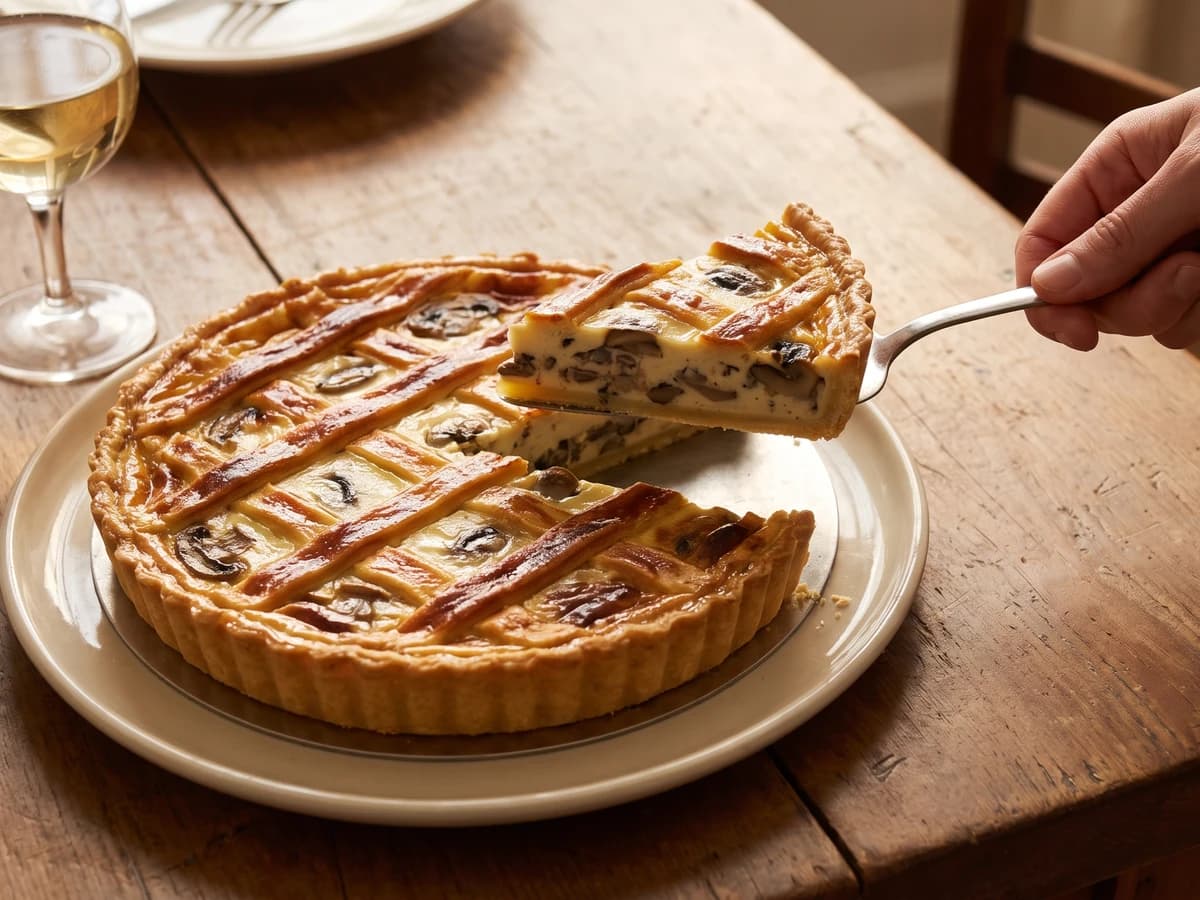
A hot mushroom flan under a butter-gold lattice, with cream reduced close around barely opened caps and a crisp short-paste base protected by one discipline: cool the filling completely.

Chef Juliette
Four little mushroom flans, latticed and gilded, baked hard and fast until butter-gold: a classical garnish scaled to the meat it accompanies and served before its crispness has time to fade.
Chef Juliette
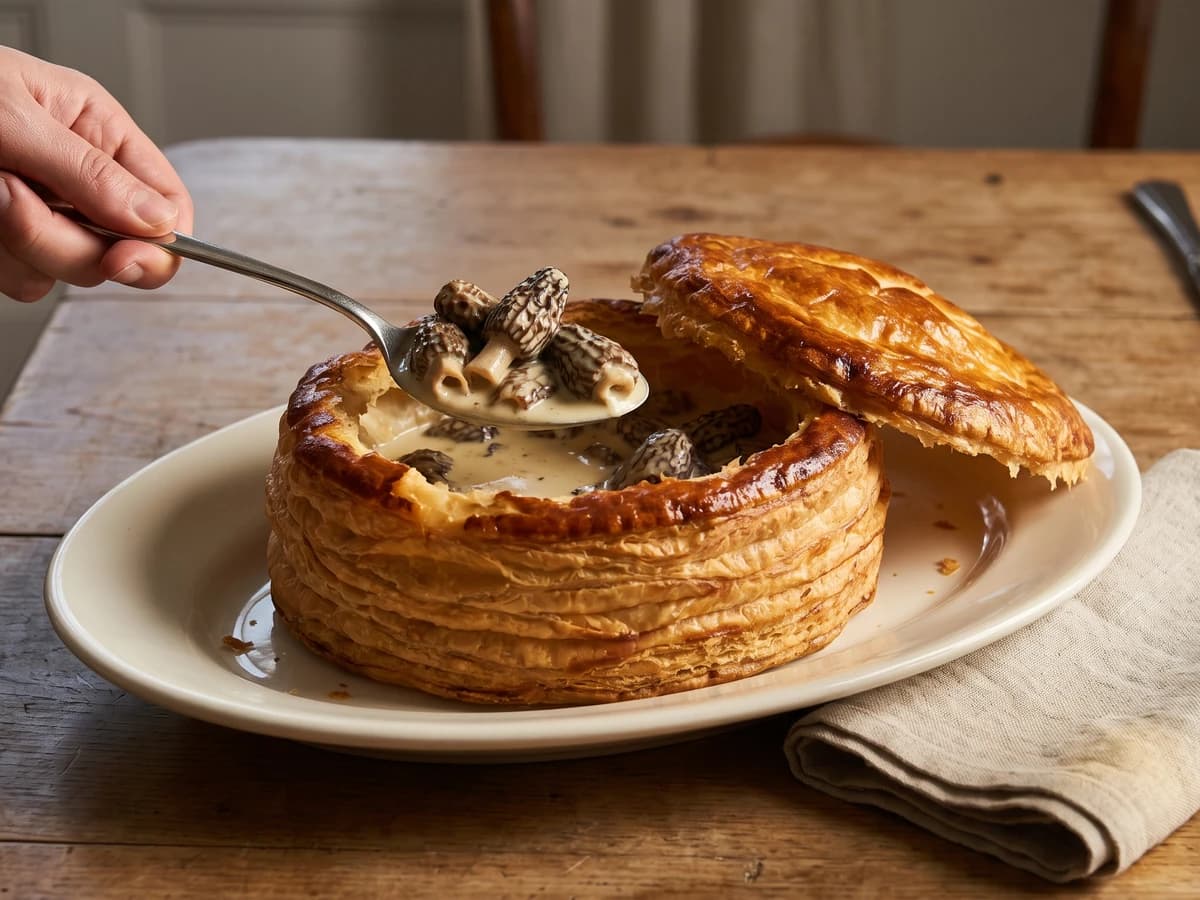
Morels surrender their liquor, then take it back as a glossy cream-and-butter sauce inside burnished puff pastry. The lesson is simple and absolute: reduce with patience, then heat gently and never boil.