Chef Juliette
Ordinary or White Consommé
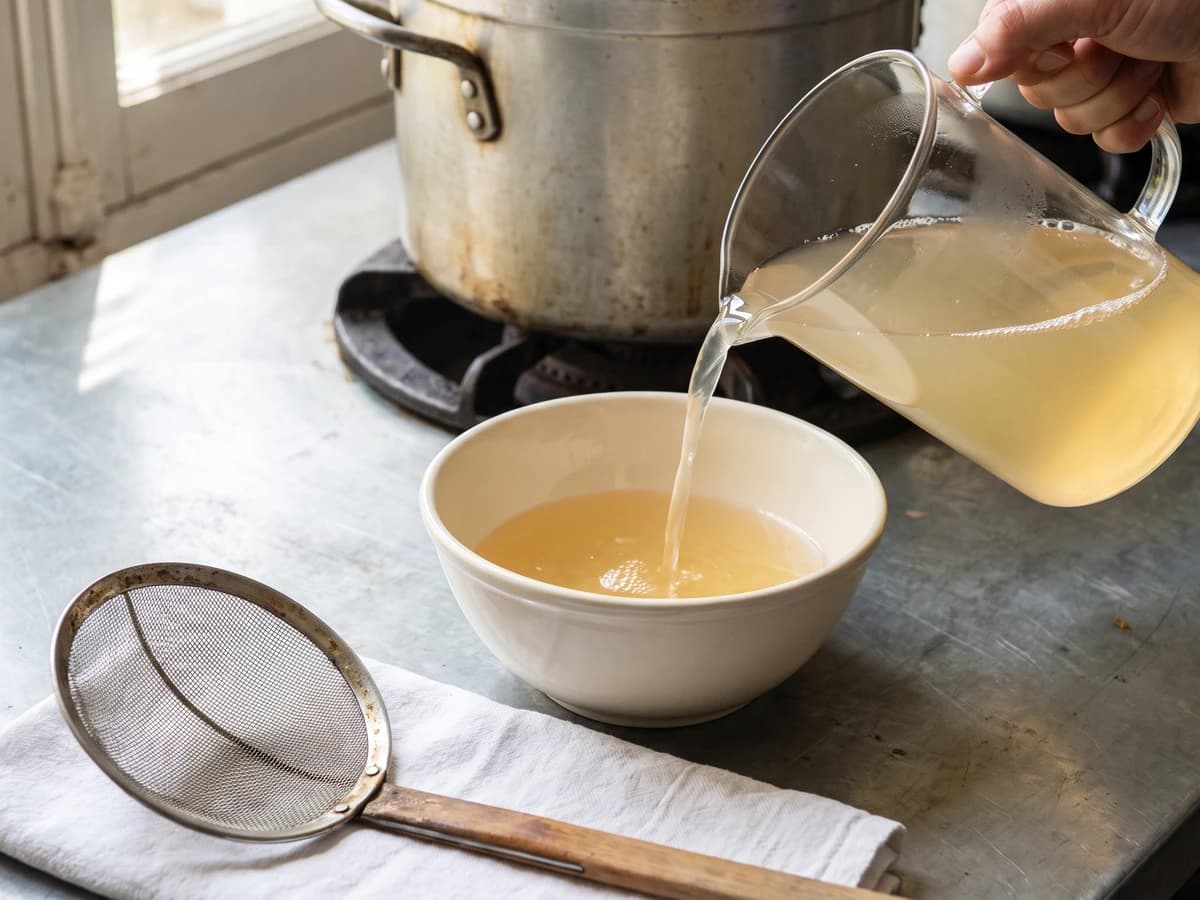
Beef shin, lean beef, and fowl begin in cold water and rise slowly toward a tremble. Skim before the boil, and you learn the quiet discipline that gives every clear French broth its backbone.
A cooking platform built around craft, culture, and the stories behind what we eat.
Created by Chef Juliette
Based on No. 2416, Raspberry Sauce, from Le Guide Culinaire (1907) by Auguste Escoffier
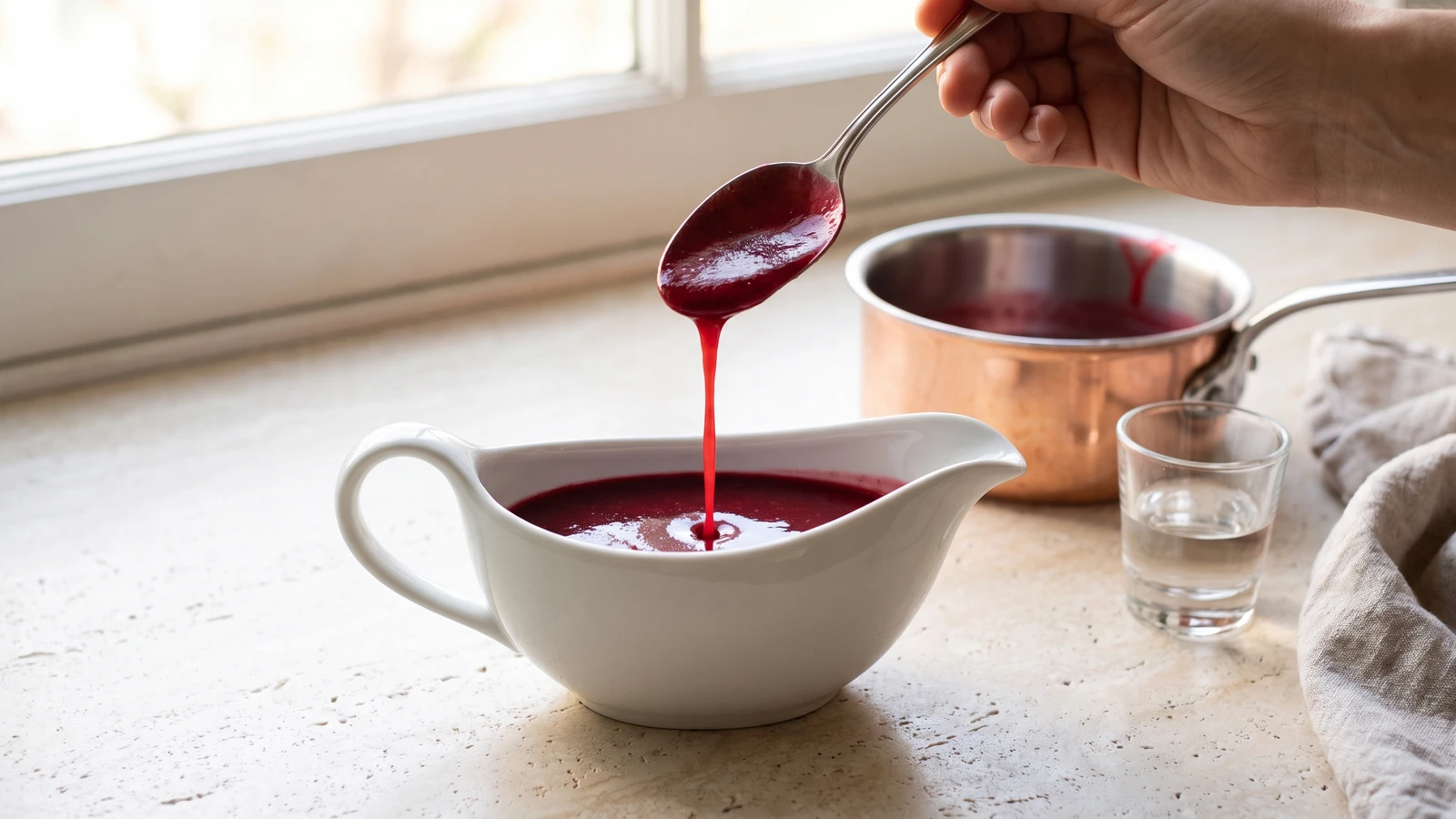
Ruby raspberry jelly, barely bound with arrowroot and scented with kirsch at the finish, makes a clear, generous sauce whose elegance depends on stopping before thickness becomes heaviness.
Sauce aux framboises (raspberry sauce) teaches restraint with starch. The jelly already holds body, sweetness, acidity, and brilliant fruit, so the arrowroot has only one task: help the warm sauce cling without turning it cloudy or pasty. Stop at the first slow bubble. That is the one true thing to know before you touch the pan.
The original formula assumed a saucier with prepared jelly at hand, melting whatever quantity service required and holding it ready for the next plate. At home, measured jars, a four-quart saucepan, and a batch of about two quarts give you the same intent for one cook, one stove, one evening. The holding pot and repeated last-minute melting were brigade scaffolding, so they go. Melting the jelly gently, binding it slightly with arrowroot, and adding kirsch at the end are the dish itself, and they remain in that order.
Finished properly, the sauce is vivid garnet, clear enough to catch the light, and fluid enough to fall from a spoon in a satin ribbon. The moment that matters is the arrowroot: whisk it in cold, heat it only until the sauce lightly coats the spoon, then stop.
Sauce aux framboises belongs to the French entremets table, where clear fruit jellies were loosened into dependable sauces for molded creams, puddings, and frozen desserts beyond the brief fresh-raspberry season. Kirsch gives this version an eastern accent familiar in Alsace, where cherry eau-de-vie has long perfumed pastry and preserved fruit. It is not a fresh coulis: beginning with seedless jelly is what gives the sauce its clarity, concentrated flavor, and smooth finish.
Quantity
7¼ cups (1.72 L / 2.32 kg)
Quantity
2 tablespoons (30 ml / 16 g)
Quantity
¼ cup (60 ml / 60 g)
Quantity
½ cup (120 ml / 112 g)
| Ingredient | Quantity |
|---|---|
| seedless raspberry jelly | 7¼ cups (1.72 L / 2.32 kg) |
| arrowroot | 2 tablespoons (30 ml / 16 g) |
| cold water | ¼ cup (60 ml / 60 g) |
| kirsch | ½ cup (120 ml / 112 g) |
Whisk the arrowroot with the cold water until completely smooth and milky, pressing out every small lump against the side of the bowl. Arrowroot settles quickly, so leave the whisk in the bowl and stir it again immediately before it enters the sauce.
Put the raspberry jelly in a four-quart heavy saucepan and set it over low heat. Stir steadily with a heatproof spatula, reaching into the corners, until the jelly has melted into a uniform ruby liquid. Keep it below a boil; hard heat darkens the fruit and needlessly reduces a sauce whose balance is already built.
Whisk the arrowroot slurry once more, then pour it into the melted jelly in a thin stream while whisking constantly. Raise the heat only enough to bring the sauce to its first slow bubbles, about 30 to 60 seconds, then remove it immediately. It should lightly coat the back of a spoon while still running freely. Prolonged boiling weakens arrowroot, while too much thickening makes the sauce dull and pasty. If it tightens into a paste, take it off the heat and whisk in hot water one tablespoon at a time until it pours again; if small lumps remain, pass it through the sieve. Ça se rattrape.
Let the pan stand off the heat for two minutes, then stir in the kirsch. Do not return the sauce to the boil. Adding the kirsch at the finish preserves its dry cherry perfume, which should follow the raspberry rather than overpower it.
Pass the sauce through a fine-mesh sieve into a heatproof pitcher or clean containers. Serve it warm or at room temperature with a charlotte, bavarois, rice pudding, poached fruit, or vanilla ice cream. For later use, divide it into smaller covered containers and refrigerate promptly; it will thicken as it cools, so rewarm it gently and loosen it with a teaspoon of water if necessary. À table!
1 serving (about 78g)
Culinary guides, cultural storytelling, and the editorial depth that makes cooking meaningful.
Discover Culinary ExplorerChef Juliette
Beef shin, lean beef, and fowl begin in cold water and rise slowly toward a tremble. Skim before the boil, and you learn the quiet discipline that gives every clear French broth its backbone.
Chef Juliette
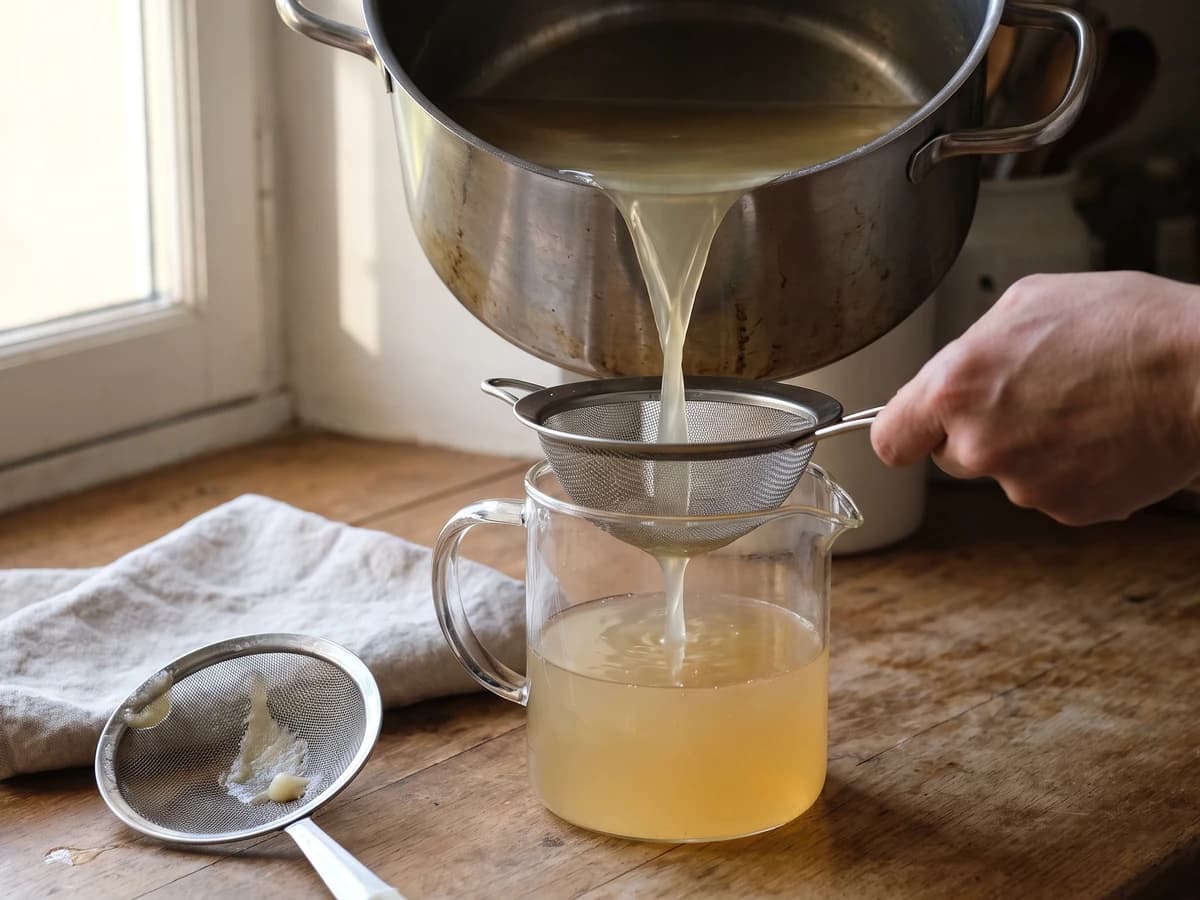
Break the veal bones small, then give them eight hours at a bare tremble. This pale, gelatinous fond becomes the quiet foundation beneath velouté, blanquette, and every sauce that must stay light.
Chef Juliette
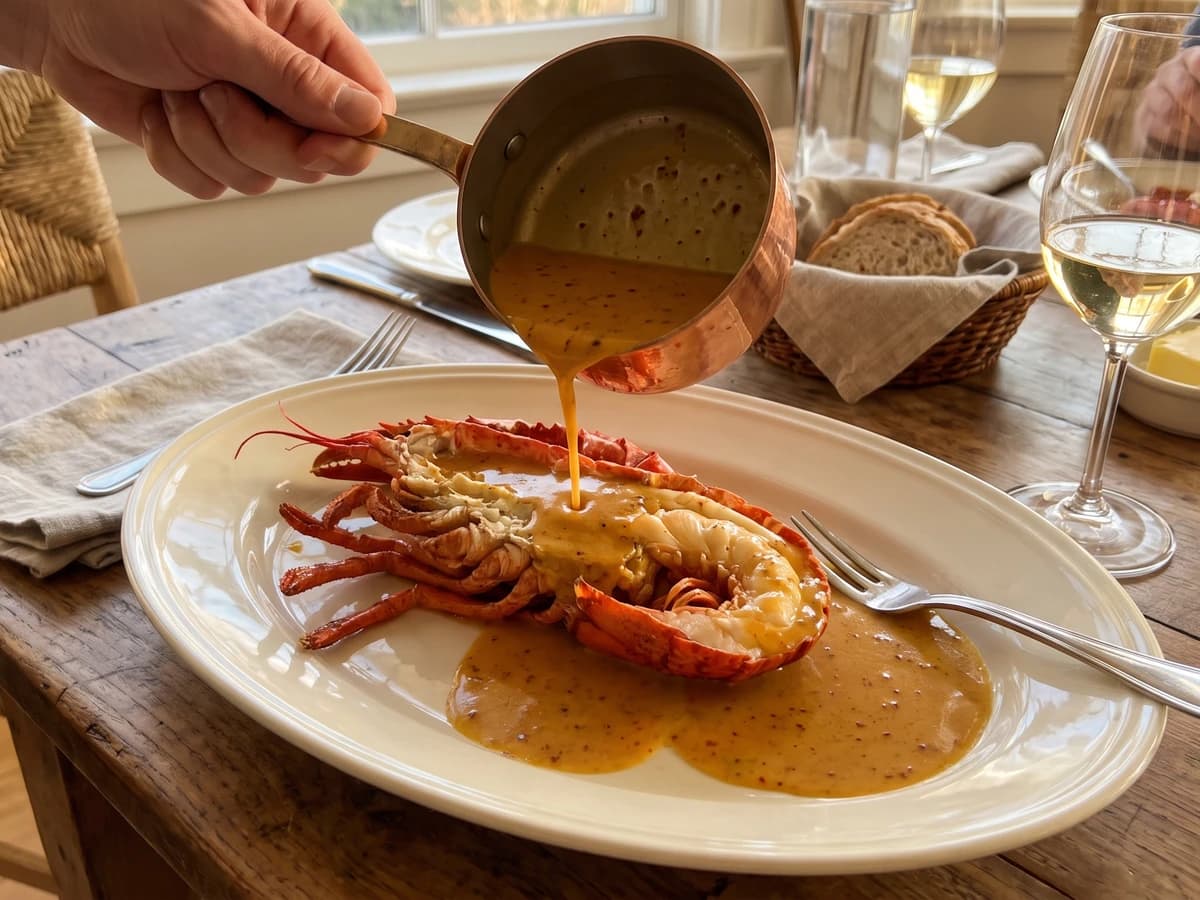
Sauce Orientale concentrates lobster-rich American Sauce with curry, then folds in cream away from the fire: a glossy, gently spiced derivative made for lobster, crayfish, and firm fish.
Chef Juliette
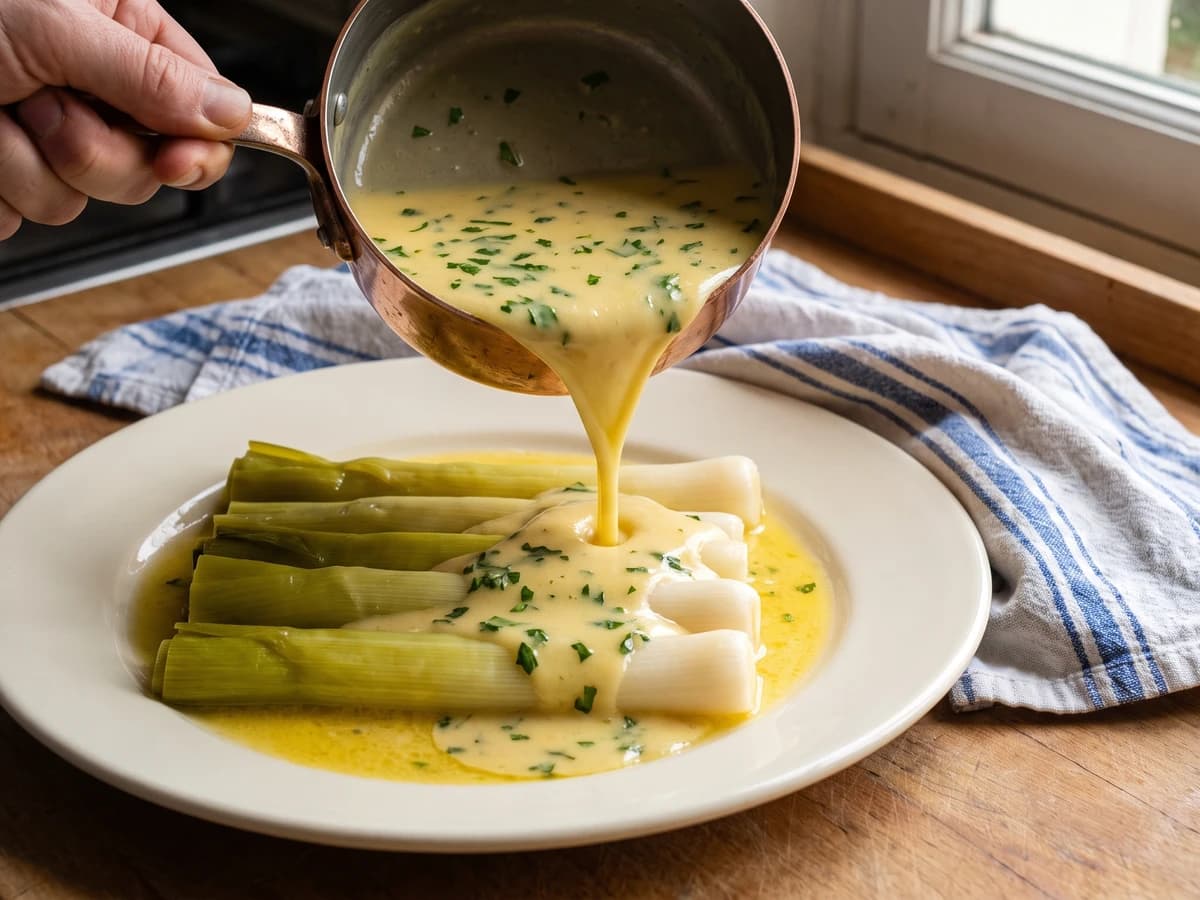
An old lesson in sauce families: Sauce Allemande takes mushroom liquor, then butter, lemon, and parsley, becoming a glossy Poulette for sheep's trotters, leeks, cauliflower, and anything needing gentle richness with a bright edge.