Chef Juliette
Ordinary or White Consommé
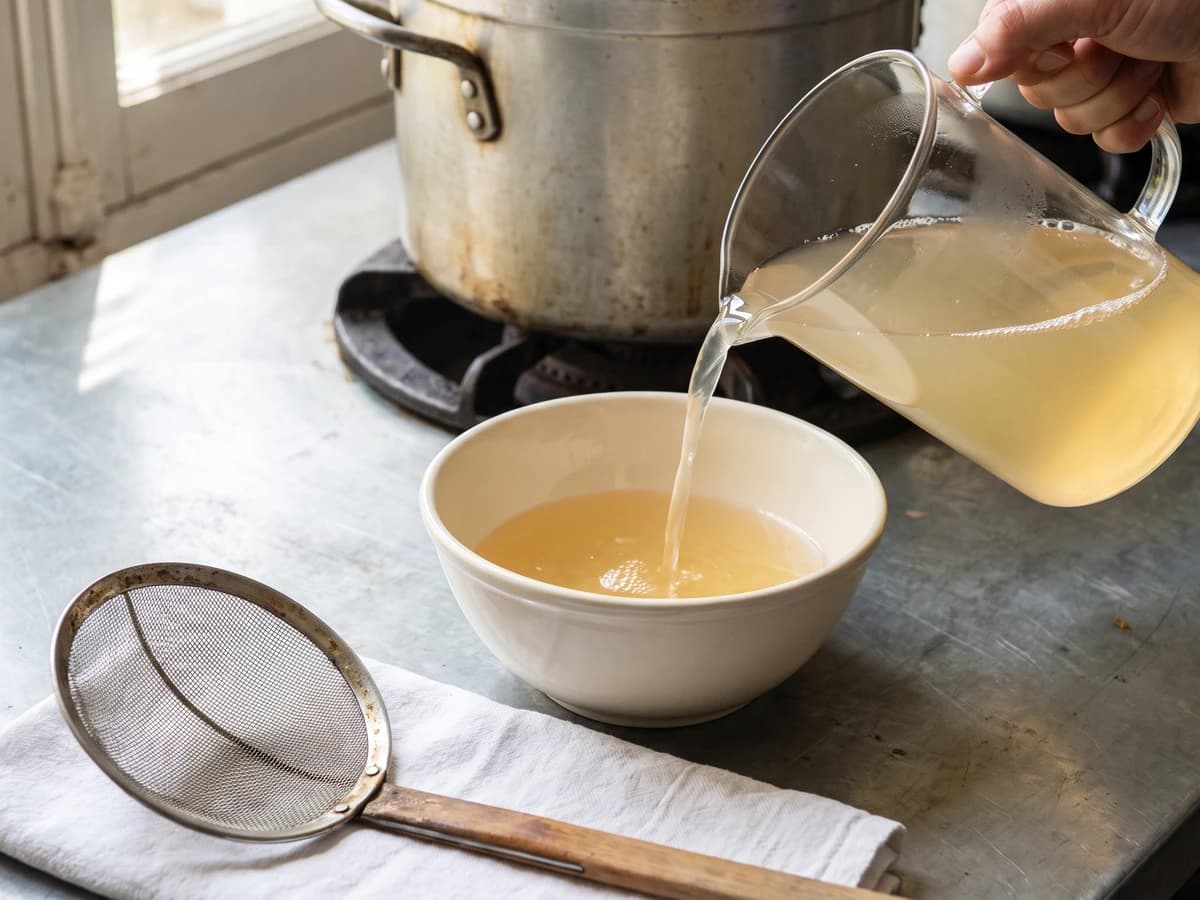
Beef shin, lean beef, and fowl begin in cold water and rise slowly toward a tremble. Skim before the boil, and you learn the quiet discipline that gives every clear French broth its backbone.
A cooking platform built around craft, culture, and the stories behind what we eat.
Created by Chef Juliette
Based on No. 2415, Cherry Sauce, from Le Guide Culinaire (1907) by Auguste Escoffier
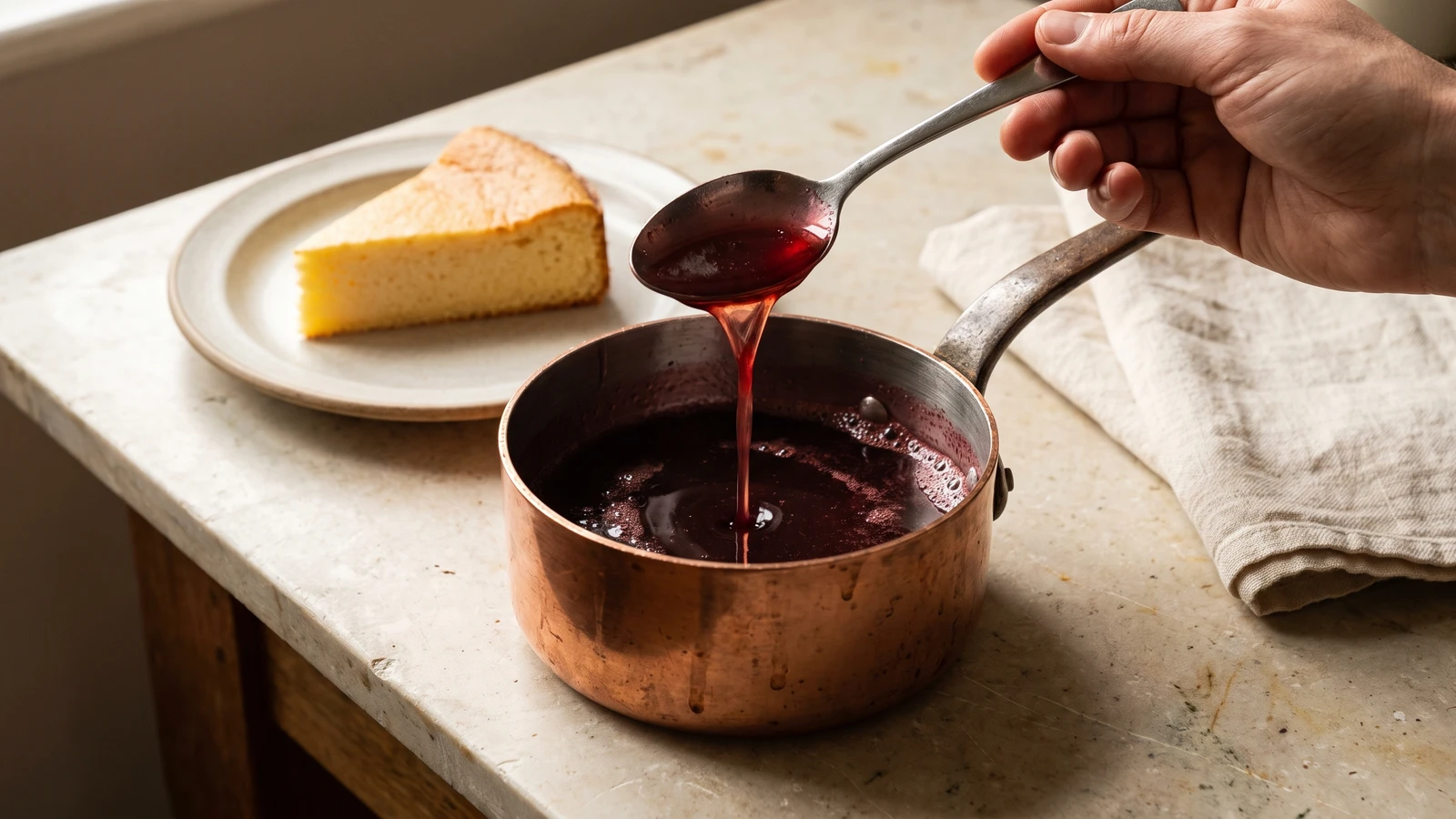
Sauce aux Cerises is an exercise in balance: clear cherry syrup, the same measure of tart red-currant jelly, and kirsch, joined gently into a garnet sauce that pours with a bright, clean finish.
Sauce aux Cerises (Cherry Sauce) teaches proportion before anything else: the syrup drained from stewed cherries and the red-currant jelly meet in equal measure. The jelly is not decoration and not merely more sweetness. Its tartness supplies the edge cooked cherries lose, while its pectin gives the sauce a clear, generous gloss.
The original instruction assumes a pan of stewed cherries already in service and a saucier who can take syrup from it without being told how much. At home, the honest equivalent is one batch of cherries, one sieve, and a measuring jug. Keeping fruit simmering through a full service was brigade scaffolding and can go; the equal measure and the kirsch finish are the dish and must stay. This batch makes about two quarts, one cook, one stove, one evening, and changes nothing except making the hidden preparation and quantity explicit.
Measure only after straining. That is the step that decides the sauce: guess at the syrup and the jelly becomes either a sweet lump or a thin afterthought; match it exactly, warm gently, and the Sauce aux Cerises pours in a wine-dark ribbon over a plain cake, crêpes, or cold cream.
Sauce aux Cerises belongs to the French classical dessert-sauce repertoire, with its clearest home in the Parisian service kitchen, where fruit syrups were kept beside preserved jellies for puddings, molded creams, and cakes. Red-currant jelly is the surprising essential, borrowed from the preserving pantry for its pectin and sharpness, which give cooked cherries both a clean edge and a pouring glaze. Kirsch brings the fruit-distilling tradition of Alsace and Franche-Comté into a sauce that passed easily from professional service to the bourgeois table because every part could be prepared ahead.
Quantity
About 12 cups (2.8 L / 1.8 kg)
fresh or frozen, pitted
Quantity
1 cup (240 ml / 200 g)
Quantity
2 cups (480 ml / 480 g)
divided
Quantity
4 cups (960 ml / about 1.28 kg)
Quantity
¼ cup (60 ml / about 56 g)
added off the heat
| Ingredient | Quantity |
|---|---|
| ripe sweet cherriesfresh or frozen, pitted | About 12 cups (2.8 L / 1.8 kg) |
| granulated sugar | 1 cup (240 ml / 200 g) |
| waterdivided | 2 cups (480 ml / 480 g) |
| red-currant jelly | 4 cups (960 ml / about 1.28 kg) |
| kirschadded off the heat | ¼ cup (60 ml / about 56 g) |
Put the cherries, sugar, and 1⅔ cups (400 ml) of the water into a heavy saucepan. Cover and bring them slowly to a gentle simmer, then uncover and cook for 20 to 25 minutes, stirring occasionally, until the cherries sag and release a deep garnet liquid. Keep the simmer quiet. A hard boil crushes the fruit, clouds the syrup, and drives away its fresh cherry perfume.
Set a fine-mesh sieve over a heatproof measuring jug and pour in the cherries and their liquid. Let the syrup drain for 15 minutes without pressing at first, then press the fruit gently enough to obtain exactly 4 cups (960 ml) of clear cherry syrup. If the measure is short, return the cherries to the pan with the reserved ⅓ cup (80 ml) water, simmer for 5 minutes, and strain again. Keep any syrup beyond the required measure separately; the equal measure begins here, and guessing will unbalance the sauce.
Pour the 4 cups (960 ml) cherry syrup into a clean saucepan and add the 4 cups (960 ml) red-currant jelly. Warm over low heat, stirring steadily, until the jelly dissolves completely and the sauce becomes translucent and glossy, about 6 to 8 minutes. Do not reduce it. The equal measure is the dish, not scaffolding. If the pan boils and the sauce tightens too far, take it off the heat and whisk in reserved cherry syrup or hot water, one tablespoon at a time, until it pours again. Ça se rattrape.
Take the saucepan off the heat and let the bubbling subside for 2 minutes. Stir in the kirsch gradually, tasting after the first 3 tablespoons before adding the last; it should perfume the cherries without turning the sauce raw or fiery. If the cooler kirsch makes the jelly tighten into threads, return the pan to the lowest heat and stir until smooth, but do not let it simmer.
Skim away any surface bubbles, then pour the Sauce aux Cerises into clean heatproof jars or a warm saucière. It will thicken as it cools but should remain pourable. Serve it warm over crêpes or a plain gâteau, or cool it for molded creams, riz au lait, and vanilla ice cream. If chilled sauce sets too firmly, warm it gently with a spoonful of water or reserved syrup; never boil it again, or the kirsch loses its fragrance. À table!
1 serving (about 75g)
Culinary guides, cultural storytelling, and the editorial depth that makes cooking meaningful.
Discover Culinary ExplorerChef Juliette
Beef shin, lean beef, and fowl begin in cold water and rise slowly toward a tremble. Skim before the boil, and you learn the quiet discipline that gives every clear French broth its backbone.
Chef Juliette
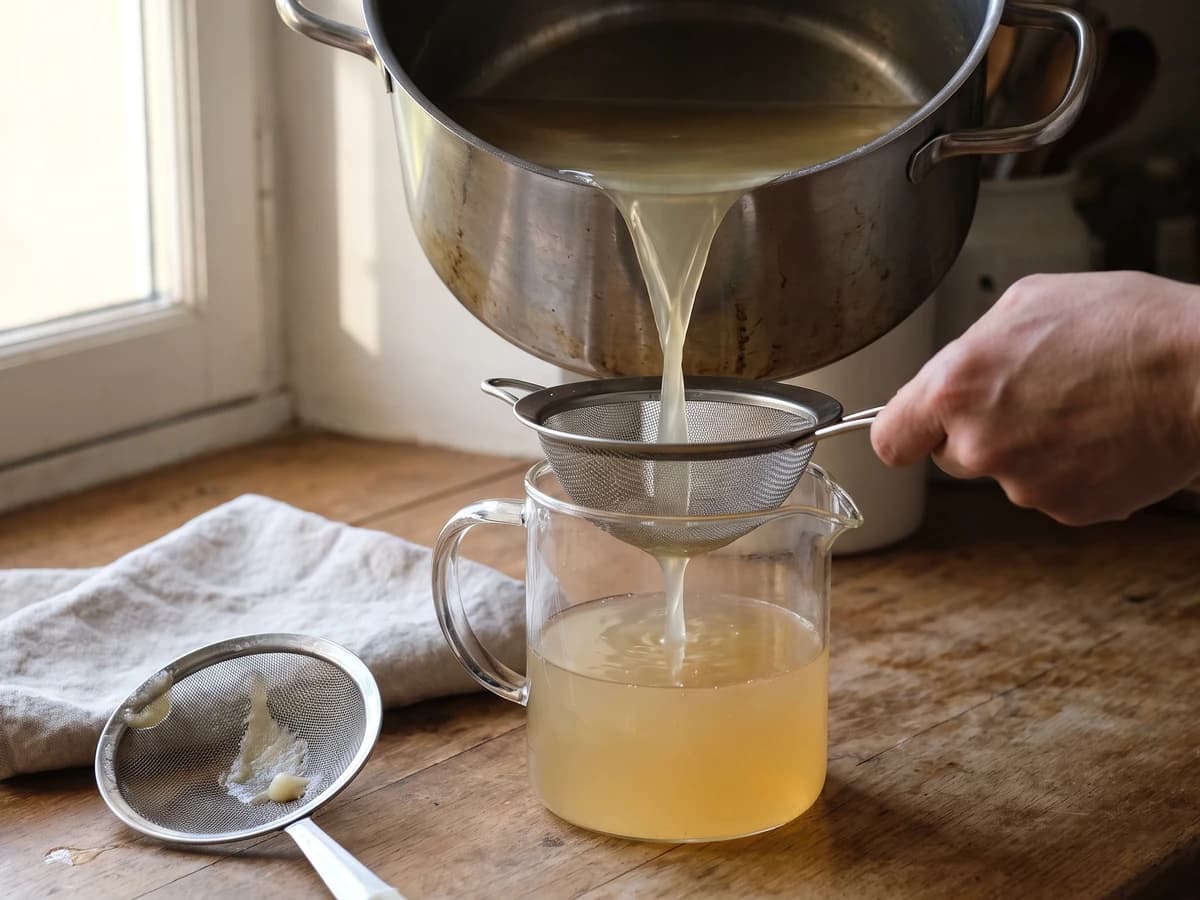
Break the veal bones small, then give them eight hours at a bare tremble. This pale, gelatinous fond becomes the quiet foundation beneath velouté, blanquette, and every sauce that must stay light.
Chef Juliette
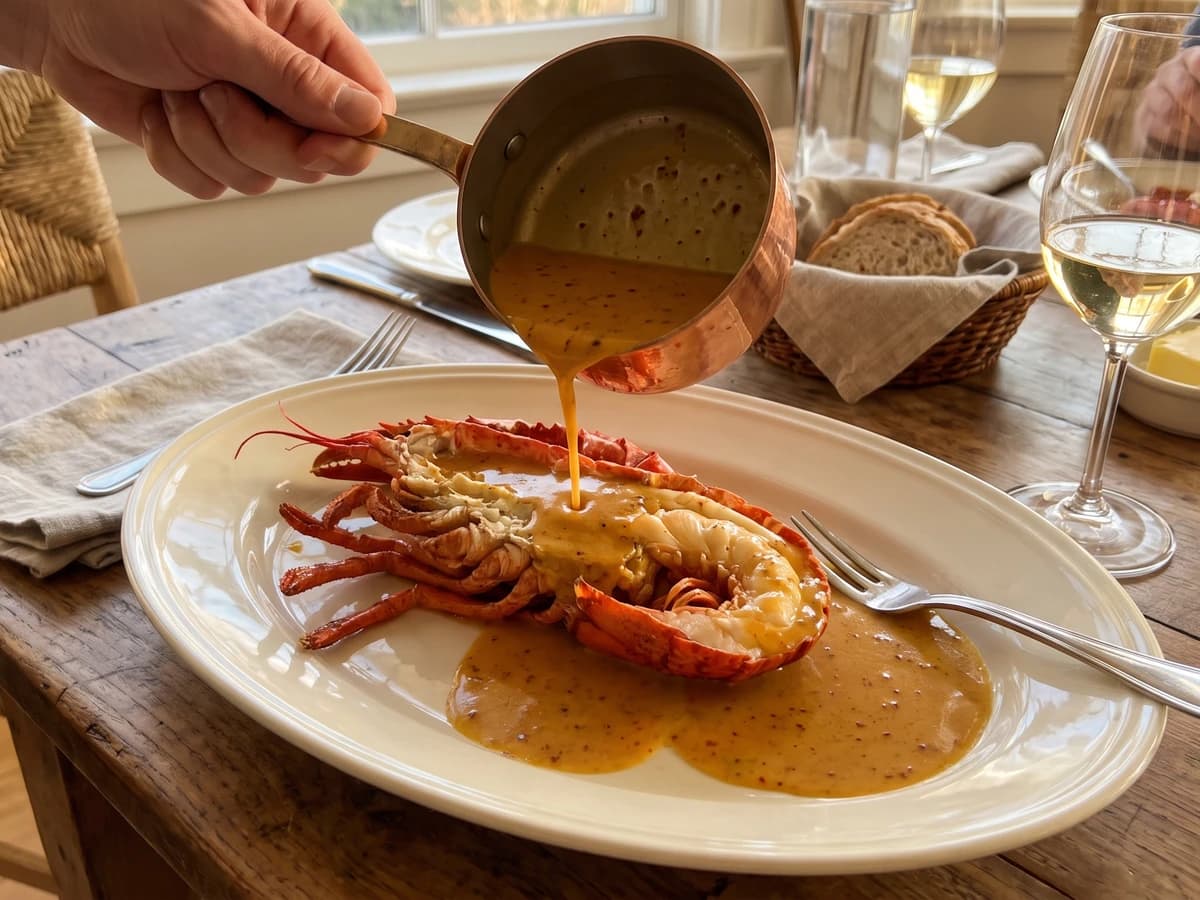
Sauce Orientale concentrates lobster-rich American Sauce with curry, then folds in cream away from the fire: a glossy, gently spiced derivative made for lobster, crayfish, and firm fish.
Chef Juliette
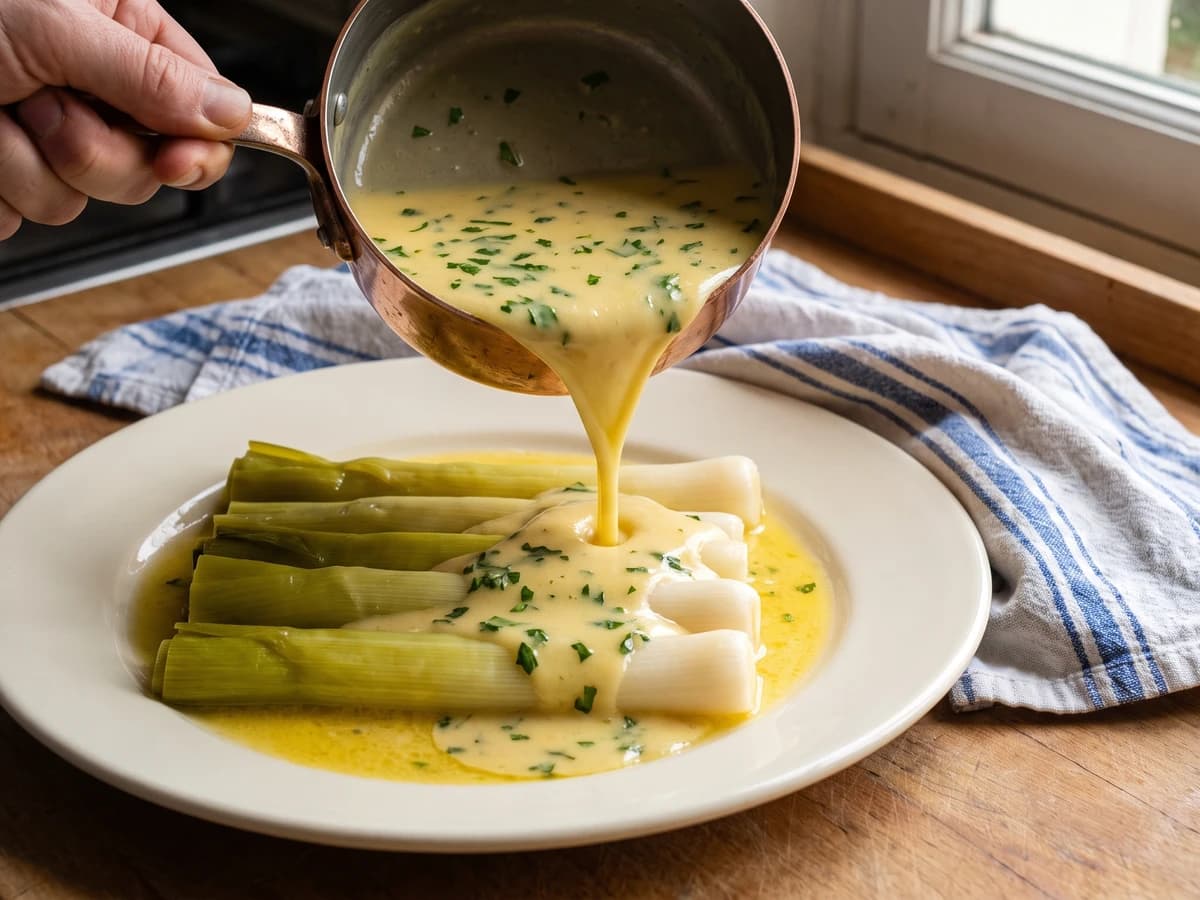
An old lesson in sauce families: Sauce Allemande takes mushroom liquor, then butter, lemon, and parsley, becoming a glossy Poulette for sheep's trotters, leeks, cauliflower, and anything needing gentle richness with a bright edge.