Chef Juliette
Ordinary or White Consommé
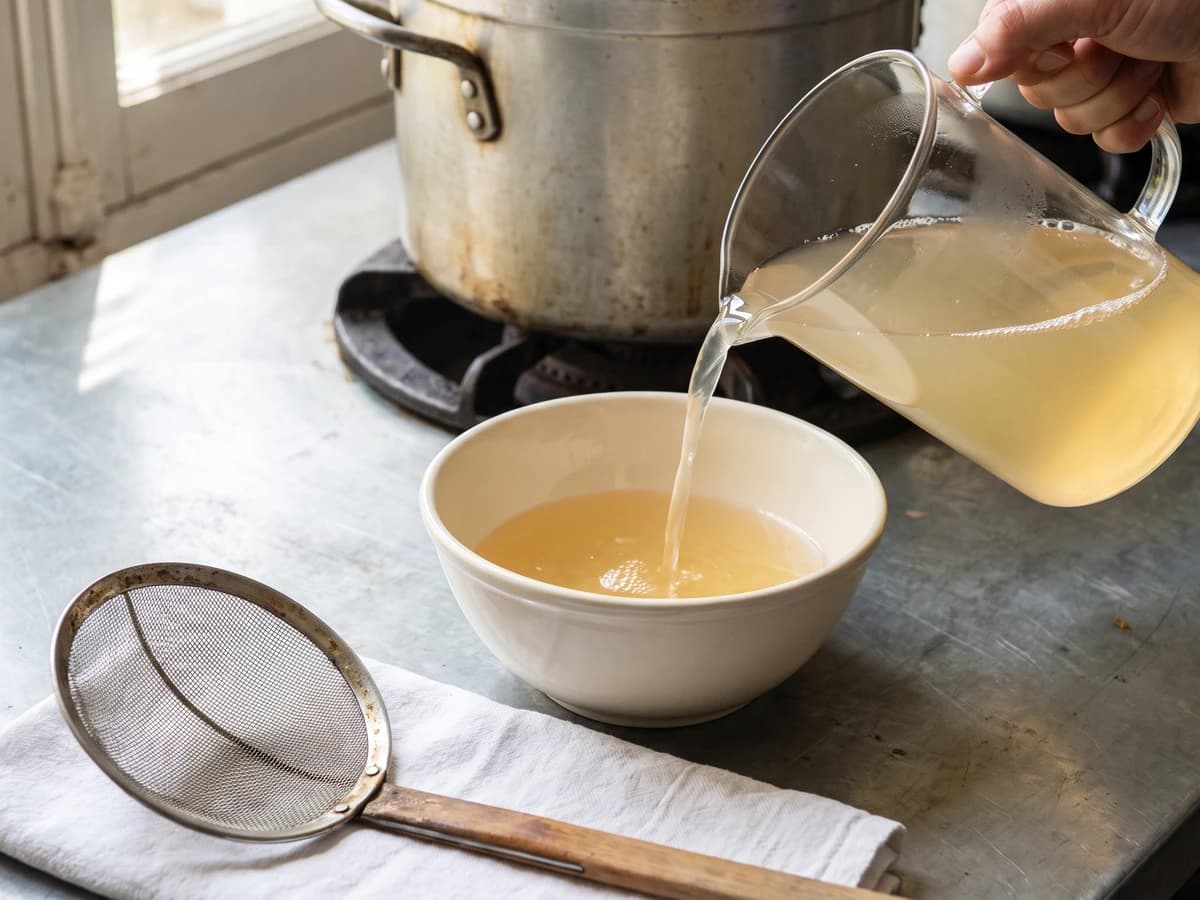
Beef shin, lean beef, and fowl begin in cold water and rise slowly toward a tremble. Skim before the boil, and you learn the quiet discipline that gives every clear French broth its backbone.
A cooking platform built around craft, culture, and the stories behind what we eat.
Created by Chef Juliette
Based on No. 2414, Greengage or Mirabelle Sauce, from Le Guide Culinaire (1907) by Auguste Escoffier
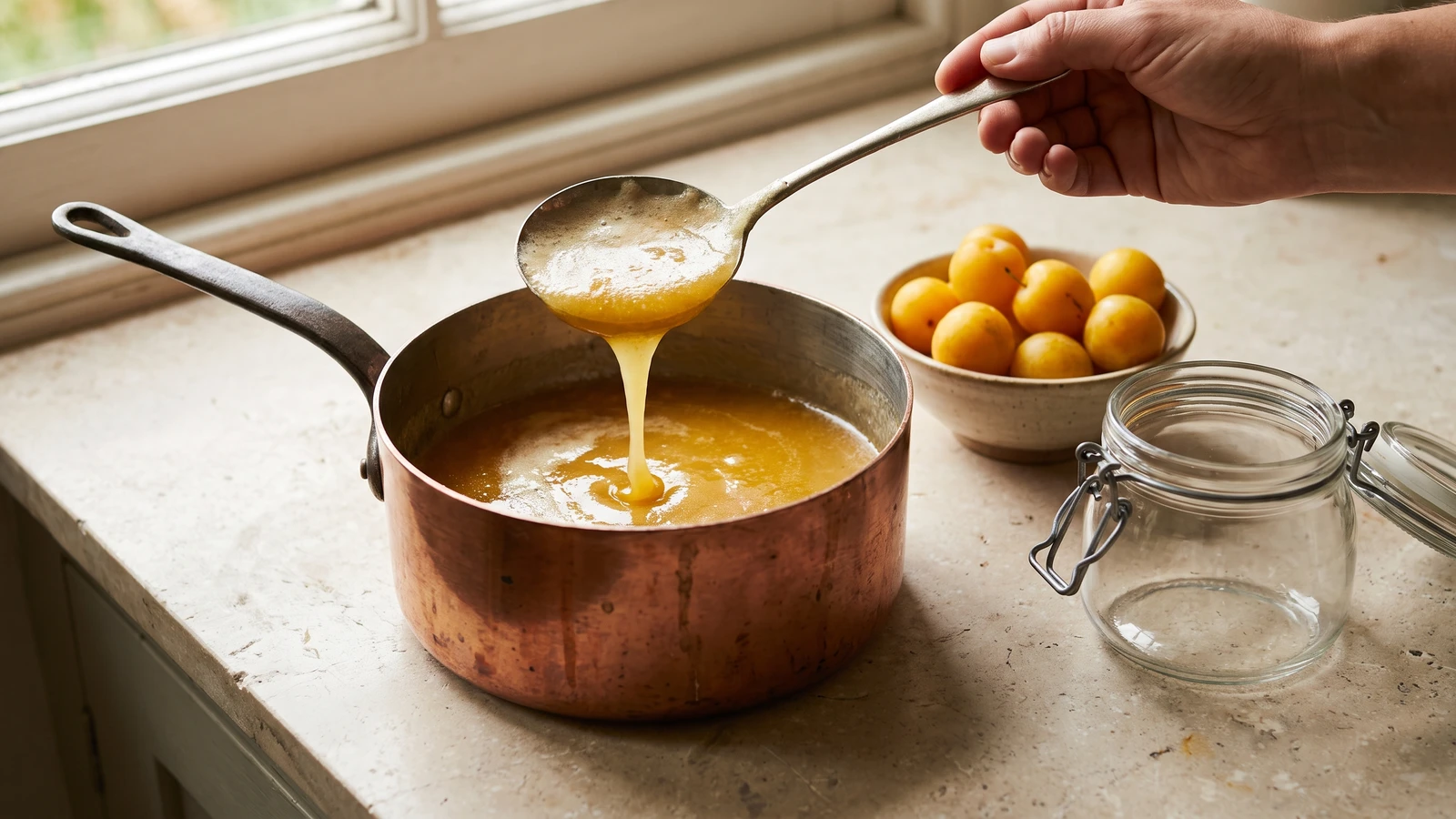
Ripe green or golden plums become a clear, satin-smooth sauce with light syrup and kirsch. The lesson is restraint: sieve carefully, skim patiently, and never boil away the fruit's perfume.
Sauce aux reines-claudes ou aux mirabelles teaches a precise lesson: clarity comes from gentle handling, not merely from passing fruit through a sieve. The finished sauce should be jewel-bright and glossy rather than transparent, with the pure taste of ripe plum carried on a light syrup and the dry cherry perfume of kirsch.
The book could point its saucier toward the apricot-sauce method because the fruit purée, syrup, and fine sieves were already waiting. A home kitchen offers one heavy pan, a fine-mesh sieve, and syrup made in minutes. Here, 4 pounds of fruit becomes about 2 quarts of sauce. The brigade shorthand and the pot of syrup held ready are scaffolding, so they go; the sequence is the dish and stays intact: soften the fruit, sieve it, let it down with syrup, skim it clear, then add kirsch away from the heat. One cook, one stove, one evening.
Do not rush the skimming or attack the sauce with a whisk. Air and hard boiling make it cloudy, while a bare tremble lets the foam gather where you can lift it away. That quiet simmer is the one step that decides the sauce.
The mirabelle version belongs most clearly to Lorraine, especially the orchards around Nancy and Metz, where the small golden plum appears in preserves, tarts, compotes, and eaux-de-vie. The reine-claude has a wider French orchard life, with especially prized fruit grown around Moissac in Quercy, and both plums traveled from household preserving pans into pastry kitchens as sieved dessert sauces. In the classical sense, clear describes a sauce free of foam, skin, and cloudy air bubbles, not a transparent syrup.
Quantity
9 cups whole fruit (2.1 liters / 1.8 kg)
washed, halved, and stoned
Quantity
1¼ cups (300 ml / 250 g)
Quantity
1½ cups (360 ml / 360 g)
divided
Quantity
¼ cup (60 ml / 56 g)
| Ingredient | Quantity |
|---|---|
| ripe but sound greengages or mirabelleswashed, halved, and stoned | 9 cups whole fruit (2.1 liters / 1.8 kg) |
| granulated sugar | 1¼ cups (300 ml / 250 g) |
| waterdivided | 1½ cups (360 ml / 360 g) |
| kirsch | ¼ cup (60 ml / 56 g) |
Choose ripe fruit with fragrant flesh but no fermentation, mould, or leaking bruises. Wash it gently, halve it, and remove every stone. Cut large greengages into quarters; mirabelles may remain in halves. Keep any clear juice released on the board and add it to the pan.
Put the sugar and 1 cup (240 ml / 240 g) of the water into a small saucepan. Warm gently, stirring only until the sugar has dissolved, then bring it to a quiet boil for 3 minutes. Lift away any pale foam and set the clear syrup aside. If crystals form around the edge, add 2 tablespoons (30 ml / 30 g) of the remaining water and warm gently until they dissolve. Ça se rattrape.
Put the prepared fruit into a wide, heavy saucepan with the remaining water, about ⅜ cup plus 2 teaspoons (120 ml / 120 g). Cover and cook over low heat for 8 minutes, until the fruit releases its juice, then uncover and hold it at a bare simmer for 10 to 15 minutes. Stir occasionally with a wooden spoon. Stop when the flesh collapses readily under the spoon but still smells fresh; browning or a hard boil would muddy both colour and flavour.
While the fruit is still warm, pass it through the fine disc of a food mill, then through a fine-mesh sieve into a clean saucepan. If you have no food mill, work directly through the sieve in manageable batches with a flexible scraper. Press steadily rather than beating the pulp, and scrape the smooth sauce from the underside. Discard the skins and fibres. Do not use a blender, which chops the skins into the sauce and whips in the air that clarity cannot tolerate.
Warm the sieved fruit over low heat and add the hot syrup about ¼ cup (60 ml) at a time, stirring slowly after each addition. Stop when the sauce falls from the spoon in a continuous glossy sheet and measures about 2 quarts (1.9 liters); the exact amount of syrup depends on the fruit's ripeness and natural juice. Bring the sauce only to a bare tremble, then skim every patch of foam from the surface. If it becomes too thin, simmer it gently before adding the kirsch until it regains a light coating consistency. Do not race it with fierce heat. Ça se rattrape.
Take the pan completely off the heat and stir in the kirsch with three or four slow turns of the spoon. Taste once the spirit has dispersed: the plum should lead and the dry cherry perfume should follow. Skim once more if a final veil of foam rises. Serve the sauce warm, at room temperature, or chilled with a bavarois, baked custard, rice pudding, charlotte, or plain vanilla ice cream. À table!
1 serving (about 65g)
Culinary guides, cultural storytelling, and the editorial depth that makes cooking meaningful.
Discover Culinary ExplorerChef Juliette
Beef shin, lean beef, and fowl begin in cold water and rise slowly toward a tremble. Skim before the boil, and you learn the quiet discipline that gives every clear French broth its backbone.
Chef Juliette
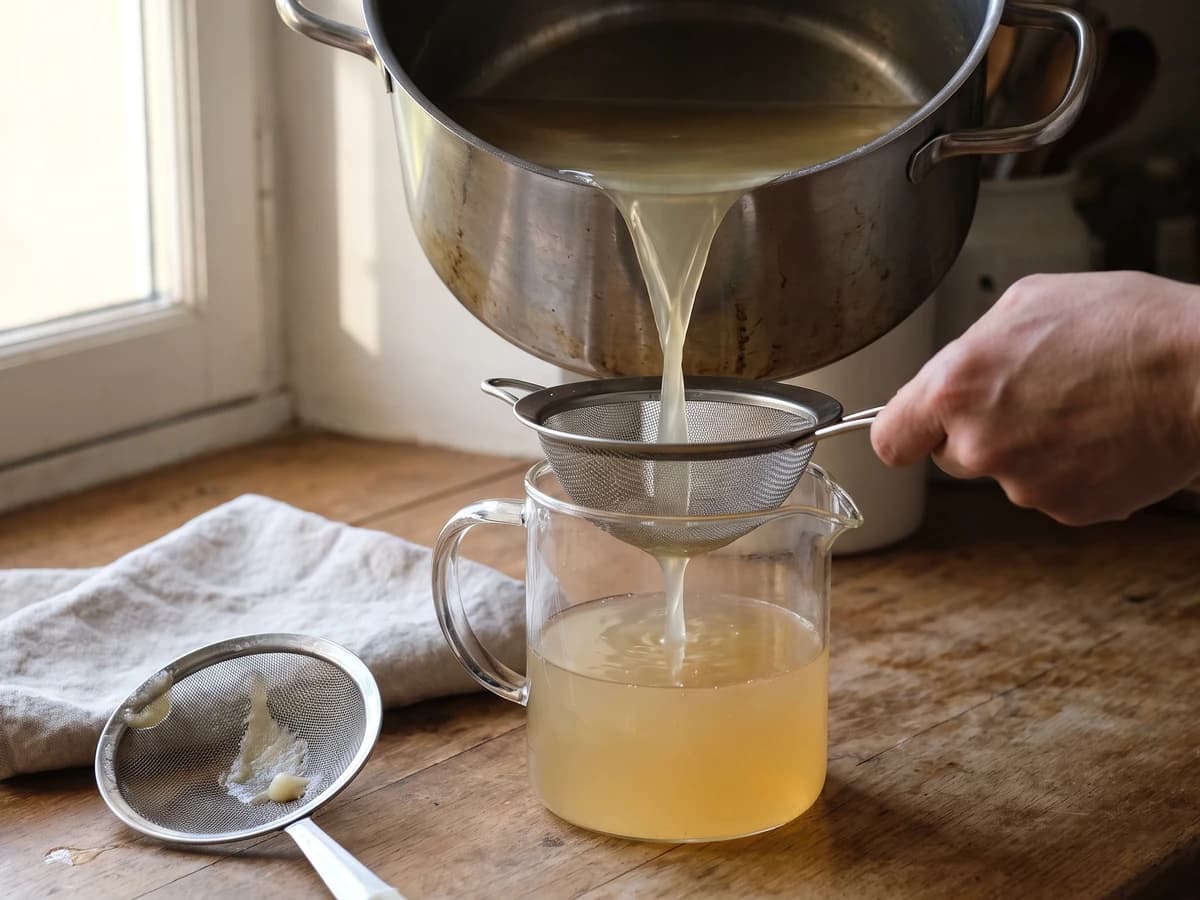
Break the veal bones small, then give them eight hours at a bare tremble. This pale, gelatinous fond becomes the quiet foundation beneath velouté, blanquette, and every sauce that must stay light.
Chef Juliette
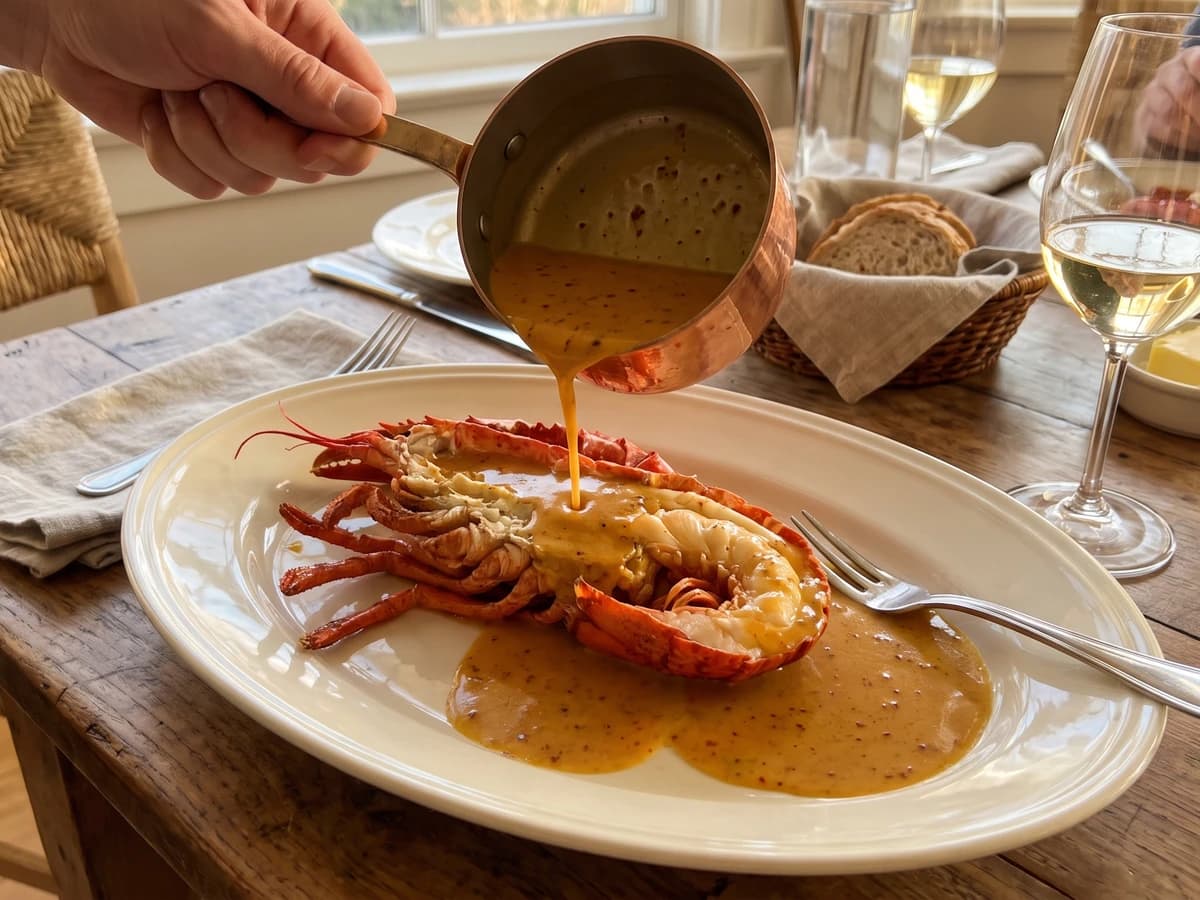
Sauce Orientale concentrates lobster-rich American Sauce with curry, then folds in cream away from the fire: a glossy, gently spiced derivative made for lobster, crayfish, and firm fish.
Chef Juliette
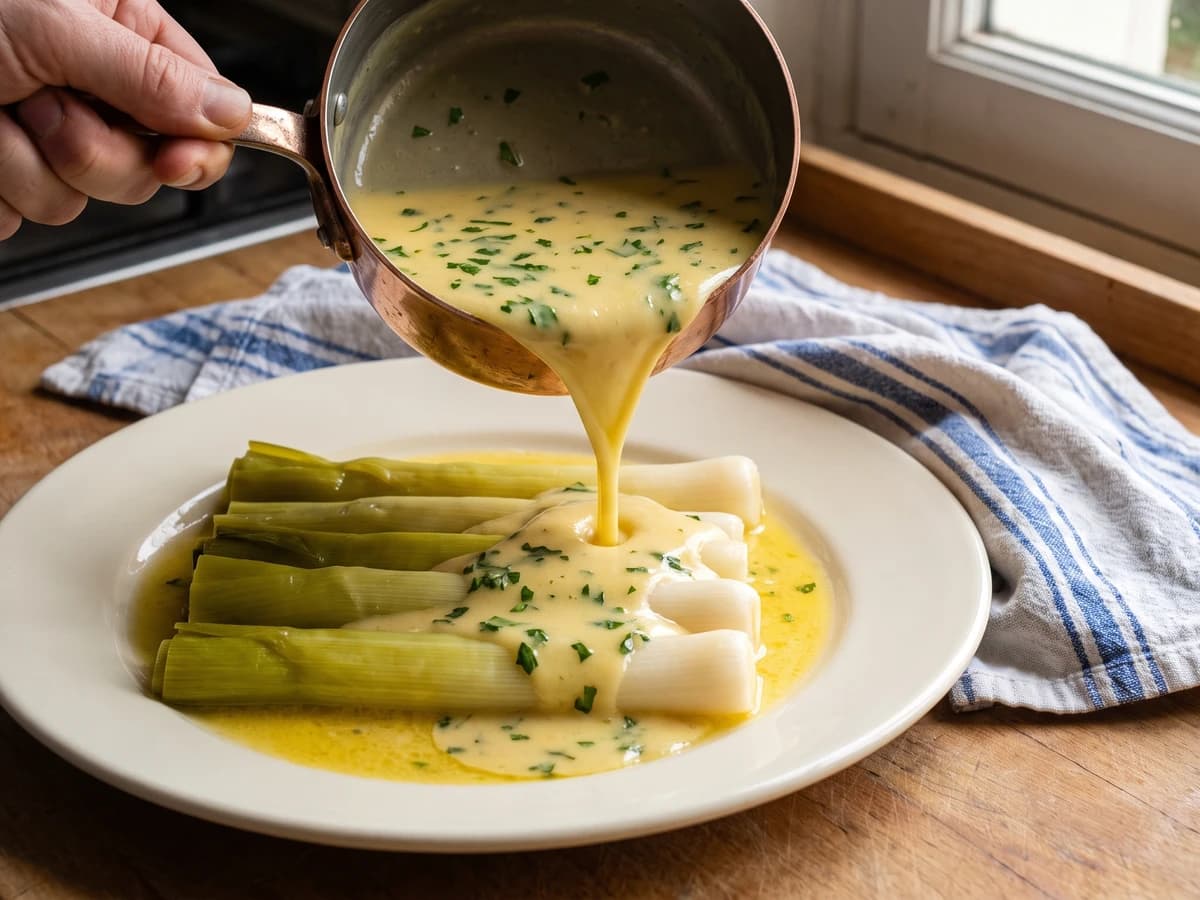
An old lesson in sauce families: Sauce Allemande takes mushroom liquor, then butter, lemon, and parsley, becoming a glossy Poulette for sheep's trotters, leeks, cauliflower, and anything needing gentle richness with a bright edge.