Culinary Explorer

A cooking platform built around craft, culture, and the stories behind what we eat.
Discover Culinary Explorer
Red-currant Sauce

Red-currant Sauce

Created by Chef Juliette

Based on No. 2411, Red-currant Sauce, from Le Guide Culinaire (1907) by Auguste Escoffier

Sauce aux groseilles rouges proves that a finished preserve can be a sauce foundation: melt it gently, sharpen it with kirsch, and use arrowroot only when the pudding asks for a closer cling.

Sauces & Condiments
French
Quick Meal
Make Ahead
Holiday
5 min
Active Time
10 min cook15 min total
YieldAbout 2 quarts

Sauce aux groseilles rouges teaches a small but essential truth: a preserve can be a finished sauce foundation when heat is used only to loosen it, not to cook it again. The jelly already holds fruit, sugar, acidity, and body; dry kirsch cuts through that sweetness with the perfume of cherries. Your work is restraint.

The source reads like a note passed to a saucier: melt the jelly, flavour it with kirsch, and use arrowroot if more body is wanted. It assumed a trained hand could judge both quantity and consistency without numbers. For one cook, one stove, one evening, I have fixed the proportions at about 2 quarts, supplied a heavy saucepan as the honest home equivalent, and made the cold arrowroot slurry explicit. The brigade shorthand is scaffolding and can go; the jelly-kirsch sequence is the dish and stays.

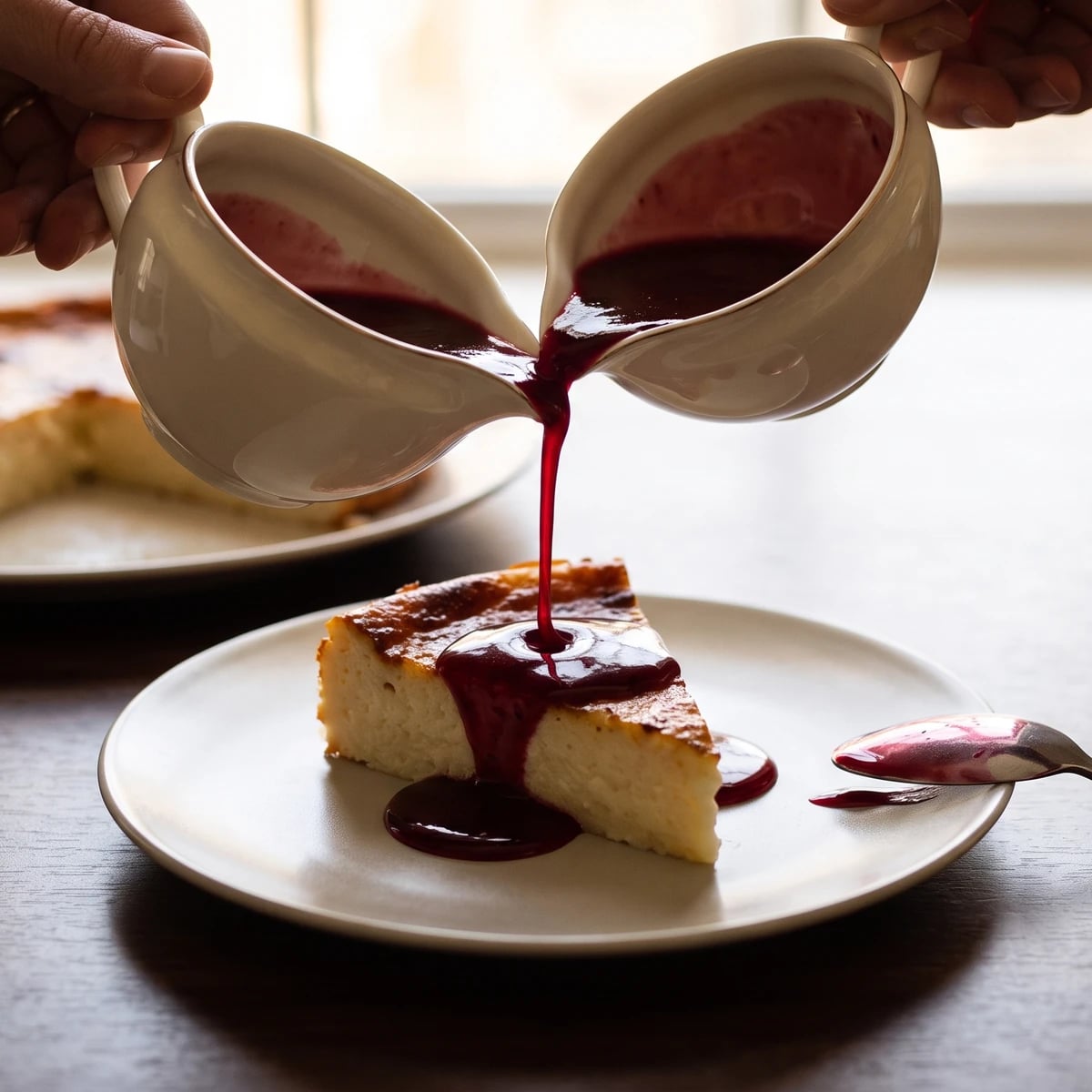
When it is right, the sauce is translucent garnet, bright with currant and dry cherry, flowing from a spoon in a ribbon rather than dropping like jam. The first step decides everything: melt the jelly over low heat and never let it boil.

Sauce aux groseilles rouges belongs to the classical French dessert-sauce repertory, where the preserving cupboard supplied jewel-clear companions to warm puddings, poached fruit, and molded creams. Kirsch gives this formula an Alsatian accent, drawing on the dry cherry eau-de-vie distilled in Alsace and the Vosges, though the method traveled wherever a pastry kitchen kept fruit jellies at hand. Arrowroot was valued because it tightened the sauce without clouding its garnet color, unlike flour.

The technique, the tradition, and the story behind every dish.

Discover Culinary Explorer

Ingredients

red-currant jelly

Quantity

7½ cups (1.8 L / 2.4 kg)

dry kirsch eau-de-vie

Quantity

½ cup (120 ml / 113 g)

arrowroot (optional)

Quantity

2 tablespoons (30 ml / 16 g)

divided

cold water (optional)

Quantity

¼ cup (60 ml / 60 g)

only if using arrowroot

Equipment Needed

  • 4-quart (3.8 L) heavy-bottomed saucepan
  • Silicone spatula
  • Balloon whisk
  • Fine-mesh sieve
  • Heatproof storage jars

Instructions

  1. 1

    Melt the jelly gently

    Put the red-currant jelly in a 4-quart heavy saucepan and set it over low heat. Stir slowly with a silicone spatula, reaching into the corners, until the jelly loosens into a smooth, translucent garnet liquid, 6 to 8 minutes. Do not let it boil. Boiling dulls the fresh currant edge and reduces the jelly back toward stickiness when it cools.

    If bubbles begin breaking across the surface, lift the pan from the heat and stir for a minute before continuing at a lower setting. The jelly needs only enough warmth to flow.
  2. 2

    Sharpen with kirsch

    Take the pan off the heat and whisk in the kirsch in four additions, incorporating each before adding the next. The sauce should smell first of currants and then of clean, dry cherry. If it turns streaky or gathers around the whisk, return it to the lowest heat for 20 to 30 seconds while whisking; it will smooth again. Do not boil after adding the kirsch, or its bright aroma will leave the pan before the sauce reaches the table.

  3. 3

    Thicken only if needed

    For a sauce that pours freely from a sauceboat, leave it unthickened. If it must cling to a pudding or poached fruit, whisk 1½ tablespoons (12 g) of the arrowroot with 3 tablespoons (45 ml / 45 g) of the cold water until completely smooth. Return the sauce to low heat, stir the slurry once more, and drizzle it in while whisking. Warm only until the sauce gives its first lazy bubble and a ribbon briefly marks the surface, then remove it immediately; prolonged boiling weakens arrowroot. If the sauce is lumpy, pass it through a fine sieve. If it is too thick, whisk in warm water a tablespoon at a time. If it remains too thin, blend the reserved arrowroot and water and repeat. Ça se rattrape.

  4. 4

    Serve with confidence

    Let the sauce settle for a minute, then transfer the amount needed to a warmed sauceboat. Serve it warm over gâteau de riz, baked custards, or poached pears, or let it cool to room temperature for cold creams and ice cream. If it begins to reset while waiting, loosen it over the lowest heat, stirring constantly. À table!

Chef Tips

  • Choose a clear, tart red-currant jelly, not a conserve filled with berries or seeds. The jelly is the sauce's entire foundation, so an overly sweet one gives the kirsch nothing to sharpen.
  • Kirsch means dry, clear cherry eau-de-vie. Sweet cherry liqueur or syrup changes both the balance and the texture; pleasant as those may be, they make another sauce.
  • Arrowroot is optional for a reason. Leave it out when the sauce will be passed at the table, and use it when the sauce must sit neatly on a molded pudding or poached fruit. The aim is a light cling, never a gel.
  • Serve this with gâteau de riz, semolina pudding, baked custard, poached pears, or plain vanilla ice cream. Rich, quiet desserts give the currant and kirsch room to speak.
  • The kirsch is only briefly heated, so the finished sauce retains alcohol. Keep that in mind when choosing the table it will serve.

Advance Preparation

  • Make the unthickened sauce up to 5 days ahead. Cool it promptly, cover, and refrigerate; it will set softly in the cold, then return to a pouring consistency over low heat.
  • If using arrowroot, thicken only the amount needed during the final reheating. The unthickened base stores more cleanly, and the kirsch keeps its brighter aroma when it is warmed only once.

Frequently Asked Questions

Nutrition Information

1 serving (about 40g)

Calories
100 calories
Total Fat
0 g
Saturated Fat
0 g
Trans Fat
0 g
Unsaturated Fat
0 g
Cholesterol
0 mg
Sodium
10 mg
Total Carbohydrates
25 g
Dietary Fiber
0 g
Sugars
23 g
Protein
0 g

Note: Chef personas and recipes are created with AI assistance. Cook with care: follow safe food-handling practices, check doneness with a thermometer when needed, and adapt for allergies and your kitchen.

Where cooking meets culture.

Culinary guides, cultural storytelling, and the editorial depth that makes cooking meaningful.

Discover Culinary Explorer

More from Entremets (Sweets) - Various Custards

Browse the full collection