Chef Juliette
Ordinary or White Consommé
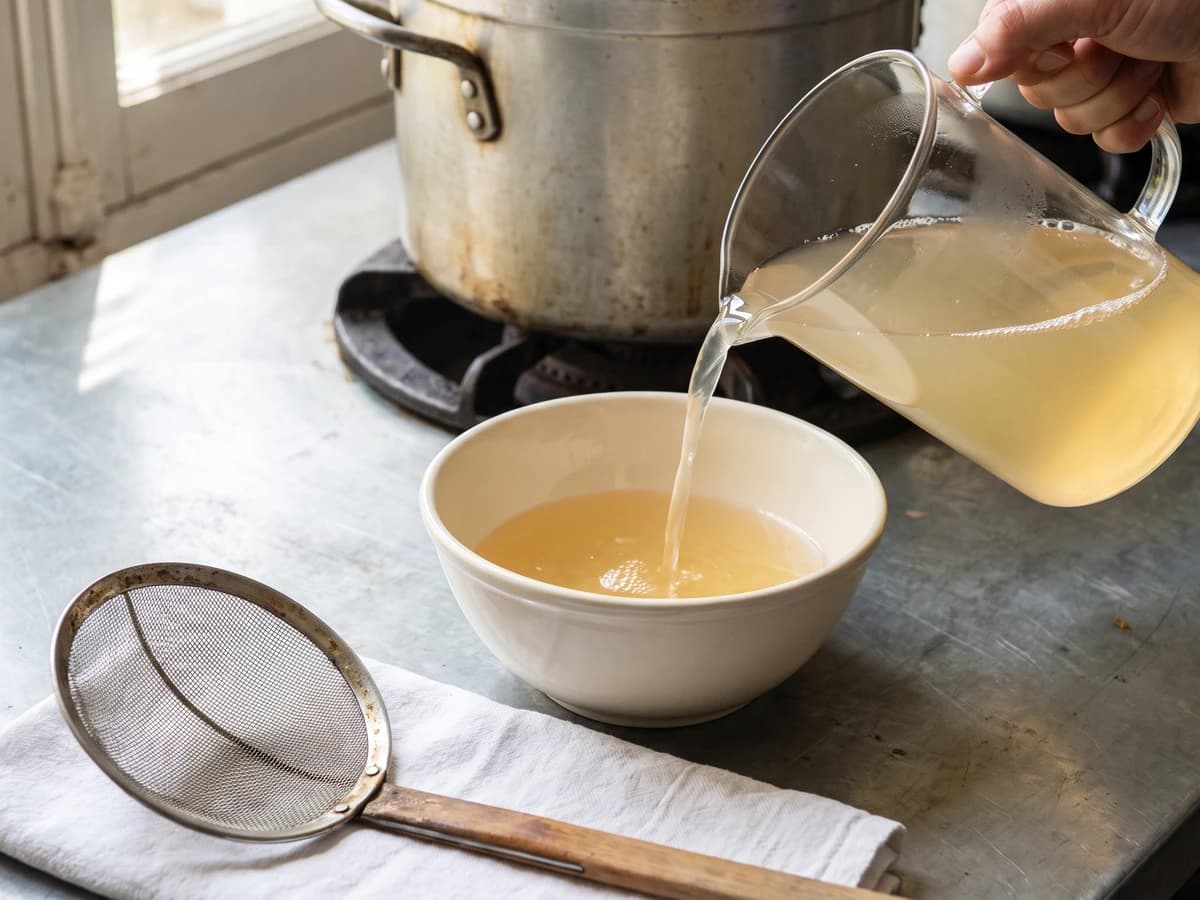
Beef shin, lean beef, and fowl begin in cold water and rise slowly toward a tremble. Skim before the boil, and you learn the quiet discipline that gives every clear French broth its backbone.
A cooking platform built around craft, culture, and the stories behind what we eat.

Created by Chef Juliette
Based on No. 2410, Apricot Sauce, from Le Guide Culinaire (1907) by Auguste Escoffier
Ripe apricots, a fine sieve, and 28-degree syrup become the pastry kitchen’s amber workhorse, boiled and skimmed only until the withdrawn spoon wears a thin, gleaming coat.
Sauce aux Abricots (apricot sauce) teaches the moment when a fruit purée becomes a proper sauce. The one true thing to know before touching the pan is this: stop cooking the instant the sauce veneers a withdrawn spoon. A minute longer pushes its fresh apricot character toward preserve, and that is another preparation entirely.
The original formula assumed a pastry brigade, a saccharometer for judging syrup density, and a basin broad enough to boil service quantities quickly. For one cook, one stove, one evening, equal weights of sugar and water reproduce the intended 28-degree syrup, while a digital scale, a fine sieve, and a wide heavy saucepan do the remaining work. The hydrometer reading and great basin were brigade scaffolding and may go. Sieving the fruit, skimming the boil, and judging the coating on the spoon are the dish, so they stay.
Done properly, the sauce is vivid apricot-gold, smooth enough to pour, and thick enough to cling in a gleaming film. Pull it from the fire at nappé, the coating stage, because that single decision preserves both its brightness and its silken flow.
Sauce aux Abricots belongs to the French pastry kitchen rather than to a single province, with a particular place among Parisian pâtisserie preparations and the bourgeois dessert table. Generations of pastry cooks used apricot for sauces, glazes, charlottes, and fruit desserts because its perfume, acidity, and natural pectin gave sweetness both structure and freshness. This sauce is sometimes mistaken for melted apricot jam, but the classical preparation begins with sieved fruit, is loosened with measured syrup, and is boiled only to nappé.
Quantity
13 cups (3.1 L / 2 kg)
halved and pitted
Quantity
1 1/2 cups (355 ml / 300 g)
Quantity
1 1/4 cups (300 ml / 300 g)
Quantity
2 tablespoons (30 ml / 28 g)
Quantity
3 tablespoons (45 ml / 42 g)
cubed, for sauce served with pastry crusts
| Ingredient | Quantity |
|---|---|
| very ripe apricotshalved and pitted | 13 cups (3.1 L / 2 kg) |
| granulated sugar | 1 1/2 cups (355 ml / 300 g) |
| water | 1 1/4 cups (300 ml / 300 g) |
| Kirsch (optional) | 2 tablespoons (30 ml / 28 g) |
| cold unsalted butter (optional)cubed, for sauce served with pastry crusts | 3 tablespoons (45 ml / 42 g) |
Put the halved apricots in the wide saucepan, cover, and set them over medium-low heat. Cook for 10 to 15 minutes, stirring occasionally, until their juices run and the flesh collapses readily beneath the spoon. Very ripe fruit needs no added liquid. Keep the heat restrained at first, because apricots scorch before they surrender their juice.
Work the warm apricots through a fine-mesh sieve with a firm ladle or flexible scraper, leaving the skins and coarse fibres behind. You should have roughly 6 1/2 to 7 cups (1.55 to 1.65 L / about 1.7 kg) of smooth purée. A blender can break down the fruit, but it cannot remove the skin and fibre that would spoil the sauce’s silken finish. The sieving is not brigade fuss. It is the dish.
Combine the sugar and water in a small saucepan. Warm gently, stirring only until the sugar dissolves, then bring the clear syrup to one full boil and remove it from the heat. Equal weights of sugar and water give the home cook the practical equivalent of the original 28-degree saccharometer syrup. Reserve about 1/2 cup of it, then keep both portions warm.
Return the apricot purée to the clean wide saucepan and stir in the larger portion of warm syrup. Bring it to a lively boil over medium-high heat, stirring across the entire pan floor so the fruit cannot catch. Skim away the pale foam as it gathers around the edges. After 3 minutes, begin withdrawing the spoon frequently: the sauce is ready when it veneers the spoon in a thin, even amber film rather than running away in watery streaks.
If the sauce slips from the spoon without coating it, boil for another 30 seconds and test again. If it has tightened into a heavy, jam-like sheet, take it off the heat at once and whisk in the reserved warm syrup a tablespoon at a time until the thin veneer returns. Ça se rattrape. Remember that the sauce thickens further as it cools, so stop slightly looser than you want to serve it.
Remove the sauce from the fire and stir in the Kirsch, if using. When the sauce is destined for pastry crusts, let the boil subside for a minute, then whisk in the cold butter one cube at a time until the surface gleams. Do not return a buttered sauce to the boil. If the butter beads at the surface, the pan is too hot; set its base in cool water briefly and whisk in a spoonful of reserved syrup until the sauce comes together.
Pour the sauce into clean heatproof containers, leaving them uncovered only until the fierce heat has passed, then cover and refrigerate. Serve cool, at room temperature, or warmed gently according to the dessert. Never boil it again after finishing, especially if butter was added. The spoon should still emerge wearing that fine apricot coat. À table!
1 serving (about 65g)
Culinary guides, cultural storytelling, and the editorial depth that makes cooking meaningful.
Discover Culinary ExplorerChef Juliette
Beef shin, lean beef, and fowl begin in cold water and rise slowly toward a tremble. Skim before the boil, and you learn the quiet discipline that gives every clear French broth its backbone.
Chef Juliette
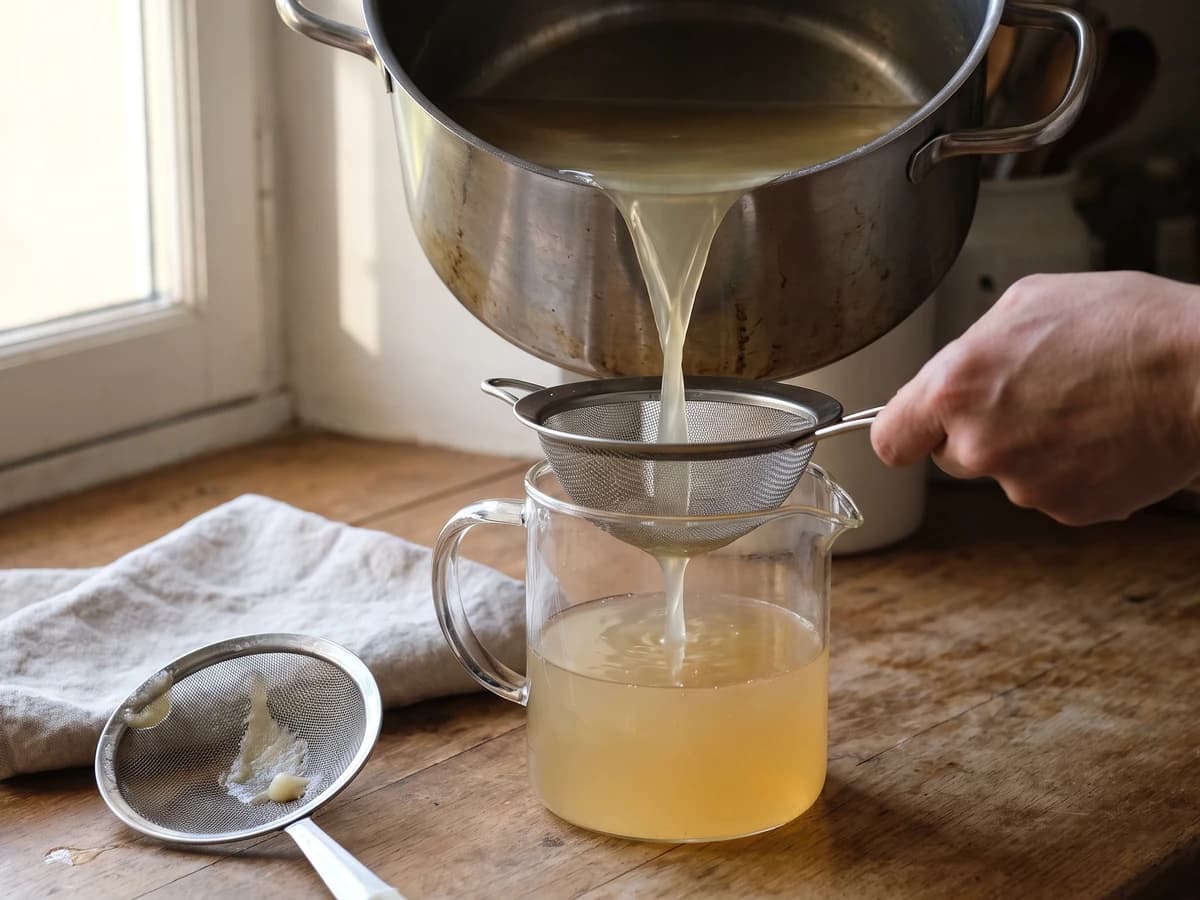
Break the veal bones small, then give them eight hours at a bare tremble. This pale, gelatinous fond becomes the quiet foundation beneath velouté, blanquette, and every sauce that must stay light.
Chef Juliette
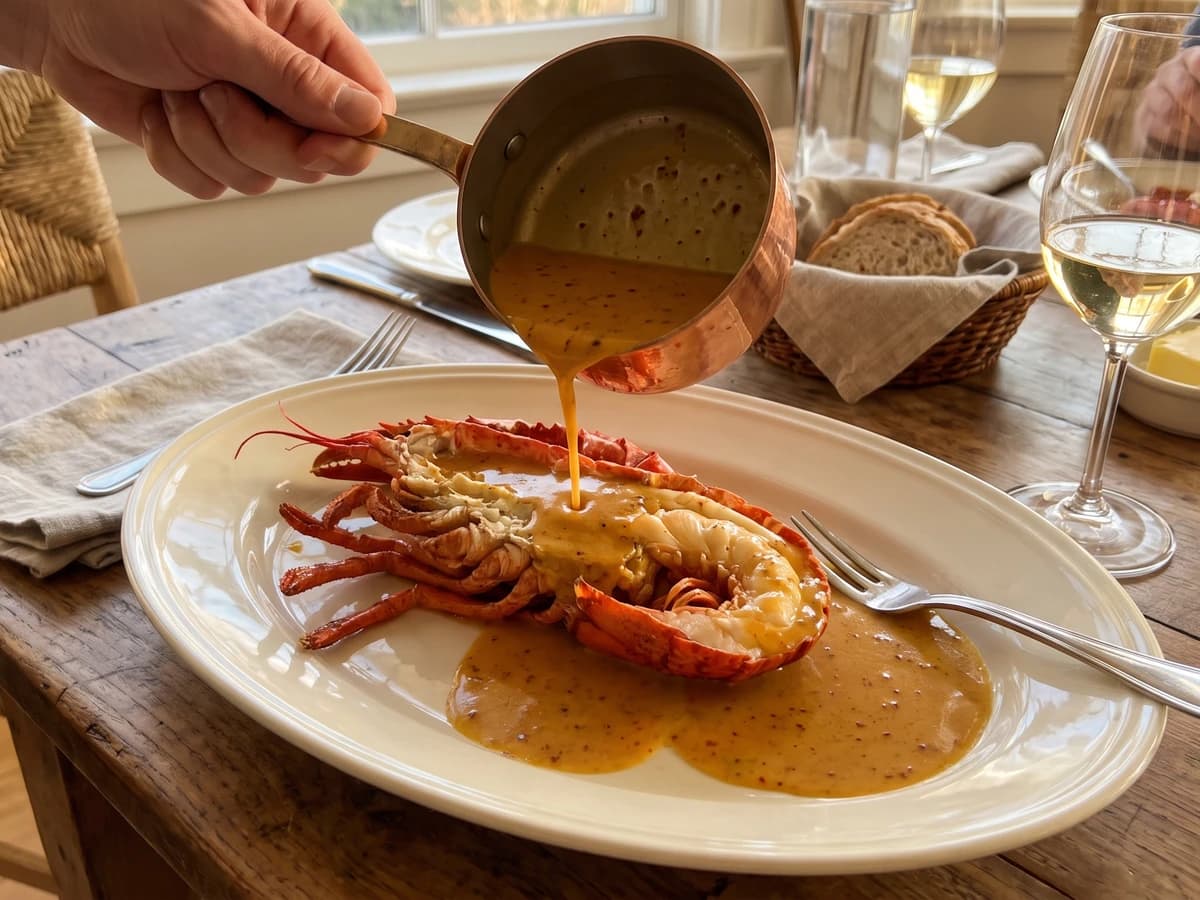
Sauce Orientale concentrates lobster-rich American Sauce with curry, then folds in cream away from the fire: a glossy, gently spiced derivative made for lobster, crayfish, and firm fish.
Chef Juliette
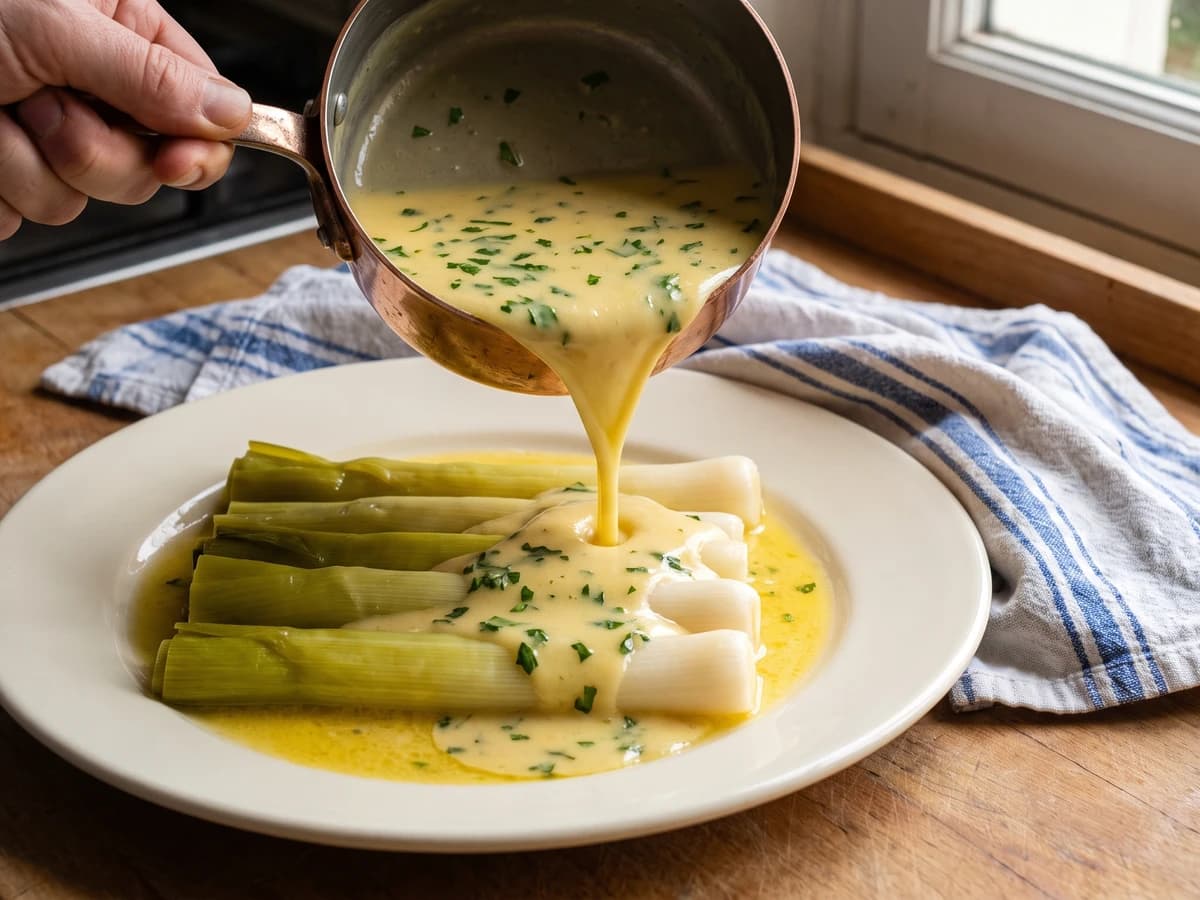
An old lesson in sauce families: Sauce Allemande takes mushroom liquor, then butter, lemon, and parsley, becoming a glossy Poulette for sheep's trotters, leeks, cauliflower, and anything needing gentle richness with a bright edge.