Chef Juliette
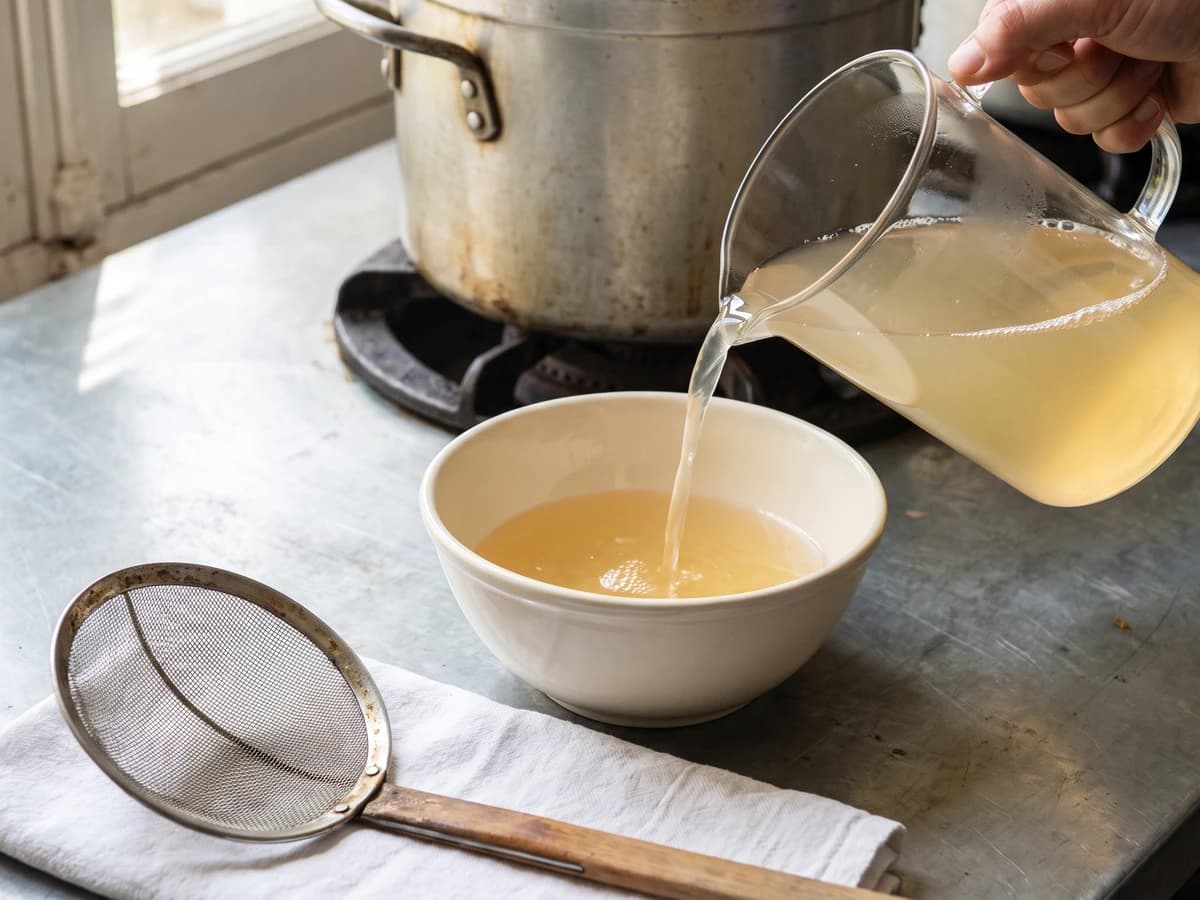
Ordinary or White Consommé
Beef shin, lean beef, and fowl begin in cold water and rise slowly toward a tremble. Skim before the boil, and you learn the quiet discipline that gives every clear French broth its backbone.
A cooking platform built around craft, culture, and the stories behind what we eat.

Created by Chef Juliette
Based on No. 2409, Fruit Sauce, from Le Guide Culinaire (1907) by Auguste Escoffier
Apricot, red currant, greengage, or mirabelle cooked just until yielding, passed smooth, and balanced into a flowing sauce: the classical lesson in preserving fruit character without drifting into jam.
Sauce aux fruits teaches one true thing: a fruit sauce must still taste more alive than cooked. The fruit is softened only until it surrenders its pulp, then passed smooth and adjusted to a flowing ribbon. Boil it hard or reduce it heavily and you haven't made a better sauce. You've begun a preserve.
The classical entry assumed a saucier on staff, a tamis always ready, and enough fruit to fill service basins. A home kitchen needs a heavy saucepan, a stick blender, and a fine-mesh sieve. There is no stock kept constantly on the fire and no salamander involved here; adding either sort of complication would only bury the fruit. The brigade volume and extra hands were scaffolding, so they can go. The gentle poach, the passing, and the final adjustment are the dish, and they stay. What changed is the scale, reduced to about two quarts for one cook, one stove, one evening.
Apricots, red currants, greengages, and mirabelles have the flavor and body for this full sauce. Peaches, Williams pears, and apples belong on the lighter side of the same family, as purées or coulis. C'est la même grammaire, but not the same finish. The step that matters most is the last reduction: stop while the sauce still falls readily from the spoon, because it will thicken as it cools.
Sauce aux fruits belongs to the national French dessert repertoire rather than to one province, having traveled from household orchard and preserving pans into pâtisserie and classical entremets service. French kitchens treated apricots, red currants, greengages, and mirabelles as fruits capable of carrying a full sweet sauce, while peaches, Williams pears, and apples were more often passed as light purées or coulis. The distinction corrects a common misconception: coulis is not simply a grander name for every fruit sauce; here the word marks a lighter consistency and service.
Quantity
12 cups (2.8 L / 2 kg) stone fruit; or 14 cups (3.3 L / 2 kg) red currants
stone fruit pitted and quartered; red currants stemmed
Quantity
1 to 2 cups (240 to 480 ml / 200 to 400 g)
divided
Quantity
1½ cups (360 ml / 360 g)
divided
| Ingredient | Quantity |
|---|---|
| ripe apricots, greengages, mirabelle plums, or red currantsstone fruit pitted and quartered; red currants stemmed | 12 cups (2.8 L / 2 kg) stone fruit; or 14 cups (3.3 L / 2 kg) red currants |
| granulated sugardivided | 1 to 2 cups (240 to 480 ml / 200 to 400 g) |
| waterdivided | 1½ cups (360 ml / 360 g) |
Choose one fruit for the batch so its character remains clear. Rinse it gently and drain it well. Pit and quarter apricots, greengages, or mirabelles; strip red currants from their stems, discarding leaves and any spoiled berries. Taste before adding sugar. Ripeness decides the final balance more honestly than a rigid spoonful can.
Put 1 cup (240 ml / 240 g) of the water in a heavy saucepan. Add 1 cup (240 ml / 200 g) of the sugar for stone fruit, or 1½ cups (360 ml / 300 g) for red currants. Warm gently, stirring only until the crystals disappear, then bring the syrup to a quiet simmer. It should remain clear and fluid, without caramel color.
Add the prepared fruit and stir once to coat it. Hold the pan at a gentle simmer until stone fruit collapses when pressed with a spoon, about 12 to 18 minutes, or until red currants burst and release their juice, about 8 to 10 minutes. Keep the cooking brief. A hard boil dulls the fresh edge and pushes the mixture toward jam; if it begins catching on the pan, lower the heat immediately and add a spoonful of the reserved water.
For stone fruit, blend directly in the pan until smooth. For red currants, crush them with a spoon but don't blend, since broken seeds can make the sauce bitter. Pass the hot fruit through a fine-mesh sieve into a clean bowl, pressing firmly with a ladle or flexible spatula. Stop when only dry skins, fibers, and seeds remain. The classical tamis was larger, not more magical; this sieve does the same work at a home scale.
Return the strained sauce to the clean pan and bring it to the barest simmer. Taste, then add more sugar only if the fruit requires it, stirring until dissolved. Reduce briefly until the sauce coats a spoon yet pours from it in a broad, unbroken ribbon. If it is thin, simmer it a little longer. If it tightens or turns jammy, ça se rattrape: whisk in the reserved water a tablespoon at a time, then pass it once more if necessary. Stop slightly looser than the consistency you want, because cooling will give it more body.
Divide the sauce between shallow, heatproof containers so it cools promptly. Once it is no longer hot, cover and refrigerate it within two hours. Serve cool, at room temperature, or warmed gently with charlottes, soufflés, riz au lait, gâteau de semoule, fromage blanc, or glace vanille. If chilling has made it too firm, loosen it with a spoonful of water before serving. À table!
1 serving (about 65g)
Culinary guides, cultural storytelling, and the editorial depth that makes cooking meaningful.
Discover Culinary ExplorerChef Juliette
Beef shin, lean beef, and fowl begin in cold water and rise slowly toward a tremble. Skim before the boil, and you learn the quiet discipline that gives every clear French broth its backbone.
Chef Juliette
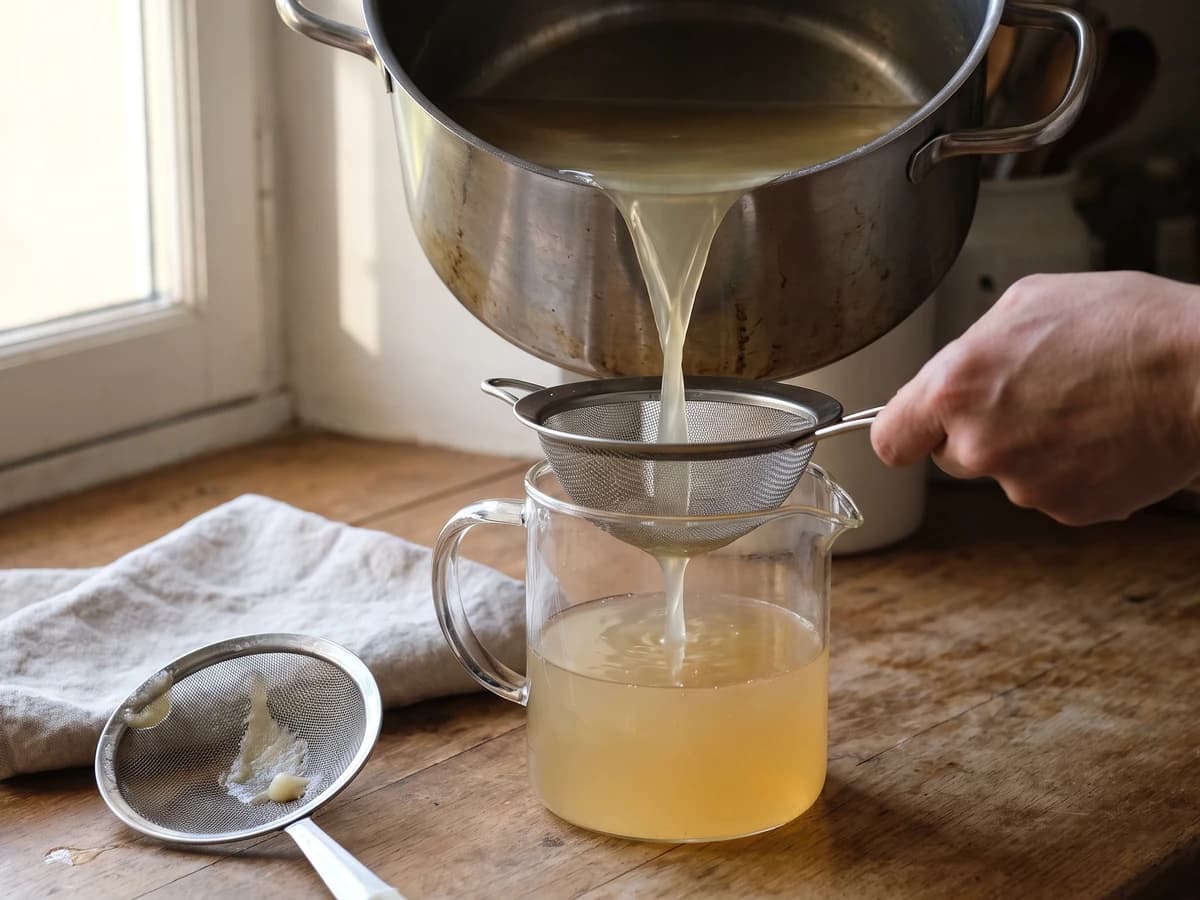
Break the veal bones small, then give them eight hours at a bare tremble. This pale, gelatinous fond becomes the quiet foundation beneath velouté, blanquette, and every sauce that must stay light.
Chef Juliette
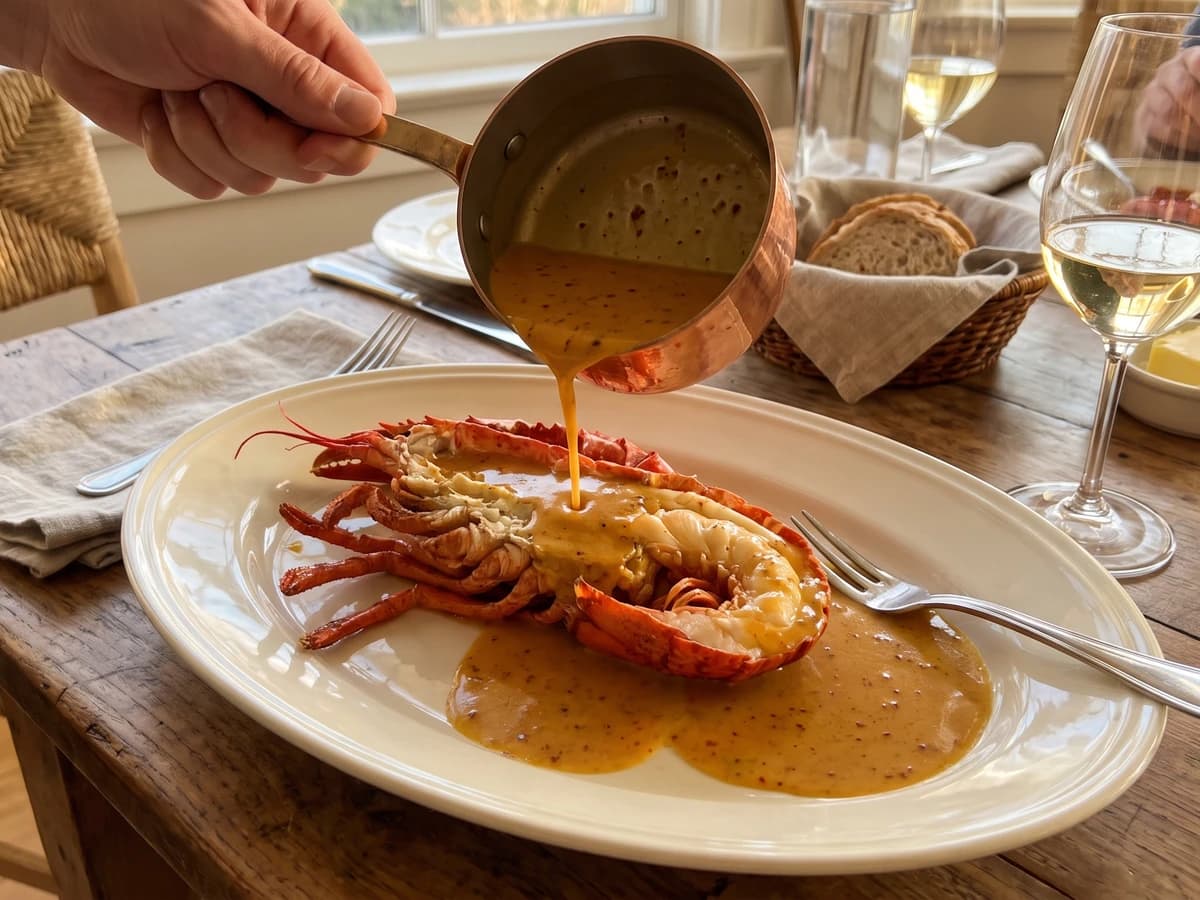
Sauce Orientale concentrates lobster-rich American Sauce with curry, then folds in cream away from the fire: a glossy, gently spiced derivative made for lobster, crayfish, and firm fish.
Chef Juliette
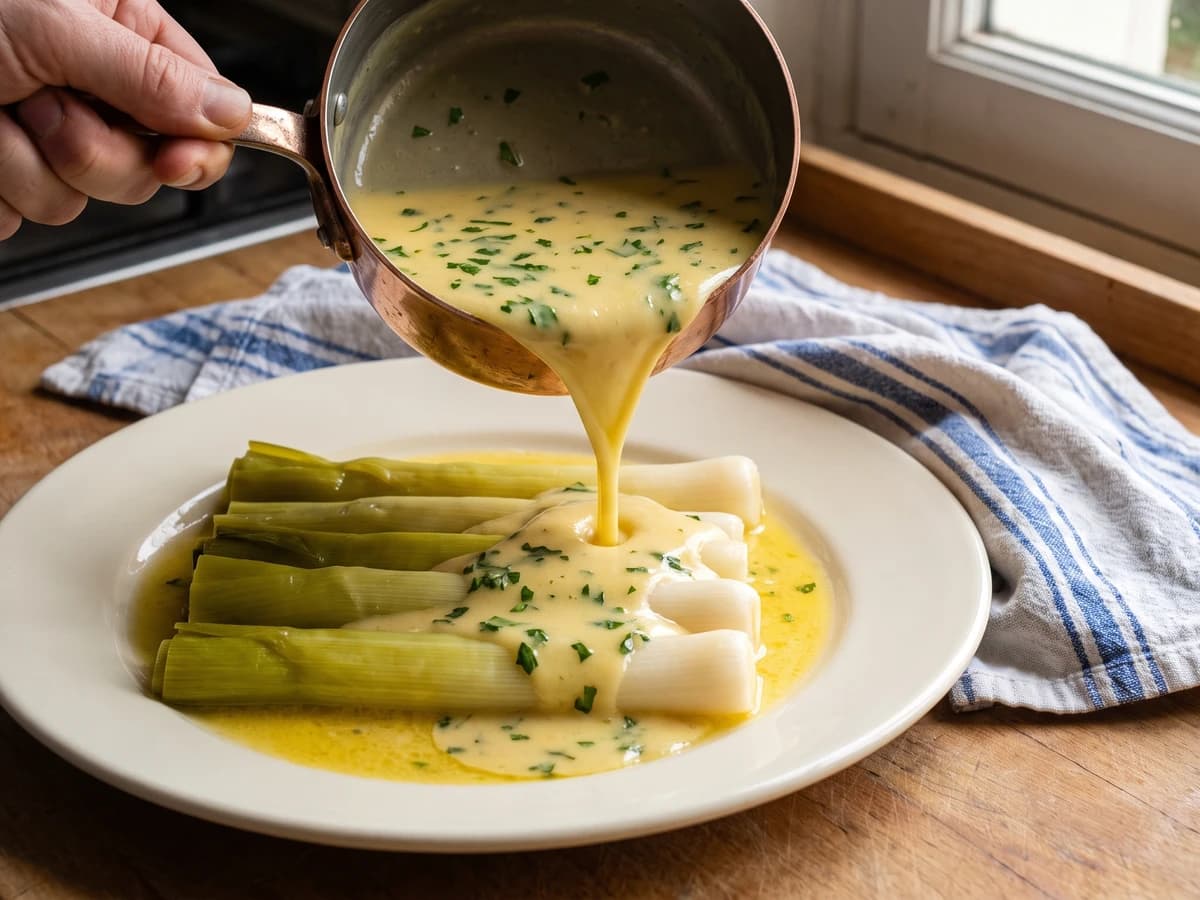
An old lesson in sauce families: Sauce Allemande takes mushroom liquor, then butter, lemon, and parsley, becoming a glossy Poulette for sheep's trotters, leeks, cauliflower, and anything needing gentle richness with a bright edge.