Chef Juliette
Ordinary or White Consommé
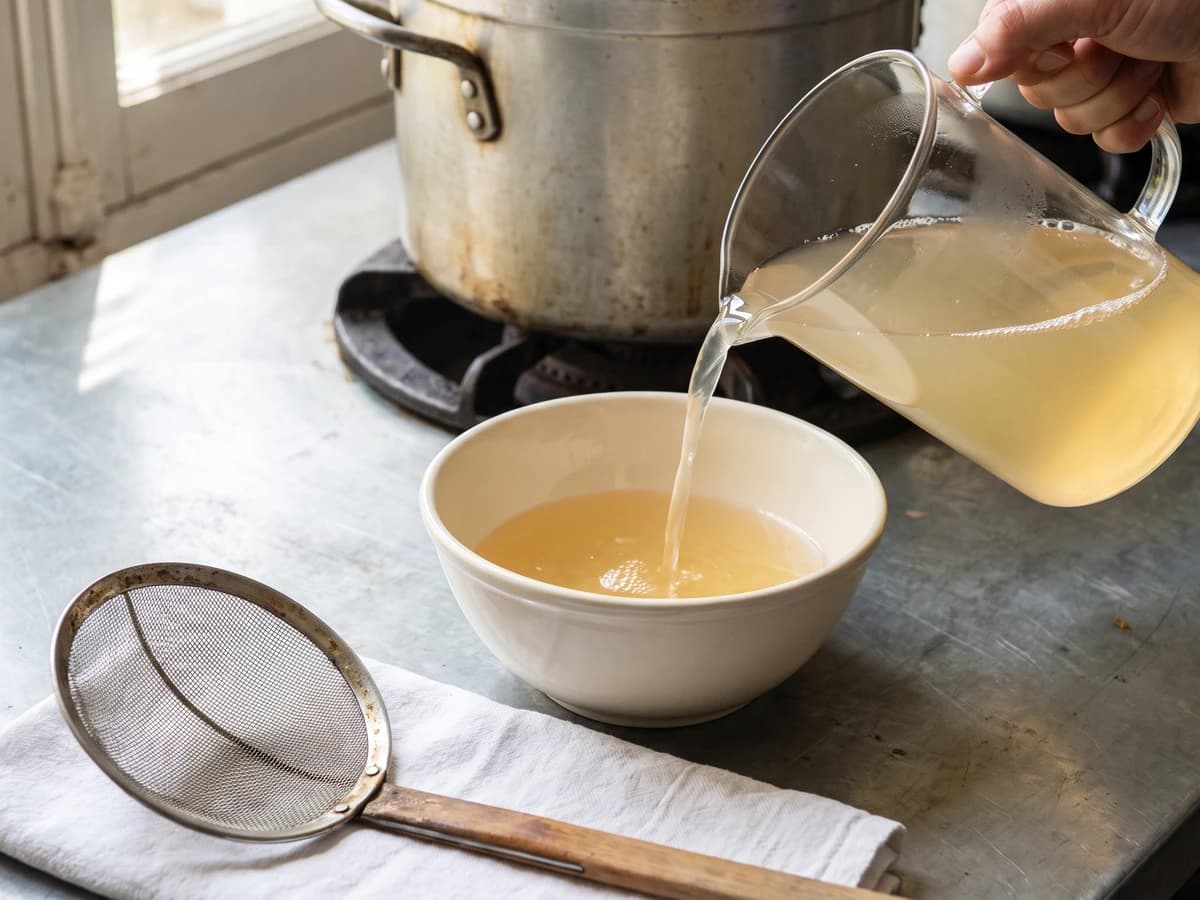
Beef shin, lean beef, and fowl begin in cold water and rise slowly toward a tremble. Skim before the boil, and you learn the quiet discipline that gives every clear French broth its backbone.
A cooking platform built around craft, culture, and the stories behind what we eat.

Created by Chef Juliette
Based on No. 2408, Sabayon, from Le Guide Culinaire (1907) by Auguste Escoffier
Sabayon turns three ingredients into a warm, wine-scented cloud: yolks, powdered sugar, and dry white wine whisked over a bain-marie until pale, firm, and four times their first volume.
Sabayon (warm wine-and-yolk froth) teaches the discipline behind every warm egg emulsion: the whisk invites the air, but gentle heat persuades it to stay. Keep the entire mixture moving as it warms. Volume without enough heat collapses, while heat without movement gives you sweet scrambled yolks.
The original formula assumed twelve yolks, a pound of powdered sugar, a quart of wine, a narrow professional bain-marie, a hot-water bath, and a saucier free to whisk without interruption. This home version cuts every quantity to one third while preserving the exact ratio, then replaces the narrow insert and dedicated pair of arms with a deep heatproof bowl and a handheld mixer. The brigade quantity was scaffolding. Whitening the yolks and sugar, diluting with wine, cooking over water, and reaching four times the first volume are the dish itself, so they stay. One cook, one stove, one evening.
When it is right, the sabayon is pale ivory-gold, wine-scented, and firm enough to fall from the whisk in soft ribbons that sit briefly on the surface. The decisive step is managing the bain-marie: steady heat underneath, constant movement above, and no hot edge left unwatched.
Sabayon entered the French classical repertoire from northern Italy's zabaione, a yolk-and-wine preparation associated particularly with Piedmont and commonly made with Marsala. French grand kitchens favored dry white wine or Champagne and treated the preparation as both a warm dessert and a sauce for fruit, sometimes coloring it beneath a salamander. The kinship is clear, but sabayon is not simply a renamed custard; it is judged by its aeration, its fourfold rise, and the soft firmness of its warm froth.
Quantity
4 (about ¼ cup / 60 ml / 68 g)
Quantity
1¼ cups (300 ml / 151 g)
sifted
Quantity
1⅓ cups (315 ml / 312 g)
at room temperature
| Ingredient | Quantity |
|---|---|
| large egg yolks | 4 (about ¼ cup / 60 ml / 68 g) |
| powdered sugarsifted | 1¼ cups (300 ml / 151 g) |
| dry white wineat room temperature | 1⅓ cups (315 ml / 312 g) |
Choose a deep 3 to 4-quart heatproof bowl that sits securely over a saucepan without its base touching the water. Fill the saucepan with about 1½ inches (4 cm) of water and bring it to a steady simmer. The small gap between water and bowl softens the heat and replaces the narrow professional bain-marie without changing its purpose. Set out the serving dishes now because a finished sabayon should go directly to the table.
Put the egg yolks in the heatproof bowl and sift the powdered sugar over them. Off the heat, whisk for 2 to 3 minutes until the mixture has whitened slightly and become smooth. It will be very thick, almost a paste. That is exactly right; the original proportion is generous with sugar, and this first whitening begins the aeration before the wine loosens everything.
Pour in the room-temperature dry white wine in four or five additions, whisking each one completely into the yolk mixture before adding the next. Scrape around the sides and across the bottom so no sweet paste remains hidden. The mixture will become thin and pale yellow and may appear to have lost all its body. It will look alarming. It is exactly right.
Set the bowl over the simmering bain-marie and whisk continuously, using a handheld mixer at medium speed or a balloon whisk. Turn the bowl by quarter turns and keep sweeping its sides and bottom, where the eggs heat first. After 8 to 15 minutes, the loose liquid will develop fine bubbles, grow pale, and rise into a firm froth close to four times its first volume. It is ready when it reaches about 160°F (71°C), the whisk leaves ribbons that remain visible for several seconds, and a spoonful settles into a soft mound rather than running flat. If the sabayon remains thin after eight minutes, the bath is too cool; bring the water back to a steady simmer and continue whisking. If the edges begin to look grainy, lift the bowl off the heat immediately and whisk hard for thirty seconds. Pass it through a fine sieve into a clean, room-temperature bowl if a few flecks remain, then resume over gentler heat. Ça se rattrape when caught at the first grain; fully set curds have gone too far.
Lift the bowl from the bain-marie and continue whisking for thirty seconds to even out the heat. Spoon the sabayon immediately into warmed shallow cups or over fruit or plain cake already arranged for serving. If dinner has delayed you, hold the bowl for no more than ten minutes over warm water off the heat, whisking briefly every minute. The sabayon should reach the table in soft, glossy folds while its wine fragrance is still bright. À table!
1 serving (about 65g)
Culinary guides, cultural storytelling, and the editorial depth that makes cooking meaningful.
Discover Culinary ExplorerChef Juliette
Beef shin, lean beef, and fowl begin in cold water and rise slowly toward a tremble. Skim before the boil, and you learn the quiet discipline that gives every clear French broth its backbone.
Chef Juliette
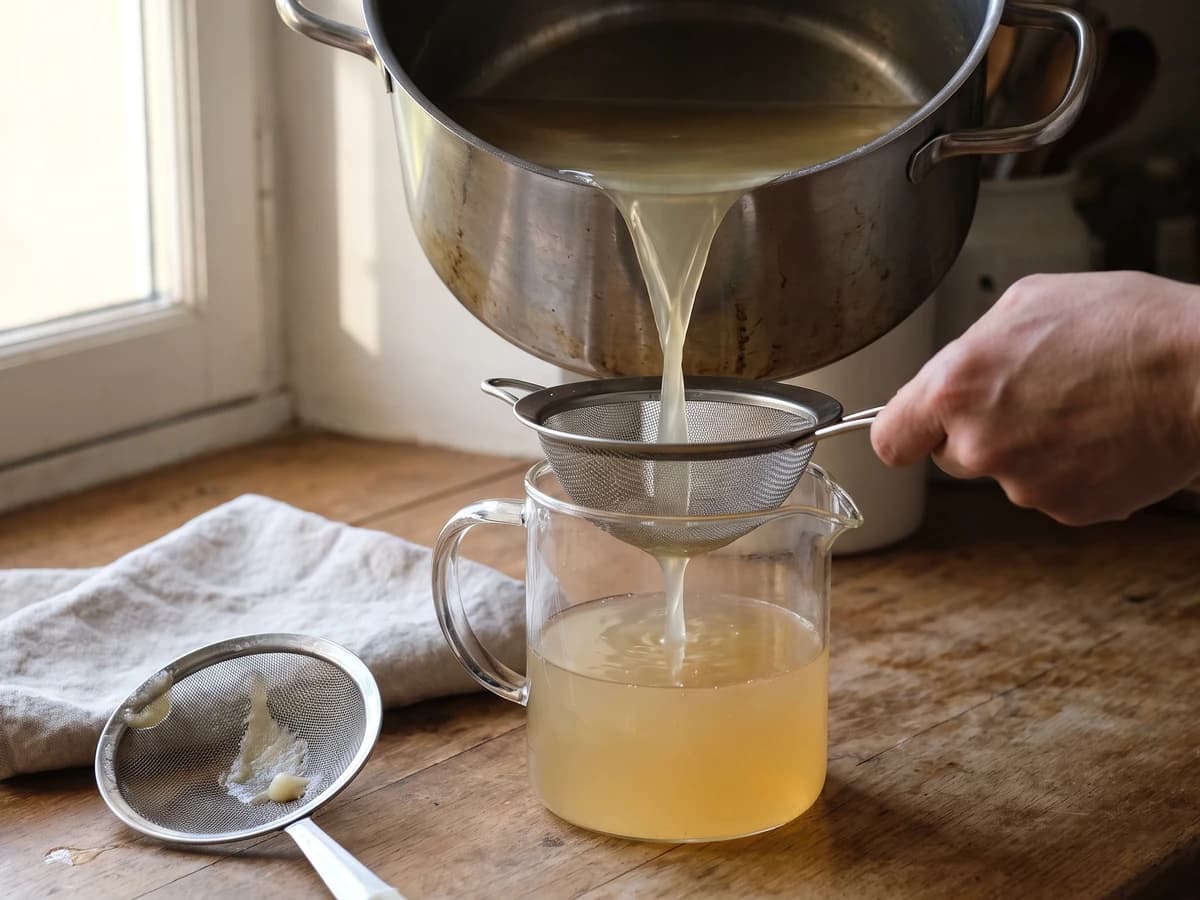
Break the veal bones small, then give them eight hours at a bare tremble. This pale, gelatinous fond becomes the quiet foundation beneath velouté, blanquette, and every sauce that must stay light.
Chef Juliette
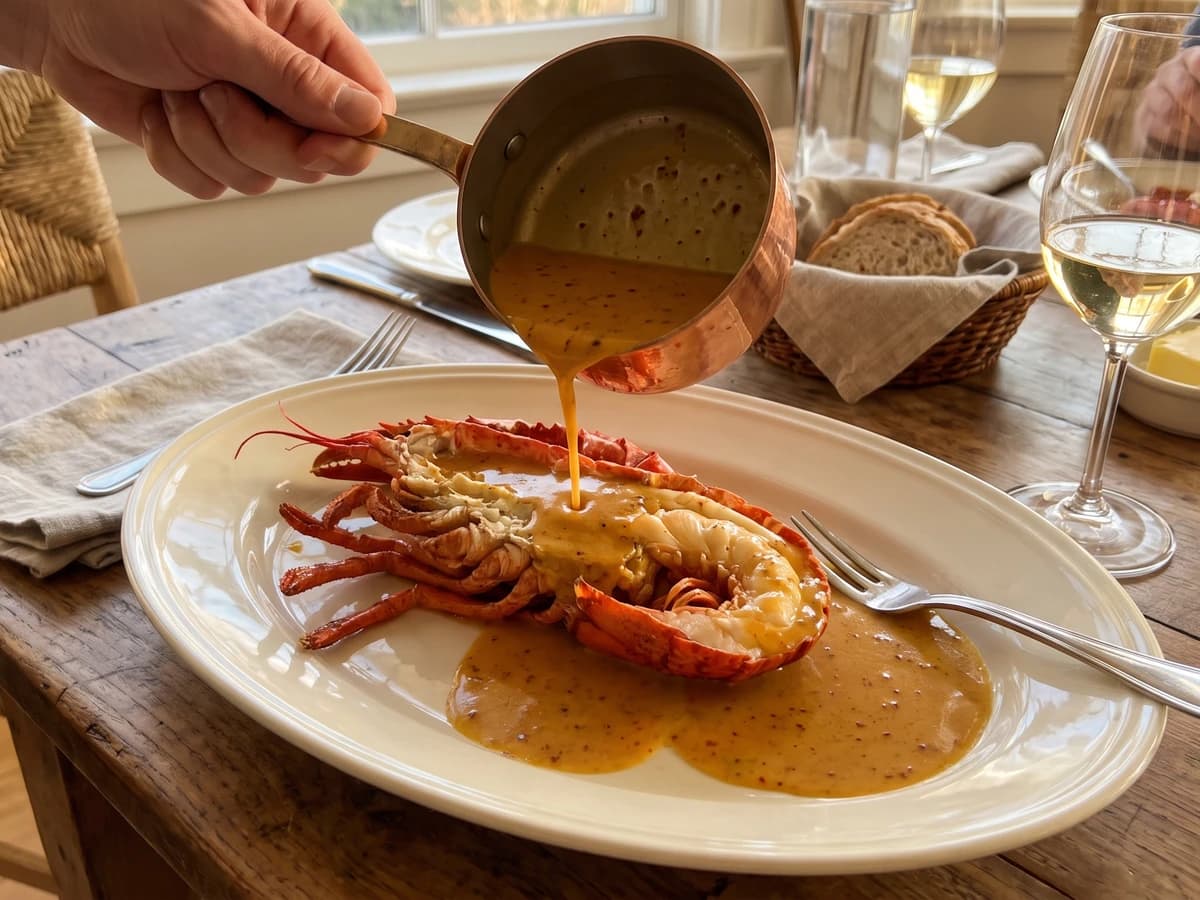
Sauce Orientale concentrates lobster-rich American Sauce with curry, then folds in cream away from the fire: a glossy, gently spiced derivative made for lobster, crayfish, and firm fish.
Chef Juliette
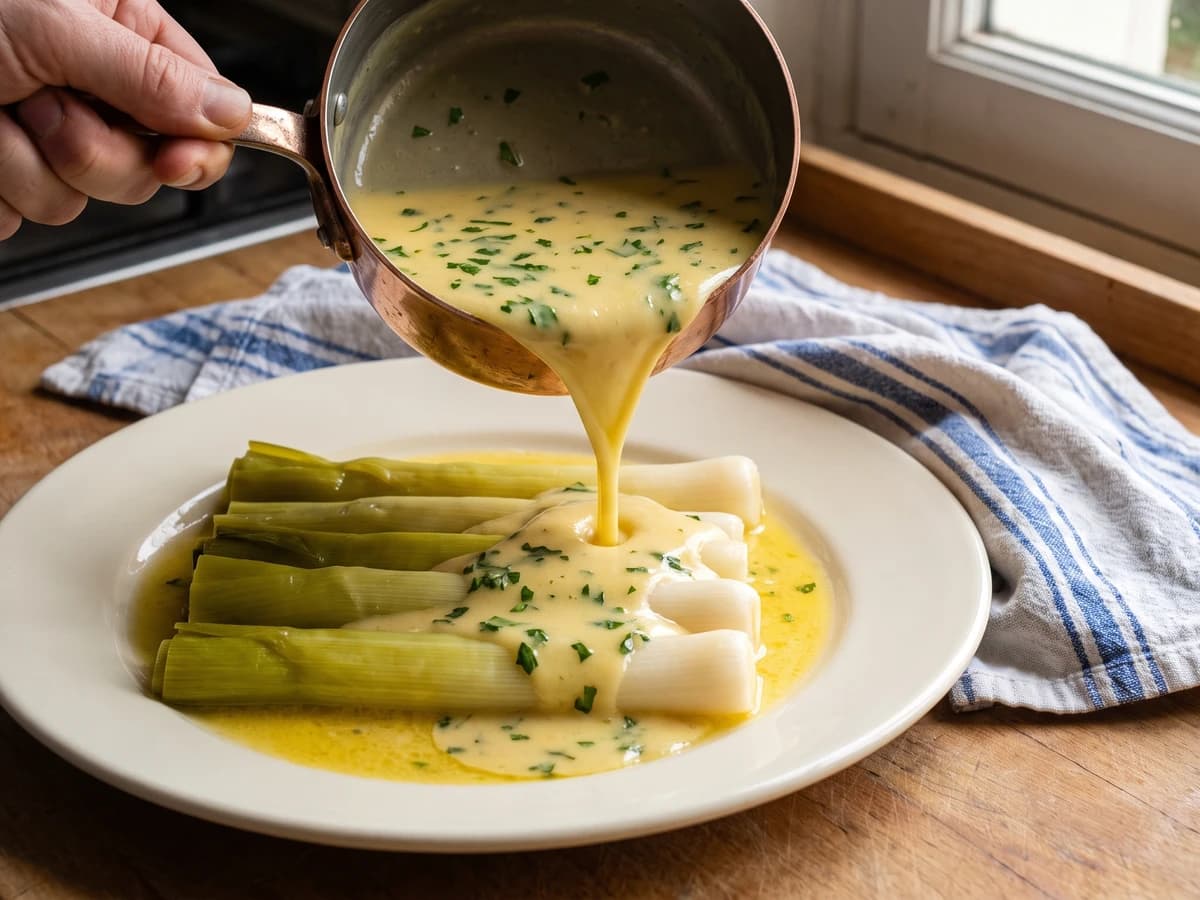
An old lesson in sauce families: Sauce Allemande takes mushroom liquor, then butter, lemon, and parsley, becoming a glossy Poulette for sheep's trotters, leeks, cauliflower, and anything needing gentle richness with a bright edge.