Chef Juliette
Ordinary or White Consommé
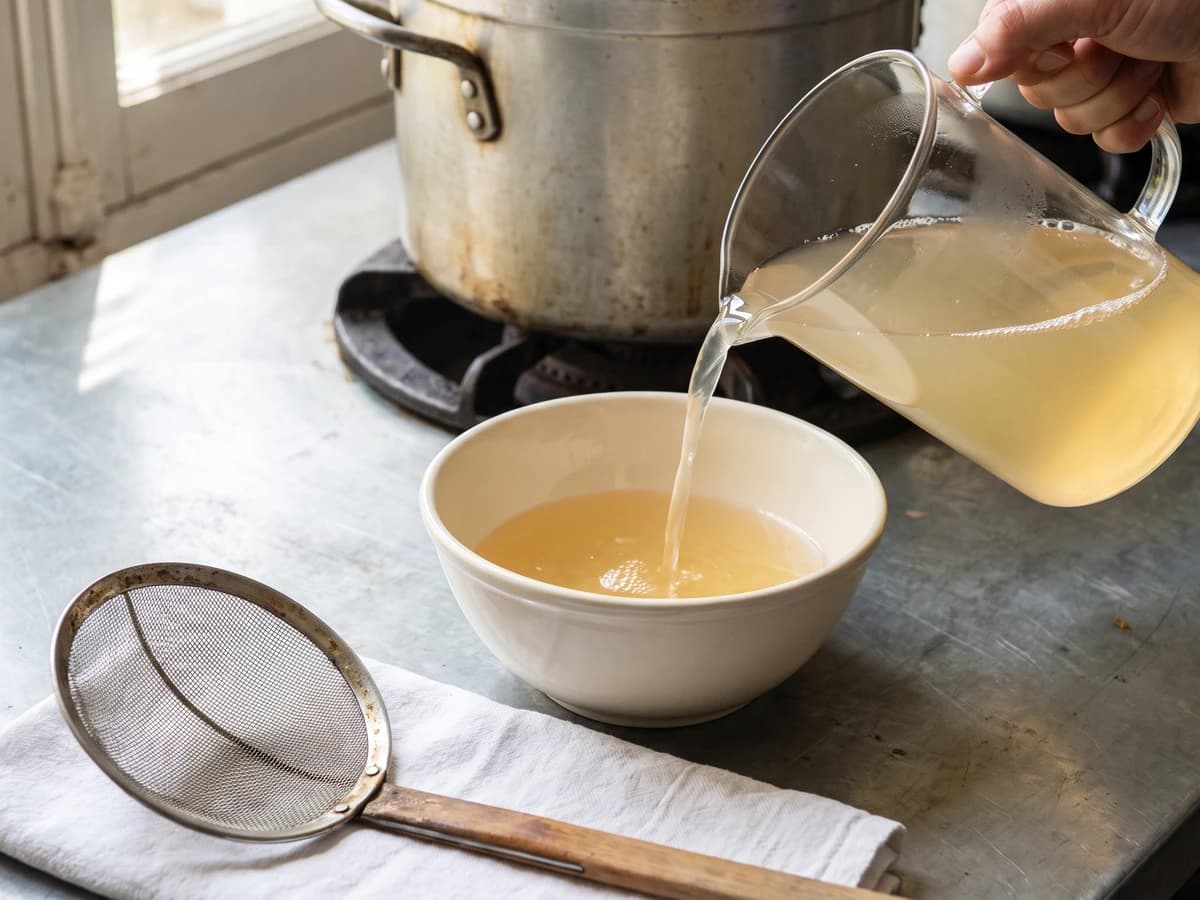
Beef shin, lean beef, and fowl begin in cold water and rise slowly toward a tremble. Skim before the boil, and you learn the quiet discipline that gives every clear French broth its backbone.
A cooking platform built around craft, culture, and the stories behind what we eat.

Created by Chef Juliette
Based on No. 2407, Chocolate Sauce, from Le Guide Culinaire (1907) by Auguste Escoffier
Sauce au chocolat teaches the discipline of the final enrichment: simmer chocolate, water, and vanilla gently, then add cream and butter away from the heat so the sauce stays dark, supple, and brilliantly glossy.
Sauce au chocolat (French chocolate sauce) teaches one true thing before the pan is warm: the gloss is not cooked into it, it is mounted at the end. Chocolate and water need their full gentle simmer to become dark and cohesive, but cream and butter enter only after the pan leaves the fire. Boil that finish and the sauce loses the supple shine you came for.
The original formula assumed a saucier who could mind one preparation while a service kitchen repeated and held larger quantities. Here the proportions are multiplied evenly to stop at one four-quart saucepan, about two quarts for a birthday table and the days after; a heavy base and a heatproof spatula replace the dedicated hand. The brigade holding setup is scaffolding and can go. The twenty-five-minute simmer and the off-fire cream-and-butter finish are the dish, so both stay exactly where the source puts them.
Watch the bottom, not the clock alone. The sauce should leave a clean path for a heartbeat when the spatula crosses the pan, then close over itself. Once it does, take it off the heat and monter au beurre (finish with butter). If the emulsion separates, ça se rattrape, and a teaspoon of warm water will bring it home. The one step that decides this sauce is simple: finish the cream and butter off the fire.
Sauce au chocolat belongs to the French pâtisserie and entremets table, particularly the confectioners and pastry kitchens of Paris, where it accompanied puddings, profiteroles, poached fruit, and frozen desserts. It passed easily into bistros and home kitchens because its pantry is small, though its technique still rewards close attention. This cooked, water-based sauce is not ganache: its long gentle simmer concentrates the chocolate before cream and butter enrich it at the last moment.
Quantity
5⅓ cups (1.26 L / 910 g)
finely grated
Quantity
6⅓ cups plus 1 tablespoon (1.52 L / 1.52 kg)
Quantity
¼ cup (60 ml / 50 g)
Quantity
¾ cup (180 ml / 180 g)
Quantity
½ cup (120 ml / 113 g)
cool and cut into 8 pieces
Quantity
up to 2 tablespoons (30 ml / 30 g)
| Ingredient | Quantity |
|---|---|
| dark chocolate, 60 to 70% cacaofinely grated | 5⅓ cups (1.26 L / 910 g) |
| water | 6⅓ cups plus 1 tablespoon (1.52 L / 1.52 kg) |
| vanilla sugar | ¼ cup (60 ml / 50 g) |
| heavy cream | ¾ cup (180 ml / 180 g) |
| best-quality unsalted buttercool and cut into 8 pieces | ½ cup (120 ml / 113 g) |
| warm water for rescuing the emulsion (optional) | up to 2 tablespoons (30 ml / 30 g) |
Grate the chocolate finely and measure everything before the pan goes on the heat. Keep the cream beside the stove and the butter cool. Fine grating is practical, not ceremonial: small, even pieces dissolve into the water at the same rate, leaving no stubborn fragments to scorch later.
Pour the water into a heavy four-quart saucepan and warm it over medium-low heat until the surface just begins to move. Add the grated chocolate by handfuls, stirring slowly with a heatproof spatula after each addition until it dissolves. It may look grainy while the first chocolate melts. Keep stirring gently; there is enough water here for it to become smooth.
Stir in the vanilla sugar, then lower the heat and cook uncovered for twenty-five minutes at the gentlest simmer, with small, lazy bubbles appearing across the surface. Scrape the bottom and corners every minute or two, especially as the sauce thickens. It is ready when it runs from the spatula in a broad ribbon and a path drawn across the pan closes slowly. If you smell scorching or see dark flecks, do not scrape the caught layer into the sauce. Pour the clean sauce into a fresh saucepan, leave the bottom behind, and continue gently. Ça se rattrape.
Remove the pan completely from the heat. Whisk in the cream in a slow stream, then use monter au beurre, the off-heat butter finish: add the cool butter one piece at a time, whisking each piece in fully before adding the next. Stop when the sauce is mirror-glossy and falls in an unbroken ribbon. If it turns oily or separates, stop adding butter and whisk in warm water one teaspoon at a time until the emulsion reunites, then finish with the remaining butter. Do not boil it after the cream and butter enter.
Pour the sauce into a warmed sauceboat and serve it over profiteroles, poires Belle-Hélène, vanilla ice cream, crêpes, or a plain birthday gâteau. If it must wait, hold the saucepan in a bain-marie (warm-water bath) for no more than thirty minutes and stir occasionally; direct burner heat can split the finish. If it tightens, loosen it with a teaspoon of warm water. À table!
1 serving (about 75g)
Culinary guides, cultural storytelling, and the editorial depth that makes cooking meaningful.
Discover Culinary ExplorerChef Juliette
Beef shin, lean beef, and fowl begin in cold water and rise slowly toward a tremble. Skim before the boil, and you learn the quiet discipline that gives every clear French broth its backbone.
Chef Juliette
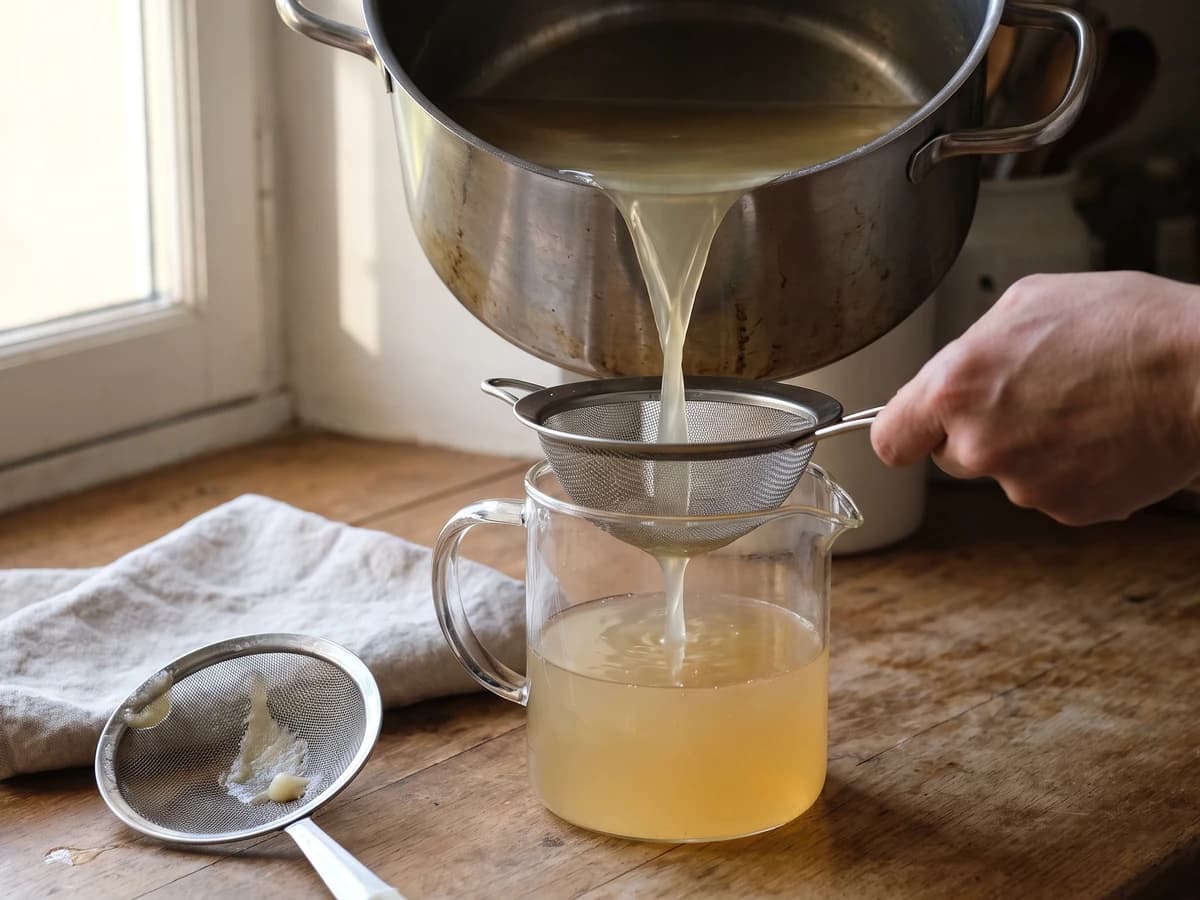
Break the veal bones small, then give them eight hours at a bare tremble. This pale, gelatinous fond becomes the quiet foundation beneath velouté, blanquette, and every sauce that must stay light.
Chef Juliette
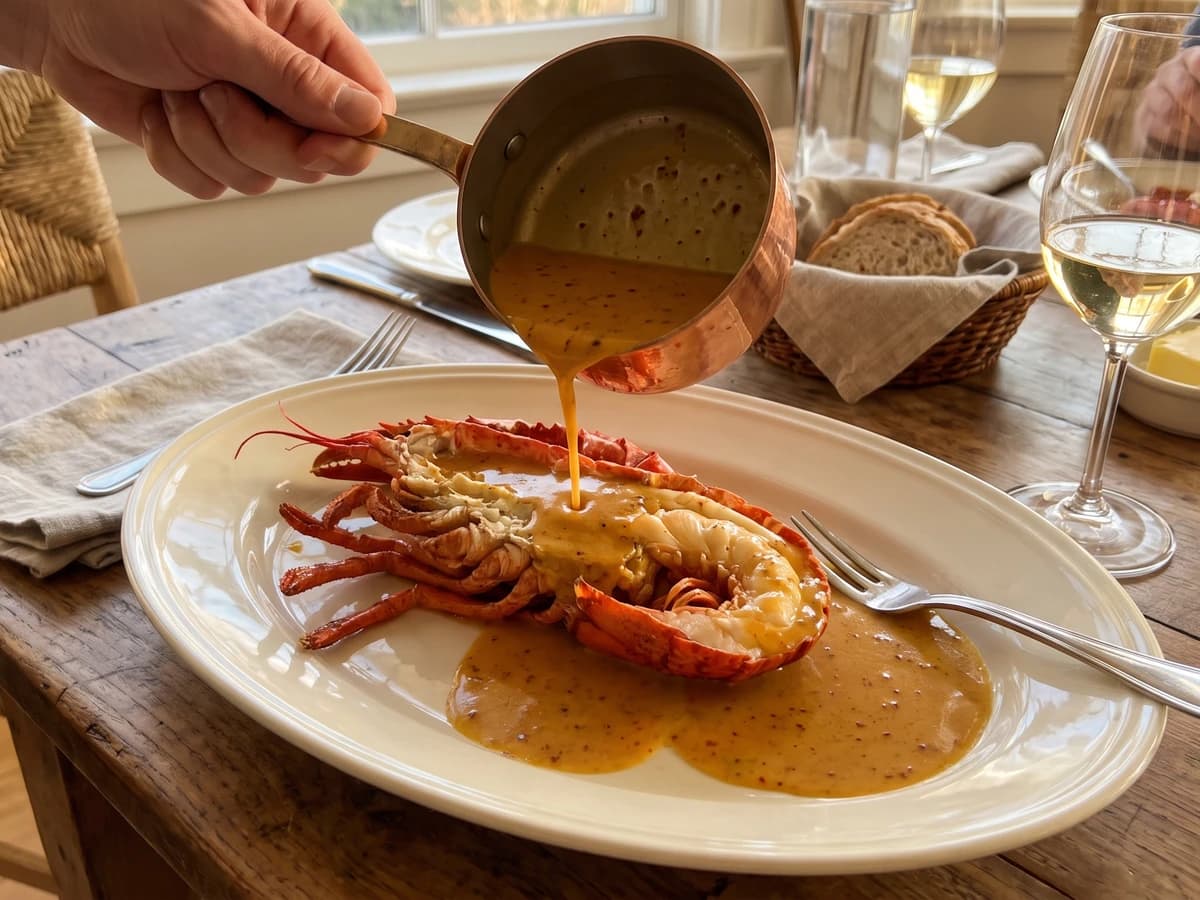
Sauce Orientale concentrates lobster-rich American Sauce with curry, then folds in cream away from the fire: a glossy, gently spiced derivative made for lobster, crayfish, and firm fish.
Chef Juliette
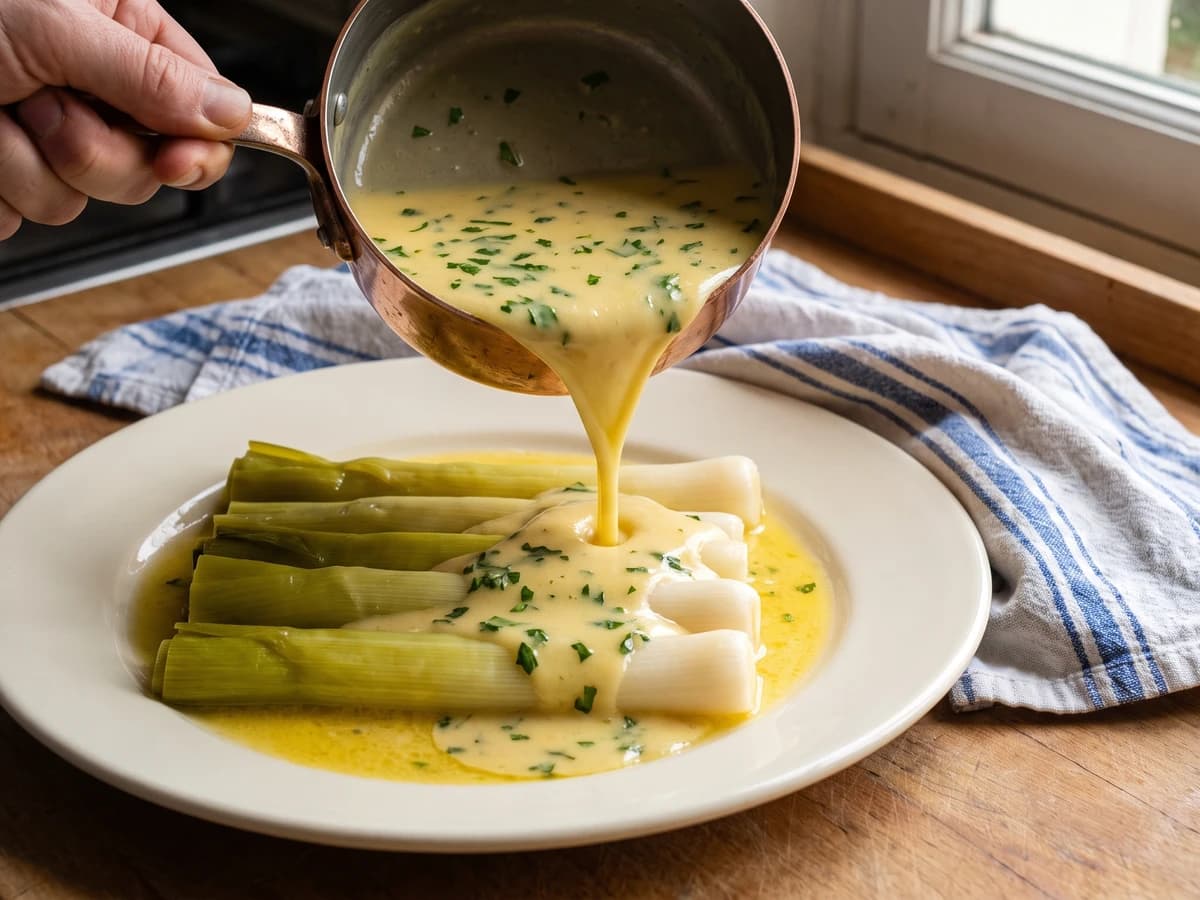
An old lesson in sauce families: Sauce Allemande takes mushroom liquor, then butter, lemon, and parsley, becoming a glossy Poulette for sheep's trotters, leeks, cauliflower, and anything needing gentle richness with a bright edge.