Chef Juliette
Ordinary or White Consommé
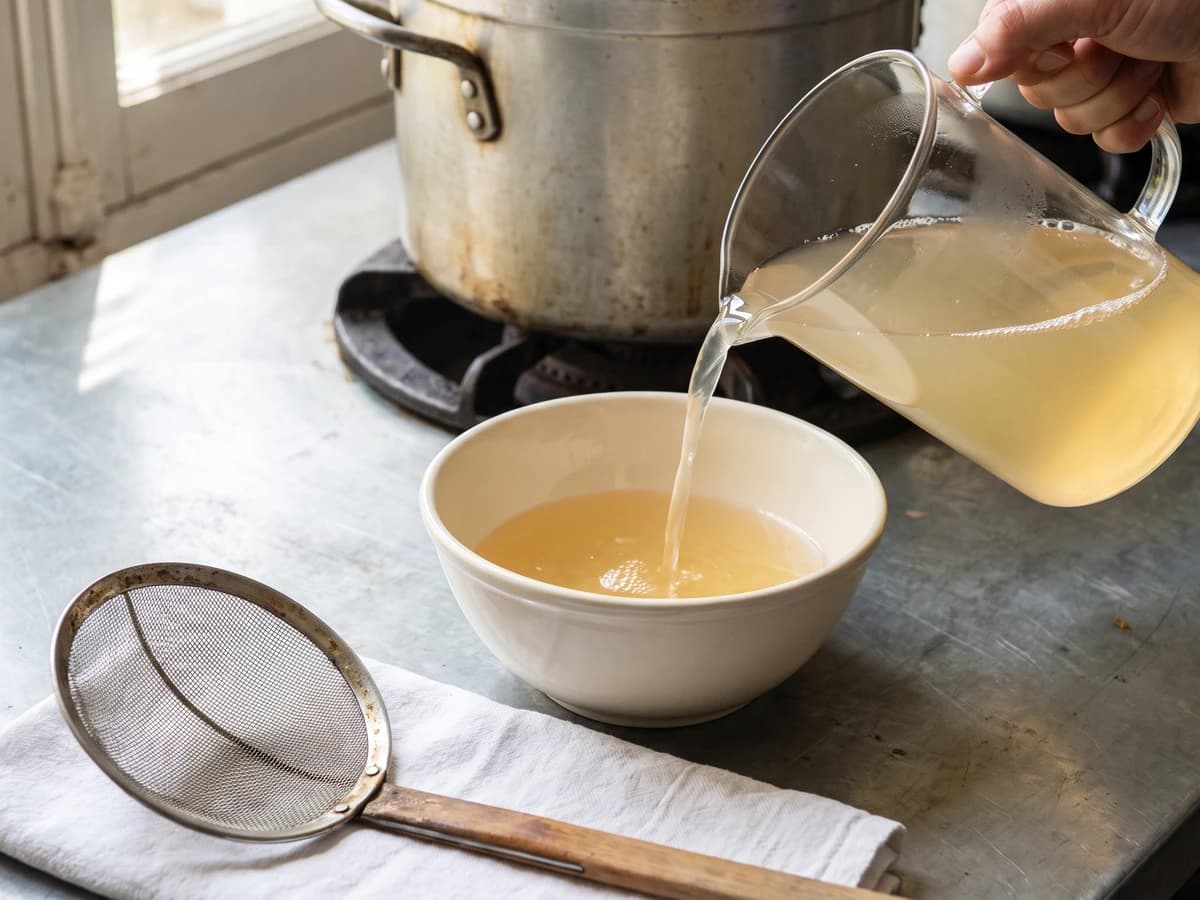
Beef shin, lean beef, and fowl begin in cold water and rise slowly toward a tremble. Skim before the boil, and you learn the quiet discipline that gives every clear French broth its backbone.
A cooking platform built around craft, culture, and the stories behind what we eat.
Created by Chef Juliette
Based on No. 24, Lenten Espagnole, from Le Guide Culinaire (1907) by Auguste Escoffier
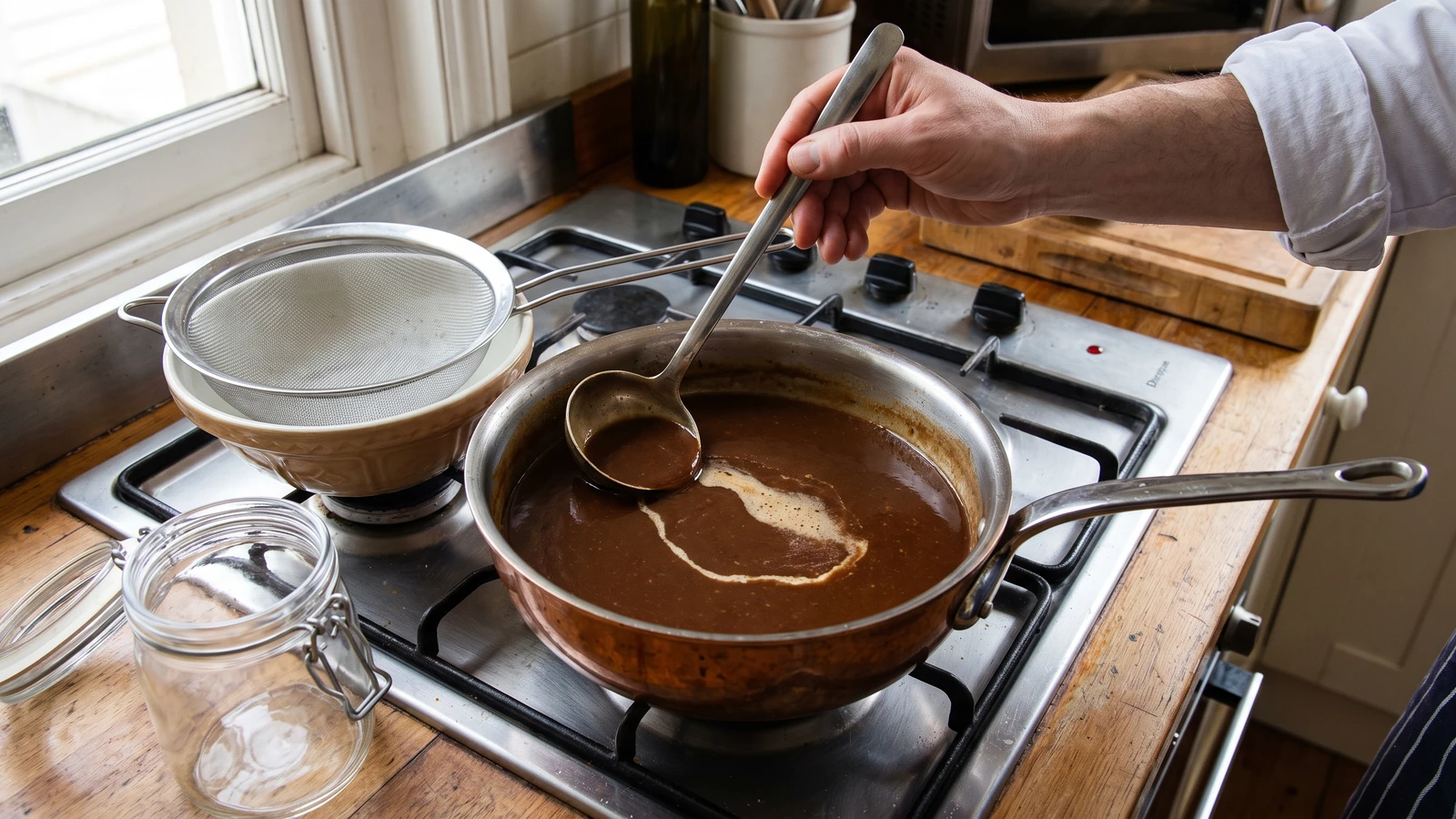
Espagnole Maigre proves that abstinence needn't mean a thin sauce: mushroom parings deepen the mirepoix, fish fumet supplies the foundation, and one attentive hour of skimming gives a smooth, clear-bodied result.
Espagnole Maigre (Lenten fish Espagnole) teaches that a mother sauce is defined by its structure, not by meat. Build a proper brown roux, give it a clean fish fumet, then dépouiller, skim it steadily at a bare tremble, and it gains the authority of ordinary Espagnole without bacon or meat stock. The one true thing to know before touching the pan is this: the quiet hour of skimming is the sauce. A boil churns the impurities back through it.
The professional formula assumed a saucier watching the pot, fish fumet never off the fire, and quantities large enough for a full service. Here the same proportions produce about two quarts in one heavy saucepan. The salamander belongs only when this sauce continues into Gratins (No. 268); a home broiler answers for it in that separate preparation. What changed is scale and equipment, because one cook doesn't need a battery of stockpots. What remains is the dish: brown roux, Mirepoix (No. 228) with mushroom parings replacing bacon, fish fumet, tomato, and one hour of careful dépouillage.
Repeated handling by several cooks was brigade scaffolding, so it can go. The one-hour simmer cannot. Keep the surface barely moving and skim without stirring the froth back into the sauce; if the fumet knots when it meets the roux, stop adding liquid and whisk it smooth off the heat. Ça se rattrape.
Espagnole Maigre belongs to the professional sauce kitchens of Paris and to Catholic Lenten tables across France, not to Spain or to one French province. It rebuilds ordinary Espagnole with fish fumet and mushroom parings, removing bacon and meat stock without surrendering the structure of the mother sauce. Practical cooks disagreed over whether a separate preparation was necessary because neutral Espagnole could be flavoured afterward, but strict abstinence demanded the dedicated sauce for preparations such as gratins and Genevoise sauce.
Quantity
½ cup (120 ml / 113 g)
Quantity
⅞ cup (210 ml / 113 g)
Quantity
10 cups (2.4 L / 2.4 kg)
unsalted or lightly salted
Quantity
1½ cups (360 ml / 200 g) Mirepoix (No. 228)
made by its own formula with the bacon omitted
Quantity
½ cup loosely packed (120 ml / 30 g), for Mirepoix (No. 228)
used in place of the omitted bacon
Quantity
1 cup (240 ml / 250 g)
Quantity
1
Quantity
Up to 1 teaspoon (5 ml / 6 g)
added only if needed
Quantity
Gratins (No. 268), as needed
made separately and finished with a portion of the sauce
| Ingredient | Quantity |
|---|---|
| clarified unsalted butter | ½ cup (120 ml / 113 g) |
| all-purpose flour | ⅞ cup (210 ml / 113 g) |
| fish fumetunsalted or lightly salted | 10 cups (2.4 L / 2.4 kg) |
| prepared mirepoixmade by its own formula with the bacon omitted | 1½ cups (360 ml / 200 g) Mirepoix (No. 228) |
| clean mushroom paringsused in place of the omitted bacon | ½ cup loosely packed (120 ml / 30 g), for Mirepoix (No. 228) |
| plain unsalted tomato purée | 1 cup (240 ml / 250 g) |
| bouquet garni of parsley stems, thyme, and bay leaf | 1 |
| fine sea salt (optional)added only if needed | Up to 1 teaspoon (5 ml / 6 g) |
| prepared gratin (optional)made separately and finished with a portion of the sauce | Gratins (No. 268), as needed |
Warm the fish fumet in a separate saucepan until small bubbles gather around the edge, then hold it there without boiling. Have the Mirepoix (No. 228) completed according to its own formula with the bacon omitted, and use the clean mushroom parings in its place. Keep the tomato purée and bouquet garni beside the stove. Once the roux begins browning, it deserves your full attention.
Melt the clarified butter in a heavy saucepan over medium-low heat. Whisk in the flour, then trade the whisk for a wooden spoon and cook for 18 to 25 minutes, stirring across the corners and floor without pause, until the roux is an even deep hazelnut colour and smells warmly toasted. This browning is the foundation, not disposable scaffolding. Black flecks or an acrid smell mean the roux has burned and must be started again; bitterness cannot be skimmed away.
Take the saucepan off the heat for two minutes, then whisk in about 2 cups of the hot fish fumet, one ladle at a time, making each addition completely smooth before the next. If lumps form, stop pouring and whisk firmly off the heat; if a few remain stubborn, pass this small amount through a fine sieve and return it to the pan. Ça se rattrape. Gradually whisk in the remaining fumet, then add the tomato purée, the prepared Mirepoix (No. 228), and the bouquet garni. Bring the sauce just to a boil while whisking, then immediately lower the heat.
Hold the sauce at the barest simmer for one hour. A few lazy bubbles should break around the perimeter while the centre remains calm. Every five to ten minutes, draw off the foam and excess fat gathering at the edge with a shallow spoon; this is dépouiller, skimming the sauce clear without stirring the impurities back through it. If the sauce thickens before the hour is complete, add a little hot fish fumet. Do not shorten the skimming, and do not continue it beyond the single hour prescribed for this fish-based Espagnole.
Remove the bouquet garni and pass the sauce through a fine-mesh sieve into a clean saucepan without crushing the mirepoix against the mesh, which would muddy the result. Measure the strained sauce. If there is more than 8 cups, simmer it gently until reduced; if there is less or it coats too heavily, add enough hot fish fumet to restore the yield. The finished Espagnole should nappe the back of a spoon in a smooth, even veil, not sit upon it like paste. Taste only now and add salt if the fumet requires it.
Use the Espagnole Maigre wherever a Lenten preparation calls for ordinary Espagnole. For Gratins (No. 268), add only the quantity directed by that separate formula. For make-ahead storage, divide the remaining sauce between shallow containers and set them in an ice bath, stirring occasionally until cool, then cover and refrigerate promptly. Reheat at a bare simmer and whisk in a spoonful of fish fumet if the chilled sauce has tightened.
1 serving (about 255g)
Culinary guides, cultural storytelling, and the editorial depth that makes cooking meaningful.
Discover Culinary ExplorerChef Juliette
Beef shin, lean beef, and fowl begin in cold water and rise slowly toward a tremble. Skim before the boil, and you learn the quiet discipline that gives every clear French broth its backbone.
Chef Juliette
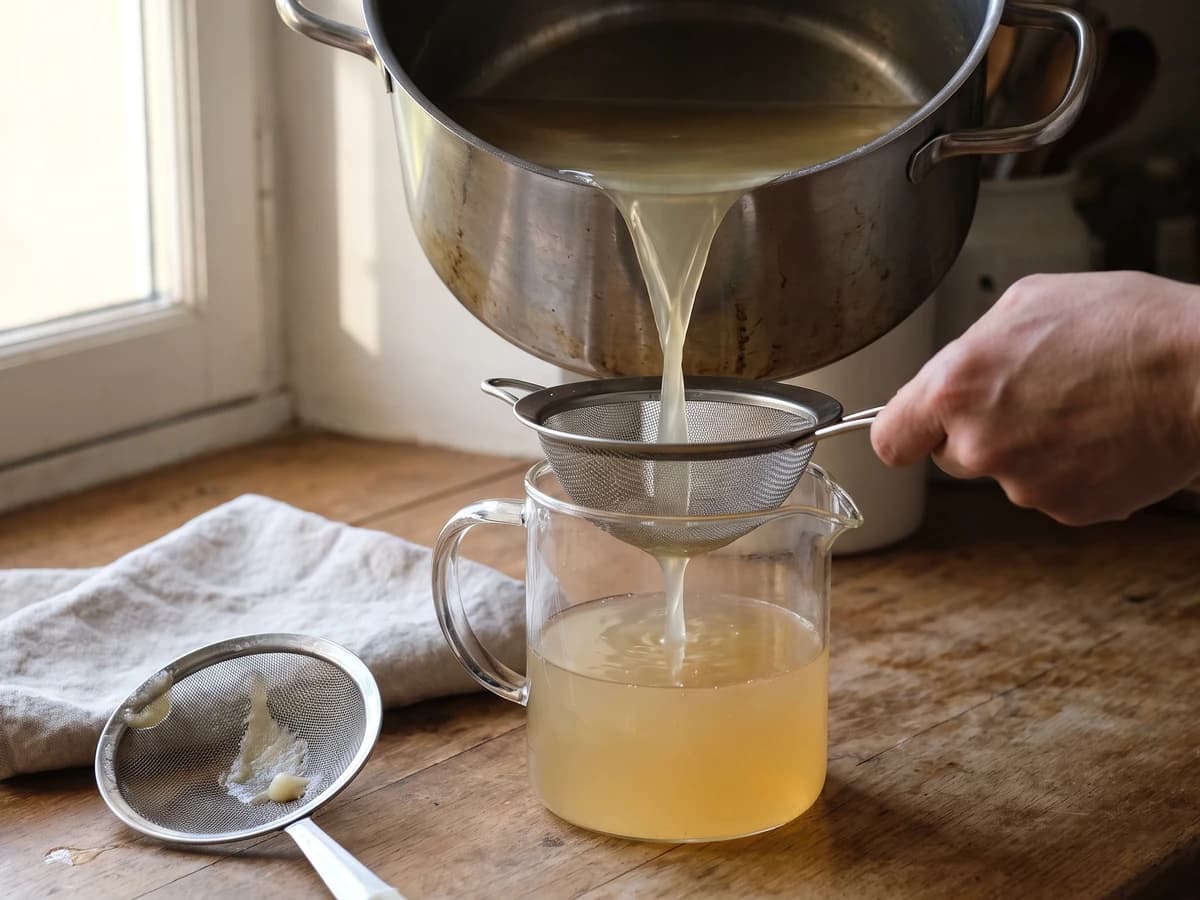
Break the veal bones small, then give them eight hours at a bare tremble. This pale, gelatinous fond becomes the quiet foundation beneath velouté, blanquette, and every sauce that must stay light.
Chef Juliette
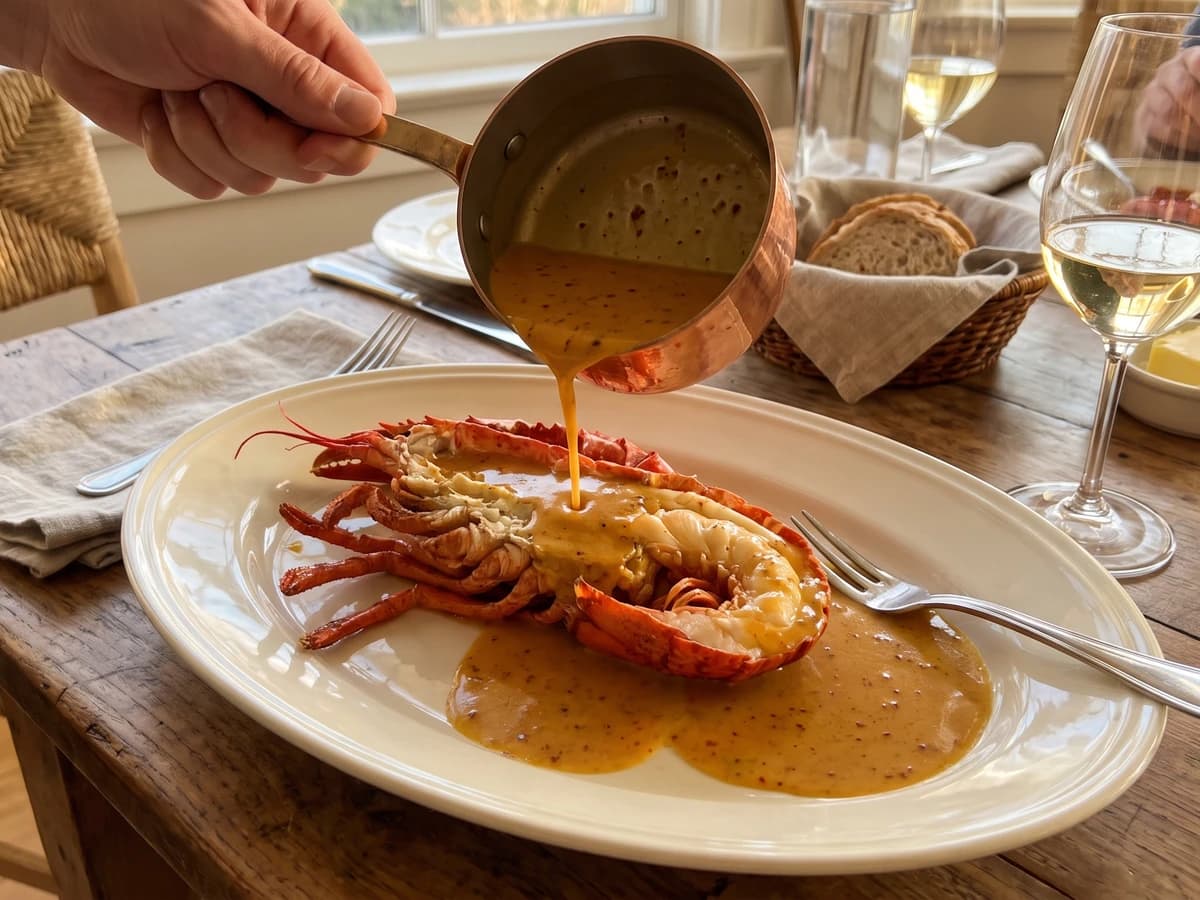
Sauce Orientale concentrates lobster-rich American Sauce with curry, then folds in cream away from the fire: a glossy, gently spiced derivative made for lobster, crayfish, and firm fish.
Chef Juliette
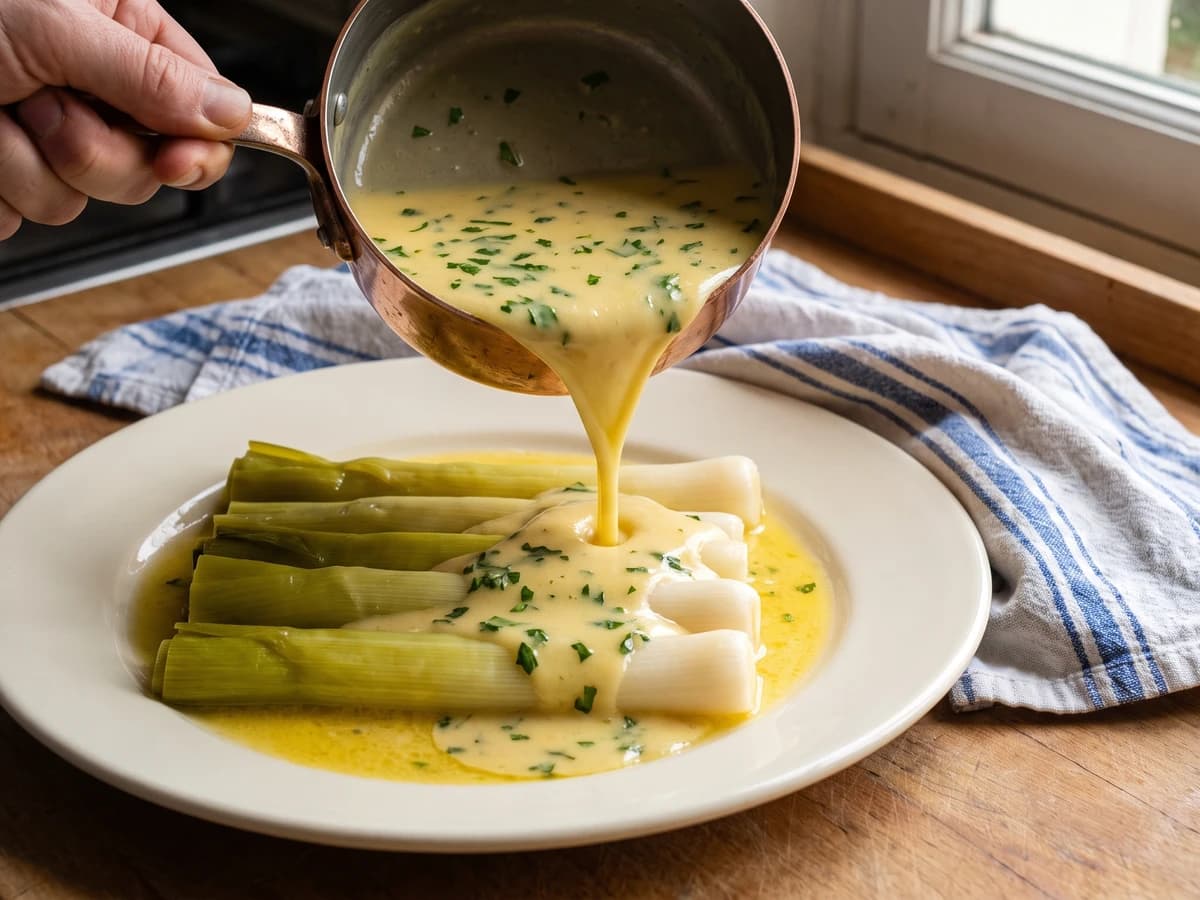
An old lesson in sauce families: Sauce Allemande takes mushroom liquor, then butter, lemon, and parsley, becoming a glossy Poulette for sheep's trotters, leeks, cauliflower, and anything needing gentle richness with a bright edge.