
Chef Juliette
Flan aux Carottes
A pale short-paste shell holds silken, lightly sweet carrot purée beneath neat glazed half-discs, their butter syrup catching the light: a classical tart poised between vegetable course and sweet.
A cooking platform built around craft, culture, and the stories behind what we eat.

Created by Chef Juliette
Based on No. 2362, Dry Sugared Paste for Various Purposes, from Le Guide Culinaire (1907) by Auguste Escoffier
Pâte sucrée teaches the discipline of brief mixing and a hard chill: butter-rich pastry scented with orange-flower water, tender enough for a tart and sturdy enough once patched.
Pâte sucrée teaches one clean principle: tenderness comes from stopping. Powdered sugar and butter give this paste its fine, crisp bite, but every extra turn of the dough develops gluten and steals that delicacy. Keep the butter cool, bring the mixture together briefly, and leave it alone.
The original formula assumed a cool pastry room, a broad marble bench, and a full pound of flour being turned into several preparations at once. This home batch is scaled to two-thirds so the egg count lands cleanly at two while the original proportions, orange-flower perfume, sequence, and two brief kneads remain intact. The cool room and brigade volume were scaffolding; a mixing bowl, a cool counter, and the refrigerator replace them honestly. The two kneads are the dish, and they stay.
When the paste is right, it feels smooth and supple without becoming elastic, with a faint orange-flower scent beneath the butter. Sugar makes it fragile when rolled, so don't force a cold disc and don't throw away a torn one. Ça se rattrape: press on a scrap, roll lightly, and continue. The moment that matters most is the fraisage, the brief heel-of-hand smearing of the dough, performed twice and no more.
Pâte sucrée belongs to the pâtisserie workshops and bourgeois tables of Paris, where its sweet, egg-bound richness made a dependable shell for fruit tarts, tartlets, and petits fours. From there it entered the national pastry repertoire, valued because it could be prepared ahead, kept cool, and shaped for several purposes as service required. The boundary between pâte sucrée and the more crumbly pâte sablée has never been perfectly fixed across French pastry books; in this formula, the eggs and two controlled kneads produce a smooth paste that remains tender because it is worked so briefly.
Quantity
2½ cups (10⅔ oz / 303 g)
sifted
Quantity
9 tablespoons plus 1 teaspoon (4⅔ oz / 132 g)
cool and pliable, cut into small pieces
Quantity
¾ cup plus 1 tablespoon (3⅓ oz / 95 g)
sifted if lumpy
Quantity
2 (about 6 tablespoons / 100 g out of shell)
at cool room temperature and lightly beaten
Quantity
1 teaspoon (5 ml / 5 g)
| Ingredient | Quantity |
|---|---|
| all-purpose floursifted | 2½ cups (10⅔ oz / 303 g) |
| unsalted buttercool and pliable, cut into small pieces | 9 tablespoons plus 1 teaspoon (4⅔ oz / 132 g) |
| powdered sugarsifted if lumpy | ¾ cup plus 1 tablespoon (3⅓ oz / 95 g) |
| large eggsat cool room temperature and lightly beaten | 2 (about 6 tablespoons / 100 g out of shell) |
| food-grade orange-flower water | 1 teaspoon (5 ml / 5 g) |
Weigh the ingredients before you begin, because this paste depends on the book's proportion of flour, butter, sugar, and egg. Sift the flour into a wide bowl and sift the powdered sugar separately if it carries any hard lumps. The butter should bend beneath a finger without looking oily; if it is hard, leave it briefly at room temperature, and if it shines or smears, return it to the refrigerator for ten minutes.
Work the butter and powdered sugar together with a wooden spoon or flexible scraper until they form a smooth, pale paste, but don't whip air into them. Stir the orange-flower water into the beaten eggs, then add the egg mixture to the butter in three additions, mixing each one in before the next. If the mixture looks curdled, stop beating and work in a tablespoon taken from the measured flour. Ça se rattrape. Add the remaining flour and fold just until no broad pockets of dry flour remain; the dough should still look rough.
Turn the rough dough onto a clean, cool counter. Using the heel of your hand, push portions of dough forward across the surface in one deliberate pass, then gather everything with the bench scraper. Repeat the pass once, and only once. This is the source's instruction to knead twice: enough work to distribute the butter and smooth the paste, not enough to make it elastic. If the dough becomes sticky after the first pass, scrape it into a mound and chill it for ten minutes before completing the second; don't bury it under more flour.
Gather the dough without further kneading and roll it gently into a ball, as the original directs. Wrap it tightly so no dry skin can form, then refrigerate it for at least two hours. The old pastry room supplied constant coolness; the refrigerator supplies it at home. The paste is ready when it feels firm throughout rather than merely cold at the surface.
When the next preparation calls for the paste, cut the chilled ball in half and let one portion stand for five to ten minutes, just until a rolling pin can press it without splitting the edges. Roll it lightly to about 3 mm (⅛ inch), preferably between sheets of parchment. If cracks open around the edge, the paste is too cold, so wait a few minutes. If it tears, press a scrap over the gap and roll once to join it; if it smears or sticks, slide it onto a tray and chill it for ten minutes. Sugar makes pâte sucrée fragile, not ruined. Line the tart tin or cut the shapes required by the next preparation, then chill the shaped pastry for thirty minutes before baking.
1 serving (about 40g)
Culinary guides, cultural storytelling, and the editorial depth that makes cooking meaningful.
Discover Culinary ExplorerChef Juliette
A pale short-paste shell holds silken, lightly sweet carrot purée beneath neat glazed half-discs, their butter syrup catching the light: a classical tart poised between vegetable course and sweet.
Chef Juliette
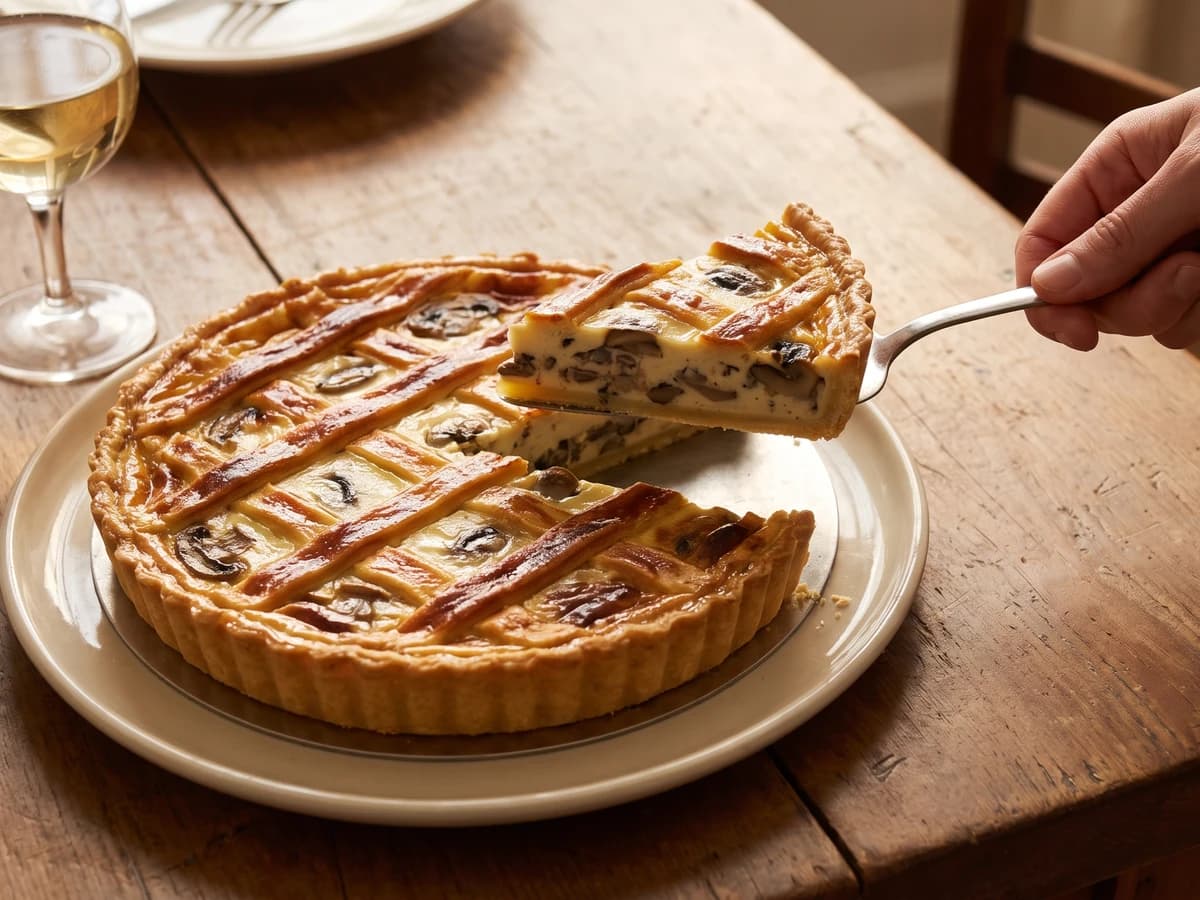
A hot mushroom flan under a butter-gold lattice, with cream reduced close around barely opened caps and a crisp short-paste base protected by one discipline: cool the filling completely.

Chef Juliette
Four little mushroom flans, latticed and gilded, baked hard and fast until butter-gold: a classical garnish scaled to the meat it accompanies and served before its crispness has time to fade.
Chef Juliette
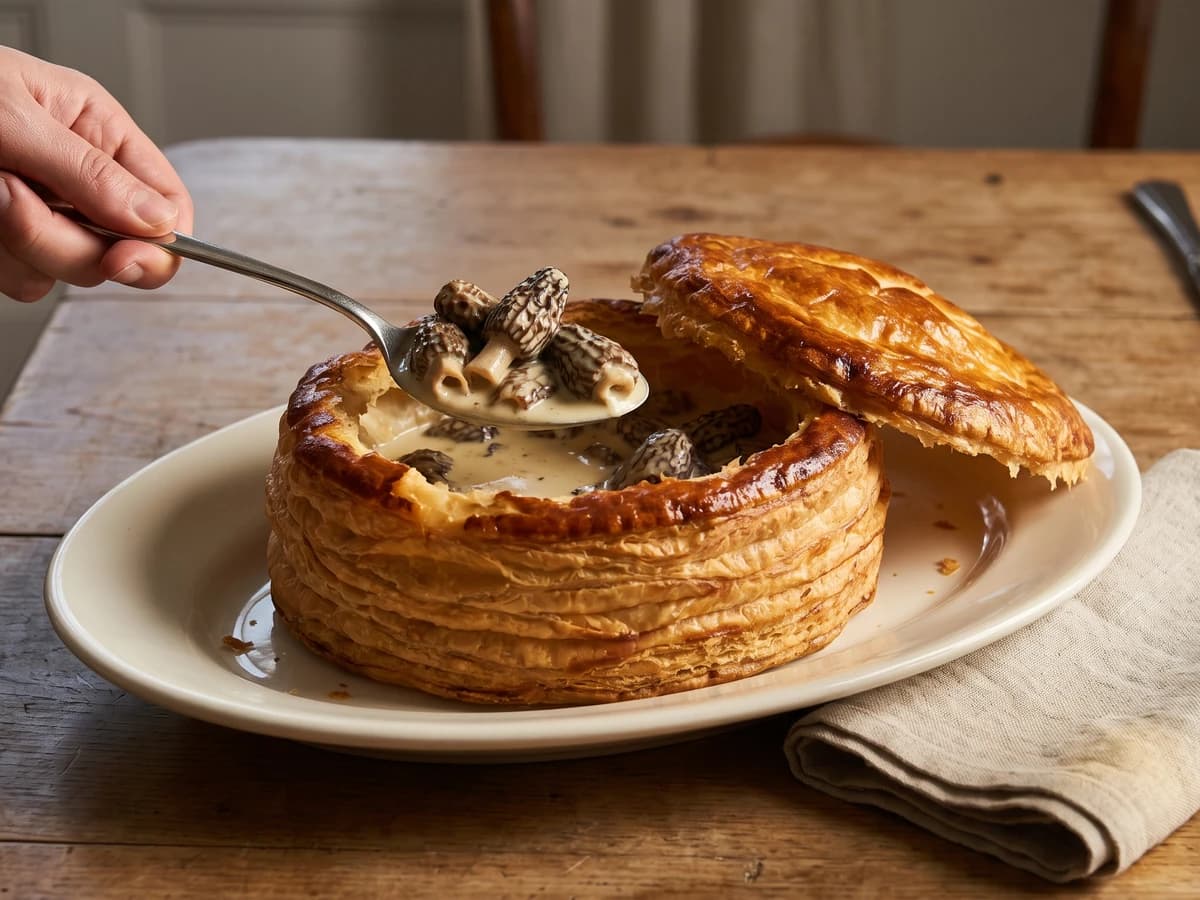
Morels surrender their liquor, then take it back as a glossy cream-and-butter sauce inside burnished puff pastry. The lesson is simple and absolute: reduce with patience, then heat gently and never boil.