Chef Juliette
Ordinary or White Consommé
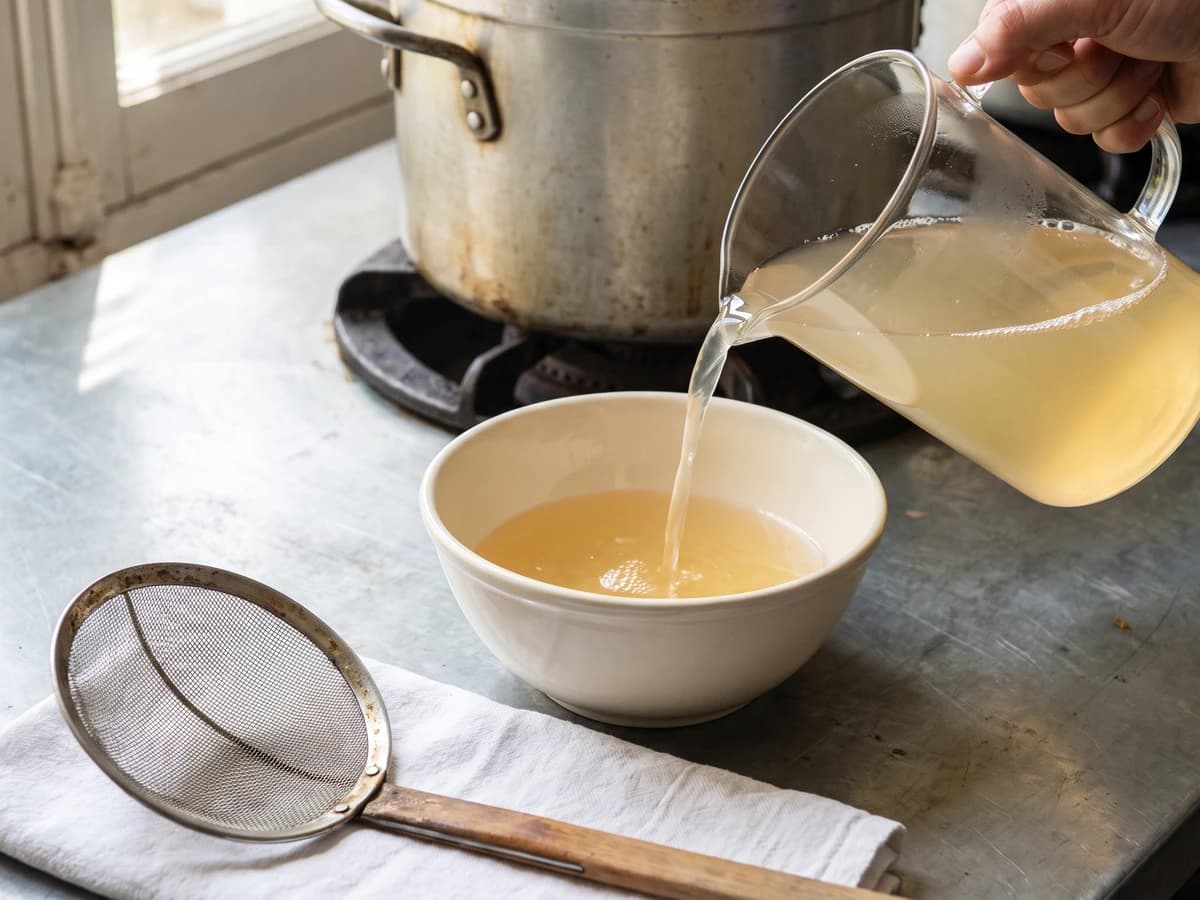
Beef shin, lean beef, and fowl begin in cold water and rise slowly toward a tremble. Skim before the boil, and you learn the quiet discipline that gives every clear French broth its backbone.
A cooking platform built around craft, culture, and the stories behind what we eat.
Created by Chef Juliette
Based on No. 2351, Apple Jelly for Decorating, from Le Guide Culinaire (1907) by Auguste Escoffier
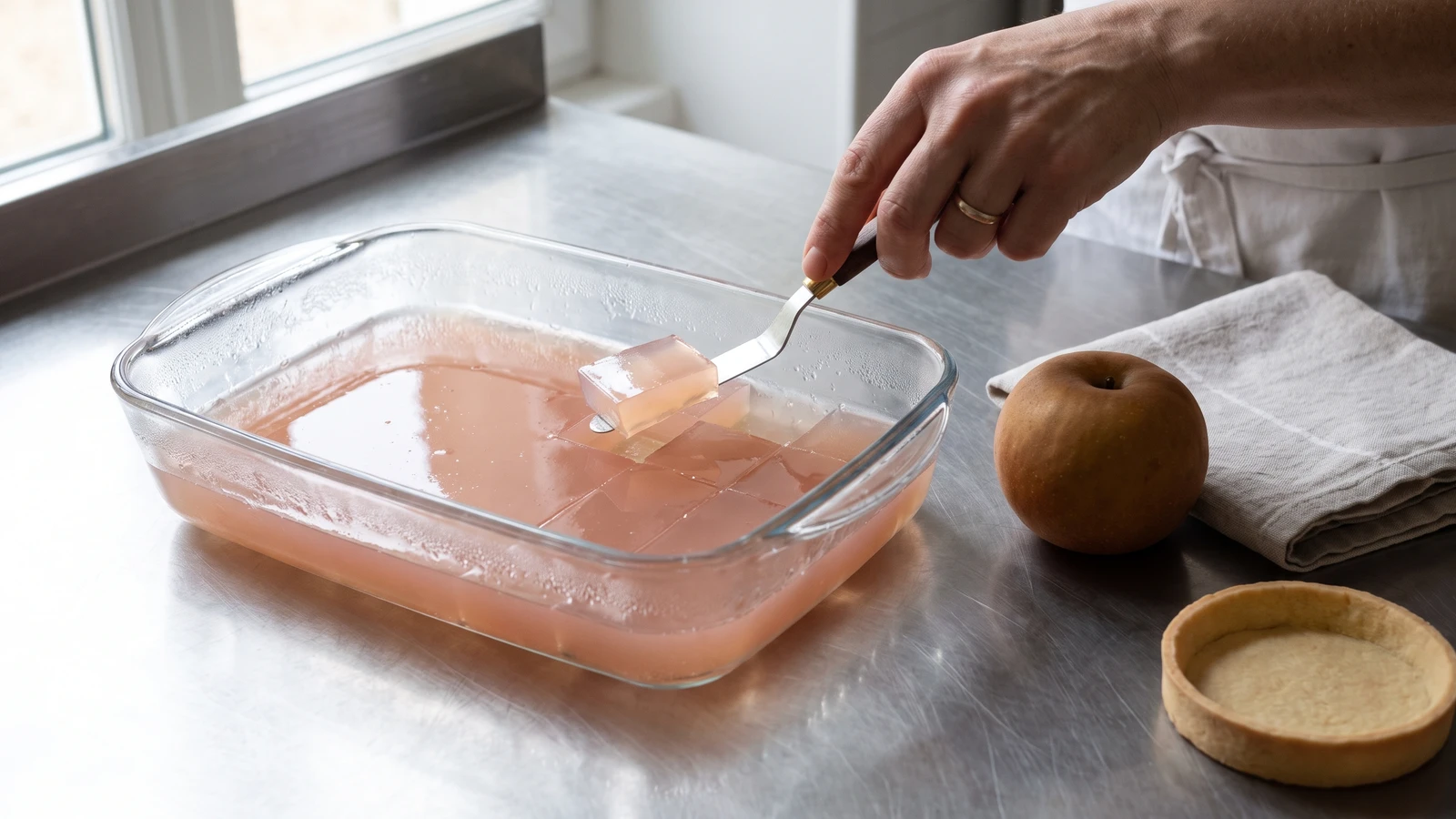
Gelée de pommes turns russets, water, sugar, and a few drops of carmine into a limpid rosy jelly, firm enough to hold a decoration and clear enough to catch the light.
Gelée de Pommes pour Décorer (apple jelly for decorating) teaches the discipline of clarity. The one true thing to know before touching a pan is this: clear jelly is protected, not repaired. Once the apples begin to soften, you don't stir, mash, or press them, because clouded juice cannot be bullied back into brilliance.
The classical formula assumed a broad copper basin, fierce range heat, a practiced saucier free to watch the boil, and rows of tin receptacles. Your kitchen gets a wide stainless-steel preserving pan, a thermometer to confirm the skimmer test, and shallow lidded glass dishes. This home batch uses three pounds of apples, enough for about two quarts, while keeping the book's proportions intact: one and one-half Imperial pints of cooking water per two pounds of fruit, then two pounds of sugar per Imperial quart of strained juice. The copper and tins were brigade scaffolding. The untouched cooking, exact sugar ratio, hard boil, patient skimming, and second strain are the dish.
Done properly, the gelée is limpid and faintly rosy, firm when cold yet willing to melt back into a shining glaze. Measure the drained juice before weighing the sugar, then stop the boil the instant the jelly sheets from the skimmer. That judgment decides the set.
Gelée de pommes pour décorer belongs to Parisian pâtisserie and the classical entremets pantry, where naturally pectin-rich apple juice became a clear medium for glazing fruit and cutting small rosy ornaments. Household apple jelly traveled into professional pastry kitchens, but the cooks clarified it through restraint, colored it with carmine, and poured it into shallow tins rather than breakfast jars. Its first purpose is decorative: it must be limpid, firm, and quiet enough to serve another sweet without stealing it.
Quantity
about 7 to 9 medium (3 lb / 1.36 kg)
peeled, quartered, and cored one at a time
Quantity
6 cups (1.42 L / 1.42 kg), or enough to cover
Quantity
5⅓ cups plus 1 tablespoon (2¼ Imperial pints / 1.28 L / 1.28 kg)
Quantity
about 5½ cups (2.4 lb / 1.1 kg), using exactly 4½ cups (2 lb / 907 g) per 4¾ cups plus 1 tablespoon (1 Imperial quart / 1.14 L / about 1.14 kg) strained juice
Quantity
up to ⅛ teaspoon (0.6 ml / about 0.6 g)
added drop by drop
| Ingredient | Quantity |
|---|---|
| russet applespeeled, quartered, and cored one at a time | about 7 to 9 medium (3 lb / 1.36 kg) |
| cold fresh water for holding the apples | 6 cups (1.42 L / 1.42 kg), or enough to cover |
| fresh water for cooking | 5⅓ cups plus 1 tablespoon (2¼ Imperial pints / 1.28 L / 1.28 kg) |
| granulated sugar | about 5½ cups (2.4 lb / 1.1 kg), using exactly 4½ cups (2 lb / 907 g) per 4¾ cups plus 1 tablespoon (1 Imperial quart / 1.14 L / about 1.14 kg) strained juice |
| food-grade liquid carmine or cochineal coloringadded drop by drop | up to ⅛ teaspoon (0.6 ml / about 0.6 g) |
Wash shallow lidded glass dishes or heatproof jars totaling 2 quarts (1.9 L), rinse them well, and keep them warm. Scald two pieces of fine linen or unbleached muslin, wring them damp, and reserve one for each straining. Warm containers and damp cloth keep the finished gelée fluid long enough to pass through cleanly.
Fill a large bowl with the holding water. Quarter, peel, and core each apple, dropping the pieces into the water as soon as they are cut so they don't brown. When every apple is prepared, drain away this holding water completely. Put the fruit into a wide stainless-steel preserving pan with the measured cooking water.
Bring the apples slowly to a gentle simmer and cook them uncovered for 35 to 45 minutes, until the quarters are very soft and beginning to collapse. Do not stir, mash, or prod them. If the fruit settles unevenly, rotate the pan by its handles instead of reaching in with a spoon. This untouched simmer is the principle of the dish: broken pulp releases starch and fine particles that make muddy jelly.
Line a large fine-mesh sieve with the first damp cloth and set it over a deep bowl. Pour in the apples and their liquid, then leave the juice to drain under its own weight for 30 to 45 minutes. Never squeeze the cloth. If the juice is cloudy, ça se rattrape partly: let it stand for 20 minutes, pour the clearer upper portion through fresh damp linen, and leave the sediment behind. Measure the juice precisely before proceeding.
Clean the preserving pan. For every 4¾ cups plus 1 tablespoon (1 Imperial quart / 1.14 L) of strained juice, weigh exactly 2 pounds (907 g) of sugar. For an odd quantity, multiply the juice measured in millilitres by 0.798 to find the sugar weight in grams. Return the juice and sugar to the pan and stir over medium heat only until every crystal dissolves.
Raise the heat and bring the jelly to a fierce rolling boil. Once it boils, stop stirring and skim the pale foam from the surface with a fine skimmer, working carefully so the jelly remains limpid. Keep the boil strong for roughly 10 to 18 minutes. If it surges toward the rim, lift the pan off the heat until it settles, then return it at once. A timid simmer prolongs the cooking and darkens the apples.
Begin testing early. Dip in the skimmer and lift it horizontally: the jelly is ready when what clings to it gathers toward the middle, or when it falls from the edge in large, separate drops that begin to join into a sheet. A thermometer should read about 220°F (104.5°C) at sea level, or 8°F (4.5°C) above water's local boiling point. Remove the pan immediately. If the hot gelée has already turned ropey, ça se rattrape: stir in boiling water 1 tablespoon (15 ml / 15 g) at a time until it flows freely, return it to one brief boil, and test again.
Take the pan off the heat. Add the food-grade carmine one drop at a time, stirring gently after each drop, until the gelée is a clear pale rose. The color reads deeper once the jelly has set, so stop before it looks red. Pass it at once through the second piece of warm damp linen into the prepared containers, without pressing. If it begins setting in the cloth, tip it back into the clean pan with 1 tablespoon (15 ml / 15 g) of water, warm it only until fluid, and strain again through reheated damp linen.
Leave the gelée undisturbed until completely cool, then cover and refrigerate for at least 4 hours. If it remains loose after chilling, return it to the pan, boil it back to the skimmer stage, and repeat the tinting only if the color needs correction. For cut decorations, chill it in shallow dishes and cut with a warm knife. For glazing, warm only the portion you need over gentle heat until it flows. Store refrigerated for up to 1 month. À table!
1 serving (about 300g)
Culinary guides, cultural storytelling, and the editorial depth that makes cooking meaningful.
Discover Culinary ExplorerChef Juliette
Beef shin, lean beef, and fowl begin in cold water and rise slowly toward a tremble. Skim before the boil, and you learn the quiet discipline that gives every clear French broth its backbone.
Chef Juliette
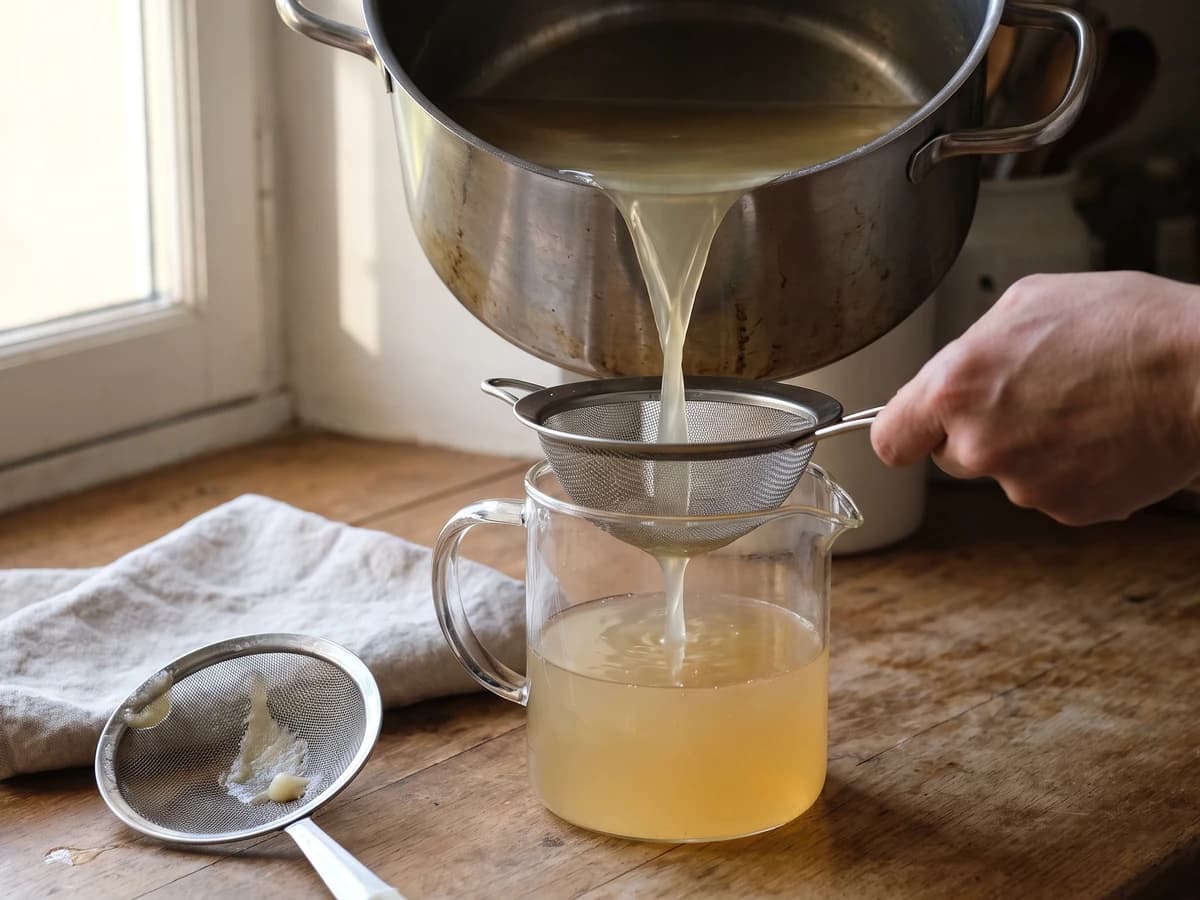
Break the veal bones small, then give them eight hours at a bare tremble. This pale, gelatinous fond becomes the quiet foundation beneath velouté, blanquette, and every sauce that must stay light.
Chef Juliette
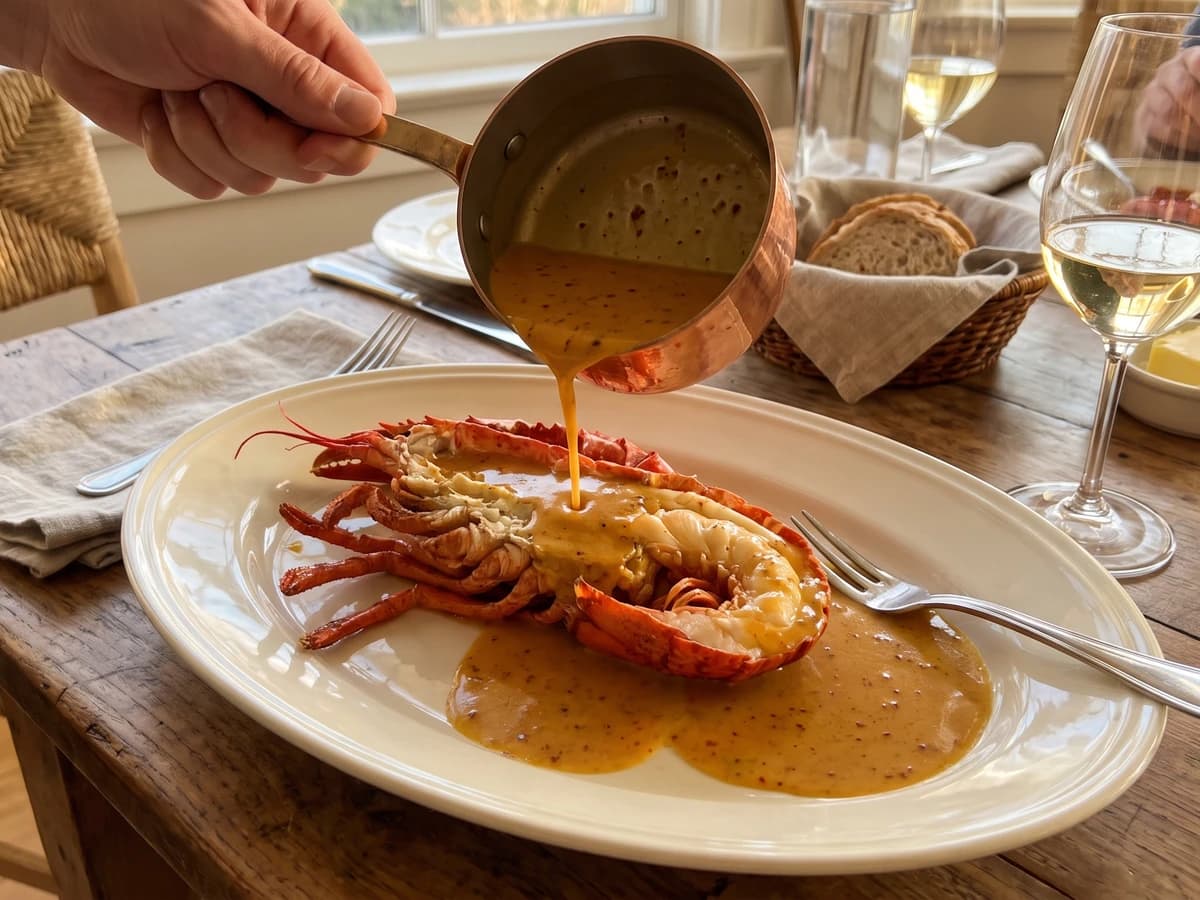
Sauce Orientale concentrates lobster-rich American Sauce with curry, then folds in cream away from the fire: a glossy, gently spiced derivative made for lobster, crayfish, and firm fish.
Chef Juliette
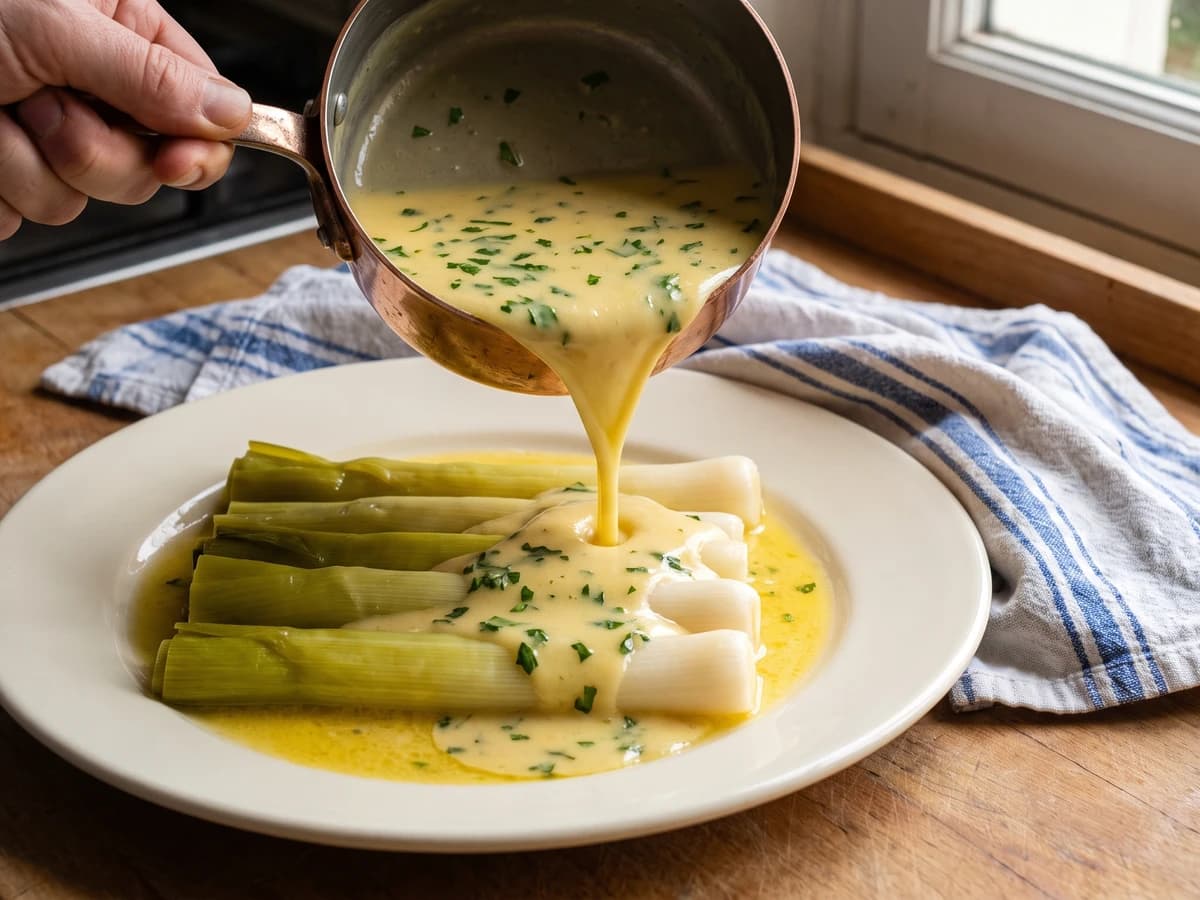
An old lesson in sauce families: Sauce Allemande takes mushroom liquor, then butter, lemon, and parsley, becoming a glossy Poulette for sheep's trotters, leeks, cauliflower, and anything needing gentle richness with a bright edge.