
Chef Juliette
Various Almond Preparations
Five almond preparations, one discipline: remove the skins cleanly, dry every kernel through, then cut, toast, or cloak it in pale caramel without letting its fragrant oils escape.
A cooking platform built around craft, culture, and the stories behind what we eat.
Created by Chef Juliette
Based on No. 2347, Sugar Grains, from Le Guide Culinaire (1907) by Auguste Escoffier
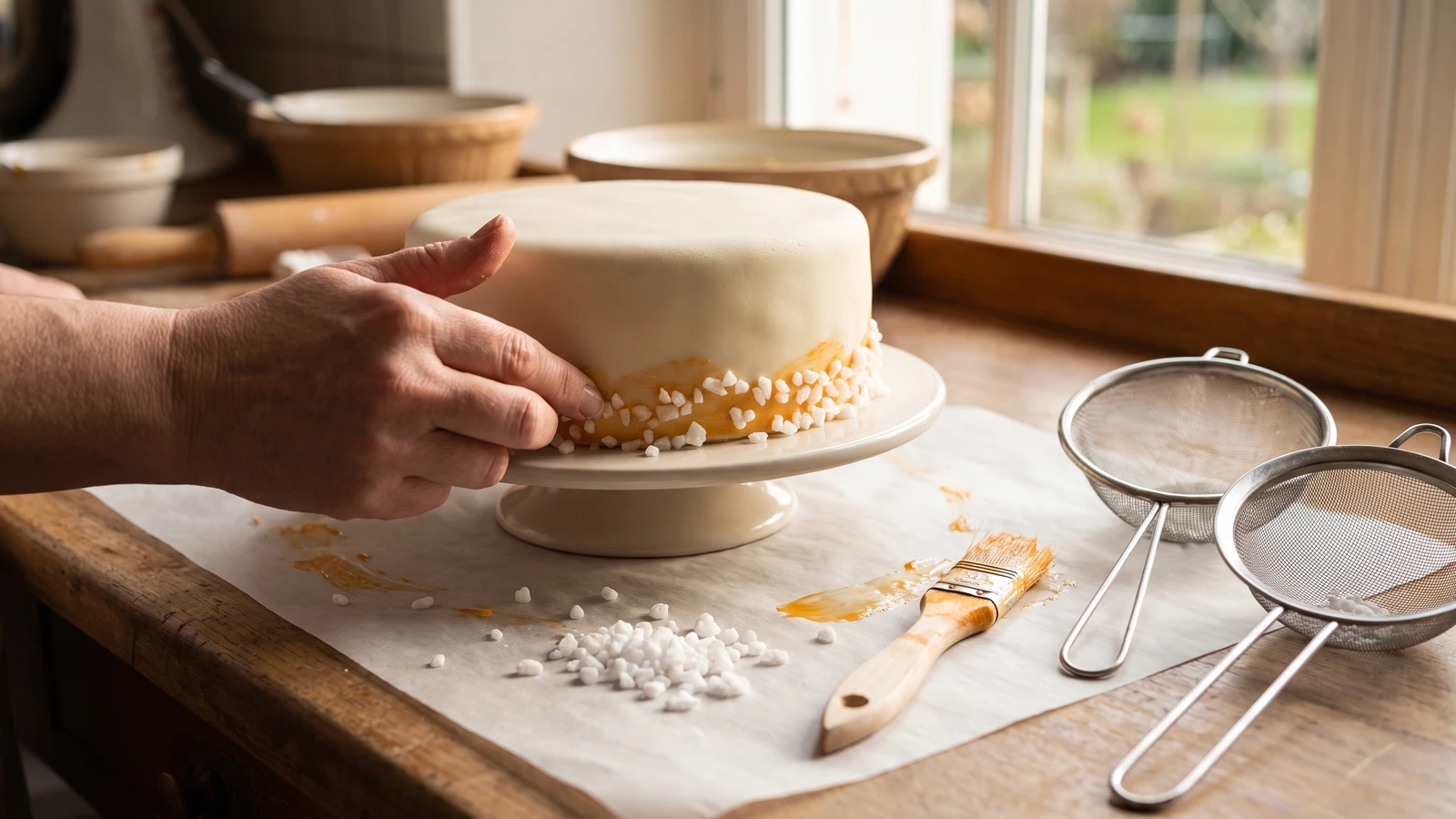
Loaf sugar becomes clean, even grains through rough pounding and two sieves, then warm cooked apricot fixes them to a cake border. The lesson is simple: grade the sugar, and never trust a dry surface.
Grains de sucre (sugar grains) teach a small but exact lesson: texture is made by grading, not by crushing blindly. Before you touch a pan, know this: the sugar itself never cooks. It is roughly pounded, then selected between two sieves so the boulders stay above, the powder falls below, and only clean grains remain.
The original pastry room assumed hard loaf sugar, a dedicated sugar mortar, several tamis, and enough cakes to justify a basinful. Your home kitchen needs none of that scale. Firm white sugar cubes replace the now-uncommon loaf, a rolling pin supplies the rough pounding, and two sieves sort one useful jarful. The brigade quantity and special mortar were scaffolding and can go. Rough pounding, double sifting, and cooked apricot are the preparation and must stay. One cook, one stove, one evening.
The finished grains should be irregular but clean, catching the light without a coat of white dust. Brush the cake border with cooked apricot first; nothing else in this preparation makes them hold cleanly. The step that matters most is the second sifting: keep what stays on the finer mesh and let every trace of powder fall through.
Grains de sucre belong to the working pastry rooms of Paris and the broader French pâtisserie canon, where refined sugar was kept in hard loaves and broken as each preparation required. Successive tamis sorted the fragments: even grains went to cake borders and sugared-paste bases, while the powder returned to creams and doughs, so nothing was wasted. They are not pearl sugar; their irregular sparkle comes from pounded loaf sugar, with cooked apricot serving as the traditional adhesive.
Quantity
1 loosely filled cup (240 ml / 200 g)
kept whole until pounding
Quantity
3 tablespoons (45 ml / 60 g)
for the cooked apricot glaze
Quantity
1 teaspoon (5 ml / 5 g)
for loosening the glaze only if needed
| Ingredient | Quantity |
|---|---|
| hard white sugar cubeskept whole until pounding | 1 loosely filled cup (240 ml / 200 g) |
| smooth apricot preservesfor the cooked apricot glaze | 3 tablespoons (45 ml / 60 g) |
| water (optional)for loosening the glaze only if needed | 1 teaspoon (5 ml / 5 g) |
Set a coarse wire sieve over a finer sieve, with a wide bowl underneath. For coarse cake-border grains, use openings of about 3 mm above a mesh near 1 mm; for finer grains, use about 2 mm above a mesh near 0.5 mm. What passes through the upper sieve but remains on the lower one is your chosen grade. The powder must fall completely away.
Put one-quarter of the sugar cubes into a strong zip-top bag and cover it with a folded kitchen towel. Strike them with short, controlled taps from a rolling pin until you have fragments ranging from pinhead to small lentil size. Pound, don't grind. Work through the remaining cubes in small batches so you can stop before they disappear into powder.
Tip one batch into the upper sieve and shake gently until the smaller fragments fall through. Return the large pieces caught above to the bag for another light pounding. Lift away the upper sieve, then shake the finer one until the powder falls into the bowl and clean grains remain on its mesh. If the first batch turns mostly to powder, stop. Ça se rattrape: reserve that sugar for pastry or custard, then pound the next cubes with lighter, fewer taps. Powder cannot be pressed back into honest grains.
Transfer the finished grains to a completely dry, airtight jar. Keep coarse and fine grades in separate jars if you made both. Moisture begins dissolving their edges, so the sugar stays well away from the apricot and pastry brush until the moment of application.
Put the apricot preserves in a small saucepan over low heat. Once loose, let them bubble briskly for about 1 minute, stirring, until glossy, smooth, and tacky enough to cling to the brush. If the cooked apricot tightens too far, remove it from the heat and stir in the water a few drops at a time; if it runs like syrup, cook it for another 30 seconds. Keep it warm while you work.
Set the finished cake or sugared-paste base over parchment to catch the excess. Brush a thin, even band of warm cooked apricot exactly where the grains should sit, working in manageable sections so it remains tacky. Sprinkle grains over a horizontal border, or cup them in your hand and press them gently against a vertical side. If they shed, the apricot cooled or the coating was too thin. Ça se rattrape: lift away the loose grains, rewarm a spoonful of apricot, brush the bare patch, and apply them again. Leave the border undisturbed for 15 minutes, then tip away any unattached sugar. À table!
1 serving (about 13g)
Culinary guides, cultural storytelling, and the editorial depth that makes cooking meaningful.
Discover Culinary ExplorerChef Juliette
Five almond preparations, one discipline: remove the skins cleanly, dry every kernel through, then cut, toast, or cloak it in pale caramel without letting its fragrant oils escape.

Chef Juliette
A pastry pantry lesson in one tray: filberts warmed only until their red skins release, rubbed clean, cooled, and chopped into a fragrant mise-en-place for cakes, creams, pralines, and petits fours.

Chef Juliette
The smallest pâtisserie discipline decides whether a cake leaves its mould intact: clarified butter in every corner, followed by the lightest veil of dry flour or fécule.

Chef Juliette
Four whites, one spotless bowl, and a patient change of speed: whisk gently until loosened, then briskly to glossy stiffness, with powdered sugar waiting if the foam begins to granulate.