Chef Juliette
Ordinary or White Consommé
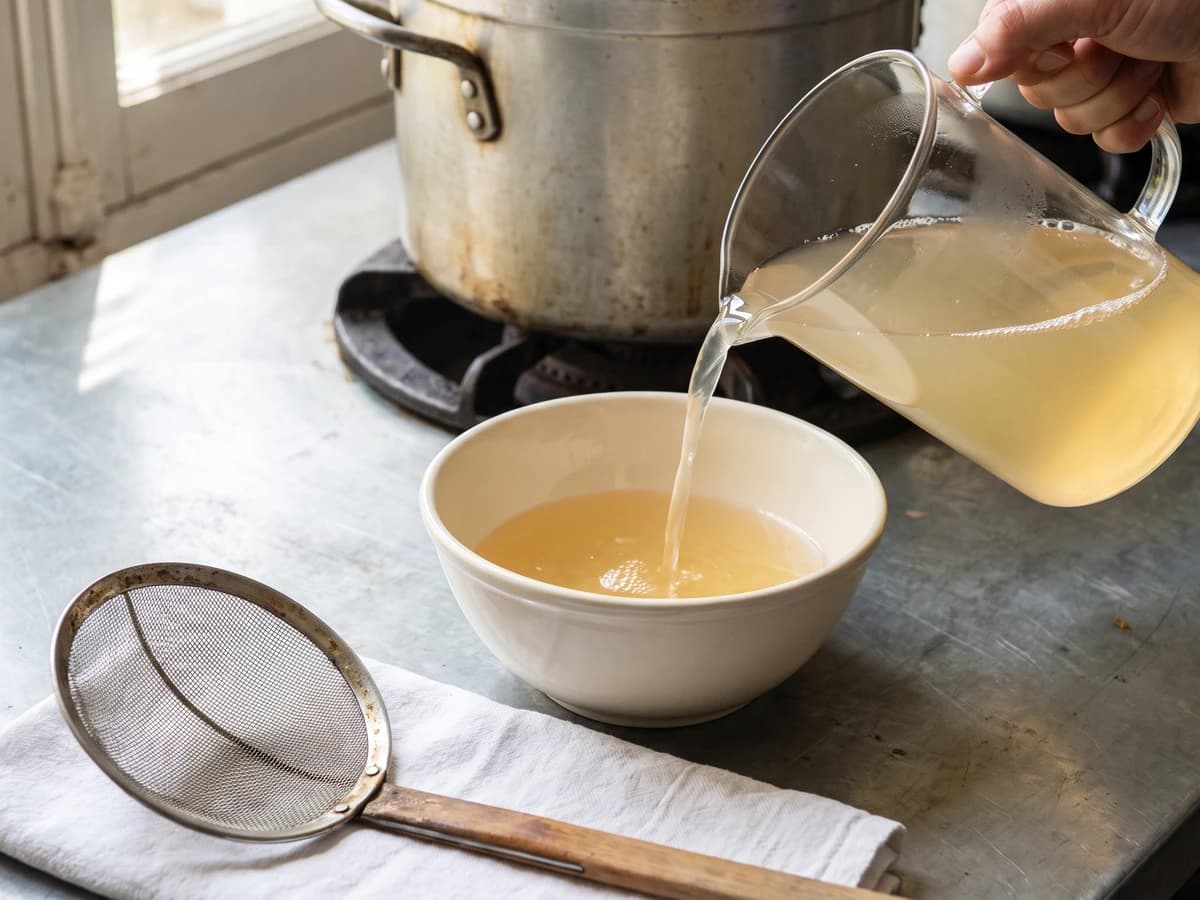
Beef shin, lean beef, and fowl begin in cold water and rise slowly toward a tremble. Skim before the boil, and you learn the quiet discipline that gives every clear French broth its backbone.
A cooking platform built around craft, culture, and the stories behind what we eat.
Created by Chef Juliette
Based on No. 2340, Various Butters, from Le Guide Culinaire (1907) by Auguste Escoffier
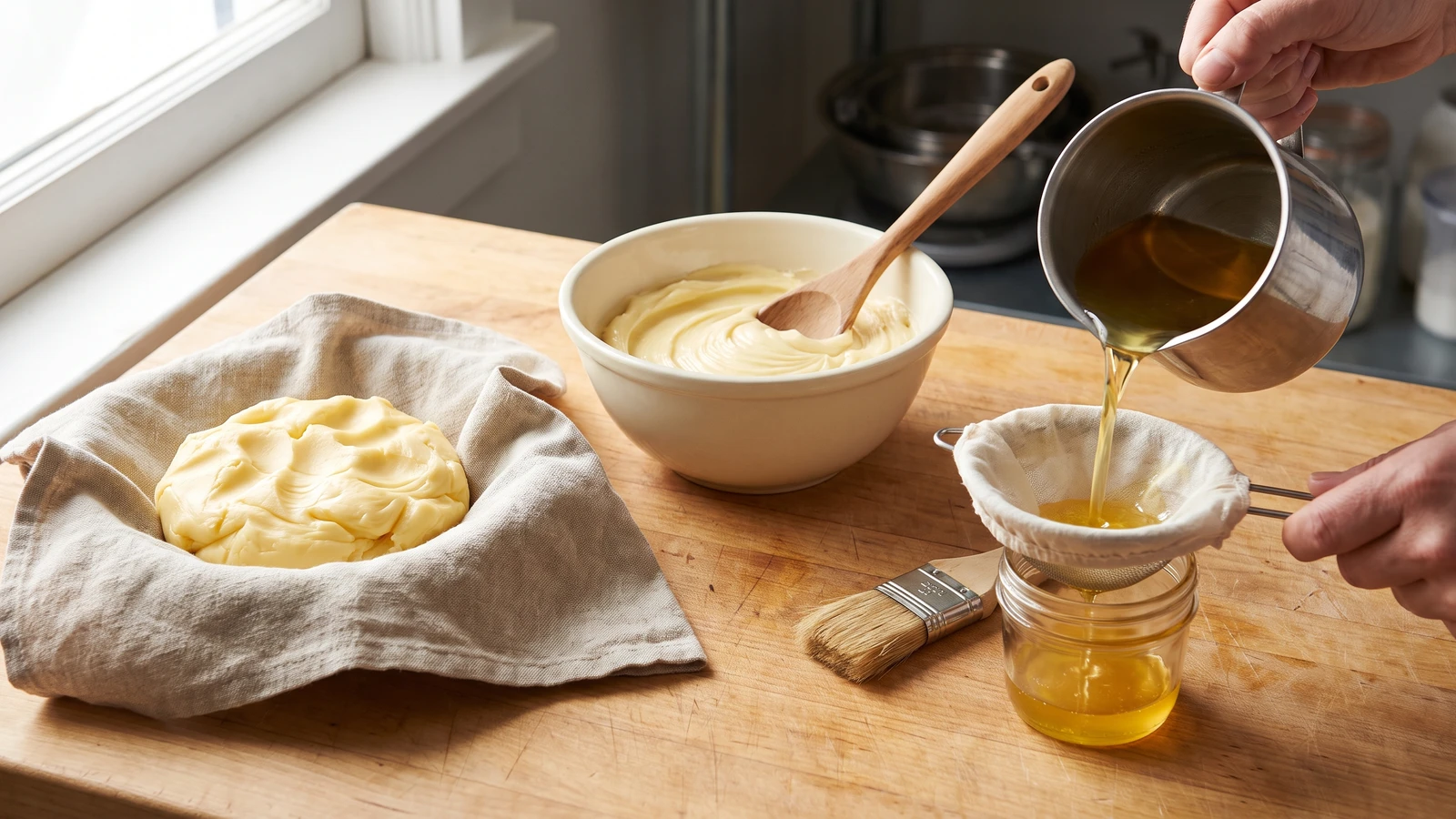
Three states, one lesson: control butter’s water and texture before it meets the pastry, then soften, work to pommade, or clarify according to the job it must do.
Beurres de pâtisserie: beurre ramolli, beurre en pommade et beurre clarifié (softened butter, butter worked to a smooth cream, and clarified butter) teach one governing principle. Before touching a pan, know this: water and texture decide how butter behaves. Knead out the residual buttermilk before mixing a paste, or the paste takes on water it never wanted.
The source formula gives no fixed proportion because nothing is being combined; it assumes a pastry station treating large blocks according to the day’s work. Here, each state begins with one cup of butter, enough for one cook’s baking without filling the refrigerator with mise en place. A clean linen cloth replaces the station towel, a hot-rinsed and thoroughly dried bowl remains exactly as prescribed, and the smallest heavy saucepan gives a home stove the control of a slow fire. Bulk handling was brigade scaffolding and can go. Kneading, working to pommade, slow clarification, and muslin straining are the preparation itself and must stay.
Beurre ramolli should bend without a greasy shine, beurre en pommade should hold a smooth furrow from the spoon, and beurre clarifié should pour limpid and gold with only the faintest nutty scent. The first kneading matters most. Keep the butter pliable but matte while you press out its moisture; if it grows oily, chill it briefly and begin again. Ça se rattrape.
These three states belong to the working vocabulary of French pâtisserie, from Parisian pastry rooms to household baking in Lyon, rather than to any single regional larder. They passed easily from large kitchens to home tables because each name describes a physical condition with a particular job: ramolli mixes into pastes, pommade disperses evenly, and clarifié coats moulds without milk solids. Softened and pommade are often treated as synonyms, but the classical distinction is deliberate: pommade has been worked beyond mere pliability into a perfectly smooth cream.
Quantity
1 cup (240 ml / 227 g)
cool but pliable
Quantity
1 cup (240 ml / 227 g)
cool but pliable
Quantity
1 cup (240 ml / 227 g)
cut into cubes
| Ingredient | Quantity |
|---|---|
| unsalted butter for beurre ramollicool but pliable | 1 cup (240 ml / 227 g) |
| unsalted butter for beurre en pommadecool but pliable | 1 cup (240 ml / 227 g) |
| unsalted butter for beurre clarifiécut into cubes | 1 cup (240 ml / 227 g) |
Set the portions for beurre ramolli and beurre en pommade at cool room temperature for 20 to 30 minutes. They are ready when a finger leaves a clean indentation and each piece bends without cracking, yet the surface remains matte. Keep the portion for beurre clarifié cold until its saucepan is ready. Do not use a microwave; melted pockets destroy the even consistency these first two states require.
Lay the first portion in the centre of a clean, strong, lint-free linen cloth and fold the cloth over it. Press and knead through the cloth with the heel of your hand, folding the butter back over itself repeatedly, until it is uniformly supple and the cloth no longer shows damp patches from residual buttermilk. Modern butter may release very little, so judge the work by both signs: no visible moisture and no hard core. Scrape the beurre ramolli into a covered container. If it begins smearing through the cloth, refrigerate the parcel for 5 minutes, then continue. The butter has warmed too far, not failed.
Knead the second portion in the cloth exactly as for beurre ramolli. Rinse a heatproof bowl with hot water, pour the water away, and wipe the bowl absolutely dry. Put in the butter and work it firmly against the sides with a wooden spoon or spatula until it becomes a smooth, homogeneous cream that holds soft ridges. Do not whisk in air. If it looks oily or separates around the edges, chill the bowl for 5 minutes and resume; if hard flecks remain, wrap the outside of the bowl briefly in a warm towel. Ça se rattrape. The finished beurre en pommade should resemble a dense pomade, satin-smooth rather than melted.
Put the cubed cold butter in the smallest heavy saucepan that holds it comfortably. Set it over the lowest heat and let it melt without stirring. Continue cooking very gently as the bubbling gradually becomes finer and the milk proteins collect and solidify on the bottom. The butter is ready when the fat above is limpid, golden, and faintly nutty in aroma, about 15 to 20 minutes. You are making beurre clarifié, not beurre noisette, so the sediment should be pale gold rather than deep brown. If the fat still looks milky, do not increase the heat; give it several more minutes at the same gentle setting.
Line a fine sieve with two layers of clean food-grade muslin and set it over a dry heatproof jug. Let the saucepan stand for one minute, then pour the clear golden fat through the muslin, stopping before the sediment on the bottom reaches the sieve. If a little sediment slips through, let the butter settle for 5 minutes and decant it once more through fresh muslin. Leave the cloudy residue behind; this restraint is what gives beurre clarifié its clean finish.
Transfer each butter to a separate clean container and label its state. Use beurre ramolli while pliable for pastes that need butter incorporated without added moisture. Use beurre en pommade where the butter must disperse as a perfectly smooth cream. Let the beurre clarifié cool before covering it, then brush it in a thin, even film over pastry moulds; without milk solids, it coats cleanly and withstands the oven without leaving scorched specks.
1 serving (about 14g)
Culinary guides, cultural storytelling, and the editorial depth that makes cooking meaningful.
Discover Culinary ExplorerChef Juliette
Beef shin, lean beef, and fowl begin in cold water and rise slowly toward a tremble. Skim before the boil, and you learn the quiet discipline that gives every clear French broth its backbone.
Chef Juliette
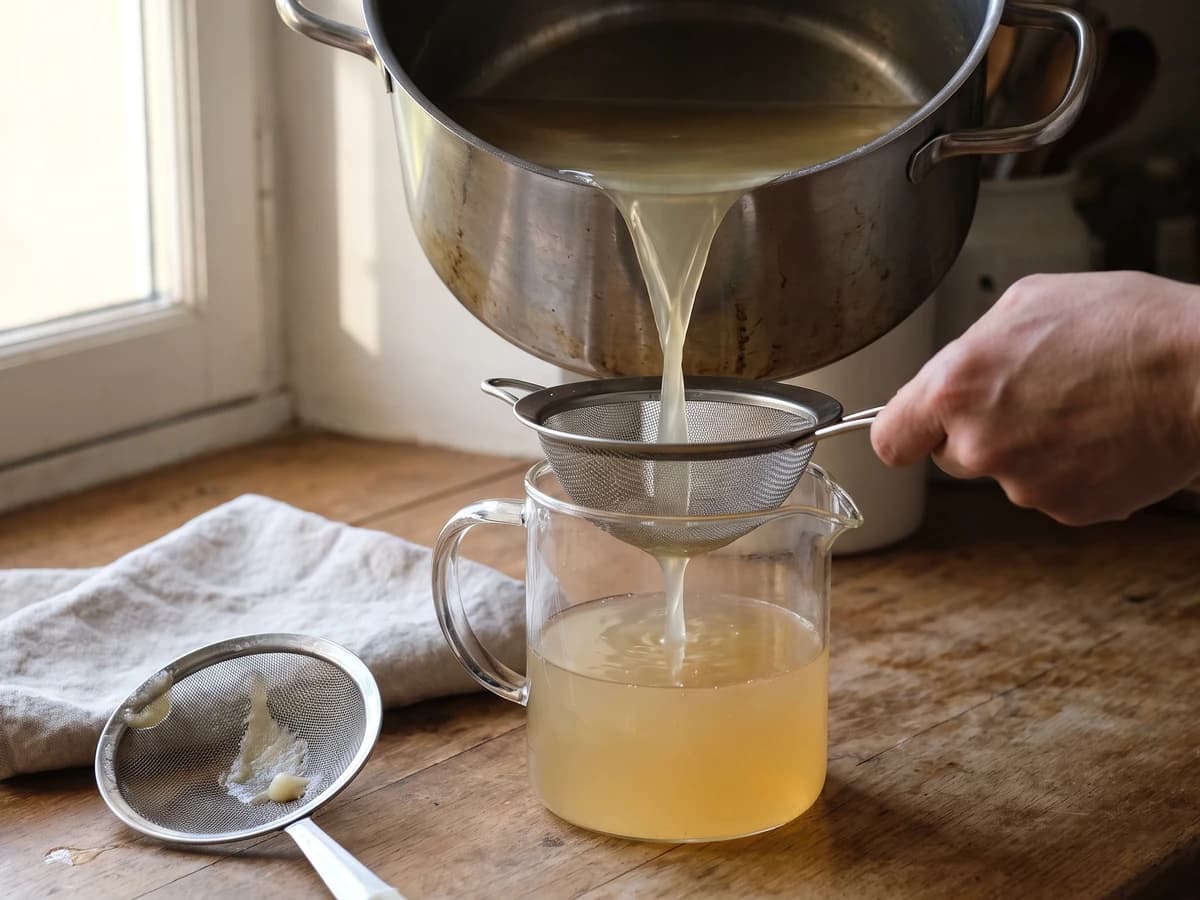
Break the veal bones small, then give them eight hours at a bare tremble. This pale, gelatinous fond becomes the quiet foundation beneath velouté, blanquette, and every sauce that must stay light.
Chef Juliette
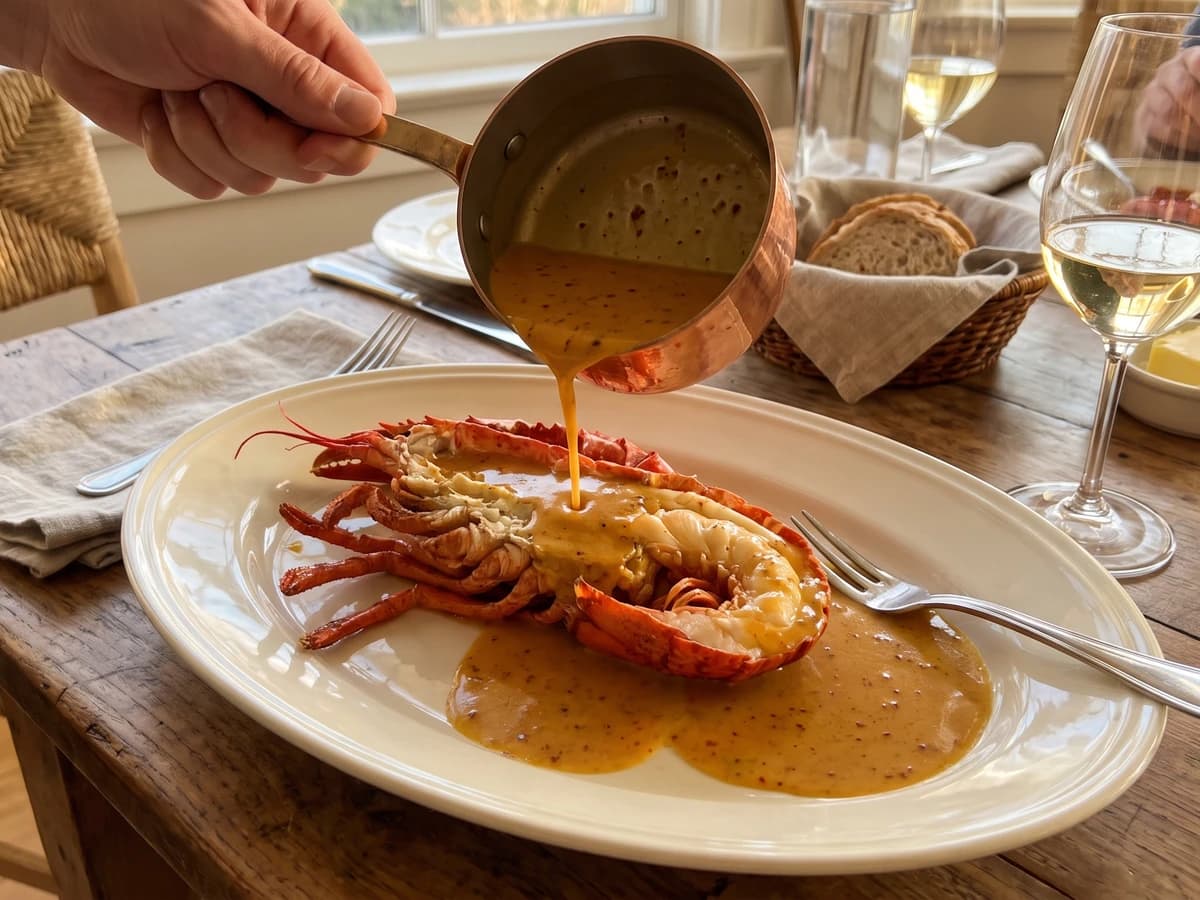
Sauce Orientale concentrates lobster-rich American Sauce with curry, then folds in cream away from the fire: a glossy, gently spiced derivative made for lobster, crayfish, and firm fish.
Chef Juliette
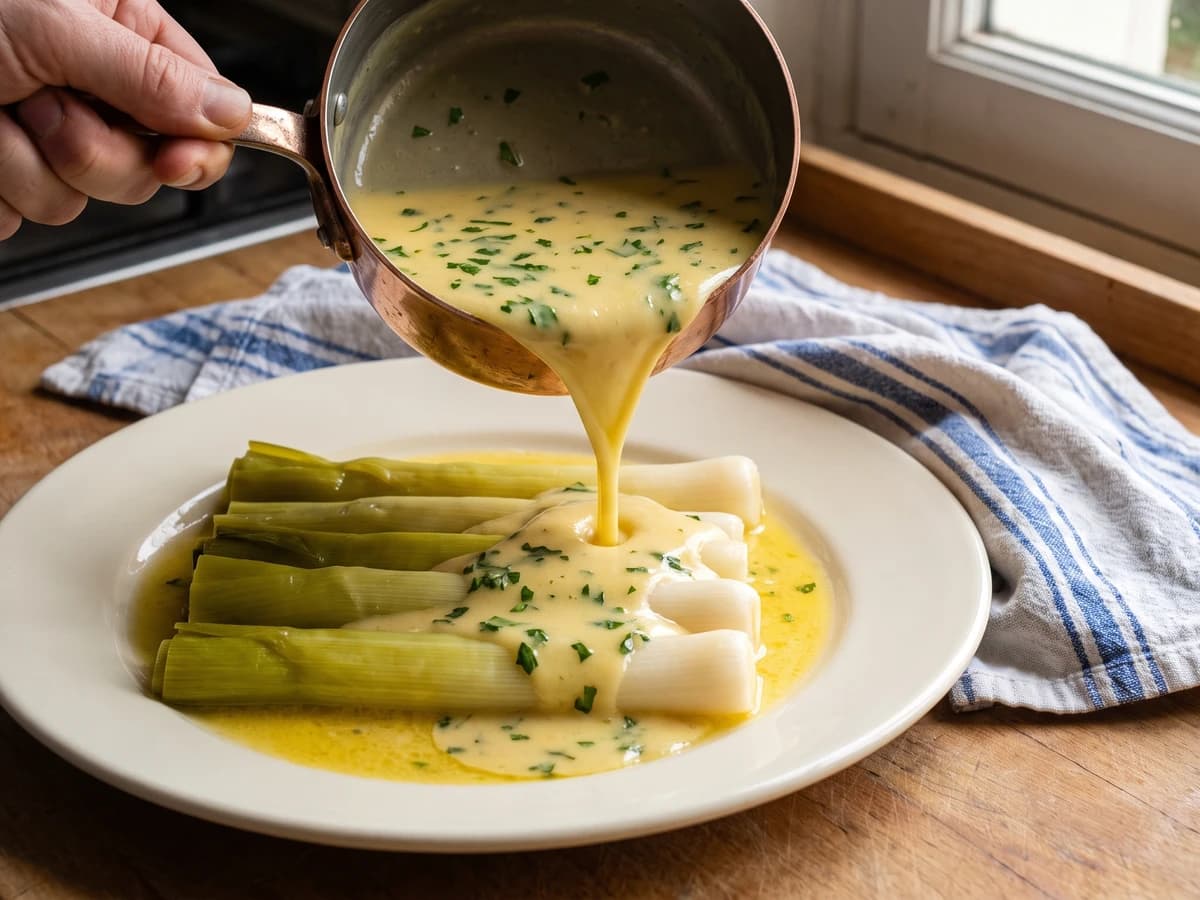
An old lesson in sauce families: Sauce Allemande takes mushroom liquor, then butter, lemon, and parsley, becoming a glossy Poulette for sheep's trotters, leeks, cauliflower, and anything needing gentle richness with a bright edge.