
Chef Juliette
Flan aux Carottes
A pale short-paste shell holds silken, lightly sweet carrot purée beneath neat glazed half-discs, their butter syrup catching the light: a classical tart poised between vegetable course and sweet.
A cooking platform built around craft, culture, and the stories behind what we eat.
Created by Chef Juliette
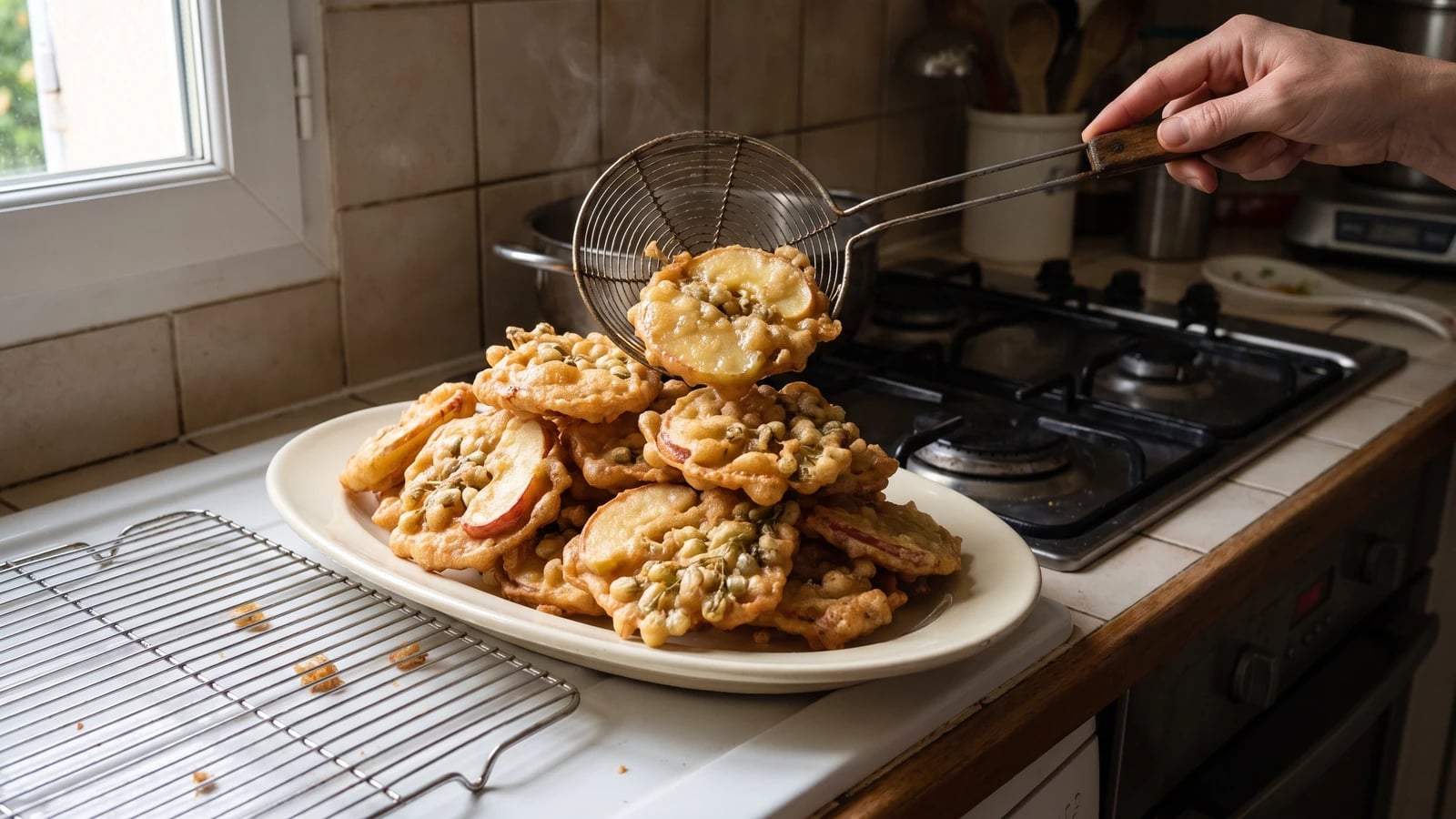
Based on No. 233, Batter for Fruit and Flower Fritters, from Le Guide Culinaire (1907) by Auguste Escoffier
Pâte à frire is a lesson in restraint: a thin beer batter, barely mixed, lifted with whisked white at the last moment so fruit and flowers emerge crisp, lacy, and golden.
Pâte à frire pour beignets de fruits et de fleurs (batter for fruit and flower fritters) teaches restraint. The one true thing is this: the batter must remain thin and barely mixed, because a coating that looks modest in the bowl fries into a crisp, lacy shell. A thick, polished batter becomes a coat of bread around the fruit. Cooking well is not cooking fancy.
The original formula assumed a pastry station frying from a pound of flour, with another pair of hands ready to whisk two whites at service. This is not a sauce, so the saucier, perpetual stockpot, and salamander can all stay out of it; at home, a bowl, a whisk, a heavy saucepan, and a thermometer are honest equivalents. This version halves every fixed quantity exactly, enough for four, and turns the book's “little tepid water” into a working range because flour, not a measuring cup, decides the final spoonful. Scale is brigade scaffolding. Beer, oil or butter, last-minute white, and minimal stirring are the dish.
Done properly, each fritter comes out gold at the edges, delicately blistered, and light enough that the fruit or flower still tastes like itself. If the batter tightens, a spoonful of tepid water restores it. Ça se rattrape. Have the oil steady before you whisk the white, fold it in only when you're ready to fry, then stop mixing. That last fold is the step that matters.
Beignets of fruit belong to cuisine bourgeoise, the well-appointed home table, and to the classical pastry repertoire across France; flower fritters remain seasonal household cooking in the Lyonnais and Dauphiné, especially when fleurs d'acacia (black locust blossoms) appear. Grand kitchens absorbed those short-season preparations into a general pâte à frire that could veil many fruits and flowers without changing its grammar. The beer is not a regional signature, and this is not doughnut dough: it is a coating batter, finished with whisked white only when frying begins.
Quantity
1⅞ cups (445 ml / 227 g)
Quantity
½ teaspoon (2.5 ml / 3.5 g)
Quantity
1 tablespoon (15 ml / 14 g)
melted and cooled if using butter
Quantity
¼ cup plus 2 teaspoons (70 ml / 70 g)
at room temperature
Quantity
½ to ¾ cup (120 to 180 ml / 120 to 180 g)
divided, as needed
Quantity
1
Quantity
about 4 cups (950 ml / 450 g) prepared fruit, or 12 to 16 blossoms
trimmed as appropriate and thoroughly dry
Quantity
6 cups (1.4 L / 1.3 kg)
| Ingredient | Quantity |
|---|---|
| all-purpose flour | 1⅞ cups (445 ml / 227 g) |
| fine salt | ½ teaspoon (2.5 ml / 3.5 g) |
| neutral oil or unsalted buttermelted and cooled if using butter | 1 tablespoon (15 ml / 14 g) |
| pale beerat room temperature | ¼ cup plus 2 teaspoons (70 ml / 70 g) |
| tepid waterdivided, as needed | ½ to ¾ cup (120 to 180 ml / 120 to 180 g) |
| large egg white | 1 |
| firm fruit or large edible unsprayed blossomstrimmed as appropriate and thoroughly dry | about 4 cups (950 ml / 450 g) prepared fruit, or 12 to 16 blossoms |
| neutral high-heat frying oil | 6 cups (1.4 L / 1.3 kg) |
Core firm apples or pears and cut them into slices about ¼ inch (6 mm) thick, or trim the edible blossoms according to their kind. Use only flowers sold for eating or positively identified as edible and unsprayed; florist flowers do not belong in the fryer. Pat everything thoroughly dry. A wet surface throws off the batter and spatters the oil.
Put the flour and salt in a wide bowl, then add the neutral oil or melted butter, following the source formula's sequence. Pour in the beer gradually, stirring only enough to draw flour from the sides, then add ½ cup (120 ml) of the tepid water in several additions. Stop as soon as no dry flour remains. The base should fall from the whisk in a thick but continuous ribbon, and a few small lumps are preferable to a batter beaten glossy. If it becomes elastic because you stirred too much, leave it untouched for 15 minutes. Ça se rattrape: the gluten will relax.
Pour the frying oil into a heavy 4-quart saucepan, leaving the vessel comfortably less than half full, and set a wire rack over a sheet pan nearby. Heat the oil steadily to 350°F (175°C), watching it with a thermometer and never leaving it unattended. The temperature must be ready before the egg white enters the batter, because the white begins losing its lift while it waits.
Whisk the egg white until it becomes an opaque froth that mounds softly and holds the faintest trail of the whisk, but no firm peaks. The source asks for froth, not a rigid meringue. A stiff white takes more stirring to incorporate, and more stirring is precisely what this batter cannot bear.
Fold one-third of the whisked white into the batter to loosen it, then add the remainder and turn the bowl with broad, gentle strokes until only a few pale streaks remain. Test the consistency on one piece of fruit or one petal: the batter should leave a thin veil through which the shape remains visible. If it clings in a heavy coat, fold in the remaining tepid water one tablespoon at a time. Stop the instant the consistency is right. Do not whisk it smooth.
Dip each piece into the batter, let the excess fall back into the bowl, and lower it carefully into the oil away from you. Fry only a few pieces at once, turning once, until the shell is lightly blistered, crisp beneath the tongs, and evenly golden. Flowers generally need 1 to 2 minutes; ¼-inch (6 mm) fruit slices need about 2 to 4 minutes. If the coating slides off, stop and dry the next pieces again. If the oil falls below 340°F (170°C), pause between batches and let it recover rather than allowing the fritters to drink the fat. Drain on the rack, give the batter one slow fold only if it settles, and serve each batch promptly. À table!
1 serving (about 210g)
Culinary guides, cultural storytelling, and the editorial depth that makes cooking meaningful.
Discover Culinary ExplorerChef Juliette
A pale short-paste shell holds silken, lightly sweet carrot purée beneath neat glazed half-discs, their butter syrup catching the light: a classical tart poised between vegetable course and sweet.
Chef Juliette
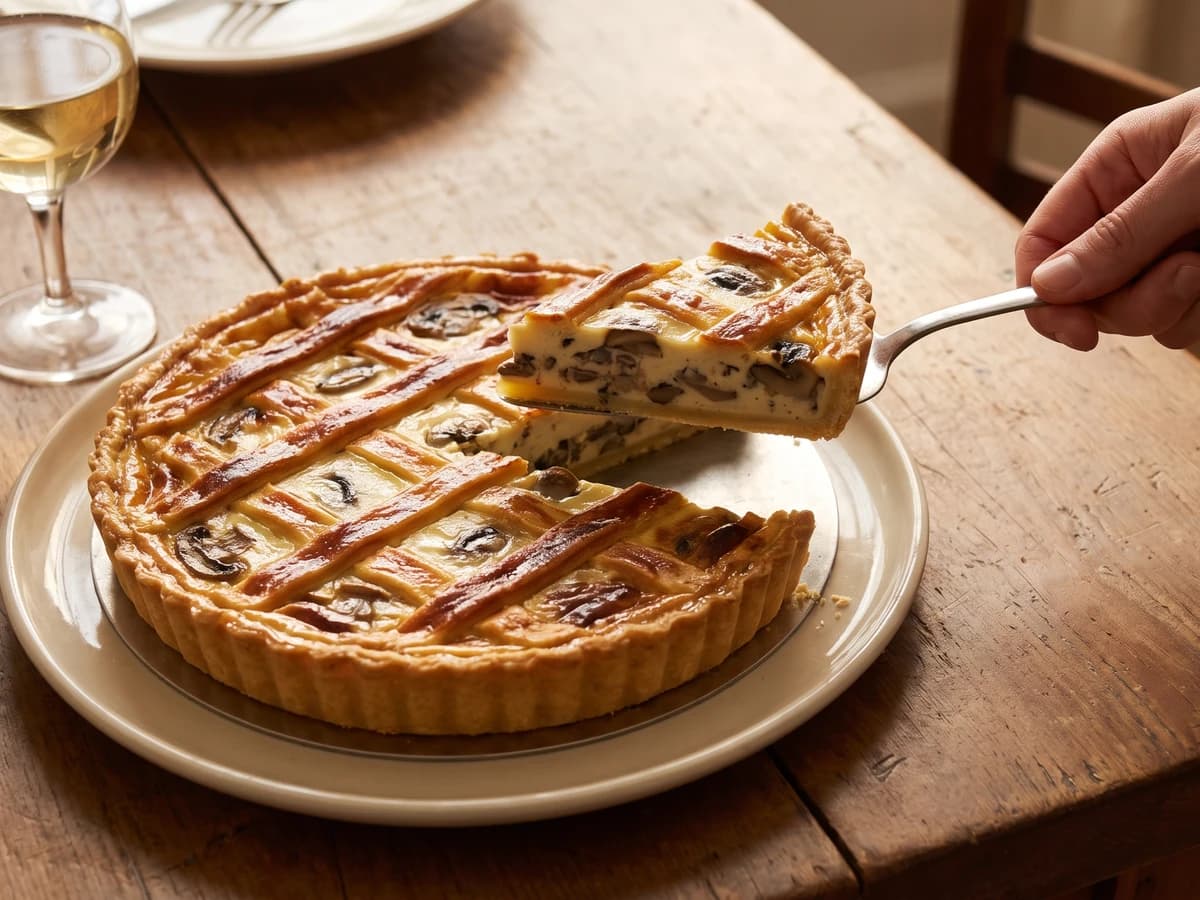
A hot mushroom flan under a butter-gold lattice, with cream reduced close around barely opened caps and a crisp short-paste base protected by one discipline: cool the filling completely.

Chef Juliette
Four little mushroom flans, latticed and gilded, baked hard and fast until butter-gold: a classical garnish scaled to the meat it accompanies and served before its crispness has time to fade.
Chef Juliette
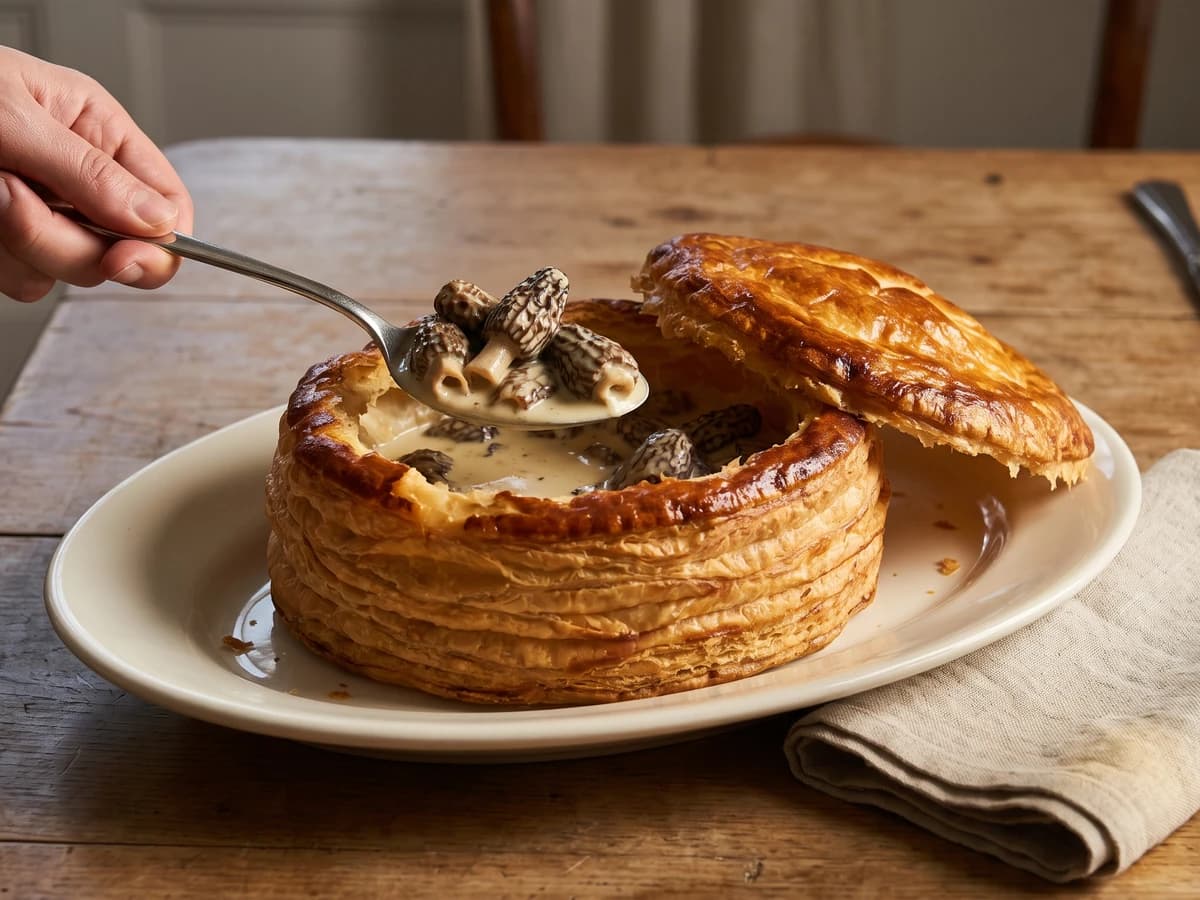
Morels surrender their liquor, then take it back as a glossy cream-and-butter sauce inside burnished puff pastry. The lesson is simple and absolute: reduce with patience, then heat gently and never boil.