
Chef Juliette
Smelt (Éperlans)
Tiny éperlans, lightly floured and fried until their tails stand crisp, arrive in a generous heap on a napkin with fried parsley and grooved lemon, a weeknight lesson in heat and restraint.
A cooking platform built around craft, culture, and the stories behind what we eat.
Created by Chef Juliette
Based on No. 2321, Grilled Bones, from Le Guide Culinaire (1907) by Auguste Escoffier
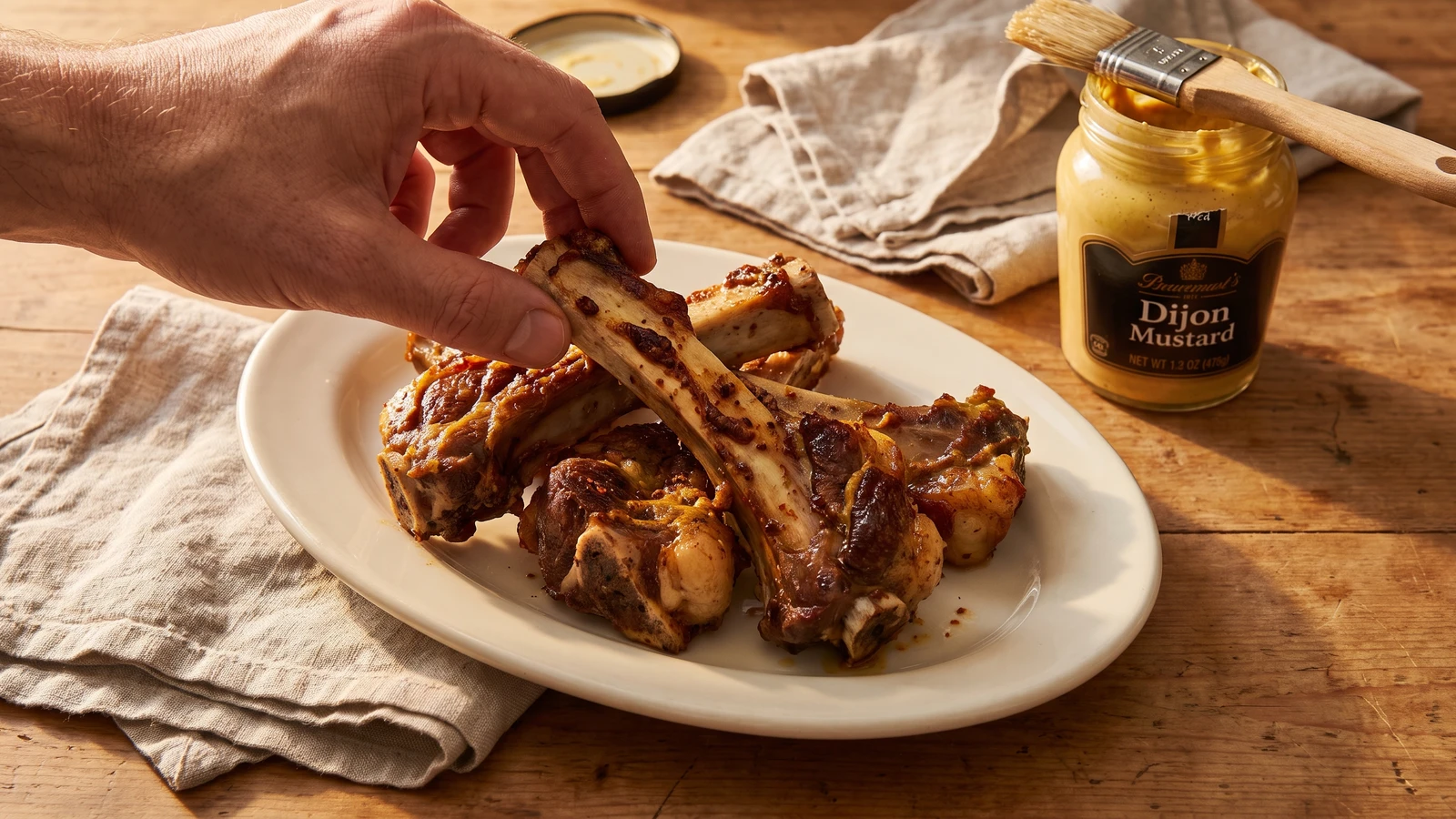
Os de Bœuf Grillés prove a roast isn't finished when carving ends: meaty bones, cayenne, and Dijon meet fierce heat until the edges crisp and the mustard bronzes.
Os de Bœuf Grillés teach the discipline of looking twice at a roast. A scraped-clean bone belongs in the stockpot; a bone with browned meat and soft fat still clinging is another course waiting to happen. That is the one true thing to know before you begin: the meat left on the bones is not untidy carving, it is the dish.
The original entry assumed a sirloin broken down by a brigade and a salamander standing ready. It needed neither the saucier nor the perpetual stockpot supporting the rest of grand-kitchen service. For one cook, the honest equivalent is four hand-sized bones and the broiler already built into the stove. The brigade's trimming is scaffolding and can go; the cayenne-first sequence, mustard coating, and fierce top heat are the dish itself, so they stay exactly where the book put them.
Watch the mustard, not the clock. It must blister and bronze while the scraps of beef grow crisp at their edges, but black mustard tastes bitter. Stay beside the broiler for these few minutes and dinner gives you an encore.
Os de bœuf grillés belong to the French cuisine bourgeoise roast table rather than to one province: after the sirloin was carved, deliberately meaty bones returned to the grill with mustard and cayenne instead of disappearing into stock. The preparation traveled easily from formal roast service to the home supper table because it required no separate sauce or garnish, only thrift backed by close attention. It should not be confused with os à moelle, which celebrates exposed marrow; here the prize is the roasted meat clinging to the bone.
Quantity
4 bones (about 1½ to 2 lb / 680 to 900 g total)
separated into hand-sized sections
Quantity
3 tablespoons (45 ml / 45 g)
Quantity
¼ teaspoon (1.25 ml / 0.5 g)
| Ingredient | Quantity |
|---|---|
| meaty bones from a fully cooked roast sirloinseparated into hand-sized sections | 4 bones (about 1½ to 2 lb / 680 to 900 g total) |
| smooth Dijon mustard | 3 tablespoons (45 ml / 45 g) |
| cayenne pepper | ¼ teaspoon (1.25 ml / 0.5 g) |
Set an oven rack 4 to 5 inches (10 to 12 cm) below the broiler and heat it on high for a full ten minutes. Fit an ovenproof wire rack inside a foil-lined rimmed baking sheet. This raised rack is the home equivalent of the salamander grate: the mustard faces direct heat while rendered fat falls clear instead of collecting underneath.
Take the bones from the refrigerator while the broiler heats. Remove only loose gristle and any large lump of hard, waxy fat; leave the browned meat and softer roasted fat attached. Pat the surfaces dry. Moisture thins the mustard and makes it slide before it can form a crust.
Sprinkle the cayenne lightly and evenly over every meaty face, then brush on the Dijon in a thin, opaque coat. Keep this order. The mustard holds the cayenne against the beef and protects it from direct scorching. If the coating slips or gathers in heavy ridges, blot the wet patch and brush it level; a thick blanket stays pasty underneath while its peaks burn.
Arrange the bones on the rack without crowding and broil for 3 to 4 minutes, until the mustard bubbles, bronzes, and darkens at the highest points. Turn with tongs and broil the second side for another 3 to 4 minutes. The beef should be hot throughout, with crisp edges, and any substantial patch of leftover meat should reach 165°F (74°C). If the mustard begins blackening before the meat is hot, lower the pan one rack and shield the darkest spots loosely with foil. Ça se rattrape. Continue until the centers are heated through.
Let the bones settle for one minute, only long enough for the mustard coating to grip, then pile them onto a warm platter. Serve them as they are, without a separate sauce; the roast juices, Dijon, and cayenne have already done the work. These are picked up, turned over, and properly searched for the best browned scraps. Never apologize at your own table. À table!
1 serving (about 90g)
Culinary guides, cultural storytelling, and the editorial depth that makes cooking meaningful.
Discover Culinary ExplorerChef Juliette
Tiny éperlans, lightly floured and fried until their tails stand crisp, arrive in a generous heap on a napkin with fried parsley and grooved lemon, a weeknight lesson in heat and restraint.

Chef Juliette
Brandade de Morue turns salt cod, warm olive oil, and milk into a pale, silky emulsion: keep everything warm and add the oil slowly, then crown the generous dome with butter-fried bread.

Chef Juliette
Salt cod worked warm with cream, one patient spoonful at a time, until the rough flakes become a glossy Nîmes paste, domed generously and ringed with butter-fried croutons for the table.

Chef Juliette
Wine-poached char packed in its earthenware crock beneath butter gold: a make-ahead first course that turns careful cooling, thorough boning, and one unbroken seal into quiet abundance.