
Chef Juliette
John Dory (St. Pierre)
John Dory has the delicacy of sole and the firmness of turbot. A light flouring, a quick butter sauté, and nut-brown beurre noisette show exactly why looks never mattered.
A cooking platform built around craft, culture, and the stories behind what we eat.
Created by Chef Juliette
Based on No. 2296, Ravioli, from Le Guide Culinaire (1907) by Auguste Escoffier
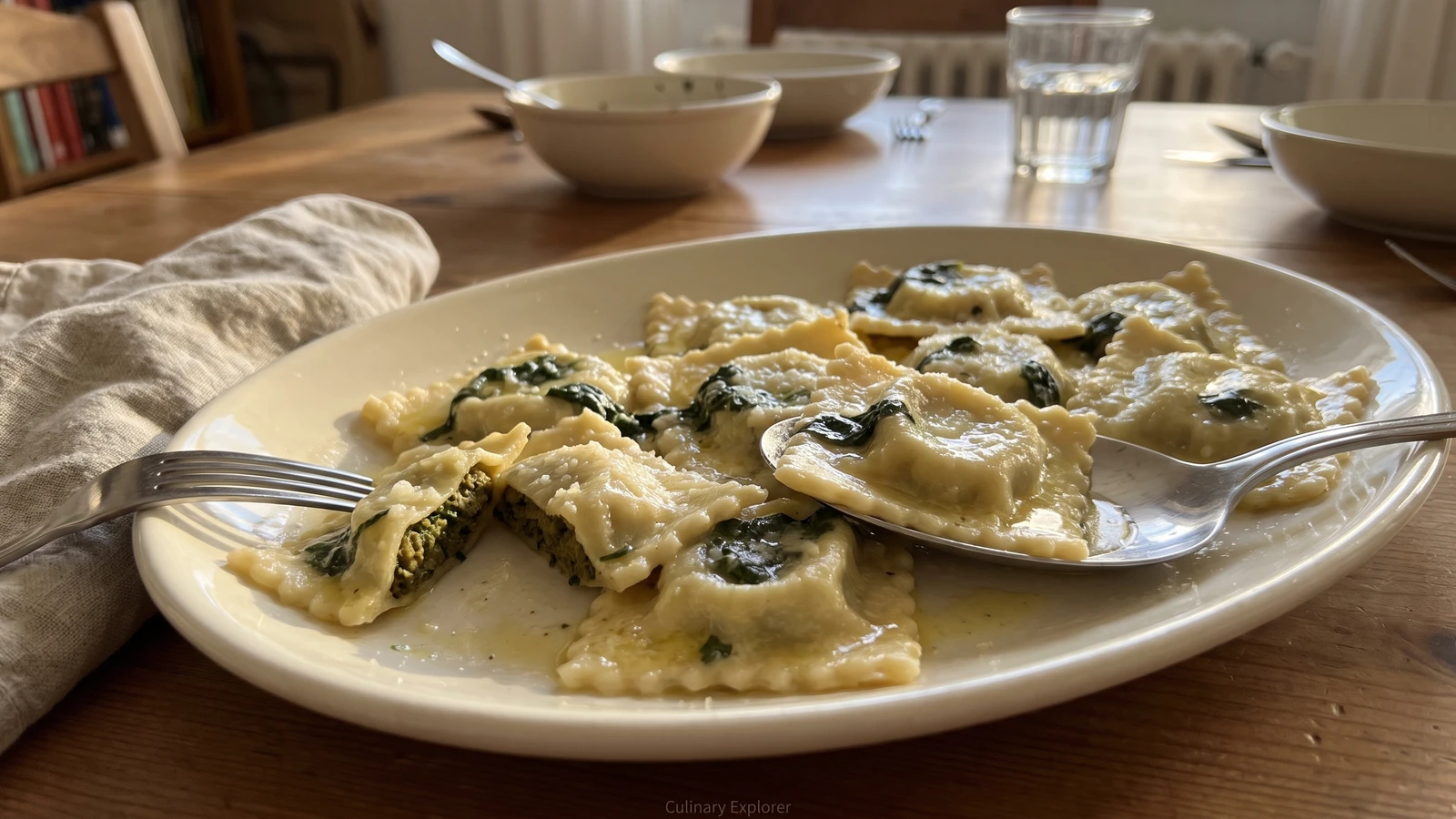
Three classical farces share one lesson: chicken and brain, beef daube and spinach, or chicken liver with anchovy and basil must be seasoned boldly before thin pasta closes around them.
Ravioli aux trois farces classiques (filled pasta parcels with three classical stuffings) teach one true thing before your hands touch the dough: paste mutes everything. A farce that tastes politely seasoned on its own will disappear inside pasta, so cook a teaspoon, taste it warm, and season until chicken, daube, liver, anchovy, basil, and nutmeg each speak clearly.
The original entry assumed brigade quantities and a larder holding cooked chicken, cold daube, prepared calf brain, and greens already passed through Blanchings (No. 273). It also assumed hands for chopping, pounding, sieving, rolling, and filling. There is no need to invent a saucier, a stockpot never off the fire, or a salamander for a dish that asked for none. Tonight, one cold leftover provides the meat, a food processor replaces the mortar, a hand-cranked roller replaces several pairs of arms, and one of the three farces makes four generous servings. One cook, one stove, one evening.
The brigade scale and the long pounding are scaffolding, so they can go. The exact proportions, very dry greens, thin pasta, firm seasoning, and close seal are the dish, so they stay. Before you roll a single sheet, fry and taste that spoonful of farce. This is the step that decides the ravioli.
Ravioli belong first to the kitchens of the Italian peninsula, yet the French classical canon took them in through the connected tables of Nice, Savoy, Piedmont, and Liguria, where filled pasta crossed coast and mountain with ease. These three farces, rich with Parmesan, borage, brains, daube, anchovy, spinach, and basil, show the grand kitchen treating ravioli as a family of technique rather than one fixed filling. Thin paste, emphatic seasoning, and a clean seal define the dish; a blanket of cream does not.
Quantity
3⅓ cups (800 ml / 400 g)
Quantity
4
Quantity
¾ teaspoon (4 ml / 4 g)
Quantity
1 to 2 tablespoons (15 to 30 ml / 15 to 30 g)
use only if needed
Quantity
¾ cup (180 ml / 115 g)
finely chopped
Quantity
⅓ cup (80 ml / 70 g)
crushed
Quantity
3 tablespoons (45 ml / 43 g)
Quantity
¼ cup packed (60 ml / 43 g), prepared by Blanchings (No. 273)
pressed and chopped
Quantity
⅓ cup packed (80 ml / 43 g), prepared by Blanchings (No. 273)
pressed and chopped
Quantity
¾ cup (180 ml / 70 g)
finely grated
Quantity
1
Quantity
1
Quantity
½ teaspoon (2.5 ml / 1 g)
finely chopped
Quantity
½ teaspoon (2.5 ml / 3 g), plus more after testing
Quantity
¼ teaspoon (1.25 ml / 0.6 g)
Quantity
⅛ teaspoon (0.6 ml / 0.3 g)
Quantity
1 cup (240 ml / 150 g)
finely chopped
Quantity
¾ cup packed (180 ml / 150 g), prepared by Blanchings (No. 273)
pressed and chopped
Quantity
2 tablespoons (30 ml / 14 g)
finely chopped
Quantity
⅓ cup (80 ml / 70 g)
puréed
Quantity
1
Quantity
¾ teaspoon (4 ml / 4 g), plus more after testing
Quantity
¼ teaspoon (1.25 ml / 0.6 g)
Quantity
⅛ teaspoon (0.6 ml / 0.3 g)
Quantity
¾ cup (180 ml / 115 g)
trimmed
Quantity
1 tablespoon (15 ml / 14 g)
Quantity
1
chopped
Quantity
1 teaspoon (5 ml / 1 g)
finely chopped
Quantity
½ teaspoon (2.5 ml / 2 g)
crushed
Quantity
⅔ cup packed (160 ml / 115 g), prepared by Blanchings (No. 273)
cooled and pressed
Quantity
1
Quantity
3 tablespoons (45 ml / 43 g)
Quantity
4½ tablespoons (68 ml / 75 g), about 1½ large eggs
Quantity
½ teaspoon (2.5 ml / 1 g)
finely chopped
Quantity
½ teaspoon (2.5 ml / 3 g), plus more after testing
Quantity
¼ teaspoon (1.25 ml / 0.6 g)
Quantity
⅛ teaspoon (0.6 ml / 0.3 g)
Quantity
1½ tablespoons (22 ml / 27 g)
Quantity
6 tablespoons (90 ml / 85 g)
cubed
Quantity
½ cup (120 ml / 45 g)
finely grated
| Ingredient | Quantity |
|---|---|
| Pasta dough, tipo 00 flour or plain all-purpose flour | 3⅓ cups (800 ml / 400 g) |
| Pasta dough, large eggs | 4 |
| Pasta dough, fine salt | ¾ teaspoon (4 ml / 4 g) |
| Pasta dough, water (optional)use only if needed | 1 to 2 tablespoons (15 to 30 ml / 15 to 30 g) |
| Stuffing A, cooked chicken meatfinely chopped | ¾ cup (180 ml / 115 g) |
| Stuffing A, cooked calf braincrushed | ⅓ cup (80 ml / 70 g) |
| Stuffing A, pressed fromage blanc | 3 tablespoons (45 ml / 43 g) |
| Stuffing A, spinachpressed and chopped | ¼ cup packed (60 ml / 43 g), prepared by Blanchings (No. 273) |
| Stuffing A, young borage leavespressed and chopped | ⅓ cup packed (80 ml / 43 g), prepared by Blanchings (No. 273) |
| Stuffing A, Parmesanfinely grated | ¾ cup (180 ml / 70 g) |
| Stuffing A, large egg | 1 |
| Stuffing A, large egg yolk | 1 |
| Stuffing A, sweet basilfinely chopped | ½ teaspoon (2.5 ml / 1 g) |
| Stuffing A, fine salt | ½ teaspoon (2.5 ml / 3 g), plus more after testing |
| Stuffing A, freshly ground pepper | ¼ teaspoon (1.25 ml / 0.6 g) |
| Stuffing A, freshly grated nutmeg | ⅛ teaspoon (0.6 ml / 0.3 g) |
| Stuffing B, well-cooked cold daube of beeffinely chopped | 1 cup (240 ml / 150 g) |
| Stuffing B, spinachpressed and chopped | ¾ cup packed (180 ml / 150 g), prepared by Blanchings (No. 273) |
| Stuffing B, shallotfinely chopped | 2 tablespoons (30 ml / 14 g) |
| Stuffing B, cooked calf brainpuréed | ⅓ cup (80 ml / 70 g) |
| Stuffing B, large egg | 1 |
| Stuffing B, fine salt | ¾ teaspoon (4 ml / 4 g), plus more after testing |
| Stuffing B, freshly ground pepper | ¼ teaspoon (1.25 ml / 0.6 g) |
| Stuffing B, freshly grated nutmeg | ⅛ teaspoon (0.6 ml / 0.3 g) |
| Stuffing C, chicken liverstrimmed | ¾ cup (180 ml / 115 g) |
| Stuffing C, unsalted butter for sautéing | 1 tablespoon (15 ml / 14 g) |
| Stuffing C, small shallotchopped | 1 |
| Stuffing C, parsleyfinely chopped | 1 teaspoon (5 ml / 1 g) |
| Stuffing C, garliccrushed | ½ teaspoon (2.5 ml / 2 g) |
| Stuffing C, fresh spinachcooled and pressed | ⅔ cup packed (160 ml / 115 g), prepared by Blanchings (No. 273) |
| Stuffing C, anchovy fillet | 1 |
| Stuffing C, softened unsalted butter | 3 tablespoons (45 ml / 43 g) |
| Stuffing C, beaten whole egg | 4½ tablespoons (68 ml / 75 g), about 1½ large eggs |
| Stuffing C, sweet basilfinely chopped | ½ teaspoon (2.5 ml / 1 g) |
| Stuffing C, fine salt | ½ teaspoon (2.5 ml / 3 g), plus more after testing |
| Stuffing C, freshly ground pepper | ¼ teaspoon (1.25 ml / 0.6 g) |
| Stuffing C, freshly grated nutmeg | ⅛ teaspoon (0.6 ml / 0.3 g) |
| Fine salt for the pasta water | 1½ tablespoons (22 ml / 27 g) |
| Cold unsalted butter for finishingcubed | 6 tablespoons (90 ml / 85 g) |
| Parmesan for serving (optional)finely grated | ½ cup (120 ml / 45 g) |
Choose Stuffing A, B, or C. Each formula is scaled to fill one batch of pasta and serve four; do not make all three unless you intend to feed a crowd. Stuffing A is the mildest and most delicate, Stuffing B is dark and deeply savory, and Stuffing C is the boldest, with liver, anchovy, garlic, and basil.
For your chosen farce, reach for the spinach, and the borage if making Stuffing A, already prepared according to Blanchings (No. 273). Cool them completely, then squeeze until no water beads between your fingers before weighing and chopping. Wet greens make a loose filling that dampens the pasta and weakens its seal; if they still glisten, wrap them in a clean towel and press again. This dryness is part of the dish, not brigade scaffolding.
Mound the flour on the work surface or place it in a wide bowl. Make a well, add the eggs and salt, and draw in the flour until a rough dough forms. Knead for 8 to 10 minutes, until smooth, firm, and elastic. If dry crumbs refuse to join after several minutes, add water one teaspoon at a time; if the dough clings to the board, dust with only enough flour to release it. Wrap tightly and rest at room temperature for 45 minutes. The rest lets the dough relax so it rolls thin without springing back.
If you chose Stuffing A, mix the finely chopped cooked chicken, crushed cooked calf brain, pressed fromage blanc, spinach and borage from Blanchings (No. 273), Parmesan, whole egg, yolk, basil, salt, pepper, and nutmeg. Work just until evenly combined. The mixture should hold a rounded teaspoon without flowing but remain soft enough to pass through a piping bag.
If you chose Stuffing B, mix the cold finely chopped daube, spinach from Blanchings (No. 273), chopped shallot, puréed cooked calf brain, egg, salt, pepper, and nutmeg. Chop the daube by hand rather than reducing it to paste; the beef should remain discernible inside the tender farce.
If you chose Stuffing C, melt the sautéing butter over medium heat and toss in the chicken livers. Brown them lightly, then add the shallot, parsley, and garlic and cook until the shallot softens and the livers are nearly cooked through. Cool for 10 minutes. Process the liver mixture finely, then add the spinach from Blanchings (No. 273), anchovy, softened butter, beaten egg, salt, pepper, nutmeg, and basil in that order. Process until smooth and rub the mixture through a fine sieve. The food processor replaces the mortar and the long pounding; the sieve stays because its silken texture is part of this farce.
Chill the chosen farce for 20 minutes, then fry a teaspoon of it thoroughly in a dab taken from the finishing butter. Taste it inside a small folded scrap of pasta dough if possible. It should seem a touch more highly seasoned than you would serve alone, because the paste mutes all. If it tastes flat, add salt a pinch at a time; if it feels too soft, chill it another 20 minutes and let it drain briefly in a fine sieve. Ça se rattrape.
Divide the rested dough into four pieces and keep three wrapped. Flatten the first piece, pass it through the widest pasta-machine setting, fold it in thirds, and repeat twice to square and strengthen it. Roll through successively narrower settings until the sheet is thin enough for the shadow of your fingers to show through, usually the next-to-last setting. Dust sparingly with flour and cover the sheet while rolling the rest. Thick paste buries the filling; thin, supple paste carries it.
Lay one sheet on a lightly floured surface. Place rounded teaspoons of cold farce in two rows, leaving about 5 cm between portions. Brush around the filling very lightly with water, lay a second sheet over it, and press from the filling outward so no air remains trapped. Seal firmly, then cut into 6 cm squares with a wheel or cutter. If the surface has dried and refuses to seal, brush it with water and wait 15 seconds; if a small tear appears, press on a wafer-thin scrap of dough as a patch. Set the ravioli in one layer on a semolina-dusted tray and cover them.
Bring a wide pot of water to a boil, add the pasta-water salt, then reduce the water to a lively simmer. Cook the ravioli in two or three batches, stirring once very gently so they do not stick. Poach for 4 to 6 minutes, depending on thickness and whether they were chilled, until the pasta is tender and the filling reaches 74°C (165°F). Test one before draining the batch. A hard rolling boil can burst the seals; if one opens, lower the heat at once, stop stirring, and lift out the intact ravioli with a spider. The rest are still entirely savable.
Reserve ½ cup of cooking water, then transfer the ravioli to a wide warm pan with ¼ cup of that water. Bring it just to a simmer, remove the pan from the heat, and swirl in the cold butter a few cubes at a time. This is monter au beurre, finishing by whisking in butter, and it makes a light emulsion that clings without hiding the farce. If the butter separates, add a tablespoon of cool cooking water and swirl off the heat until it comes together. Spoon onto a warm serving platter, finish with Parmesan if wanted, and serve immediately. À table!
1 serving (about 550g)
Culinary guides, cultural storytelling, and the editorial depth that makes cooking meaningful.
Discover Culinary ExplorerChef Juliette
John Dory has the delicacy of sole and the firmness of turbot. A light flouring, a quick butter sauté, and nut-brown beurre noisette show exactly why looks never mattered.

Chef Juliette
Fresh haddock proves its delicacy in the meunière pan: a fine flour crust, moist pearly flakes, and beurre noisette sharpened with lemon and parsley, ready from one skillet in half an hour.

Chef Juliette
Éperlans à l’Anglaise turns small fish into a lesson in disciplined coating: boned smelts under a close, crisp crumb, pan-fried in clarified butter and finished with bright, half-melted maître d’hôtel butter.

Chef Juliette
Tiny smelts, shallot, mushrooms, white wine, gratin sauce, and fine bread raspings meet a fierce oven, where the fish must turn tender in the same breath the buttered crust bronzes.