Chef Juliette
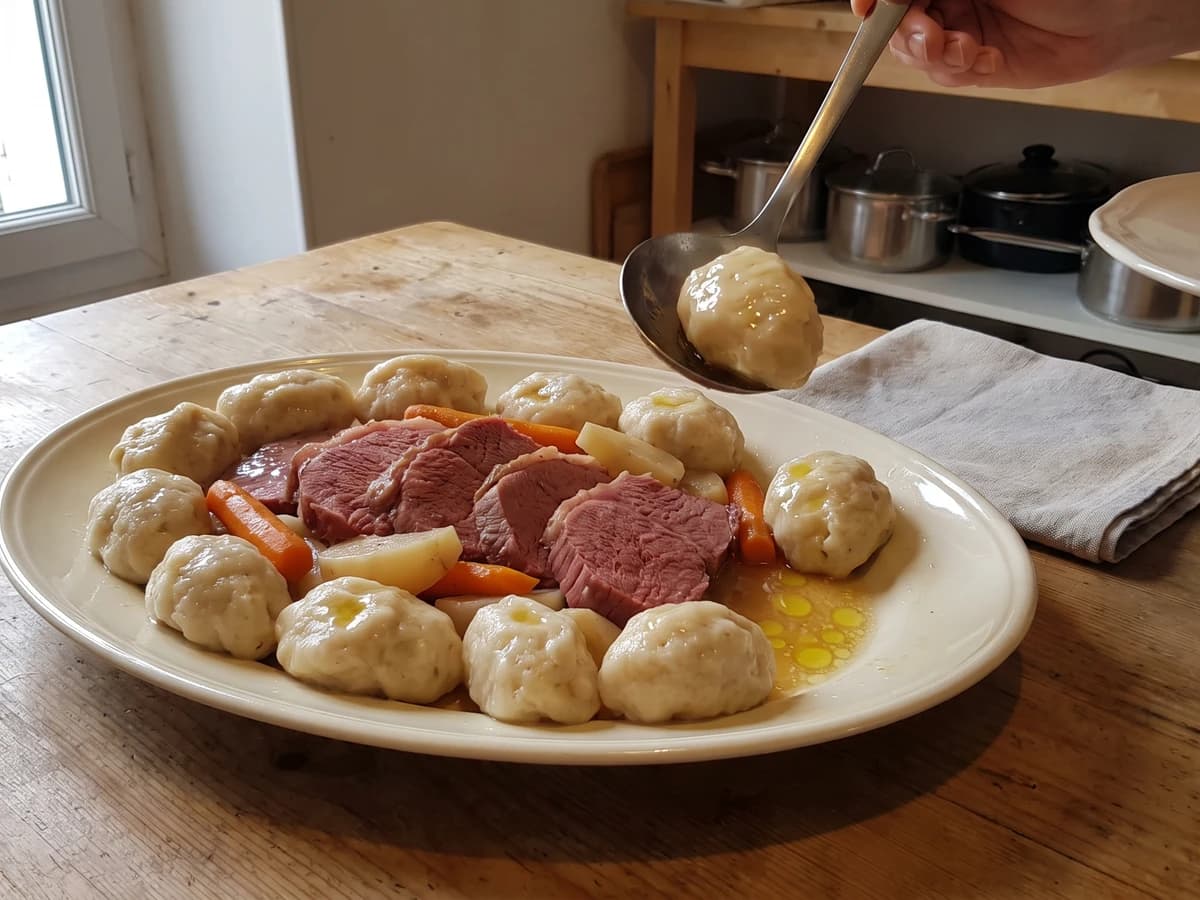
Suet Dumpling
Boulettes au suif, poached beside salt beef, turn equal weights of flour and finely chopped suet into tender, rich dumplings. Keep the beef liquor at a bare tremble and the old garnish works beautifully at home.
A cooking platform built around craft, culture, and the stories behind what we eat.
Created by Chef Juliette
Based on No. 2280, Gnochi au Gratin, from Le Guide Culinaire (1907) by Auguste Escoffier
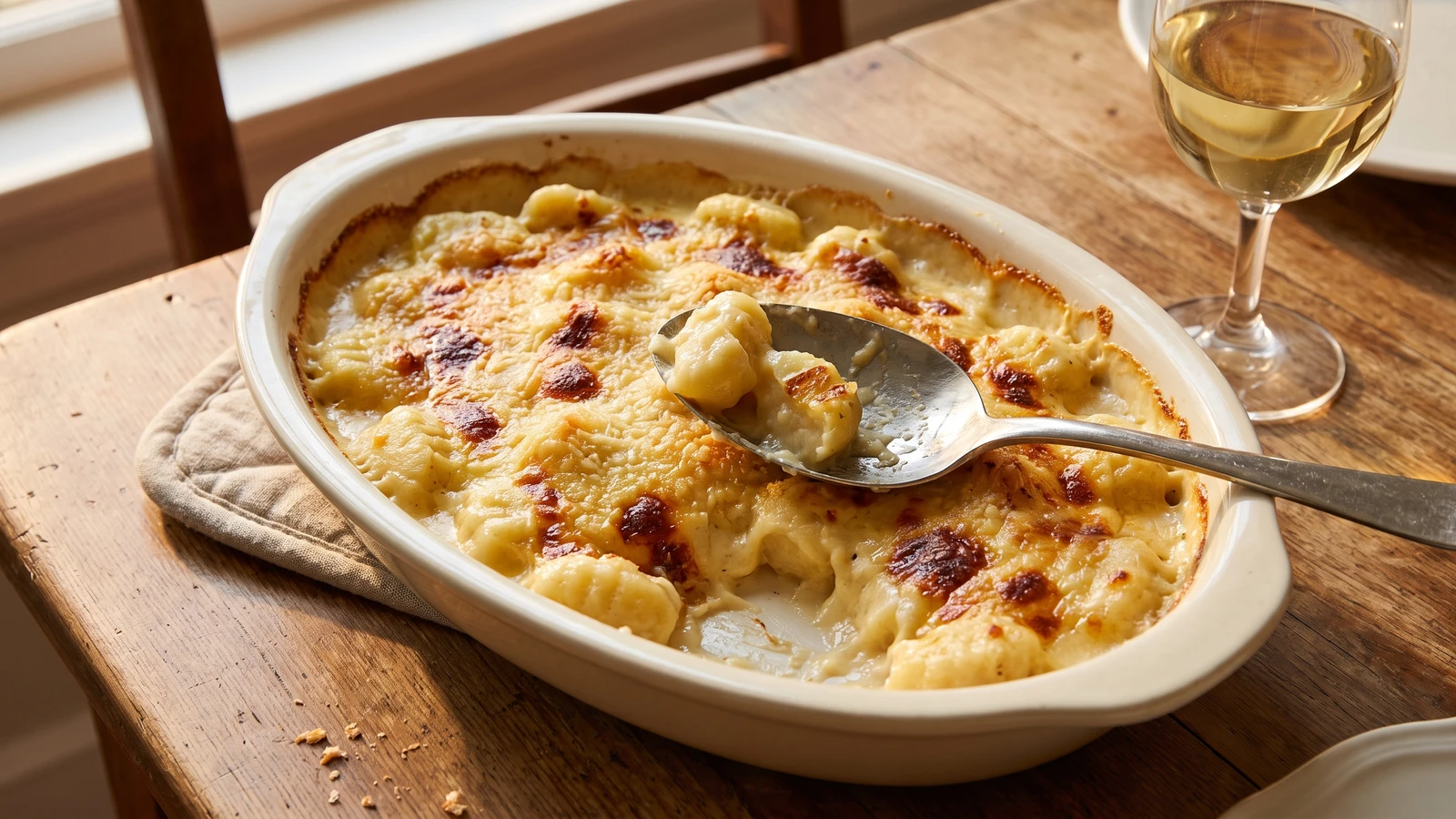
Walnut-size Parisian pâte à choux dumplings rise in the poaching pot, then settle beneath glossy Mornay and Parmesan until their edges are bronzed and their centers answer the finger with a spring.
Gnochi au Gratin (Parisian pâte à choux dumplings baked beneath Mornay) teaches control of texture. The one true thing is this: the water must poach, not bully. When each dumpling rises and answers a light touch with a spring, the pâte is set; everything afterward is generous sauce and color.
The source formula assumed a full professional batch, a pâtissier tending the pâte, a saucier with Mornay ready, and a salamander waiting to bronze the gratin. Your home equivalent is a one-third batch for four, two damp spoons for shaping, one poaching pot, and a moderate oven with a brief turn under the broiler only if needed. The separate hands are brigade scaffolding and can go. The pâte à choux, gentle poach, Mornay, and final gratin are the dish, and they stay.
Finished properly, the gnochi sit plump beneath an ivory sauce, their tops bronzed with Parmesan and butter, their centers tender but never pasty. Poach one tester before committing the batch. That single dumpling tells you everything.
Gnochi au Gratin belongs to the Parisian classical table, where cooks translated the Italian family of gnocchi into a distinctly French preparation built from pâte à choux, Mornay, and gratin. The spelling varies among classical books, but this is not potato gnocchi: the dumplings rise through egg and cooked flour, then finish beneath a cheese-enriched sauce. From grand kitchens the dish passed naturally to bistros and home dining rooms because its components can be prepared ahead and brought together when the table is ready.
Quantity
About 2 cups (475 ml / 400 g) Common Pâte à Choux (for Souffléd Fritters, Gnochi, Potatoes à la Dauphine) (No. 2374), one-third of the source batch and prepared to this entry's prescribed milk, salt, nutmeg, butter, flour, and egg proportions
Quantity
⅓ cup (80 ml / 38 g)
finely grated
Quantity
1½ cups (355 ml / 370 g)
warmed gently
Quantity
¼ cup (60 ml / 25 g)
finely grated
Quantity
1 tablespoon (15 ml / 14 g)
melted
Quantity
3 quarts (2.8 L / 2.8 kg)
Quantity
1 tablespoon (15 ml / 18 g)
| Ingredient | Quantity |
|---|---|
| prepared pâte à choux | About 2 cups (475 ml / 400 g) Common Pâte à Choux (for Souffléd Fritters, Gnochi, Potatoes à la Dauphine) (No. 2374), one-third of the source batch and prepared to this entry's prescribed milk, salt, nutmeg, butter, flour, and egg proportions |
| Parmesanfinely grated | ⅓ cup (80 ml / 38 g) |
| Mornay saucewarmed gently | 1½ cups (355 ml / 370 g) |
| Parmesan for the gratinfinely grated | ¼ cup (60 ml / 25 g) |
| unsalted buttermelted | 1 tablespoon (15 ml / 14 g) |
| water | 3 quarts (2.8 L / 2.8 kg) |
| fine salt for the poaching water | 1 tablespoon (15 ml / 18 g) |
Heat the oven to 375°F (190°C) with a rack in the upper third. Warm the Mornay sauce over gentle heat only until it falls from a spoon in a broad ribbon; boiling can make the cheese tighten and the sauce oily. Spread about ½ cup (120 ml / 125 g) across the bottom of a shallow gratin dish.
Place the Common Pâte à Choux (for Souffléd Fritters, Gnochi, Potatoes à la Dauphine) (No. 2374) in a bowl and work in the ⅓ cup (80 ml / 38 g) Parmesan until evenly distributed. With two damp teaspoons, divide it into 16 to 18 walnut-size portions on a sheet of parchment. If the portions slump into puddles, chill the paste for 10 minutes before shaping again; it should be soft but capable of holding a mound.
Bring the water and salt to a full boil in a wide saucepan, then lower the heat until only lazy bubbles break the surface. Slide in one tester. If it feathers into ragged threads, lift out the fragments, lower the heat further, and chill the remaining paste for 10 minutes before testing again. Ça se rattrape. A hard boil tears delicate pâte before its eggs can set.
Poach the remaining gnochi in batches of six so the water keeps its gentle movement and the dumplings have room to rise. As each reaches the surface, press it lightly with the back of the slotted spoon. Lift it when it answers with a spring rather than holding a dent; floating is the first test, resilience the second. Drain the gnochi in a single layer on a clean lint-free towel, and do not stack them.
Arrange the drained gnochi snugly over the sauce in one layer. Spoon over the remaining Mornay, letting a little of each dumpling remain visible, then scatter with the ¼ cup (60 ml / 25 g) Parmesan and drizzle the melted butter evenly across the top. We don't apologize for butter. Here it carries the color and protects the cheese as the gratin forms.
Bake for 15 to 20 minutes, until the Mornay bubbles around the rim and the Parmesan is evenly bronzed. This is the home execution of Gratins (No. 268): the moderate oven heats the dish through, while a 30 to 60 second turn beneath the broiler replaces the salamander only if the surface remains pale. Watch without leaving the oven. If the top colors before the sauce bubbles, move the dish to a lower rack and cover it loosely with foil. Rest for 5 minutes, then serve from the dish. À table!
1 serving (about 215g)
Culinary guides, cultural storytelling, and the editorial depth that makes cooking meaningful.
Discover Culinary ExplorerChef Juliette
Boulettes au suif, poached beside salt beef, turn equal weights of flour and finely chopped suet into tender, rich dumplings. Keep the beef liquor at a bare tremble and the old garnish works beautifully at home.

Chef Juliette
Bread, flour, frangipane, and rice become four cool, supple panades for binding forcemeats, each changing body and flavor while preserving tenderness. The finest Mousselines need none, and knowing that distinction is the lesson.

Chef Juliette
Panade au pain is bread, milk, salt, heat, and attention: stir until the paste releases cleanly, butter it against a skin, and you have the quiet binder behind tender French farces.

Chef Juliette
Panade de farine teaches the drying stroke behind pâte à choux: flour meets boiling buttered water, then stays over the fire until the paste gathers, smooths, and quits the pan cleanly.