
Chef Juliette
Smelt (Éperlans)
Tiny éperlans, lightly floured and fried until their tails stand crisp, arrive in a generous heap on a napkin with fried parsley and grooved lemon, a weeknight lesson in heat and restraint.
A cooking platform built around craft, culture, and the stories behind what we eat.
Created by Chef Juliette
Based on No. 2264, Tomates Farcies, from Le Guide Culinaire (1907) by Auguste Escoffier
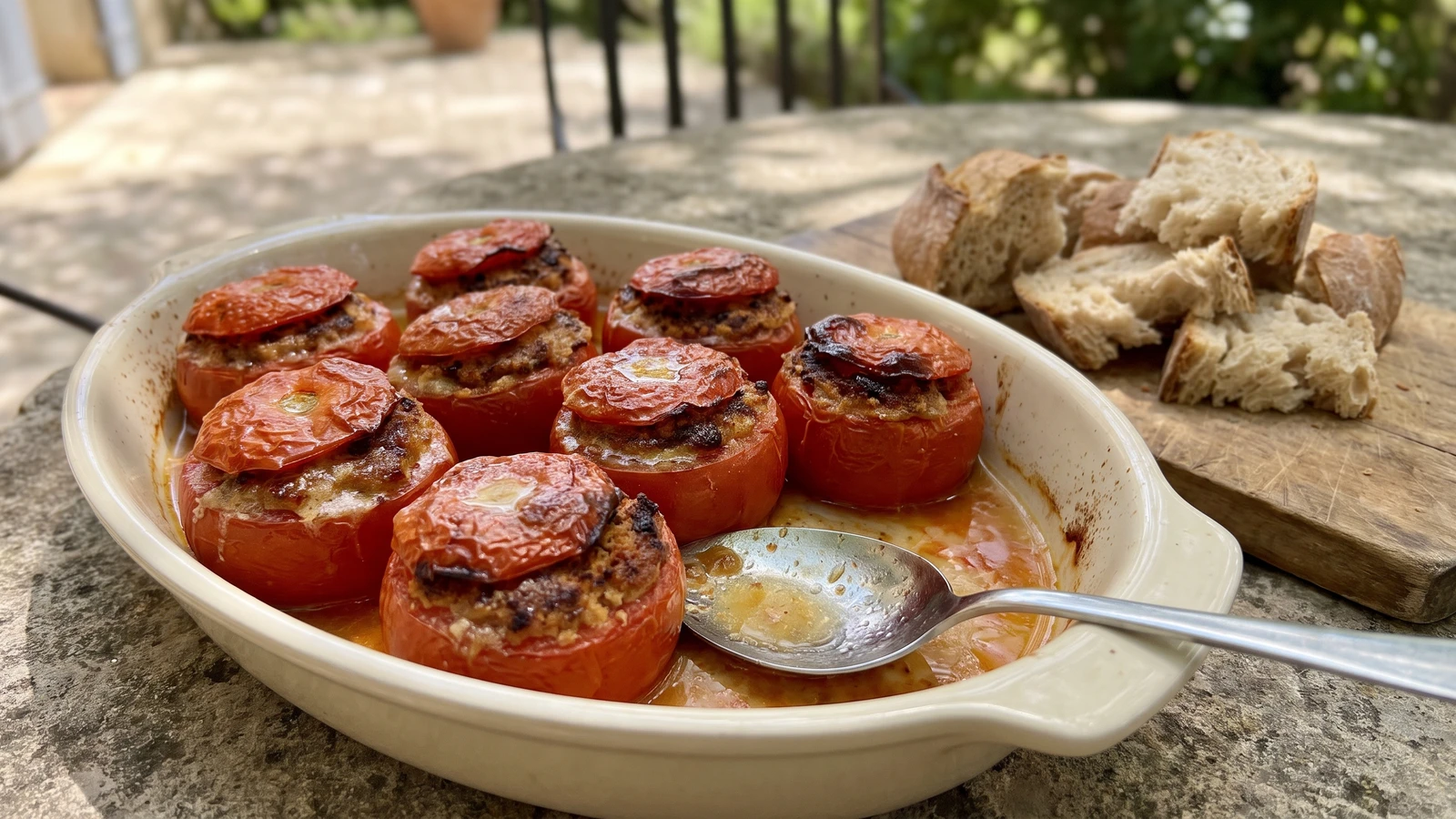
The classical stuffed-tomato method, scaled for eight: press out every seed and drop of juice, half-bake the shells, then add a tender pork farce that stays savory instead of turning soupy.
Tomates farcies (stuffed tomatoes) teach one rule before any pan comes out: water must leave before filling goes in. Press out the loose seeds and juice, season the hollow, and half-bake it empty; miss that work and the farce (seasoned stuffing) poaches in a puddle instead of settling into the tomato. The pressing looks modest, but it decides the dish.
The classical entry is a master method, not a fixed filling. It assumed a service tray of tomatoes and a separate farce already waiting according to the menu, which is the sort of quiet coordination a brigade never bothered to explain. There is no saucier, standing stockpot, or salamander hidden behind this one. For one cook, one stove, one evening, eight medium tomatoes share a simple pork-and-crumb farce, and the ordinary oven handles both bakes.
The separate filling station and service quantity are scaffolding, so they go; the pork farce is supplied because the master entry leaves its designation open. Pressing the tomatoes, seasoning their insides, setting them in an oiled dish, and half-baking before stuffing are the dish, so every one stays. Press well, and if liquid gathers after the first bake, tip it away and dry the hollows before filling. Ça se rattrape.
Tomates farcies have a particularly strong home in Provence and the Niçois kitchen, where tomatoes join courgettes, onions, and peppers under the family name petits farcis. From those southern tables the dish entered the wider cuisine bourgeoise, carrying fillings of cooked meat, sausage, rice, or vegetables according to the household. The classical master formula settles no filling at all: its defining act is to drain, season, and half-cook the tomato before the menu's chosen farce is added.
Quantity
8 (about 2¼ pounds / 1 kg)
Quantity
1½ teaspoons (7.5 ml / 9 g), plus more as needed
divided
Quantity
¾ teaspoon (3.75 ml / 1.5 g), plus more as needed
divided
Quantity
1 tablespoon (15 ml / 14 g)
Quantity
2 tablespoons (30 ml / 28 g)
divided
Quantity
1 (about ⅓ cup / 60 g)
finely minced
Quantity
1 clove (about 1 teaspoon / 3 g)
minced
Quantity
¾ cup (180 ml / 75 g)
divided
Quantity
¼ cup (60 ml / 60 g)
Quantity
12 ounces (about 1½ cups / 340 g)
Quantity
1
Quantity
2 tablespoons (30 ml / 8 g)
finely chopped
Quantity
1 teaspoon (5 ml / 1 g)
Quantity
⅛ teaspoon (0.6 ml / 0.3 g)
| Ingredient | Quantity |
|---|---|
| medium ripe but firm tomatoes | 8 (about 2¼ pounds / 1 kg) |
| fine sea saltdivided | 1½ teaspoons (7.5 ml / 9 g), plus more as needed |
| freshly ground black pepperdivided | ¾ teaspoon (3.75 ml / 1.5 g), plus more as needed |
| olive oil | 1 tablespoon (15 ml / 14 g) |
| unsalted butterdivided | 2 tablespoons (30 ml / 28 g) |
| large shallotfinely minced | 1 (about ⅓ cup / 60 g) |
| garlicminced | 1 clove (about 1 teaspoon / 3 g) |
| fresh breadcrumbsdivided | ¾ cup (180 ml / 75 g) |
| whole milk | ¼ cup (60 ml / 60 g) |
| ground pork | 12 ounces (about 1½ cups / 340 g) |
| large egg | 1 |
| flat-leaf parsleyfinely chopped | 2 tablespoons (30 ml / 8 g) |
| fresh thyme leaves | 1 teaspoon (5 ml / 1 g) |
| freshly grated nutmeg | ⅛ teaspoon (0.6 ml / 0.3 g) |
Heat the oven to 375°F (190°C) with a rack in the center. Cut a lateral slice about ⅜ inch (1 cm) thick from each stem end and reserve the caps. Lift out the core and loose seed pockets with a teaspoon, leaving the walls intact. Hold each tomato cut-side down and press it gently once or twice so the seeds and juice fall away; squeeze firmly enough to empty it, never hard enough to split it. Season the hollows with ½ teaspoon of the salt and ¼ teaspoon of the pepper, then invert them on a clean towel for 10 minutes.
Coat a shallow 2-quart (2-liter) gratin dish with the olive oil and arrange the tomatoes cut-side up without crowding them. Bake the empty shells for 12 to 15 minutes, until their flesh has begun to soften but the walls remain upright and the skins have not split. Lift out the dish and carefully tip away any liquid collected inside the tomatoes. If the hollows are still swimming, blot them and return them empty to the oven for 3 minutes. Ça se rattrape. Keep the oven on.
While the tomatoes half-bake, moisten ½ cup (120 ml / 50 g) of the breadcrumbs with the milk and let them stand for 5 minutes. Melt 1 tablespoon (15 ml / 14 g) of the butter in a small skillet over medium-low heat. Add the shallot and cook until soft and translucent, about 5 minutes, then stir in the garlic for 30 seconds. Cool briefly. Combine the pork, soaked crumbs, shallot mixture, egg, parsley, thyme, nutmeg, the remaining 1 teaspoon salt, and the remaining ½ teaspoon pepper. Mix just until the farce becomes cohesive and lightly tacky. Fry a teaspoonful in the skillet until cooked through, taste, and correct the seasoning. If the farce slumps or sheds liquid, mix in 1 or 2 tablespoons of the reserved dry crumbs and wait 5 minutes; the crumbs will bind the excess without making the filling heavy.
Divide the farce among the half-baked tomatoes, filling each to the rim and making a loose mound without compressing it into a dense plug. Scatter the remaining breadcrumbs over the tops and dot them with the remaining 1 tablespoon (15 ml / 14 g) butter. Set the reserved tomato caps in the dish beside the tomatoes so the filling can brown. Bake for 22 to 28 minutes, until the crumb tops are deep gold, the tomato edges look relaxed, and the center of the pork reaches 160°F (71°C). If the crumbs brown before the farce is cooked, cover the dish loosely with foil and continue baking.
Let the tomates farcies rest in their dish for 10 minutes. This pause lets the farce settle and the tomato juices thicken slightly instead of running across the plate. Set the caps askew on top, spoon a little of the buttery dish juice around each tomato, and serve two per person while warm. À table!
1 serving (about 300g)
Culinary guides, cultural storytelling, and the editorial depth that makes cooking meaningful.
Discover Culinary ExplorerChef Juliette
Tiny éperlans, lightly floured and fried until their tails stand crisp, arrive in a generous heap on a napkin with fried parsley and grooved lemon, a weeknight lesson in heat and restraint.

Chef Juliette
Brandade de Morue turns salt cod, warm olive oil, and milk into a pale, silky emulsion: keep everything warm and add the oil slowly, then crown the generous dome with butter-fried bread.

Chef Juliette
Salt cod worked warm with cream, one patient spoonful at a time, until the rough flakes become a glossy Nîmes paste, domed generously and ringed with butter-fried croutons for the table.

Chef Juliette
Wine-poached char packed in its earthenware crock beneath butter gold: a make-ahead first course that turns careful cooling, thorough boning, and one unbroken seal into quiet abundance.