Chef Juliette
Suet Dumpling
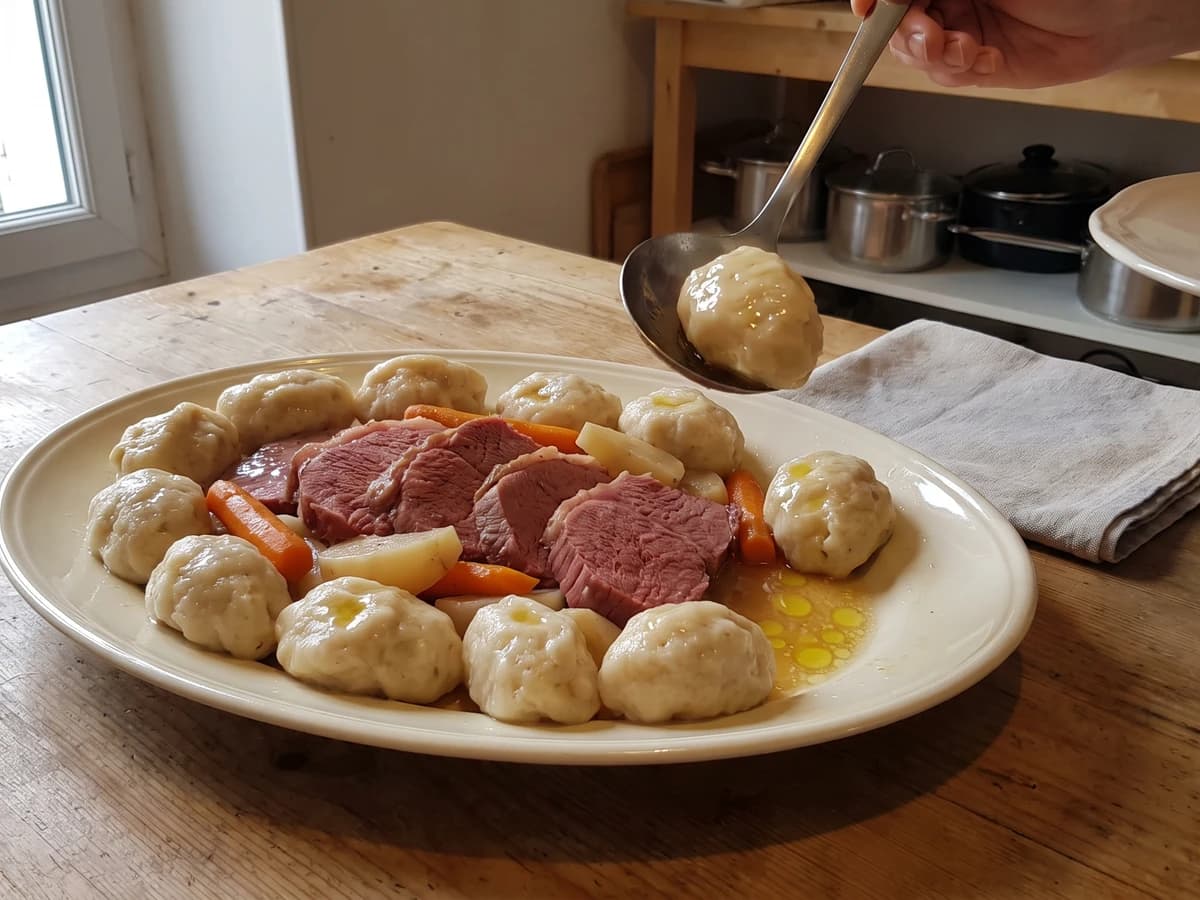
Boulettes au suif, poached beside salt beef, turn equal weights of flour and finely chopped suet into tender, rich dumplings. Keep the beef liquor at a bare tremble and the old garnish works beautifully at home.
A cooking platform built around craft, culture, and the stories behind what we eat.
Created by Chef Juliette
Based on No. 2242, Pommes de Terre à la Savoyarde, from Le Guide Culinaire (1907) by Auguste Escoffier
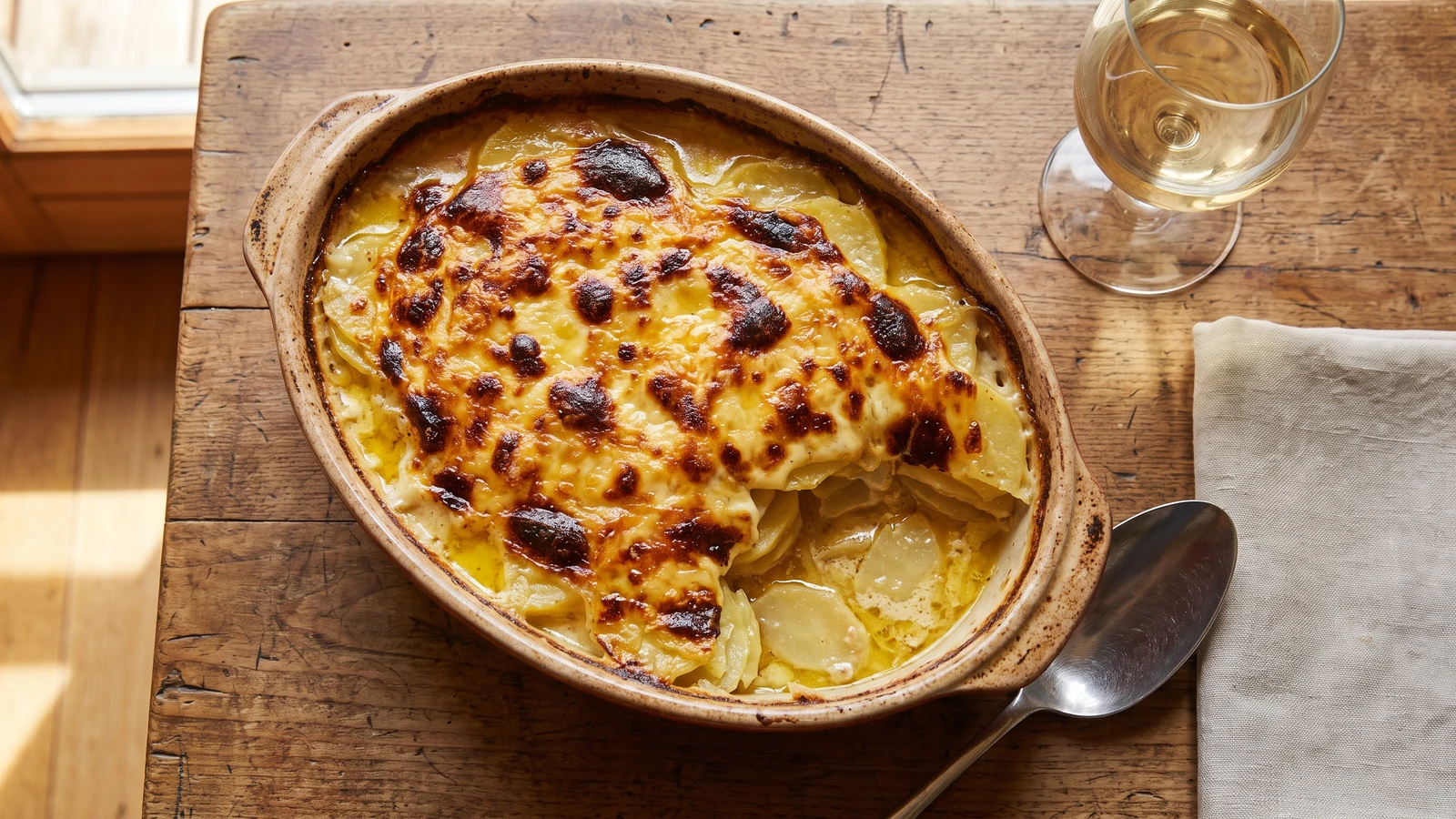
Pommes de Terre à la Savoyarde trades the milk of its Dauphinoise parent for clear consommé, keeping egg, nutmeg, and Gruyère for a leaner gratin with a savory center and a deeply bronzed crown.
Pommes de Terre à la Savoyarde (Savoy-style potato gratin) teaches one true thing: when consommé replaces milk, the potato must provide the body. The liquid will look loose when it enters the oven. Don't drain it or thicken it with flour. The unwashed potato starch and beaten egg bind it as it bakes, while Gruyère makes the bronzed crust.
The book sends the cook to Gratin de Pommes de Terre à la Dauphinoise (No. 2222) and changes one thing, milk becomes consommé. A brigade could rely on a saucier, a stockpot never off the fire, several earthenware service dishes, and a salamander waiting to color the top. At home, use a good clear consommé, one shallow gratin dish, and the broiler only if the oven leaves the crown pale. The original two pounds of potatoes already make four generous side portions, so there is no sense halving an egg and disturbing the ratio. One cook, one stove, one evening.
The written cross-reference and multiple service dishes are brigade scaffolding. They can go. Even slices, unwashed starch, hot consommé, thorough mixing, and a full bake are the dish, and they stay. Before touching a pan, slice the potatoes evenly and do not rinse them. That starch decides whether the center becomes succulent or soupy.
Pommes de Terre à la Savoyarde belongs to Savoie in the French Alps, where potatoes, broth, and firm mountain cheeses naturally meet in substantial table dishes. In the classical canon it is defined through Gratin de Pommes de Terre à la Dauphinoise (No. 2222), replacing boiled milk with consommé while retaining the egg, nutmeg, and Gruyère of that formula. It is therefore more than Dauphinoise with extra cheese: the changed cooking liquid gives the potatoes a clearer, more savory character and marks the regional distinction.
Quantity
1 full recipe Gratin de Pommes de Terre à la Dauphinoise (No. 2222)
prepare only to the point before adding its boiled milk; omit the milk entirely and do not bake
Quantity
3 2/3 cups (850 ml / about 850 g)
preferably low-sodium; brought just to a boil
| Ingredient | Quantity |
|---|---|
| Gratin de Pommes de Terre à la Dauphinoise baseprepare only to the point before adding its boiled milk; omit the milk entirely and do not bake | 1 full recipe Gratin de Pommes de Terre à la Dauphinoise (No. 2222) |
| clear beef or chicken consommépreferably low-sodium; brought just to a boil | 3 2/3 cups (850 ml / about 850 g) |
Heat the oven to 350°F (180°C). Prepare Gratin de Pommes de Terre à la Dauphinoise (No. 2222) exactly to the point before its boiled milk is added, using its full proportions and sequence. Do not add or measure any milk, and do not bake the mixture yet. Keep the potato slices unwashed so their surface starch remains available to bind the consommé.
Bring the consommé just to a boil in a saucepan, then take it off the heat for one minute. Taste it before it meets the potatoes. It should be savory but not salty, because the Gruyère in the referenced preparation will season the dish further. If your consommé is aggressively salty, dilute it with enough water to make it pleasant before measuring the required amount.
Use the hot consommé volume for volume in place of the boiled milk called for in Gratin de Pommes de Terre à la Dauphinoise (No. 2222). Add it gradually while turning the potatoes through the egg, seasonings, and Gruyère so the egg warms evenly rather than catching in threads. Mix thoroughly, exactly as the source directs. The mixture will appear much looser than a cream gratin. It is exactly right.
Transfer the mixture to one garlic-rubbed, well-buttered 2-quart shallow gratin dish, arranging the slices into an even layer without packing them tightly. Pour over every drop of seasoned consommé, then finish with the grated Gruyère and pieces of butter specified by the referenced preparation. Set the dish on a rimmed baking sheet to catch any bubbling at the edge.
Bake for 40 to 45 minutes, until a thin knife passes through the center without resistance, the liquid has settled around the potatoes, and the top is deep gold with darker bronze patches. If the crown colors before the potatoes soften, cover it loosely with foil and continue baking. If the potatoes are tender but the top remains pale, place the dish under the broiler for one or two minutes, watching without distraction. That is your honest home salamander.
Rest the gratin for 10 to 15 minutes. The consommé may still tremble at the rim when the dish leaves the oven, but the starch and egg will finish setting as it stands. If a true puddle remains after the rest, ça se rattrape: return the dish to the oven for another 5 to 10 minutes. Serve from the baking dish while the top is crisp and the center remains succulent. À table!
1 serving (about 450g)
Culinary guides, cultural storytelling, and the editorial depth that makes cooking meaningful.
Discover Culinary ExplorerChef Juliette
Boulettes au suif, poached beside salt beef, turn equal weights of flour and finely chopped suet into tender, rich dumplings. Keep the beef liquor at a bare tremble and the old garnish works beautifully at home.

Chef Juliette
Bread, flour, frangipane, and rice become four cool, supple panades for binding forcemeats, each changing body and flavor while preserving tenderness. The finest Mousselines need none, and knowing that distinction is the lesson.

Chef Juliette
Panade au pain is bread, milk, salt, heat, and attention: stir until the paste releases cleanly, butter it against a skin, and you have the quiet binder behind tender French farces.

Chef Juliette
Panade de farine teaches the drying stroke behind pâte à choux: flour meets boiling buttered water, then stays over the fire until the paste gathers, smooths, and quits the pan cleanly.