Chef Juliette
Suet Dumpling
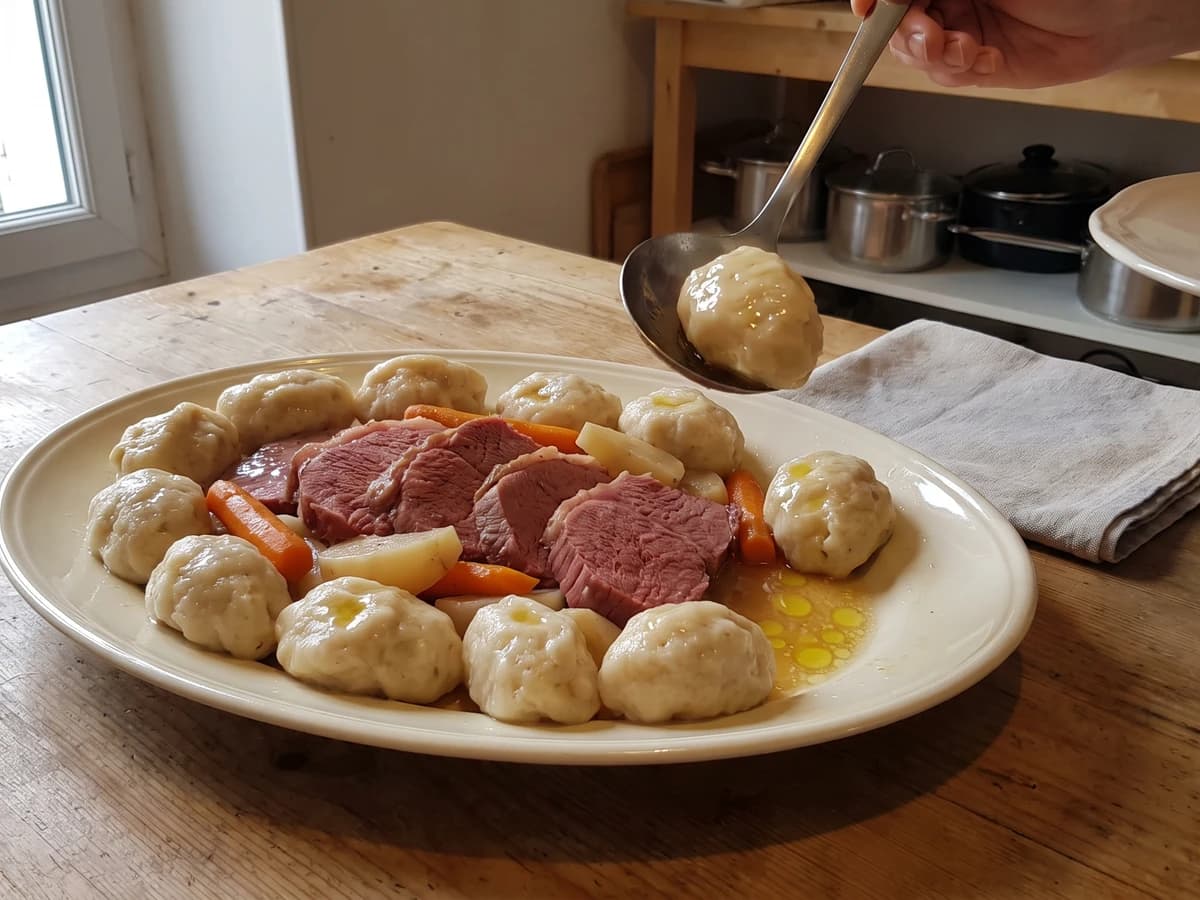
Boulettes au suif, poached beside salt beef, turn equal weights of flour and finely chopped suet into tender, rich dumplings. Keep the beef liquor at a bare tremble and the old garnish works beautifully at home.
A cooking platform built around craft, culture, and the stories behind what we eat.
Created by Chef Juliette
Based on No. 222, Marquise Potatoes, from Le Guide Culinaire (1907) by Auguste Escoffier
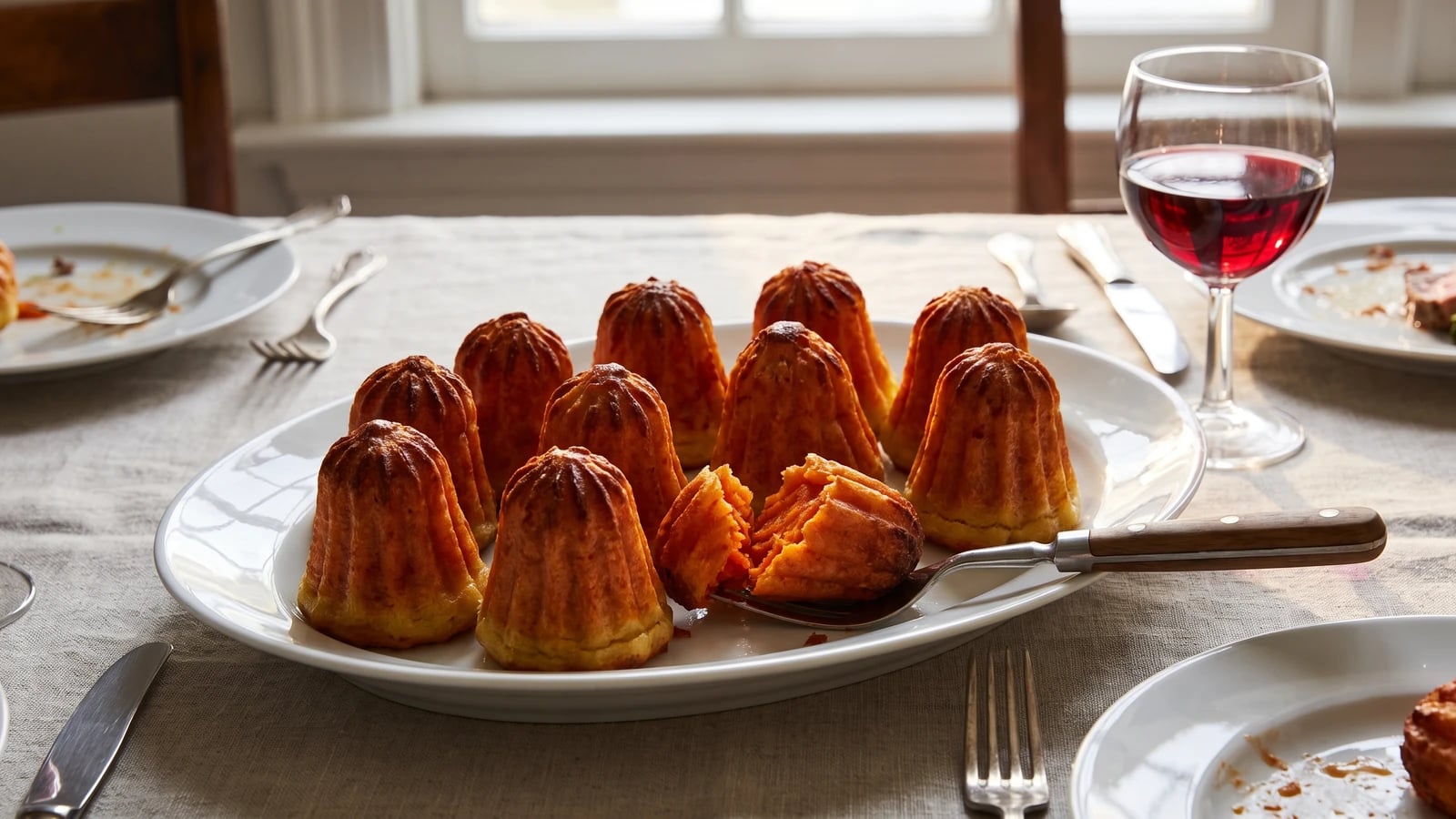
Croquette paste meets a fierce tomato reduction, then pipes into ridged meringue shapes and takes an egg gilding. Keep the purée dry, and every proud little Marquise holds its crown.
Pommes Marquise (tomato-tinted piped potatoes) teach a blunt lesson: moisture decides whether a piped potato stands or slumps. The very red tomato purée must be reduced until a spatula leaves a clean track that stays open; only then can the croquette paste keep its tall grooves beneath an egg gilding. That reduction is the dish.
The original entry assumes a pound of croquette paste ready from the day's production, six ounces of reduced tomato purée maintained by a saucier, and a large grooved pipe waiting near a fierce service oven. At home, you cook one pan of potatoes, reduce an honest canned purée in a small saucepan, and use an open-star tip. The ratio remains exactly 1 lb (454 g) paste to 6 oz (170 g) reduction, but the batch becomes twelve generous pieces for four. The brigade's ready-made components are scaffolding and can go. The dry reduction, grooved piping, light gilding, and last-minute hot oven must stay.
They emerge russet-red with bronze tips, tender at the center and lightly crusted wherever the egg catches a ridge. No stockpot or mother sauce belongs here, and the broiler supplies a salamander's final flash only if your oven colors slowly. Before you pipe even one, weigh that finished tomato reduction and make certain it mounds rather than flows. That is the step that decides the tray.
Pommes Marquise belong to the professional French garniture repertoire centered in Paris, where seasoned potato pastes were shaped into distinct named forms for roasted and sauced meats. They are a tomato-colored branch of the croquette and duchesse family, piped in the silhouette of Ordinary Meringue (No. 2382) and gilded before the oven, rather than a regional potato dish tied to a provincial larder. The title describes a classical presentation, not evidence of a particular marquise's household recipe.
Quantity
15 oz (425 g), peeled weight
cut into even chunks
Quantity
2½ tablespoons (37 ml / 35 g)
softened
Quantity
2 (2 tablespoons / 36 g)
Quantity
¾ teaspoon (3.75 ml / 4.5 g)
Quantity
⅛ teaspoon (0.6 ml / 0.3 g)
Quantity
1 small pinch (0.3 ml / 0.1 g)
Quantity
1¾ cups (415 ml / 425 g), reduced to exactly ⅔ cup (160 ml / 170 g)
Quantity
1 (3 tablespoons / 50 g without shell)
thoroughly beaten for gilding
Quantity
1 finished piece (No. 2382), visual reference only; not incorporated
| Ingredient | Quantity |
|---|---|
| floury potatoescut into even chunks | 15 oz (425 g), peeled weight |
| unsalted buttersoftened | 2½ tablespoons (37 ml / 35 g) |
| large egg yolks | 2 (2 tablespoons / 36 g) |
| fine salt | ¾ teaspoon (3.75 ml / 4.5 g) |
| ground white pepper | ⅛ teaspoon (0.6 ml / 0.3 g) |
| freshly grated nutmeg | 1 small pinch (0.3 ml / 0.1 g) |
| smooth canned tomato purée | 1¾ cups (415 ml / 425 g), reduced to exactly ⅔ cup (160 ml / 170 g) |
| large eggthoroughly beaten for gilding | 1 (3 tablespoons / 50 g without shell) |
| Ordinary Meringue | 1 finished piece (No. 2382), visual reference only; not incorporated |
Put the tomato purée in a small, wide saucepan and cook over medium-low heat, stirring frequently at first and almost constantly as it thickens. Reduce it until a spatula drawn across the pan leaves a clean track that stays open and the purée sits in a dense, deep-red mound. Begin weighing when it looks close: scrape it into a tared bowl, and return it to the pan if it weighs more than 6 oz (170 g). The finished reduction must weigh exactly 6 oz (170 g). If the bottom catches, don't scrape it. Transfer the unburned purée to a clean pan and continue over gentler heat. Ça se rattrape. Let it cool until warm.
Put the potatoes in a saucepan and cover them with cold water by 1 inch (2.5 cm). Bring to a gentle simmer and cook for 15 to 18 minutes, until a knife passes through the center without resistance. Keep the water calm. A hard boil knocks floury potatoes apart and leaves them waterlogged.
Drain the potatoes thoroughly, return them to the empty hot pan, and set them over low heat for 2 to 3 minutes. Shake the pan until the surfaces look floury and no moisture gathers underneath. Pass them through a potato ricer or fine food mill while hot. Never use a food processor here; its blade ruptures the potato cells and turns a light paste into glue.
Let the riced potato stand for 1 minute, then work in the softened butter, salt, white pepper, and nutmeg with a wooden spoon. Add the yolks one at a time, mixing only until smooth. If the potatoes still look wet before the yolks go in, return them to low heat and stir for another minute; once the yolks are added, aggressive heat risks curdling them. Weigh exactly 1 lb (454 g) of finished croquette paste for the Marquise. Reserve any small excess for another use.
Fold the 6 oz (170 g) tomato reduction into the 1 lb (454 g) croquette paste while both are warm, mixing just until the color is even. Pipe a small test rosette onto parchment. Its grooves should remain sharply visible. If it slumps, spread the paste in a wide bowl and chill it uncovered for 10 minutes, then test again. If it remains loose, stir it over the lowest heat for 1 to 2 minutes, cool briefly, and retest. Ça se rattrape. Don't add flour, which makes the potatoes heavy and dulls their flavor.
Heat the oven to 450°F (230°C), or 425°F (220°C) convection, with a rack in the upper third. Line a heavy baking tray with parchment. Fit a sturdy piping bag with a large ⅝ to ¾ inch (16 to 18 mm) open-star tip and fill it no more than two-thirds full. Using Ordinary Meringue (No. 2382) as the shape reference, pipe 12 broad, tall crowns about 2 inches (5 cm) across, spiraling upward and releasing pressure before lifting the pointed tip. The meringue is a model for the silhouette only and never enters the potato mixture.
Gild the Marquise, meaning brush their exposed surfaces very lightly with beaten egg. Use a soft pastry brush and barely touch the ridges so they remain sharp. If egg gathers in the grooves or puddles around the base, wick it away with the corner of a clean paper towel before baking. A heavy coating glues the definition shut; a thin film gives the proper golden sheen.
Bake for 8 to 12 minutes, until the ridges are bronze, the tomato-red sides look dry and set, and the bases release cleanly from the parchment. The potatoes are already cooked, so this last hot oven is for setting and gilding, not prolonged baking. If they are hot and firm but still pale, place them beneath a fully heated broiler for 20 to 40 seconds, watching without looking away; this is the home equivalent of a salamander's final color. Transfer them carefully to a warm platter and serve at once. À table!
1 serving (about 165g)
Culinary guides, cultural storytelling, and the editorial depth that makes cooking meaningful.
Discover Culinary ExplorerChef Juliette
Boulettes au suif, poached beside salt beef, turn equal weights of flour and finely chopped suet into tender, rich dumplings. Keep the beef liquor at a bare tremble and the old garnish works beautifully at home.

Chef Juliette
Bread, flour, frangipane, and rice become four cool, supple panades for binding forcemeats, each changing body and flavor while preserving tenderness. The finest Mousselines need none, and knowing that distinction is the lesson.

Chef Juliette
Panade au pain is bread, milk, salt, heat, and attention: stir until the paste releases cleanly, butter it against a skin, and you have the quiet binder behind tender French farces.

Chef Juliette
Panade de farine teaches the drying stroke behind pâte à choux: flour meets boiling buttered water, then stays over the fire until the paste gathers, smooths, and quits the pan cleanly.