Chef Juliette
Suet Dumpling
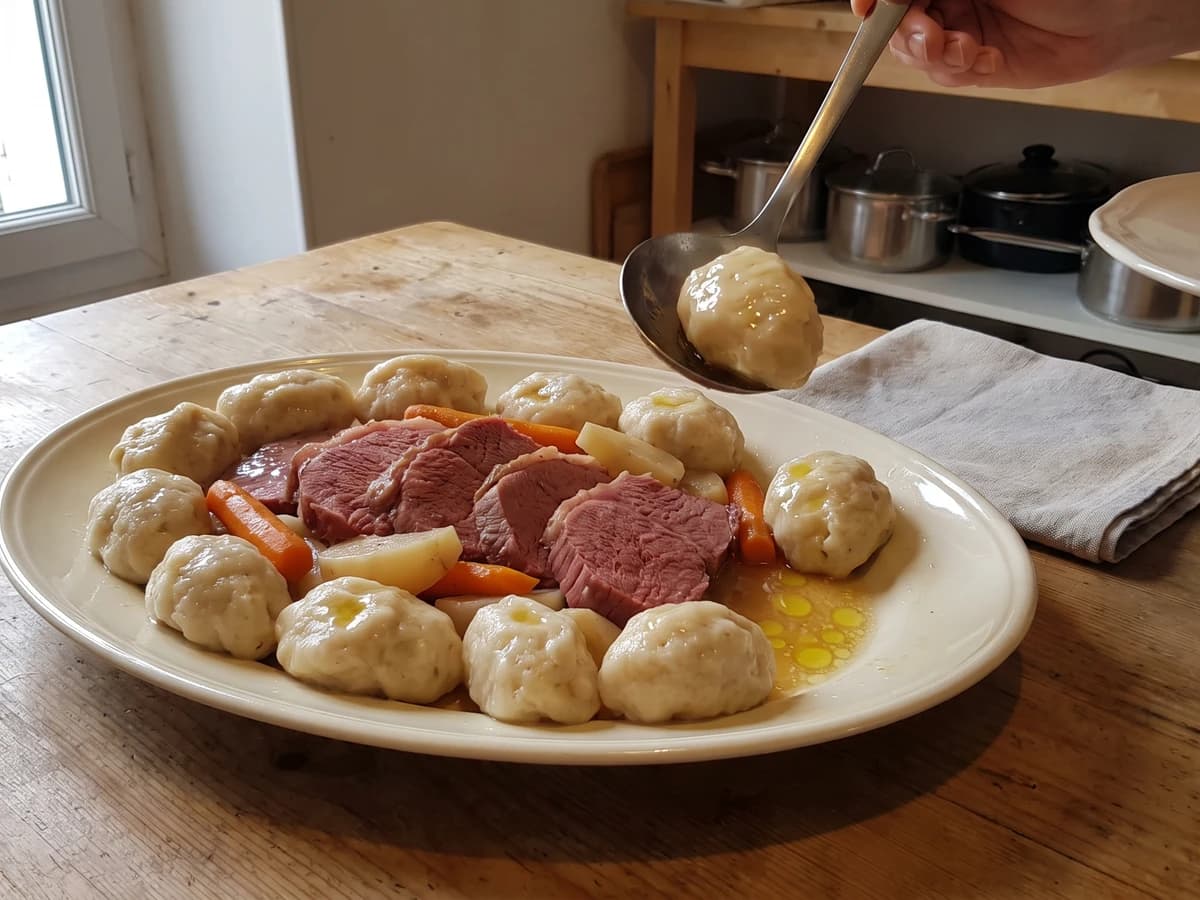
Boulettes au suif, poached beside salt beef, turn equal weights of flour and finely chopped suet into tender, rich dumplings. Keep the beef liquor at a bare tremble and the old garnish works beautifully at home.
A cooking platform built around craft, culture, and the stories behind what we eat.
Created by Chef Juliette
Based on No. 2211, Croquettes de Pommes de Terre à la Dauphine, from Le Guide Culinaire (1907) by Auguste Escoffier
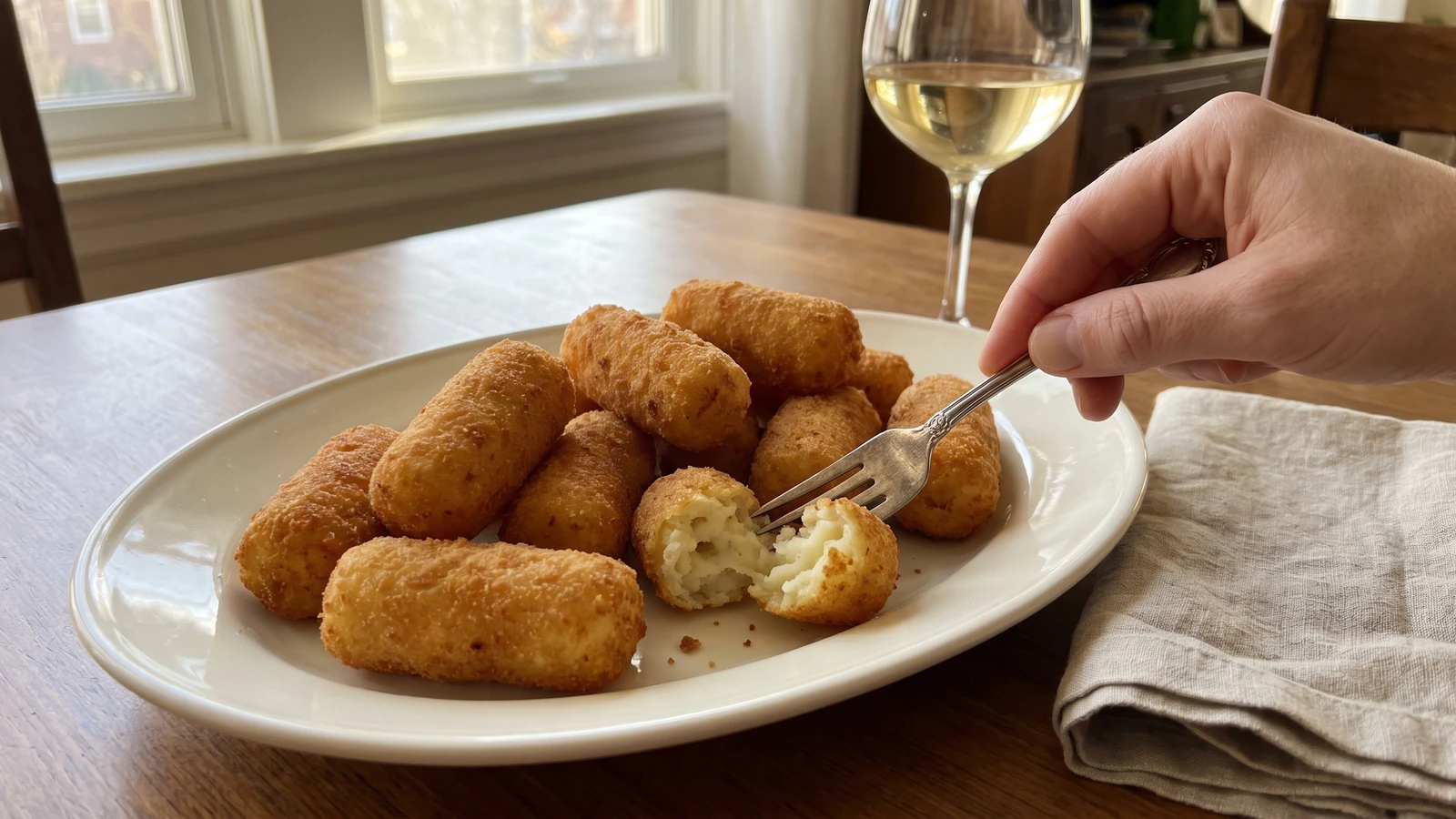
The choux inside the potato paste is the whole lesson: it lifts these breadcrumbed corks as they fry, leaving a deep golden shell around a tender, airy center.
Croquettes de Pommes de Terre à la Dauphine (Dauphine potato croquettes) teach one clear principle: pâte à choux is not decoration in the potato paste, it is the lift. The breading gives a firm golden coat, but the choux is what keeps each cork from sitting heavy. Before you touch a pan, know this: cold, well-shaped paste must meet properly hot fat.
The classical entry assumed a brigade with prepared Dauphine Potatoes (No. 220), Anglaise (for Egg-and-bread-crumbing) (No. 174), trays of fine crumbs, and a bath of frying fat held ready for service. There is no saucier, simmering stockpot, or salamander hiding in this method; its brigade scaffolding was readiness and volume. At home, 680 grams of paste becomes twelve exact two-ounce croquettes, while a deep saucepan and clip-on thermometer replace the standing fryer. One cook, one stove, one evening.
The service fryer and ranks of trays are scaffolding. The two-ounce cork shape, the complete panure à l’anglaise, and the hot fat are the dish, so those remain untouched. Send one test croquette into the oil by itself. It will tell you whether the coating and temperature are ready, and that single test is the step that matters most.
Croquettes de pommes de terre à la Dauphine belong to the grand Parisian classical table, where potato garnishes were distinguished by their paste, shape, and finish before traveling into hotels and bourgeois dining rooms. The name does not make them a provincial specialty of Dauphiné; in this culinary nomenclature, à la Dauphine identifies potato paste lightened with pâte à choux. The croquette form encloses that airy mixture in panure à l’anglaise, turning a delicate garnish preparation into a sturdy, generous side dish.
Quantity
about 3 cups (720 ml / 680 g) Dauphine Potatoes (No. 220)
cooled
Quantity
½ cup (120 ml / 120 g) Anglaise (for Egg-and-bread-crumbing) (No. 174)
Quantity
½ cup (120 ml / 60 g)
Quantity
2 cups (480 ml / 200 g)
Quantity
2 quarts (1.9 L / approximately 1.7 kg)
for frying
| Ingredient | Quantity |
|---|---|
| prepared Dauphine potato pastecooled | about 3 cups (720 ml / 680 g) Dauphine Potatoes (No. 220) |
| prepared egg coating | ½ cup (120 ml / 120 g) Anglaise (for Egg-and-bread-crumbing) (No. 174) |
| all-purpose flour | ½ cup (120 ml / 60 g) |
| fine dry bread crumbs | 2 cups (480 ml / 200 g) |
| high-heat neutral oil, such as sunflower or peanut oilfor frying | 2 quarts (1.9 L / approximately 1.7 kg) |
Set the prepared Dauphine Potatoes (No. 220) on a tray and work with them cool and firm, never warm or refrigerator-hard. If the paste feels loose, spread it about 2 cm thick and chill it for 15 minutes rather than adding flour; extra flour steals the lift supplied by the pâte à choux. Weigh twelve portions of 2 ounces (56 to 57 g) each. The source gives that size deliberately, large enough to stay tender within its crust but small enough to warm before the coating darkens.
Roll each portion gently between your palms into a short cork about 2½ inches (6 cm) long and 1¼ inches (3 cm) thick. Close every fissure with a fingertip and square the ends without compressing the paste into a dense plug. If the cylinders slump or cling badly, return them to the cold for another 10 minutes. Ça se rattrape: chill the paste, never burden it with more flour.
Arrange three shallow dishes in order: flour, Anglaise (for Egg-and-bread-crumbing) (No. 174), and fine bread crumbs. Roll each cork lightly in flour and tap away every excess, coat it completely in the Anglaise, then let the surplus drain before rolling it in crumbs. Press just firmly enough to close the coat around the ends and seams. The flour gives the egg something dry to grip, while the egg and crumbs form the resisting crust that holds the soft paste inside. Patch any bare spot with a dab more Anglaise (for Egg-and-bread-crumbing) (No. 174) and fresh crumbs, then chill the breaded croquettes for 15 minutes.
Pour the oil into a deep 4-quart (3.8 L) saucepan or cocotte to a depth of about 3 inches (7.5 cm), leaving the vessel no more than one-third full. Heat it to 350°F (175°C). The fat must be hot enough to set the egg coating immediately; cooler oil seeps through the crumbs and gives a heavy, greasy shell. Keep the pot lid nearby and the work area dry.
Lower one croquette gently into the oil with a spider or slotted spoon. Fry it for 3 to 4 minutes, turning once or twice, until evenly deep gold and firm beneath the spoon. The bubbling should be lively but controlled. If the croquette splits, lift it out, return the oil to 350°F (175°C), patch any visible fissures on the remaining croquettes with Anglaise (for Egg-and-bread-crumbing) (No. 174) and crumbs, then chill them for 10 minutes. Ça se rattrape. If the test darkens in less than 2 minutes, lower the heat before continuing.
Fry the remaining croquettes three at a time for 3 to 4 minutes, letting the oil return to 350°F (175°C) between batches. Crowding drops the temperature and softens the crust, so give them room to move. Turn them gently for even color, then lift them onto a wire rack. A rack lets excess fat fall away without trapping moisture against the underside.
Let the croquettes stand on the rack for 2 minutes, just long enough for the crust to settle, then pile them generously on a warm platter. Serve beside roast poultry, veal, or beef, with any jus offered alongside rather than poured over their crisp coats. The shell should give cleanly under the fork and reveal a pale, tender center lifted by choux. À table!
1 serving (3 croquettes, about 230g)
Culinary guides, cultural storytelling, and the editorial depth that makes cooking meaningful.
Discover Culinary ExplorerChef Juliette
Boulettes au suif, poached beside salt beef, turn equal weights of flour and finely chopped suet into tender, rich dumplings. Keep the beef liquor at a bare tremble and the old garnish works beautifully at home.

Chef Juliette
Bread, flour, frangipane, and rice become four cool, supple panades for binding forcemeats, each changing body and flavor while preserving tenderness. The finest Mousselines need none, and knowing that distinction is the lesson.

Chef Juliette
Panade au pain is bread, milk, salt, heat, and attention: stir until the paste releases cleanly, butter it against a skin, and you have the quiet binder behind tender French farces.

Chef Juliette
Panade de farine teaches the drying stroke behind pâte à choux: flour meets boiling buttered water, then stays over the fire until the paste gathers, smooths, and quits the pan cleanly.