Chef Juliette
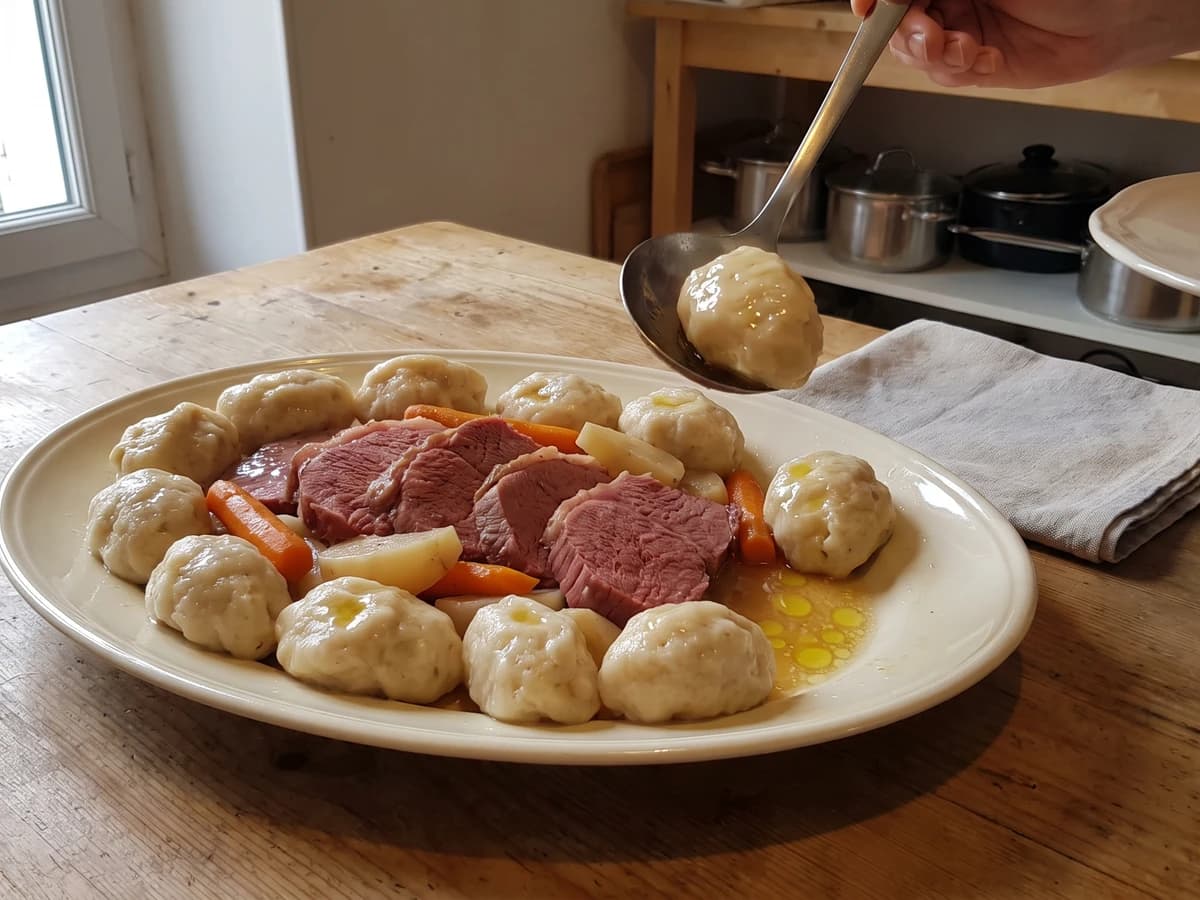
Suet Dumpling
Boulettes au suif, poached beside salt beef, turn equal weights of flour and finely chopped suet into tender, rich dumplings. Keep the beef liquor at a bare tremble and the old garnish works beautifully at home.
A cooking platform built around craft, culture, and the stories behind what we eat.
Created by Chef Juliette
Based on No. 220, Dauphine Potatoes, from Le Guide Culinaire (1907) by Auguste Escoffier
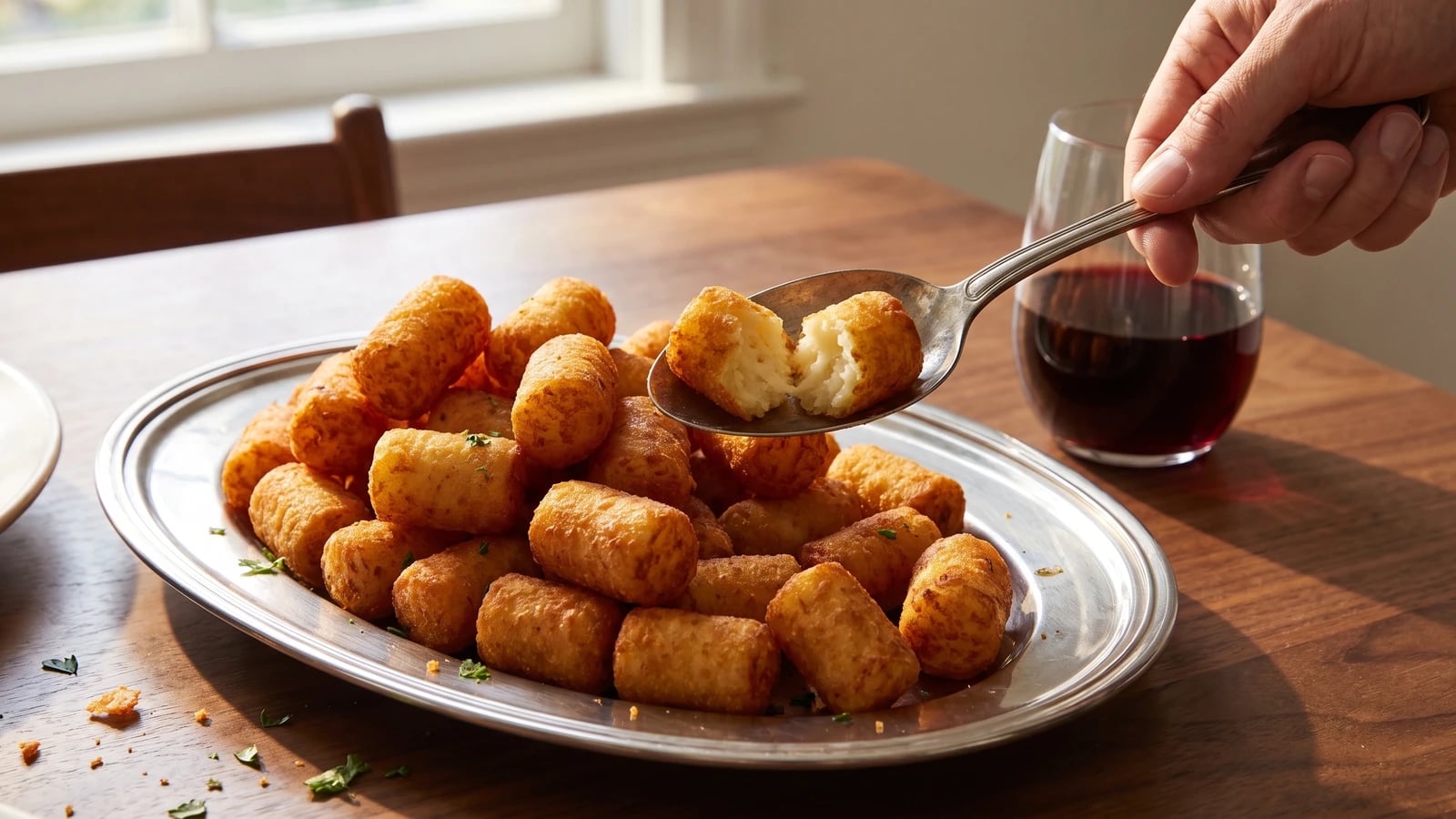
Pommes dauphine marry dry potato croquette paste with savory pâte à choux, then seal the small cylinders à l’anglaise and fry them gold. The lesson is moisture control: dry paste puffs, wet paste escapes.
Pommes dauphine (Dauphine potatoes) teach one governing fact: the potato croquette paste must be dry before it meets the pâte à choux. A firm paste gives the choux room to lift inside its crumb jacket; a wet one softens the coating, drinks oil, and may escape. This is not a detail. It is the dish.
The book assumed a brigade with potato paste, Common Pâte à Choux (for Souffléd Fritters, Gnochi, Potatoes à la Dauphine) (No. 2374), and Anglaise (for Egg-and-bread-crumbing) (No. 174) already prepared, plus a deep fryer holding its heat through service. At home, weigh one pound of paste against the prescribed six ounces of choux, shape on a tray, and use a heavy saucepan with a thermometer. The scale, vessel, and batch size have changed because they were brigade scaffolding. The proportion, small cylinders, and complete crumb coat stay because they make this particular recipe. One cook, one stove, one evening.
Fried properly, the cylinders emerge deep gold, with a fine crust that gives cleanly under the teeth and a pale, tender centre made lighter by the choux. Guard the potato paste before mixing: if it slumps, dry it again and let it cool. Ça se rattrape, but only before the choux goes in.
Pommes dauphine belong to the classical Parisian garnish repertoire, where potato preparations were named, shaped, and matched to roasts with almost grammatical precision; the title points to the dauphine of courtly usage, not to a farmhouse origin in the Dauphiné. Across generations, many home versions have become uncrumbed balls, while this book’s form mixes potato croquette paste with pâte à choux, moulds small cylinders, and gives them a flour, egg, and crumb coat before frying. That coat is structural, not decorative: it sets on contact with the hot fat, holds the soft mixture in, and lets the choux lighten the centre.
Quantity
2 cups (480 ml / 454 g)
cool and very dry
Quantity
¾ cup (180 ml / 170 g) Common Pâte à Choux (for Souffléd Fritters, Gnochi, Potatoes à la Dauphine) (No. 2374)
made without sugar, cooled but pliable
Quantity
½ cup (120 ml / 60 g)
Quantity
½ cup (120 ml / 120 g) Anglaise (for Egg-and-bread-crumbing) (No. 174)
Quantity
2 cups (480 ml / 200 g)
Quantity
6 cups (1.4 L / 1.3 kg)
| Ingredient | Quantity |
|---|---|
| prepared potato croquette pastecool and very dry | 2 cups (480 ml / 454 g) |
| prepared Common Pâte à Chouxmade without sugar, cooled but pliable | ¾ cup (180 ml / 170 g) Common Pâte à Choux (for Souffléd Fritters, Gnochi, Potatoes à la Dauphine) (No. 2374) |
| plain flour | ½ cup (120 ml / 60 g) |
| prepared Anglaise | ½ cup (120 ml / 120 g) Anglaise (for Egg-and-bread-crumbing) (No. 174) |
| fine dry breadcrumbs | 2 cups (480 ml / 200 g) |
| neutral frying oil | 6 cups (1.4 L / 1.3 kg) |
Check the potato croquette paste before portioning it. A spoon drawn through the paste should leave a clean trench, and a small mound should hold its ridges without spreading. If it slumps or leaves watery moisture behind, don't disguise the problem with flour. Ça se rattrape: return the whole supply to a wide pan over gentle heat and stir just until the excess moisture leaves, then cool it completely before weighing the required 454 g. The finished paste will feel firmer than ordinary mashed potato. It is exactly right.
Weigh 170 g, exactly six ounces, of the prepared Common Pâte à Choux (for Souffléd Fritters, Gnochi, Potatoes à la Dauphine) (No. 2374). Add it to the potato paste in three portions, folding firmly with a sturdy spatula after each addition until no pale choux streaks remain. Mix thoroughly, as the book directs, but don't beat the paste into glue. It should be tacky yet capable of holding a mound; if the warmth of mixing makes it smear, chill it for ten minutes rather than adding flour.
Divide the mixture into 24 portions of about 26 g each. With lightly floured hands, roll each into a neat cylinder about 1½ inches (4 cm) long and ¾ inch (2 cm) thick, keeping the ends blunt and the thickness even. Pinch any visible cracks closed, because a crack becomes an escape route in the fryer. Set the cylinders apart on a floured tray as you work.
Paner à l’anglaise, bread in the English manner, means giving each cylinder three complete layers. Roll first in flour and tap off every loose patch, dip into the prepared Anglaise (for Egg-and-bread-crumbing) (No. 174), letting the excess fall away, then roll in the fine breadcrumbs. Press lightly so the crumbs adhere without flattening the cylinder. Look closely for bald spots and coat them again. Rest the breaded potatoes in the refrigerator for 15 minutes so the crust bonds.
Pour the oil into a heavy 3 to 4 quart (3 to 4 L) saucepan; it should stand about 2 inches (5 cm) deep and never fill the pan beyond halfway. Heat it to 350°F (180°C), using a thermometer rather than guessing. The original kitchen relied on a fryer kept very hot through service. Your thermometer is the honest home equivalent, and it matters because the coating must set the instant it touches the oil.
Fry one cylinder alone as a test. It should bubble briskly, rise slightly, and turn an even deep gold in 4 to 5 minutes without darkening in the first two. Fry the rest in batches of five or six, turning them gently and allowing the oil to return to 350°F (180°C) between batches. If one splits, lift it out before the filling escapes. Ça se rattrape: check that the oil has not fallen below 345°F (175°C), patch any bare spots on the remaining cylinders with the Anglaise (for Egg-and-bread-crumbing) (No. 174) and crumbs, then chill them for ten minutes before testing another. If the coating is complete and the oil is correct but the mixture still leaks, the potato paste was too wet; keep the remaining pieces well chilled and fry them one at a time.
Lift the pommes dauphine onto a wire rack and leave them for two minutes, just long enough for excess oil to fall away while the crust stays crisp. Break open the test piece: the centre should be pale, tender, and lightly aerated, with no sticky streak of uncooked choux. Bring them to the table within ten minutes, beside a roast and its jus rather than buried beneath it. À table!
1 serving (about 215g)
Culinary guides, cultural storytelling, and the editorial depth that makes cooking meaningful.
Discover Culinary ExplorerChef Juliette
Boulettes au suif, poached beside salt beef, turn equal weights of flour and finely chopped suet into tender, rich dumplings. Keep the beef liquor at a bare tremble and the old garnish works beautifully at home.

Chef Juliette
Bread, flour, frangipane, and rice become four cool, supple panades for binding forcemeats, each changing body and flavor while preserving tenderness. The finest Mousselines need none, and knowing that distinction is the lesson.

Chef Juliette
Panade au pain is bread, milk, salt, heat, and attention: stir until the paste releases cleanly, butter it against a skin, and you have the quiet binder behind tender French farces.

Chef Juliette
Panade de farine teaches the drying stroke behind pâte à choux: flour meets boiling buttered water, then stays over the fire until the paste gathers, smooths, and quits the pan cleanly.