Chef Juliette
Ordinary or White Consommé
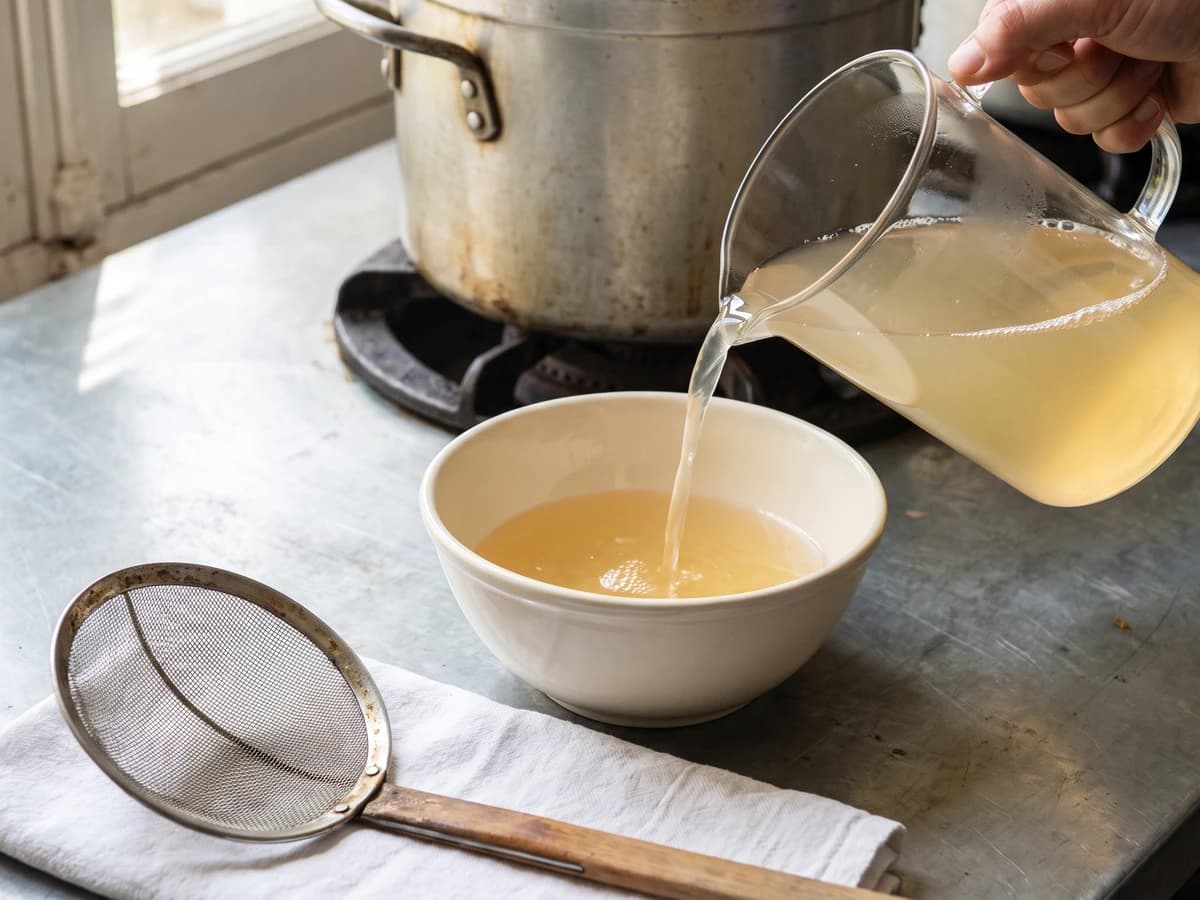
Beef shin, lean beef, and fowl begin in cold water and rise slowly toward a tremble. Skim before the boil, and you learn the quiet discipline that gives every clear French broth its backbone.
A cooking platform built around craft, culture, and the stories behind what we eat.

Created by Chef Juliette
Based on No. 1984, The Seasoning of Salads, from Le Guide Culinaire (1907) by Auguste Escoffier
Five dressings, one governing lesson: match fat and acid to the salad itself, from tender lettuce under fresh cream to bitter dandelion leaves glossed with hot bacon fat.
Assaisonnements de salades teach one governing principle: match the dressing to the leaf, not merely the bowl. Sturdy dandelion welcomes hot bacon fat, early lettuce asks for fresh thin cream, and beetroot can carry mustard and lemon. C’est la même grammaire: fat carries flavour, acid gives shape, and the salad decides their weight.
Unlike a grand sauce, this entry assumed neither a saucier nor a stockpot kept permanently on the fire. It assumed five small preparations, a cook who could judge cream by its flow, and an omelet pan ready for bacon. Here each formula is scaled to dress four side salads. Making gallons for service was scaffolding and can go; keeping the original ratios, pairings, and sequence is the dish and must stay. A small skillet replaces the omelet pan, and a bowl warmed with hot water gives the bacon seasoning the welcome it needs. One cook, one stove, one evening.
Before you mix anything, dry the salad completely. Water dilutes the acid, pushes fat off the leaves, and makes a sound dressing seem badly made. Dry leaves, the right seasoning, and a last-minute toss decide everything.
These five assaisonnements belong to the French household and bourgeois dining-room table, where salads were seasoned according to leaf and season rather than covered with one universal vinaigrette. The hot bacon version has particular kinship with the bitter-green and cabbage salads of Alsace and Lorraine, while the cream versions reflect the northern dairy larder rather than the olive-oil South. Their passage into the classical canon did not make them grander; it fixed the pairings and proportions home cooks already understood.
Quantity
3 tablespoons (45 ml / 41 g)
Quantity
1 tablespoon (15 ml / 15 g)
Quantity
1/4 teaspoon (1.25 ml / 1.5 g)
Quantity
1/8 teaspoon (0.6 ml / 0.3 g)
Quantity
3 tablespoons (45 ml / 45 g)
Quantity
1 tablespoon (15 ml / 15 g)
Quantity
1/4 teaspoon (1.25 ml / 1.5 g)
Quantity
1/8 teaspoon (0.6 ml / 0.3 g)
Quantity
2
hard-boiled, yolks crushed and whites cut into thin strips
Quantity
3 tablespoons (45 ml / 41 g)
Quantity
1 tablespoon (15 ml / 15 g)
Quantity
1/4 teaspoon (1.25 ml / 1.5 g)
Quantity
1/8 teaspoon (0.6 ml / 0.3 g)
Quantity
1 teaspoon (5 ml / 5 g)
Quantity
1/4 cup (60 ml / 60 g)
Quantity
1 tablespoon (15 ml / 15 g)
strained
Quantity
1/4 teaspoon (1.25 ml / 1.5 g)
Quantity
1/8 teaspoon (0.6 ml / 0.3 g)
Quantity
3/4 cup (180 ml / 100 g)
cut into small dice
Quantity
1 tablespoon (15 ml / 15 g)
Quantity
1/8 teaspoon (0.6 ml / 0.75 g)
Quantity
1/8 teaspoon (0.6 ml / 0.3 g)
Quantity
1 tablespoon (15 ml / 10 g)
ciseled, rinsed, and pressed dry
| Ingredient | Quantity |
|---|---|
| Assaisonnement à l’huile: mild salad oil | 3 tablespoons (45 ml / 41 g) |
| Assaisonnement à l’huile: wine vinegar | 1 tablespoon (15 ml / 15 g) |
| Assaisonnement à l’huile: fine salt | 1/4 teaspoon (1.25 ml / 1.5 g) |
| Assaisonnement à l’huile: freshly ground black pepper | 1/8 teaspoon (0.6 ml / 0.3 g) |
| Assaisonnement à la crème: very fresh light cream, 18 to 20 percent fat | 3 tablespoons (45 ml / 45 g) |
| Assaisonnement à la crème: wine vinegar | 1 tablespoon (15 ml / 15 g) |
| Assaisonnement à la crème: fine salt | 1/4 teaspoon (1.25 ml / 1.5 g) |
| Assaisonnement à la crème: freshly ground black pepper | 1/8 teaspoon (0.6 ml / 0.3 g) |
| Assaisonnement à l’œuf: large eggshard-boiled, yolks crushed and whites cut into thin strips | 2 |
| Assaisonnement à l’œuf: mild salad oil | 3 tablespoons (45 ml / 41 g) |
| Assaisonnement à l’œuf: wine vinegar | 1 tablespoon (15 ml / 15 g) |
| Assaisonnement à l’œuf: fine salt | 1/4 teaspoon (1.25 ml / 1.5 g) |
| Assaisonnement à l’œuf: freshly ground black pepper | 1/8 teaspoon (0.6 ml / 0.3 g) |
| Assaisonnement moutarde à la crème: Dijon mustard | 1 teaspoon (5 ml / 5 g) |
| Assaisonnement moutarde à la crème: very fresh light cream, 18 to 20 percent fat | 1/4 cup (60 ml / 60 g) |
| Assaisonnement moutarde à la crème: fresh lemon juicestrained | 1 tablespoon (15 ml / 15 g) |
| Assaisonnement moutarde à la crème: fine salt | 1/4 teaspoon (1.25 ml / 1.5 g) |
| Assaisonnement moutarde à la crème: freshly ground black pepper | 1/8 teaspoon (0.6 ml / 0.3 g) |
| Assaisonnement au lard: thick-cut fatty baconcut into small dice | 3/4 cup (180 ml / 100 g) |
| Assaisonnement au lard: wine vinegar | 1 tablespoon (15 ml / 15 g) |
| Assaisonnement au lard: fine salt | 1/8 teaspoon (0.6 ml / 0.75 g) |
| Assaisonnement au lard: freshly ground black pepper | 1/8 teaspoon (0.6 ml / 0.3 g) |
| raw yellow onion (optional)ciseled, rinsed, and pressed dry | 1 tablespoon (15 ml / 10 g) |
Choose the seasoning before you prepare the salad. Assaisonnement à l’huile suits nearly any leaf; assaisonnement à la crème belongs with tender early lettuce and cos; assaisonnement au lard welcomes dandelion, red cabbage, and corn salad, or mâche; assaisonnement moutarde à la crème is for beetroot, celeriac, or a green salad in which beetroot plays a large part. Wash the salad, dry it thoroughly, and leave it cool until the last possible moment.
If the salad truly wants raw onion, Cisel it, cutting crosswise into extremely fine pieces rather than leaving coarse dice. Rinse the ciseled onion in fresh cold water, gather it in the corner of a clean towel, and press it completely dry. Use no more than the measured tablespoon for four servings. Raw onion should sharpen a salad quietly, not announce itself before the bowl reaches the table.
For Assaisonnement à l’huile (oil and vinegar seasoning), dissolve the salt in the vinegar, add the pepper, then whisk in the oil. The proportion is three parts oil to one part vinegar, and that ratio stays. Whisk until lightly emulsified and toss with the salad immediately. If the dressing separates while it waits, don’t pour it out. Ça se rattrape: whisk it again just before it meets the leaves.
For Assaisonnement à la crème (cream seasoning), reserve 1 teaspoon of the measured cream. Dissolve the salt in the vinegar, add the pepper, then whisk in the remaining cream gradually. The dressing should be fluid, lightly thickened by the acid, and able to veil a tender leaf without weighing it down. If it freckles or begins to separate, place the reserved fresh cream in a clean bowl and whisk the troubled dressing into it a spoonful at a time. Ça se rattrape. If it remains smooth, whisk in the reserved cream at the end.
For Assaisonnement à l’œuf (egg seasoning), cover the eggs with cold water, bring to a boil, then cover the pan, remove it from the heat, and leave for 10 minutes. Cool under cold water and shell them. Separate the yolks, crush them to a fine paste in the salad bowl, and cut the whites into thin strips. Work 2 teaspoons of the vinegar, the salt, and the pepper into the yolks, then add the oil gradually, mixing with a fork until creamy. If oil begins to pool, stop and work in the reserved teaspoon of vinegar before continuing. Fold the egg-white strips through the salad after dressing.
For Assaisonnement moutarde à la crème (mustard and cream seasoning), reserve 1 teaspoon of the measured cream. Whisk the Dijon mustard with the lemon juice, salt, and pepper until perfectly smooth, then add the remaining cream in a thin stream. It should become ivory-pale and pourable, not stiff. If the acid makes it grainy, put the reserved cream in a clean bowl and whisk the dressing into it gradually. If it is smooth, add the reserve normally at the finish.
For Assaisonnement au lard (hot bacon seasoning), warm a heatproof salad bowl with hot water, empty it, and dry it thoroughly. Put the prepared dandelion, red cabbage, or mâche into the warm bowl and season with the salt and pepper. Render the bacon dice in a small skillet over medium heat until their edges are crisp and the fat runs clear, but stop before either fat or bacon darkens bitterly. Remove the skillet from the heat, add the vinegar carefully, and scrape the pan so the vinegar gathers every savoury trace. Pour the hot fat, vinegar, and bacon dice over the salad at once and toss. If the fat clouds before you pour, return the skillet to low heat only until it flows again. Ça se rattrape.
For the four cold seasonings, spoon the chosen dressing around the sides of the salad bowl rather than flooding the centre, then lift and turn the leaves until each carries a light gloss. Taste one leaf, not the dressing alone, because the salad is the final measure of salt and acid. Add the ciseled onion only if using, and serve immediately. The hot bacon salad should already be moving toward the table. À table!
1 serving (about 23g)
Culinary guides, cultural storytelling, and the editorial depth that makes cooking meaningful.
Discover Culinary ExplorerChef Juliette
Beef shin, lean beef, and fowl begin in cold water and rise slowly toward a tremble. Skim before the boil, and you learn the quiet discipline that gives every clear French broth its backbone.
Chef Juliette
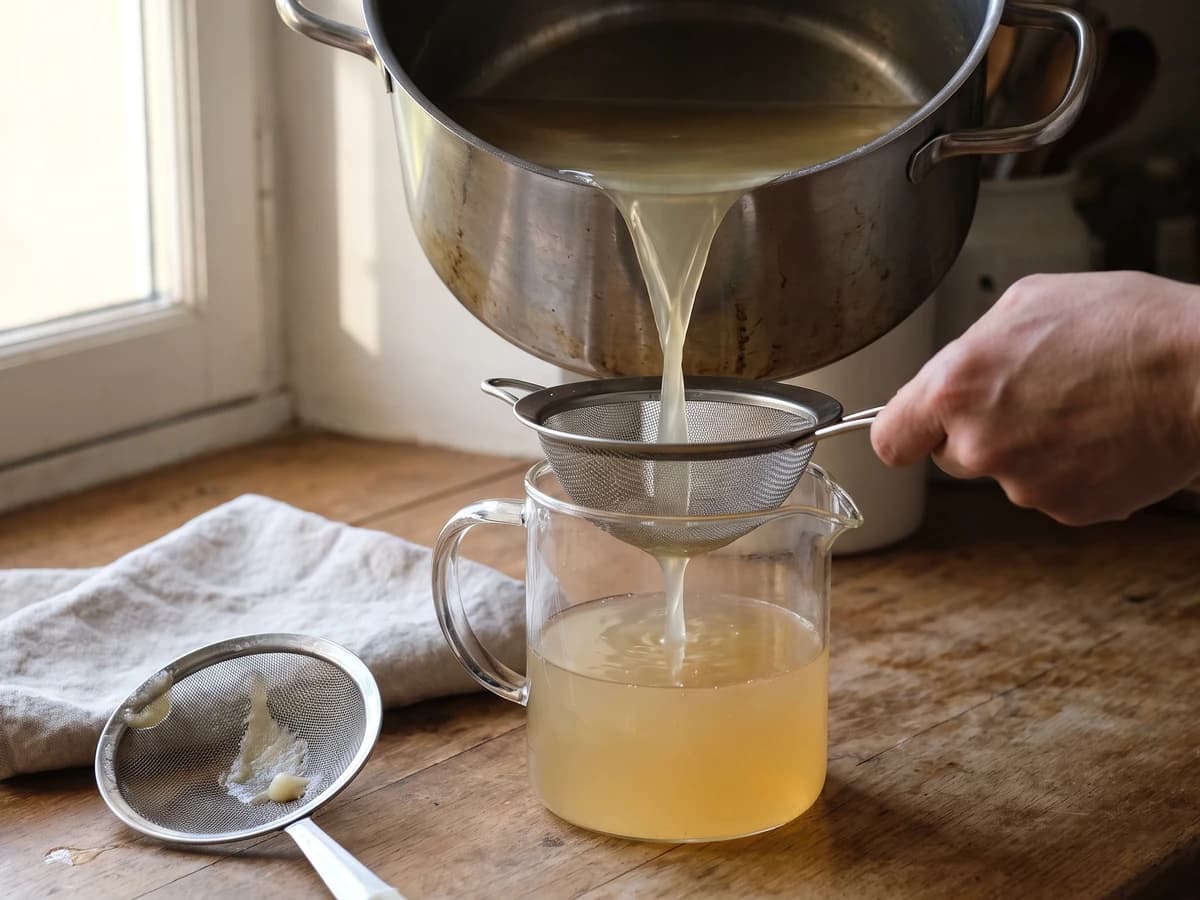
Break the veal bones small, then give them eight hours at a bare tremble. This pale, gelatinous fond becomes the quiet foundation beneath velouté, blanquette, and every sauce that must stay light.
Chef Juliette
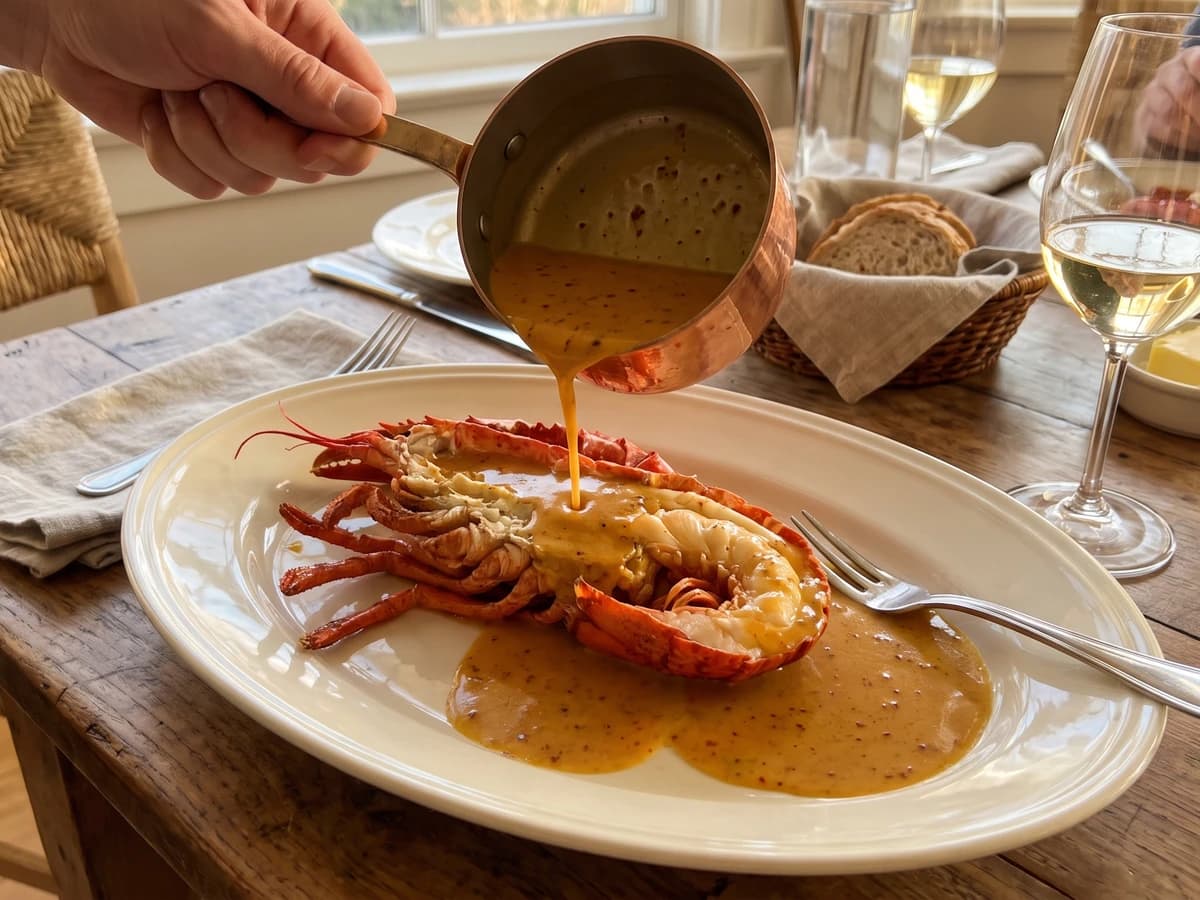
Sauce Orientale concentrates lobster-rich American Sauce with curry, then folds in cream away from the fire: a glossy, gently spiced derivative made for lobster, crayfish, and firm fish.
Chef Juliette
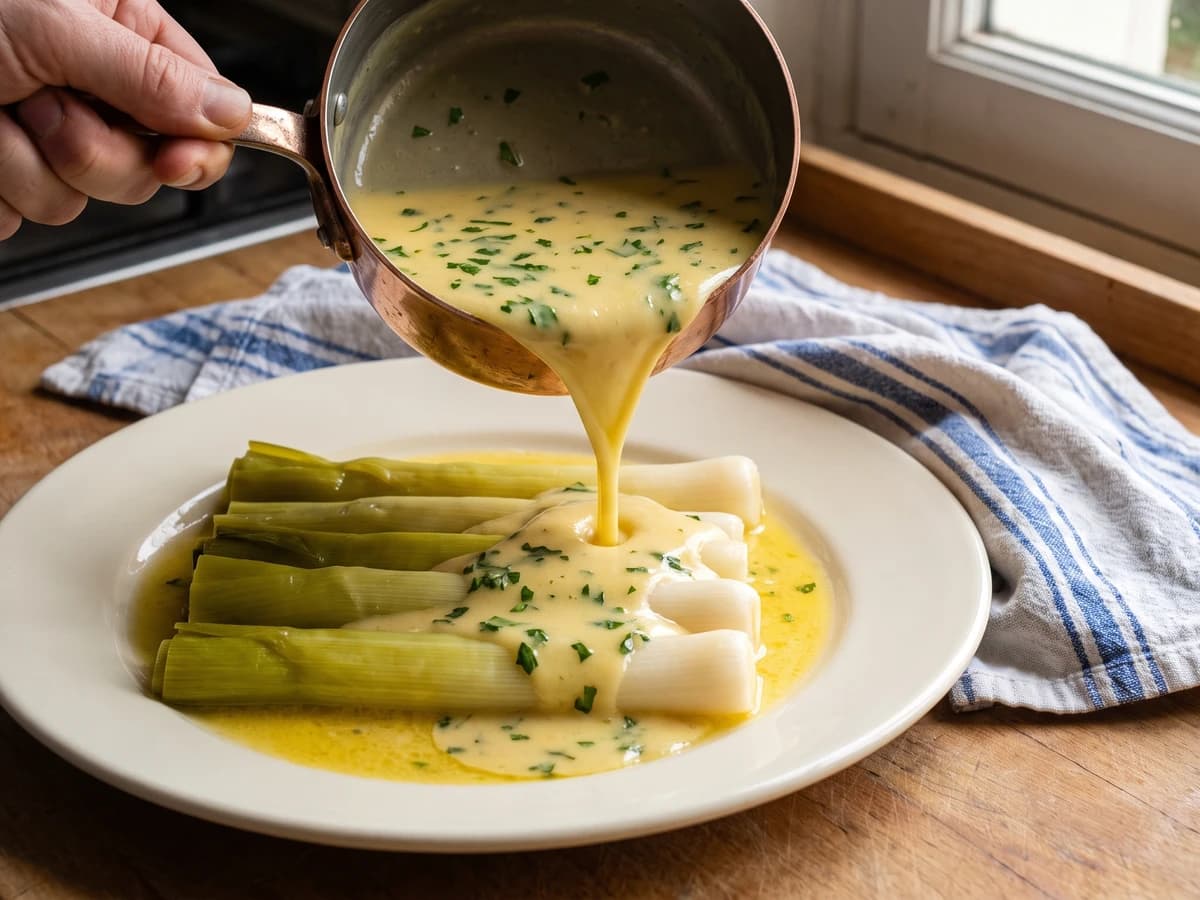
An old lesson in sauce families: Sauce Allemande takes mushroom liquor, then butter, lemon, and parsley, becoming a glossy Poulette for sheep's trotters, leeks, cauliflower, and anything needing gentle richness with a bright edge.