Chef Juliette
Ordinary or White Consommé
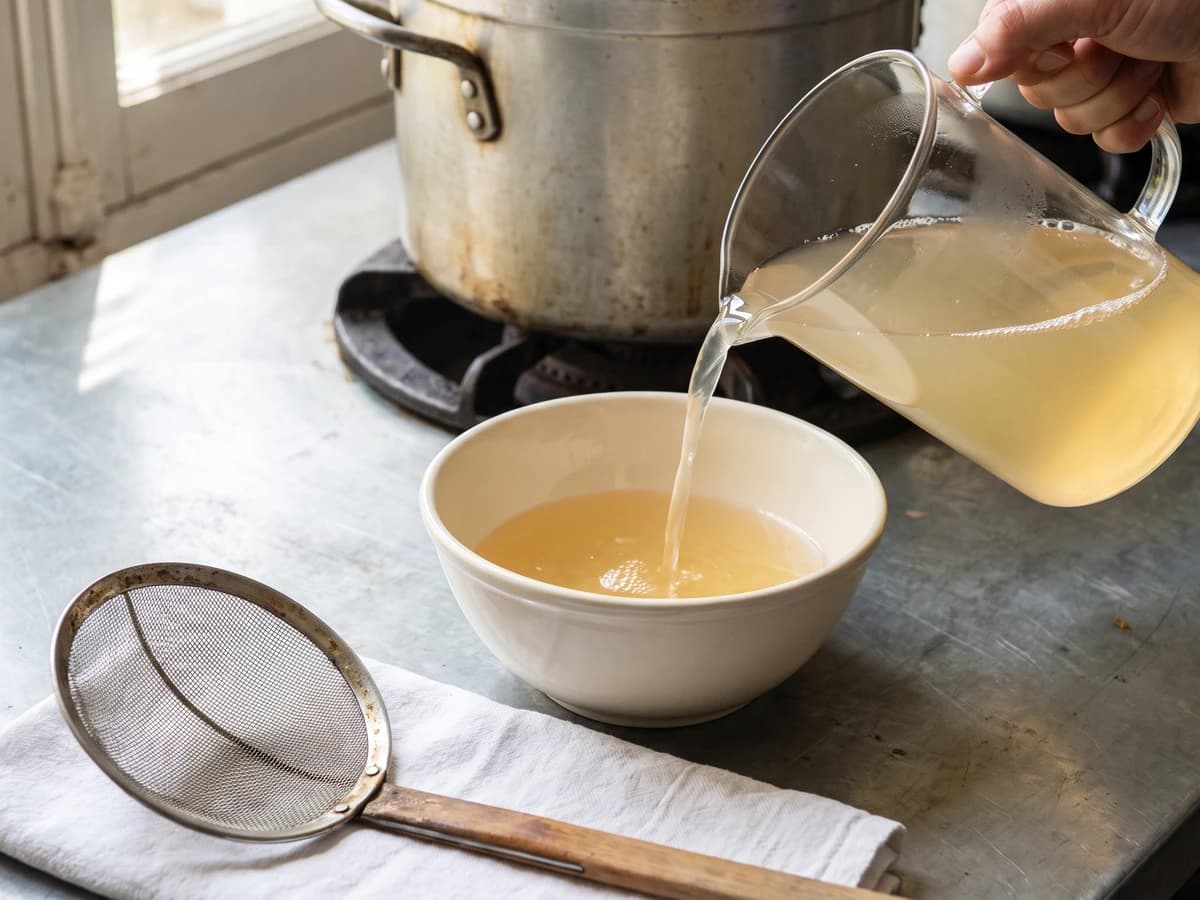
Beef shin, lean beef, and fowl begin in cold water and rise slowly toward a tremble. Skim before the boil, and you learn the quiet discipline that gives every clear French broth its backbone.
A cooking platform built around craft, culture, and the stories behind what we eat.
Created by Chef Juliette
Based on No. 187, Parsley, from Le Guide Culinaire (1907) by Auguste Escoffier
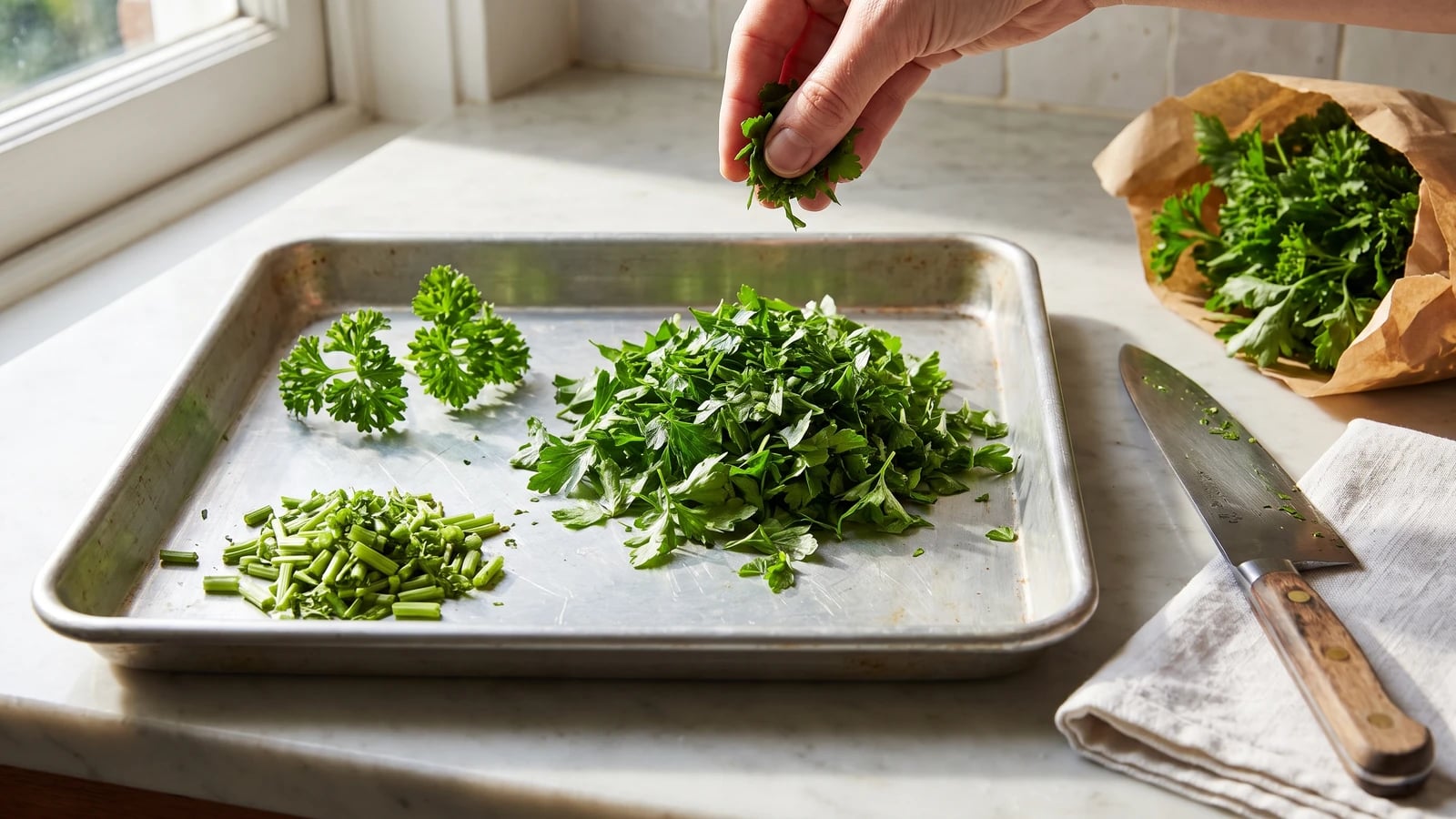
Persil haché teaches a knife’s first discipline: cut fresh, dry leaves cleanly and they scatter green and loose; pound them, and their juice makes a clump. The same bunch yields concassé, sprays, and a quick-fried garnish.
Persil haché (properly chopped parsley) teaches a knife’s first discipline: chopping must cut, never pound. When the leaves are fresh, completely dry, and met by a sharp blade, the pieces stay vivid, loose, and easy to scatter. Bruise them repeatedly against the board and their juice becomes glue.
The original entry assumed a garde-manger station, the cold-preparation bench, with fresh bunches arriving throughout service, clean towels always ready, and hot fat waiting for fried parsley sprays. At home, one bunch, one sharp knife, a salad spinner, and, only if you want the fried garnish, a small saucepan of oil do the same work. Repeated service batches are brigade scaffolding and can go; dryness, clean cutting, and last-moment timing are the preparation itself, so those stay. One cook, one stove, one evening is generous here; this takes a quarter-hour.
Concass, the book’s instruction to chop roughly, gives persil concassé for the final moments of a hot dish. Curly sprays can wait in fresh water, while fully dried sprays can meet very hot fat for an instant. The step that decides every version is drying: before the knife you want no surface water, and before hot fat you want none at all.
Persil haché belongs to the shared working vocabulary of French kitchens rather than to one region, appearing on Parisian bistro plates, Lyonnais potatoes, fried fish, and buttered vegetables across the country. The classical distinction is practical rather than decorative: fine persil haché is scattered at the last moment, while persil concassé enters a hot preparation moments earlier so it softens without surrendering its freshness. Curly parsley sprays also accompanied fried meats and fish from professional kitchens to bourgeois tables, either fresh or briefly fried in hot fat.
Quantity
1 large bunch, about 3 packed cups (710 ml / 90 g)
leaves and tender upper stems
Quantity
8 sprays, about 1 packed cup (240 ml / 20 g)
long stalks removed
Quantity
4 cups (950 ml / 950 g), plus more as needed
Quantity
2 cups (480 ml / approximately 440 g)
Quantity
1/4 teaspoon (1.25 ml / 1.5 g)
| Ingredient | Quantity |
|---|---|
| very fresh flat-leaf parsleyleaves and tender upper stems | 1 large bunch, about 3 packed cups (710 ml / 90 g) |
| very fresh curly parsley (optional)long stalks removed | 8 sprays, about 1 packed cup (240 ml / 20 g) |
| fresh cold water | 4 cups (950 ml / 950 g), plus more as needed |
| neutral high-heat frying oil (optional) | 2 cups (480 ml / approximately 440 g) |
| fine salt (optional) | 1/4 teaspoon (1.25 ml / 1.5 g) |
Use parsley whose leaves stand upright, smell clean and peppery, and show no yellow or slimy patches. Old parsley turns bitter, and no knife can put its fragrance back. Swish the bunch gently in the cold water, lifting it out so any grit remains at the bottom rather than pouring the grit over the leaves again.
Reserve the curly sprays if you are using them, remove their long stalks, and keep them in fresh cold water until required. Strip away the coarse stems from the flat-leaf parsley, leaving the tender upper stems, then spin the parsley thoroughly and roll it in a clean towel. Let it lie open for several minutes if any moisture remains. Damp parsley skids beneath the knife and clumps; parsley destined for hot oil must be completely dry.
Gather no more than a loose handful and hold it without crushing. Draw a broad, very sharp knife forward through the leaves, turn the pile, and repeat only until the pieces are fine and even. Stop before green moisture marks the board or the parsley begins to adhere to the blade; endless rocking turns cutting into pounding. If the particles clump, don’t discard them. Ça se rattrape: swish the choppings in fresh cold water, gather them in a clean towel, press and wring out every drop, then loosen them with your fingertips.
For persil concassé, give dry leaves only one or two clean passes with the knife, leaving distinct rough pieces rather than a mince. Fold the concassé into a hot sauce, sauté, or vegetable dish during its final 30 to 60 seconds, just long enough to soften slightly. Don’t simmer it; prolonged heat flattens the aroma and brings out bitterness.
Keep fresh curly sprays in cold water until the dish is nearly ready, then lift them out and blot them carefully. Use them whole for a simple garnish, with no long stalk protruding across the plate. If they are going into hot oil, press them between two dry towels and check every fold of every leaf for trapped water.
Pour the oil into a small deep saucepan, filling it no more than one-third full, and heat it to 375°F (190°C). Lower one completely dry spray into the oil with a spider or long tongs; it should crisp within 5 to 10 seconds while remaining green. Fry the rest in tiny batches, drain immediately, salt lightly, and place them in a clean towel to surrender excess oil. If the first spray spits violently, take the pan off the heat and dry the remaining parsley again before continuing. If a spray browns, it has stayed too long and will taste bitter; discard it and shorten the next immersion.
Scatter fine persil haché over the finished dish at the last possible moment, when its colour and fragrance remain entirely fresh. Add persil concassé just before a hot preparation leaves the stove, and set fried sprays on fried fish or meat only as they go to the table so they remain crisp. À table!
1 serving (about 12g)
Culinary guides, cultural storytelling, and the editorial depth that makes cooking meaningful.
Discover Culinary ExplorerChef Juliette
Beef shin, lean beef, and fowl begin in cold water and rise slowly toward a tremble. Skim before the boil, and you learn the quiet discipline that gives every clear French broth its backbone.
Chef Juliette
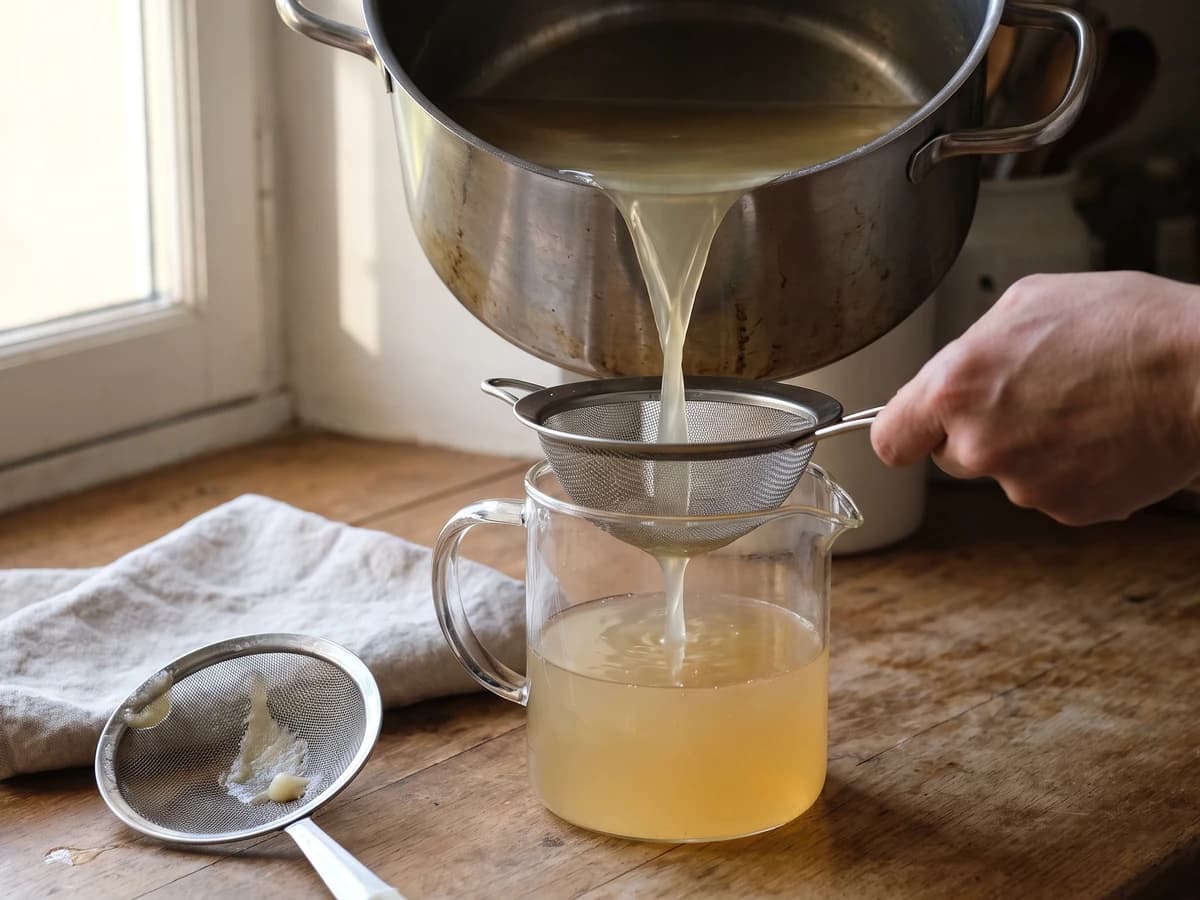
Break the veal bones small, then give them eight hours at a bare tremble. This pale, gelatinous fond becomes the quiet foundation beneath velouté, blanquette, and every sauce that must stay light.
Chef Juliette
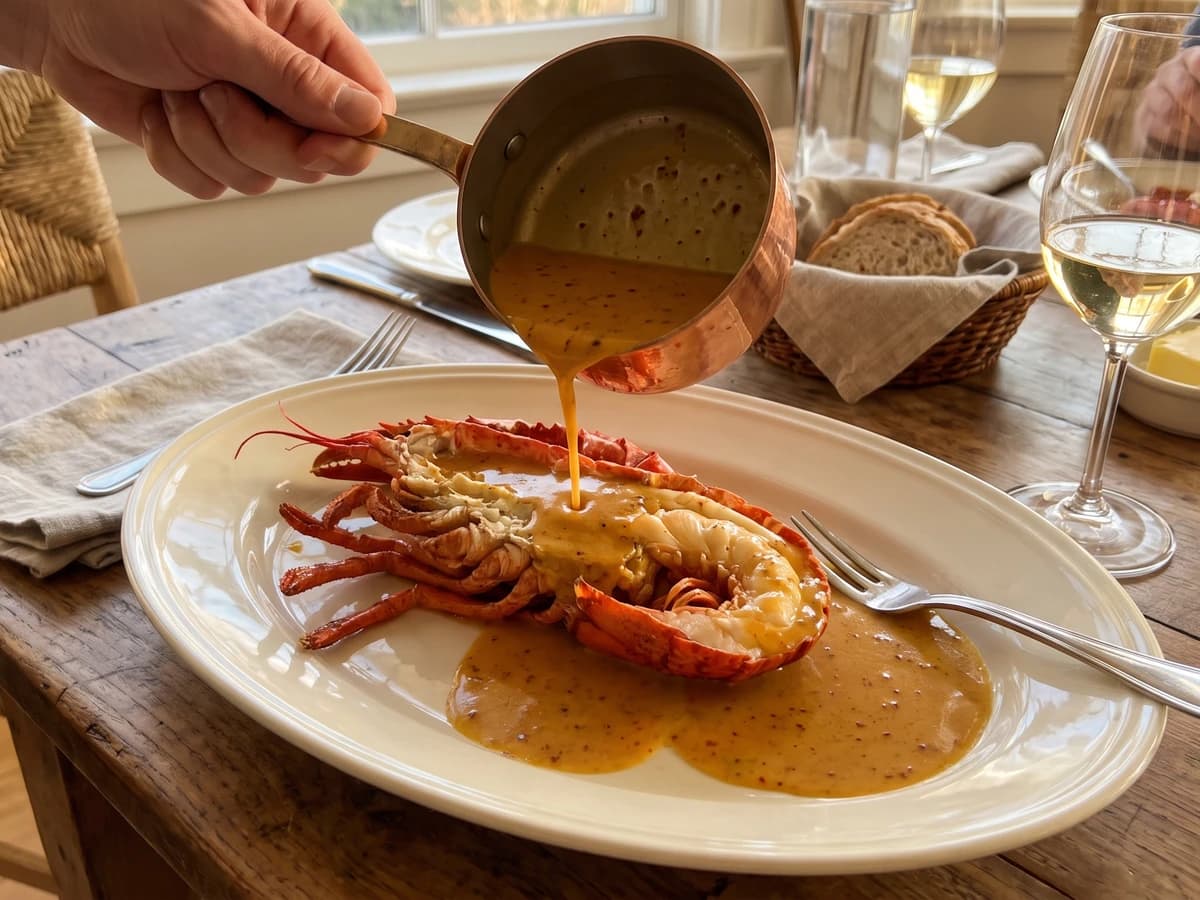
Sauce Orientale concentrates lobster-rich American Sauce with curry, then folds in cream away from the fire: a glossy, gently spiced derivative made for lobster, crayfish, and firm fish.
Chef Juliette
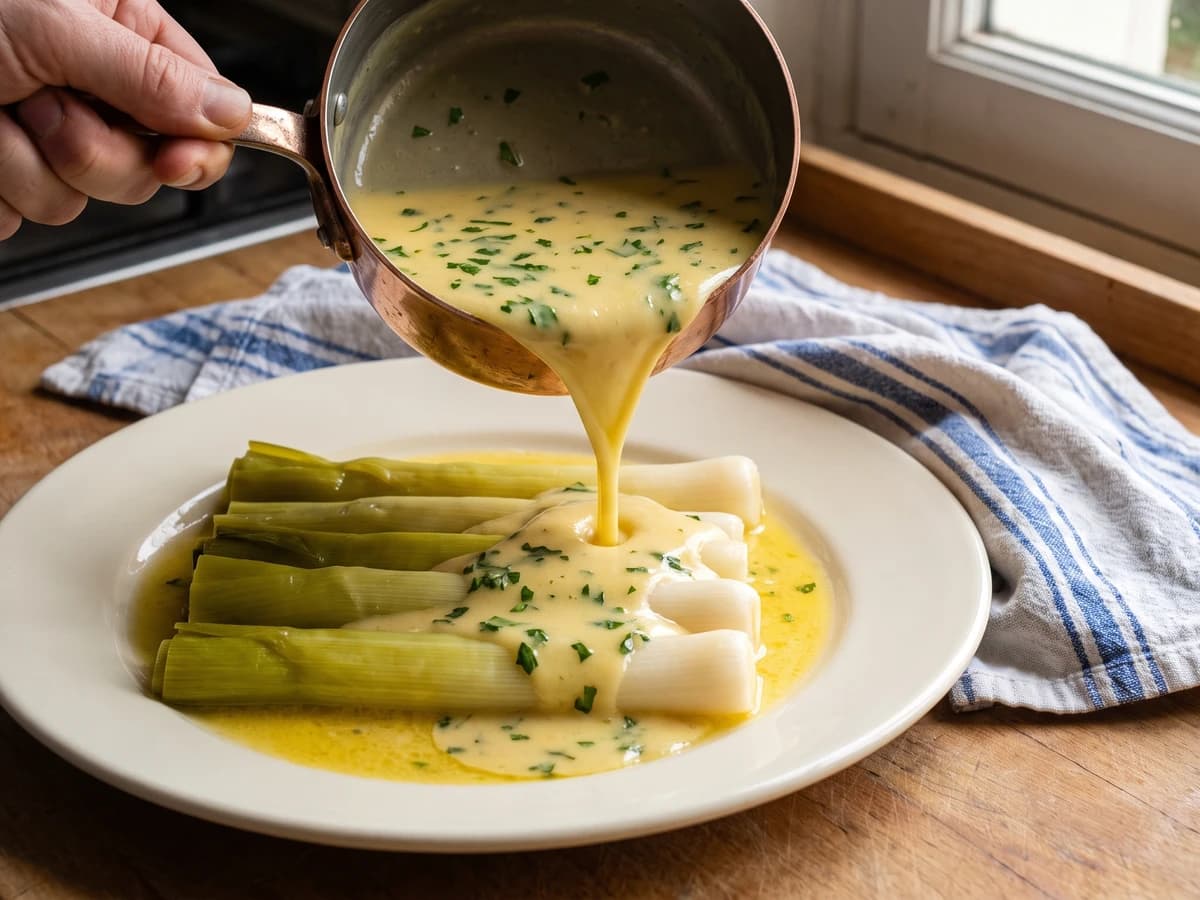
An old lesson in sauce families: Sauce Allemande takes mushroom liquor, then butter, lemon, and parsley, becoming a glossy Poulette for sheep's trotters, leeks, cauliflower, and anything needing gentle richness with a bright edge.