Chef Juliette
Ordinary or White Consommé
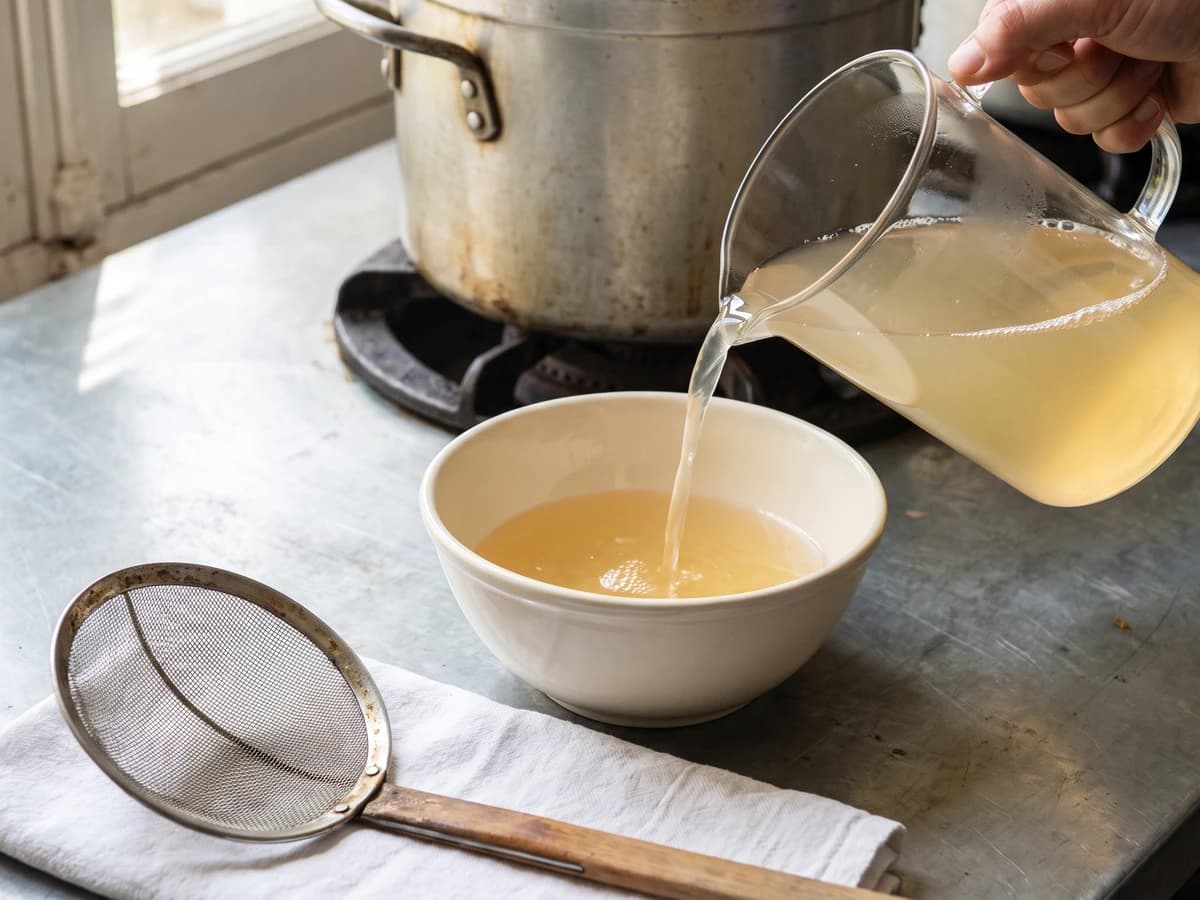
Beef shin, lean beef, and fowl begin in cold water and rise slowly toward a tremble. Skim before the boil, and you learn the quiet discipline that gives every clear French broth its backbone.
A cooking platform built around craft, culture, and the stories behind what we eat.
Created by Chef Juliette
Based on No. 185, Chopped Onion, from Le Guide Culinaire (1907) by Auguste Escoffier
Oignon haché proves that knife work is only half the technique: rinse the fine mince in cold water, wring it dry, and the onion stays white, mild, and ready to disappear neatly into a dish.
Oignon haché (chopped onion) teaches a narrow but useful truth. When raw onion is cut very fine and expected to stay pale, its pungent juice must be rinsed away, then the water must be wrung out just as decisively. Cutting is only half the technique.
The original entry assumed a commis preparing a service quantity beside running cold water and a stack of linen. No saucier, stockpot, or salamander is part of this little preparation; the honest home equivalent is one medium onion, a sharp knife, and a clean cotton towel. The brigade batch is scaffolding and goes. The cold rinse and firm wring are the preparation itself, and they stay exactly where the canon put them.
You finish with snowy, separate, gentler onion ready for a marinade, cold sauce, or garnish. Wringing is the decisive step. Stop too soon and you've merely traded pungent juice for wash water; if the onion remains wet, wrap it again and twist once more. Ça se rattrape.
Oignon haché belongs to the shared mise en place of classical French kitchens rather than to one region, appearing wherever finely cut raw onion was needed for marinades, cold sauces, and garnishes. The towel rinse passed neatly from professional service into cuisine bourgeoise because it let onion be prepared ahead without its pungent juice darkening the fine mince. It is not a rule for every onion: pieces meant to sweat or brown go directly to the pan, while this treatment is reserved for onion whose pale color and mildness matter.
Quantity
1 medium (about 7 oz / 200 g whole; 5½ oz / 160 g peeled)
peeled
Quantity
4 cups (960 ml / 960 g), plus more if needed
| Ingredient | Quantity |
|---|---|
| yellow onionpeeled | 1 medium (about 7 oz / 200 g whole; 5½ oz / 160 g peeled) |
| very cold water | 4 cups (960 ml / 960 g), plus more if needed |
Trim the stem end, leave the root intact, and halve the peeled onion through the root. Set each half flat-side down and make very close cuts toward the root, then slice crosswise into a fine, even mince. Gather the onion and pass the knife through it once or twice more if a finer texture is required, using the same close work you would give a shallot. Stop before the pieces collapse into paste.
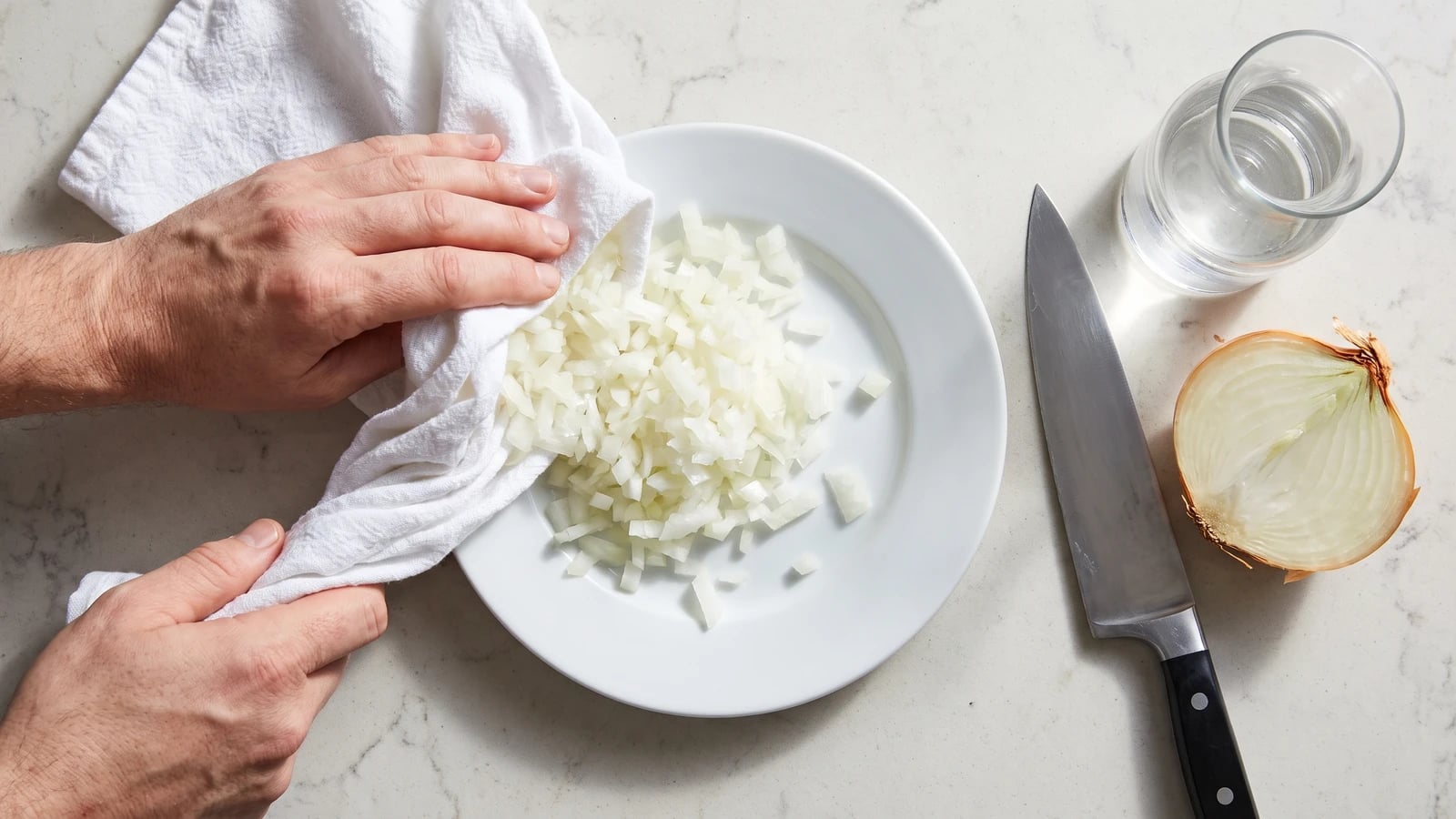
Spread the chopped onion in one corner of a clean, lint-free cotton towel. Bring the corner loosely around it to make a shallow bundle, keeping the onion together without compressing it yet. Use an unscented towel with no trace of laundry fragrance, because raw onion will carry that perfume straight to the table.
Hold the bundle over a bowl or sink and pour the very cold water steadily through the onion, loosening and turning the mince through the cloth with your fingers so every piece is washed. The runoff will begin cloudy and strongly scented, then become clearer. Cold water tempers the pungency while helping the onion remain firm and white.
Gather the towel tightly above the onion and twist until the water is expressed and no steady drops fall. Press firmly, but don't grind the onion into the cloth; the finished pieces should remain distinct. If the onion still feels wet or smells aggressively sharp, loosen the bundle, rinse with more cold water, and twist again. Ça se rattrape.
Open the towel at once and lift the onion into a dry bowl, separating any small clumps with your fingertips. It should look white and clean, feel barely damp rather than watery, and taste milder without becoming bland. Use it immediately in the marinade, cold sauce, condiment, or garnish that called for it, or cover and chill it promptly.
1 serving (about 150g)
Culinary guides, cultural storytelling, and the editorial depth that makes cooking meaningful.
Discover Culinary ExplorerChef Juliette
Beef shin, lean beef, and fowl begin in cold water and rise slowly toward a tremble. Skim before the boil, and you learn the quiet discipline that gives every clear French broth its backbone.
Chef Juliette
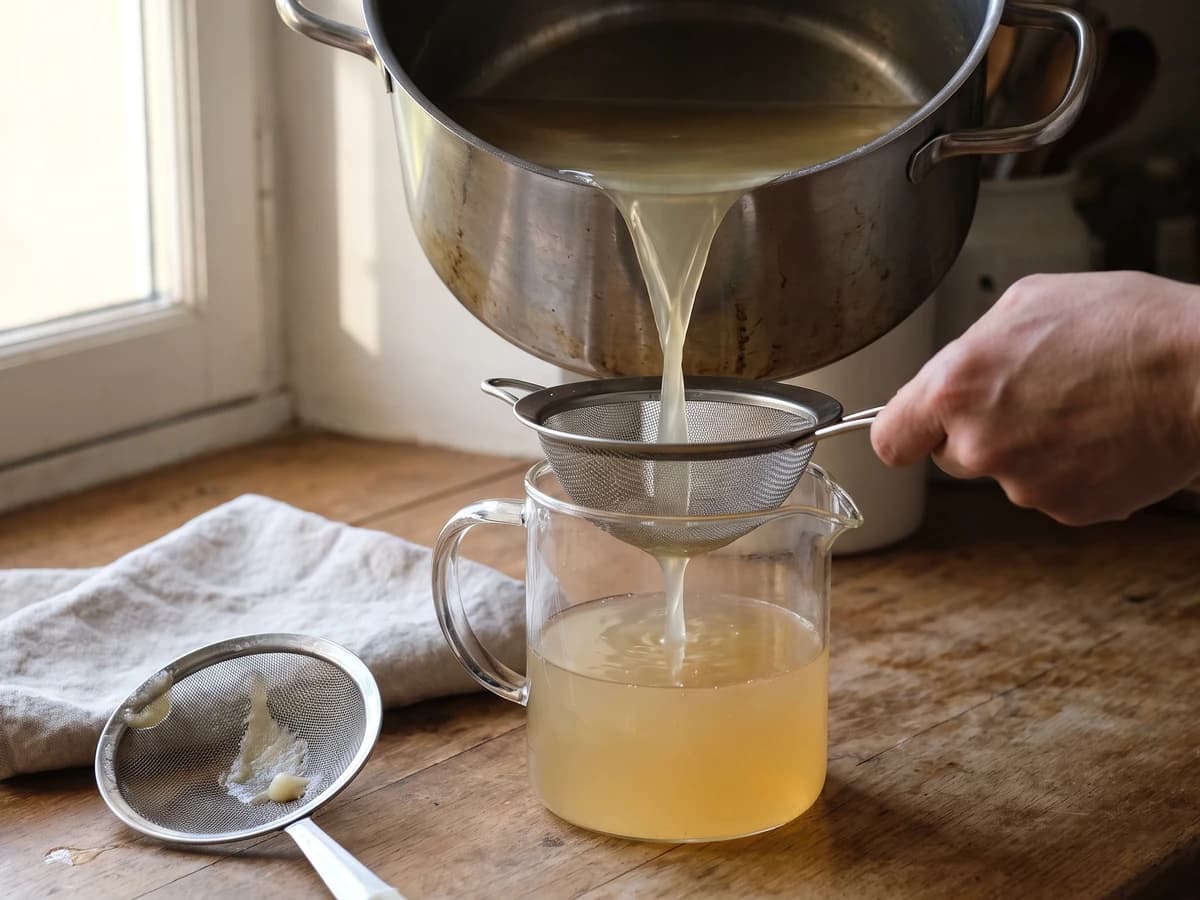
Break the veal bones small, then give them eight hours at a bare tremble. This pale, gelatinous fond becomes the quiet foundation beneath velouté, blanquette, and every sauce that must stay light.
Chef Juliette
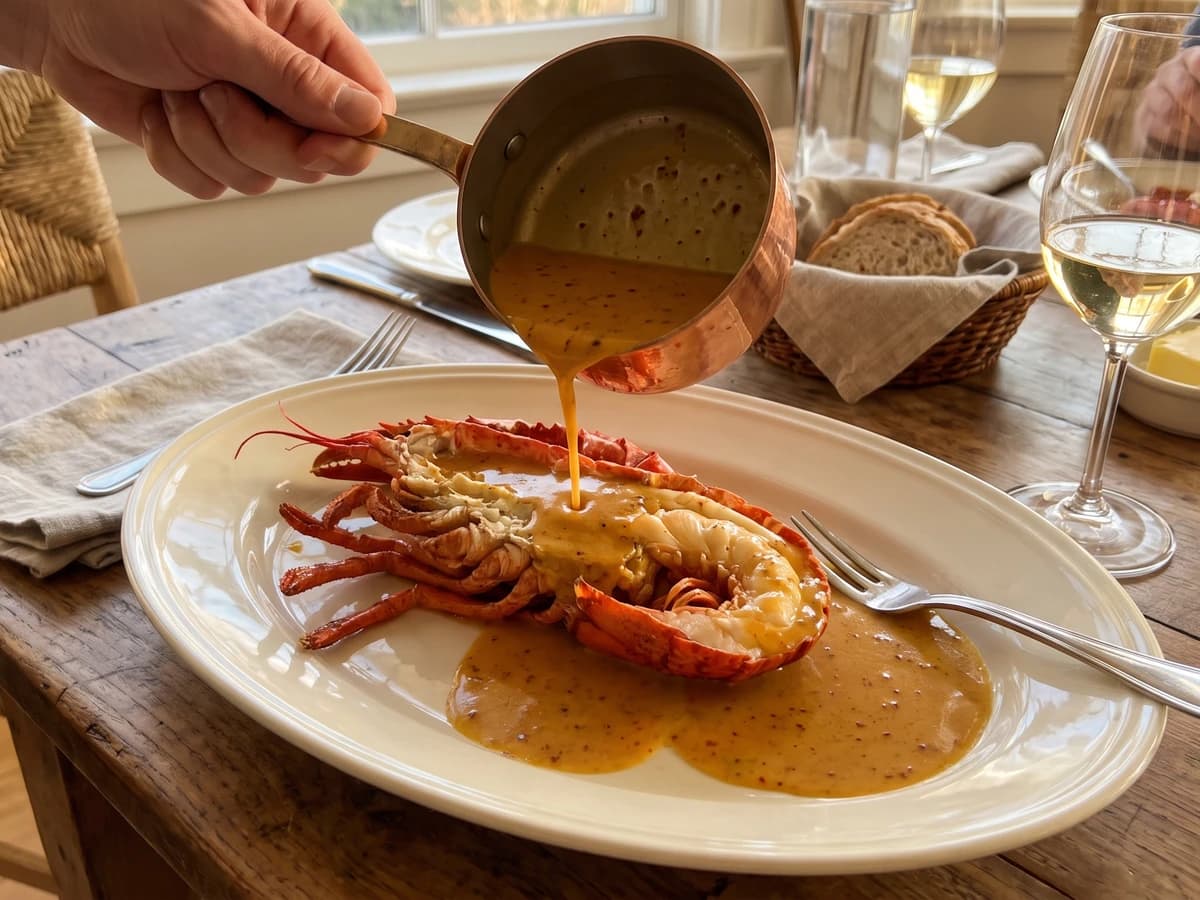
Sauce Orientale concentrates lobster-rich American Sauce with curry, then folds in cream away from the fire: a glossy, gently spiced derivative made for lobster, crayfish, and firm fish.
Chef Juliette
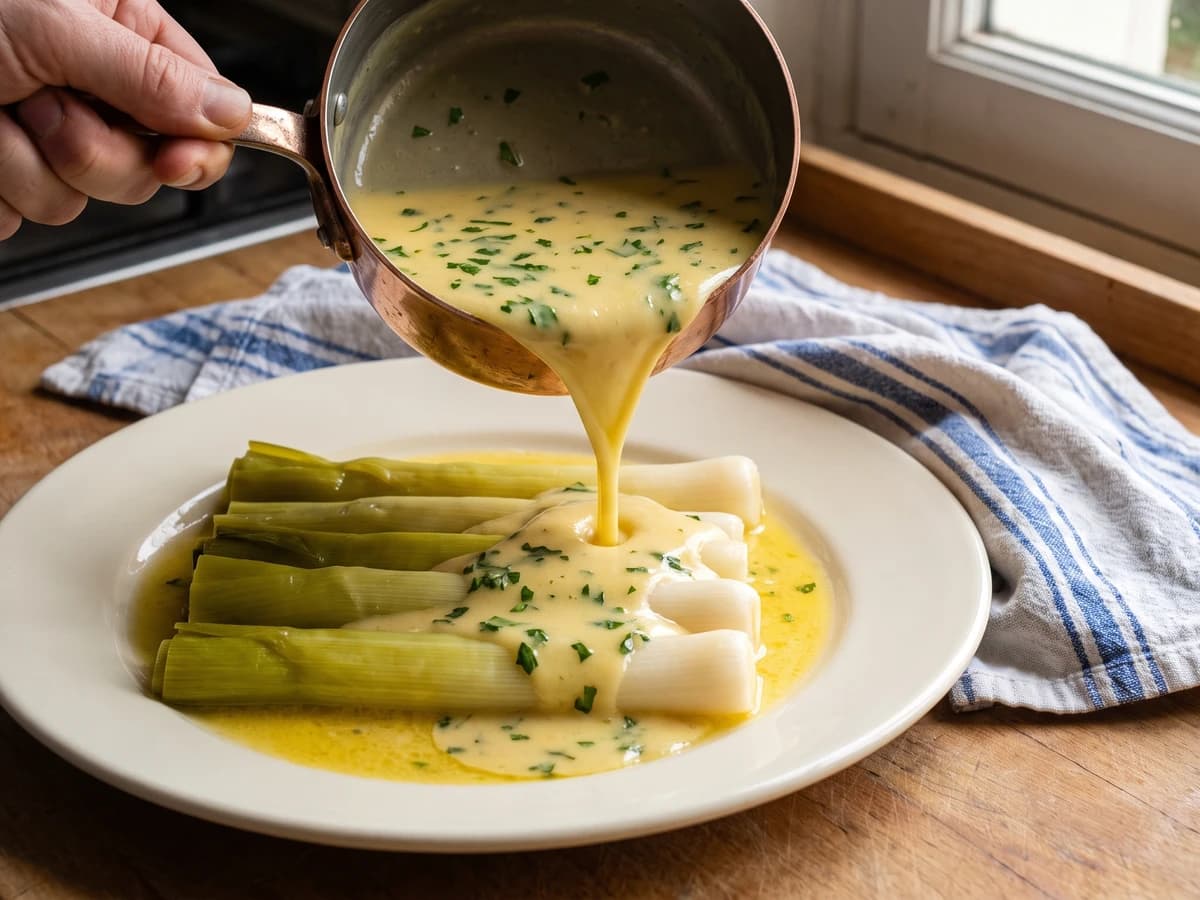
An old lesson in sauce families: Sauce Allemande takes mushroom liquor, then butter, lemon, and parsley, becoming a glossy Poulette for sheep's trotters, leeks, cauliflower, and anything needing gentle richness with a bright edge.