Chef Juliette
Ordinary or White Consommé
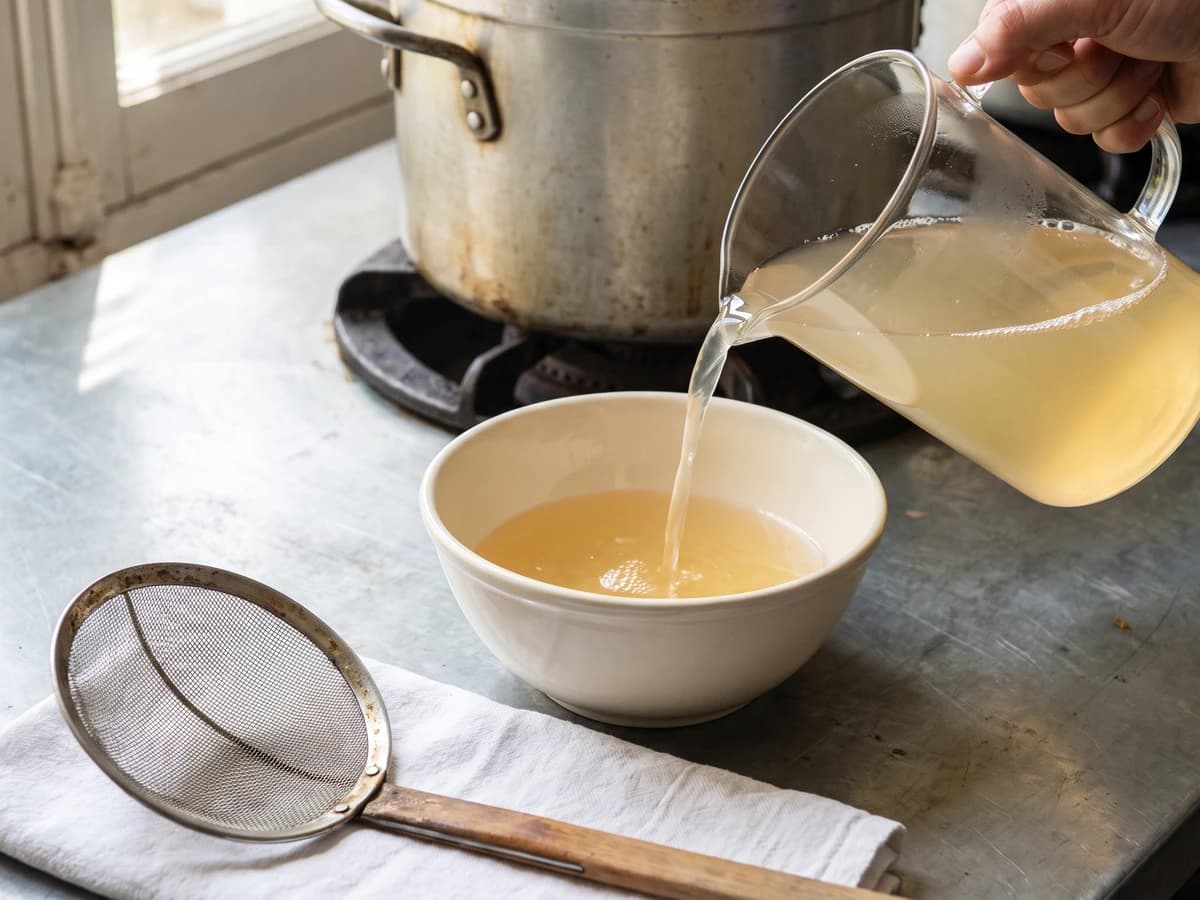
Beef shin, lean beef, and fowl begin in cold water and rise slowly toward a tremble. Skim before the boil, and you learn the quiet discipline that gives every clear French broth its backbone.
A cooking platform built around craft, culture, and the stories behind what we eat.
Created by Chef Juliette
Based on No. 183, Herb Juice, from Le Guide Culinaire (1907) by Auguste Escoffier
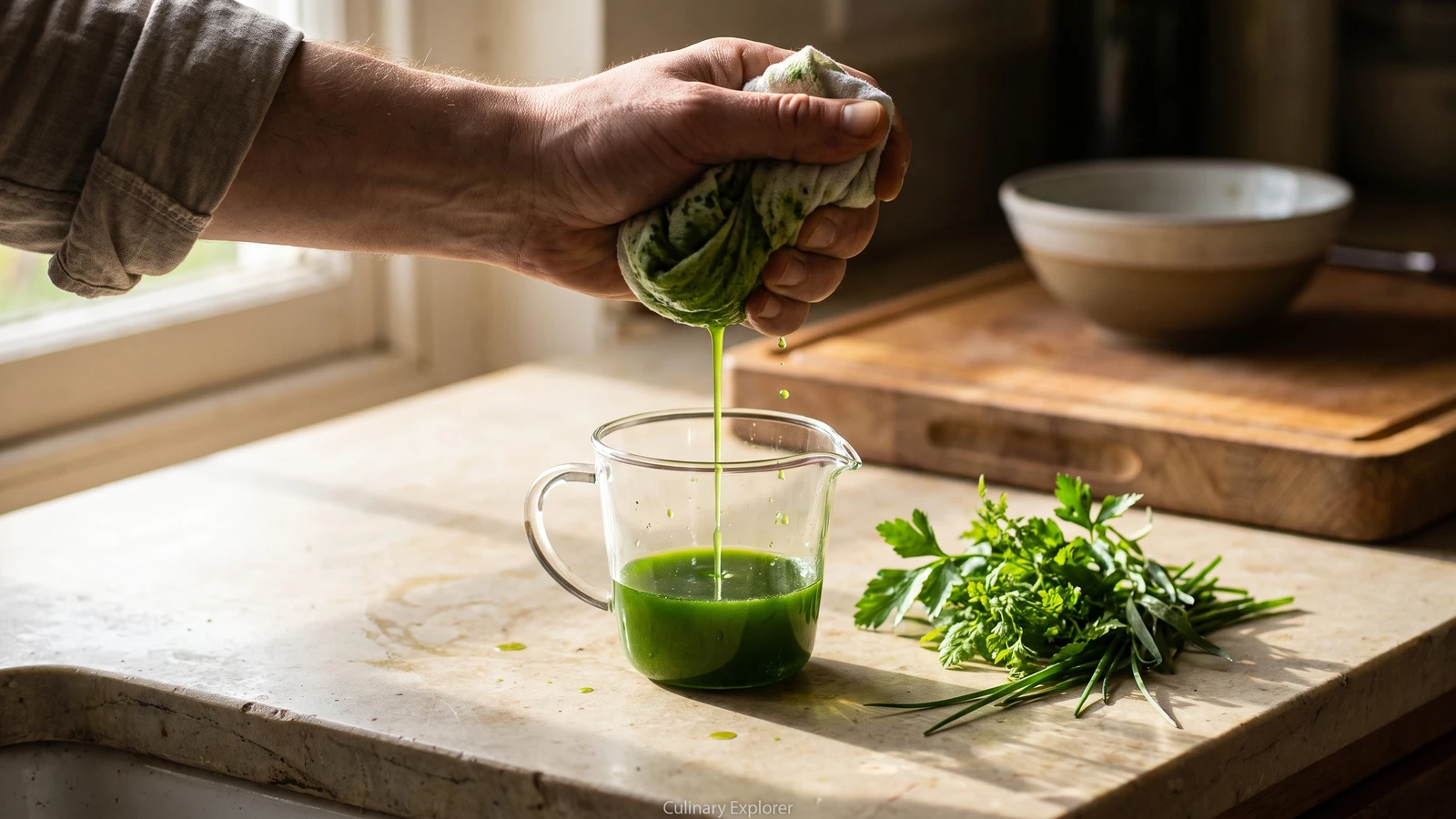
Four herbs, two minutes of boiling, and one uncompromising squeeze make the vivid green essence that finishes a classical sauce without cooking its freshness away.
Jus d’Herbes teaches the discipline of the last minute. It does not build a sauce; it finishes one whose fond, roux, reduction, or emulsion is already complete. Added away from the heat, this concentrated green liquor gives parsley, chervil, tarragon, and chive their final word without letting prolonged cooking turn them dull.
The original entry assumed a saucier who could blanch armfuls of herbs, pound them patiently in a mortar, and sacrifice a strong towel to the green stain. At home, equal 25-gram portions, a small food processor, and two lint-free towels do the same work for one cook. Brigade quantities and long hand-pounding are scaffolding, so they go; the two-minute boil, forceful first pressing, fine paste, and cold extraction are the dish, so they stay.
Every drop of blanching water left in the herbs weakens the juice. Do not try to strengthen a pale result by boiling it, because heat destroys precisely what you made; re-pound and press again instead. Ça se rattrape. The hard first wringing is the step that decides it.
Jus d’herbes belongs to the working pantry of the classical French sauce station, particularly the saucier’s bench, rather than to any single region. Grand kitchens used it as a last-minute correction, giving finished preparations fresh herb color and aroma after their main cooking was complete. Though sometimes filed beside marinades, it is neither a marinade nor a purée: blanching, pounding, and towel extraction produce a concentrated finishing liquor meant to be kept cold and used sparingly.
Quantity
1 loosely packed cup (240 ml / 25 g)
washed, with tough stems removed
Quantity
1½ loosely packed cups (355 ml / 25 g)
washed, with tough stems removed
Quantity
1¼ loosely packed cups (300 ml / 25 g)
washed, with tough stems removed
Quantity
½ loosely packed cup (120 ml / 25 g)
washed and cut into short lengths
Quantity
1½ quarts (1.4 liters / 1.4 kg)
for blanching
Quantity
4 cups (950 ml / 950 g)
for cooling
| Ingredient | Quantity |
|---|---|
| flat-leaf parsley leaveswashed, with tough stems removed | 1 loosely packed cup (240 ml / 25 g) |
| chervil leaveswashed, with tough stems removed | 1½ loosely packed cups (355 ml / 25 g) |
| tarragon leaveswashed, with tough stems removed | 1¼ loosely packed cups (300 ml / 25 g) |
| chive leaveswashed and cut into short lengths | ½ loosely packed cup (120 ml / 25 g) |
| waterfor blanching | 1½ quarts (1.4 liters / 1.4 kg) |
| ice waterfor cooling | 4 cups (950 ml / 950 g) |
Pick over the herbs carefully, discarding yellow leaves and every tough parsley, chervil, or tarragon stem. Wash them in plenty of cold water, lift them out so any grit remains behind, and drain. Weigh 25 grams of each prepared herb after trimming. The different cup measures reflect how differently the leaves pack; equal weight preserves the source formula’s equal proportions.
Bring the blanching water to a full boil in a 3 to 4-quart saucepan. Add all four herbs together, press them beneath the water with a spoon, and let the water return to the boil. Boil for exactly two minutes. This fixed cooking is enough to soften the leaves for pounding while holding their green character; prolonged boiling gives you a tired, brownish juice.
Drain the herbs immediately, then rafraîchir, cool rapidly, in the ice water until completely cold, about one minute. Lift them into the colander and drain again. Do not leave them soaking once cold, because the water begins carrying away the very flavor the juice is meant to concentrate.
Spread the herbs across the center of the first clean lint-free towel. Gather the corners, twist the bundle tightly, and press until water falls only in occasional drops rather than a stream. If the bundle still feels loose or wet, open it, redistribute the herbs, and twist again. Ça se rattrape. Do not proceed while blanching water remains trapped inside, or the finished juice will be pale and weak.
Chop the compressed herb mass into several pieces and place them in a small food processor. Process in short bursts, scraping the bowl often, until the herbs become a dense, uniform paste with no visible strips, about two to four minutes. Add neither water nor oil. If the blade spins above the herbs, stop and press the paste back beneath it; the processor replaces the mortar’s labor, not the required fineness.
Place the paste in the center of the second clean towel. Gather it into a tight bundle over a small glass bowl, then twist and squeeze with steady force until the vivid green juice stops flowing. Rotate the bundle as it tightens so no pocket escapes pressure. If the yield stalls while the paste still feels damp, open it, process it for another minute, and wring it through a fresh section of towel. That is the rescue; never thin the juice with water.
Transfer the Jus d’Herbes immediately to the smallest clean jar that will hold it, cover, and chill. Stir before using. Begin with 1 teaspoon per cup of completed sauce, added after the pan leaves the heat, then taste before adding more. Never boil the finished juice into a sauce, or its bright aroma and color will fade. À table!
1 serving (about 45g)
Culinary guides, cultural storytelling, and the editorial depth that makes cooking meaningful.
Discover Culinary ExplorerChef Juliette
Beef shin, lean beef, and fowl begin in cold water and rise slowly toward a tremble. Skim before the boil, and you learn the quiet discipline that gives every clear French broth its backbone.
Chef Juliette
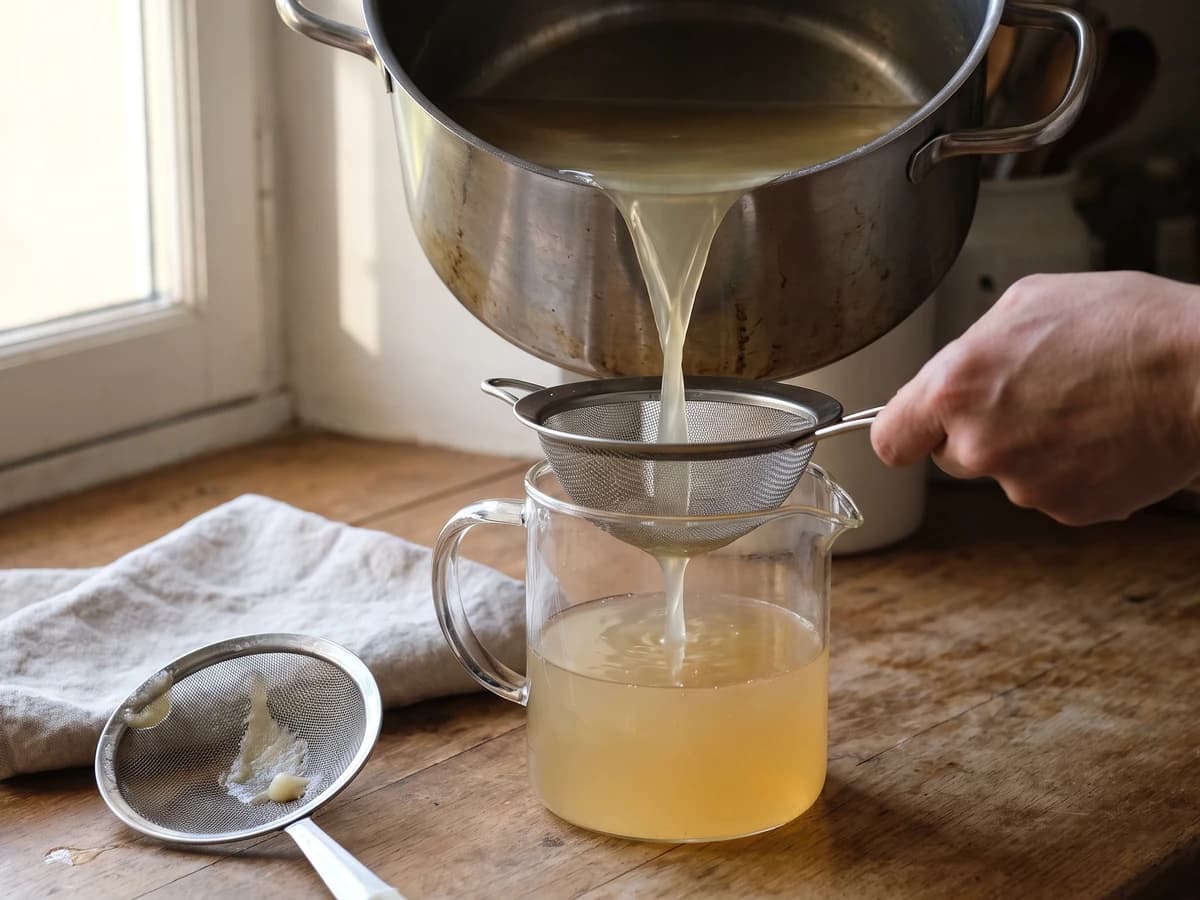
Break the veal bones small, then give them eight hours at a bare tremble. This pale, gelatinous fond becomes the quiet foundation beneath velouté, blanquette, and every sauce that must stay light.
Chef Juliette
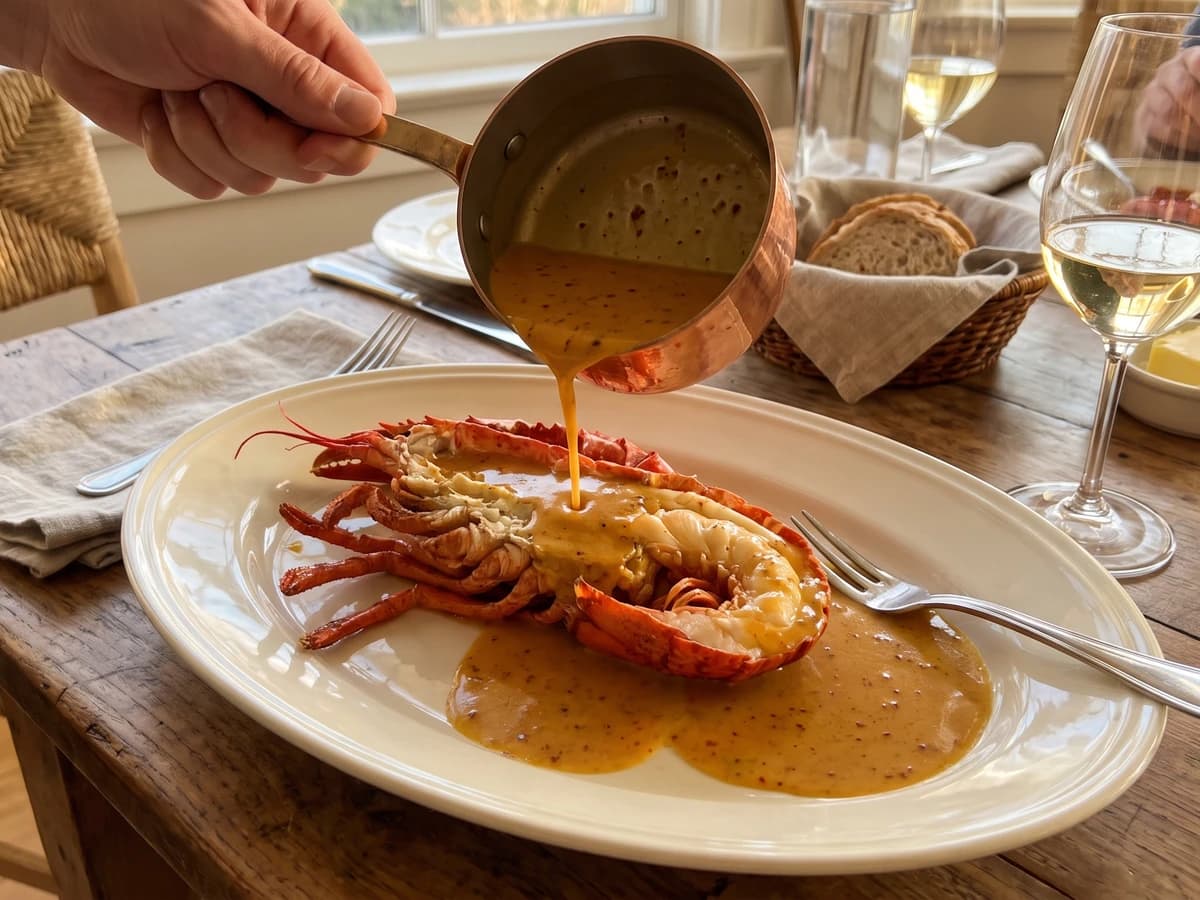
Sauce Orientale concentrates lobster-rich American Sauce with curry, then folds in cream away from the fire: a glossy, gently spiced derivative made for lobster, crayfish, and firm fish.
Chef Juliette
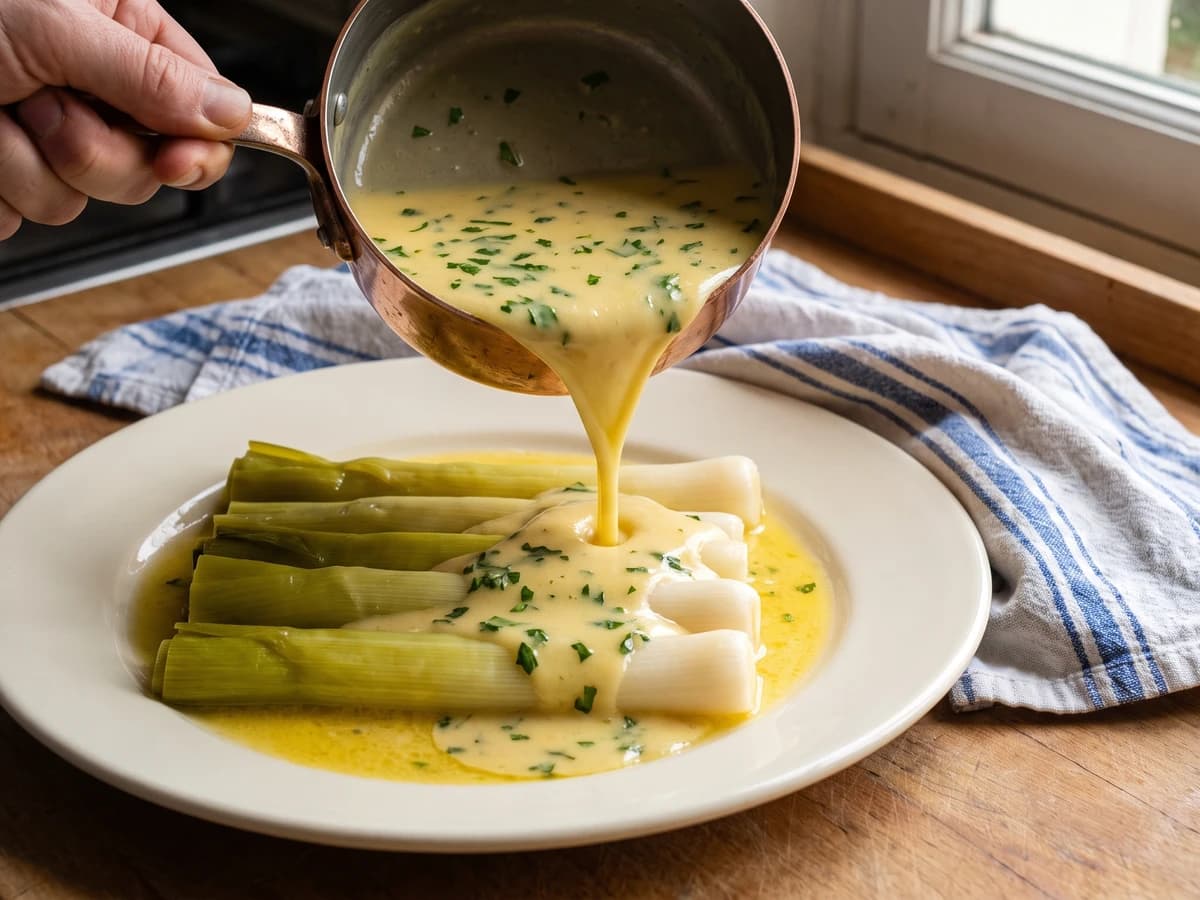
An old lesson in sauce families: Sauce Allemande takes mushroom liquor, then butter, lemon, and parsley, becoming a glossy Poulette for sheep's trotters, leeks, cauliflower, and anything needing gentle richness with a bright edge.