Chef Juliette
Ordinary or White Consommé
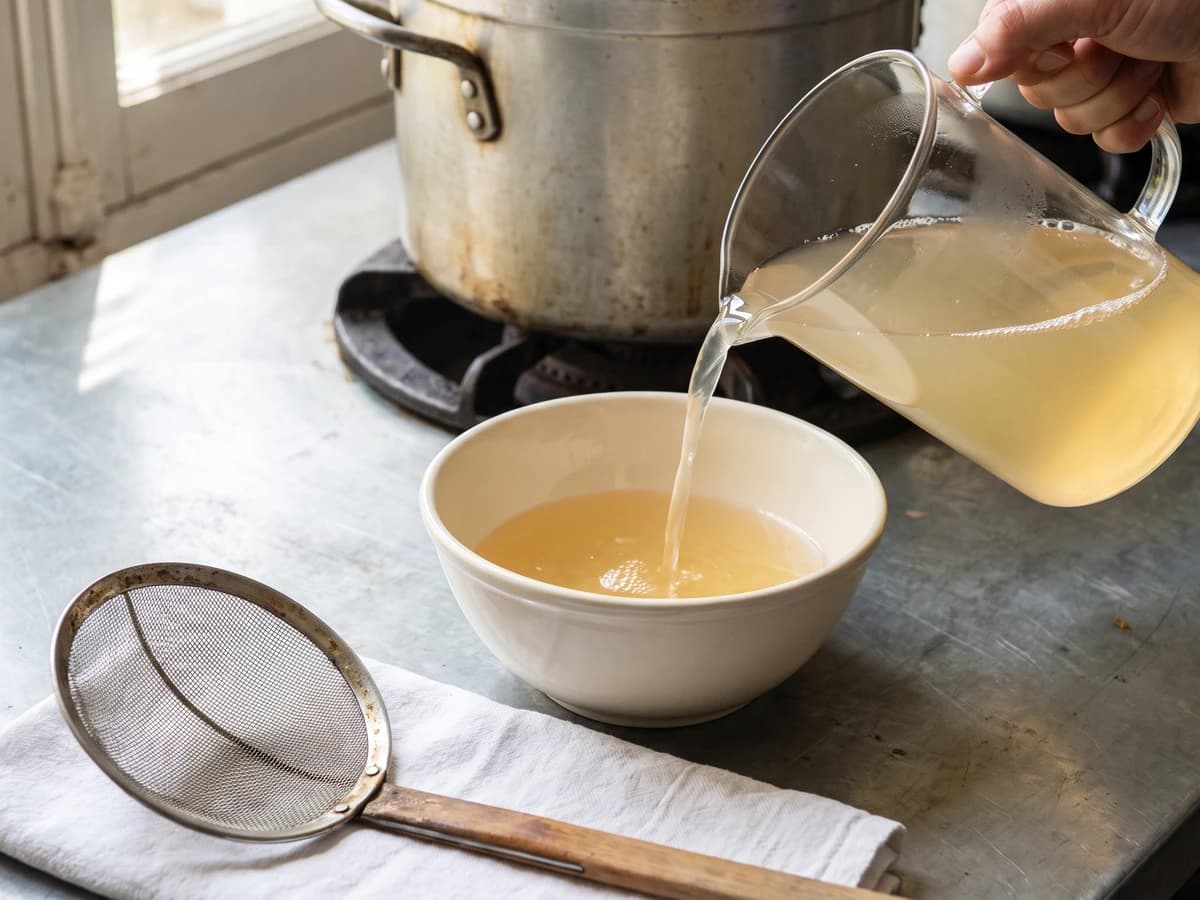
Beef shin, lean beef, and fowl begin in cold water and rise slowly toward a tremble. Skim before the boil, and you learn the quiet discipline that gives every clear French broth its backbone.
A cooking platform built around craft, culture, and the stories behind what we eat.
Created by Chef Juliette
Based on No. 180, Shallots, from Le Guide Culinaire (1907) by Auguste Escoffier
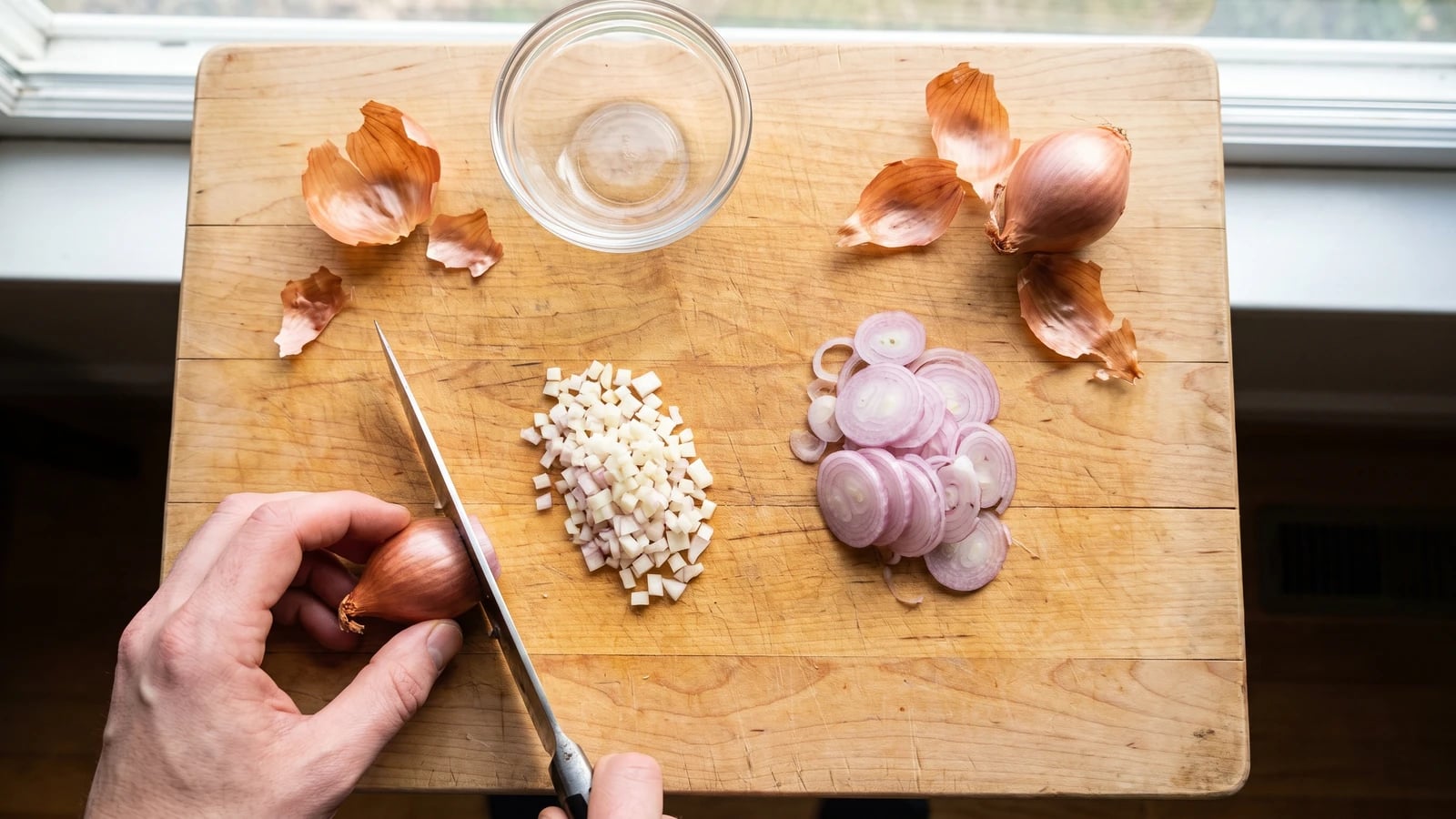
Échalotes hachées et ciselées teach the knife work behind French sauces and marinades: tiny clean cubes or thin regular discs, cut at the last moment so the shallot stays crisp, dry, and sweet.
Échalotes hachées et ciselées (finely chopped and thinly sliced shallots) teach one of the quiet laws of sauce work: the knife decides the flavor before the pan does. Hachées are tiny, regular cubes. Ciselées, in this entry's precise usage, are thin lateral discs. A very sharp blade cuts cleanly; a dull one presses out juice and gives you harsh, wet shallot before it meets the vinaigrette, marinade, or pan.
The original entry assumed a brigade prep table, a trained hand cutting service quantities, and a cool holding place beside the sauce station. It calls for no stockpot, salamander, or special machine. The home equivalent is four shallots, one stable board, and the sharpest knife you own. I have reduced the quantity and kept the root as a safety hinge because one cook needs a half-cup, not a service tray. Bulk preparation and a dedicated commis are scaffolding we can discard; the intersecting cuts for hachées and the lateral cisel for ciselées are the preparation itself and must stay.
Prepare only the cut your recipe calls for, and do it at the last possible moment. If the blade starts squeezing rather than slicing, stop and sharpen it. The one step that matters is the clean cut, not speed.
Échalotes hachées et ciselées belong to the shared working vocabulary of classical kitchens across France: Bordeaux uses shallot beneath red-wine sauces, the country around Nantes puts it into beurre blanc, and Lyon sharpens vinaigrettes and cervelle de canut with it. The preparation passed from the market basket to the sauce station because small, regular pieces release flavor at a predictable rate. This entry preserves a distinction often blurred in kitchen speech: hachées are fine cubes made with intersecting cuts, while ciselées are thin lateral discs, not another name for the cubes.
Quantity
4 shallots (120 g unpeeled; about ½ cup / 80 g prepared)
peeled and cut hachées or ciselées as required
| Ingredient | Quantity |
|---|---|
| medium shallotspeeled and cut hachées or ciselées as required | 4 shallots (120 g unpeeled; about ½ cup / 80 g prepared) |
Decide whether the dish calls for hachées, very fine cubes that disperse through a marinade or sauce, or ciselées, thin regular discs made with a lateral cisel. Work only when the rest of the dish is ready. Cut away the dry stem end and peel off the papery skin. For hachées, leave the root base intact except for its dry whiskers; for ciselées, trim both ends just before slicing. If a shallot needs rinsing, dry it completely before the knife touches it.
Set one shallot on its flattest side with the root pointing away from your knife hand. Make close parallel cuts lengthwise toward the root, stopping just before you cut through it so the layers remain joined. Rotate the shallot a quarter turn and make a second set of lengthwise cuts at right angles to the first. Finally, slice laterally from the stem end toward the root to release very fine, regular cubes. Use straight, clean strokes rather than grinding the blade through the flesh. If the layers separate, gather them into a flat stack and finish with downward cuts. If the knife has already bruised part of the shallot into paste, ça se rattrape: use that portion immediately in a cooked sauce or marinade, sharpen the knife, and begin with a fresh shallot when clean cubes will remain visible.
For ciselées, lay the peeled shallot on its side and steady it beneath curled fingertips. Move the knife laterally across the bulb in close, parallel strokes, like a small chaff cutter, producing regular discs about 1 to 2 mm thick. The cisel is this crosswise slicing motion. It is not the intersecting dice used for hachées. If the first slices are too thick, reserve them for a cooked preparation, narrow the spacing, and continue without sawing or pressing.
Transfer the shallots directly to the waiting marinade, vinaigrette, condiment, or pan. Do not salt, rinse, or crush them while they wait; salt draws out liquid, rinsing washes away aroma, and crushing makes them harsh. If service is delayed, spread them loosely in a shallow airtight container and refrigerate for no more than four hours. Bring only the amount you need back to the board.
1 serving (about 80g)
Culinary guides, cultural storytelling, and the editorial depth that makes cooking meaningful.
Discover Culinary ExplorerChef Juliette
Beef shin, lean beef, and fowl begin in cold water and rise slowly toward a tremble. Skim before the boil, and you learn the quiet discipline that gives every clear French broth its backbone.
Chef Juliette
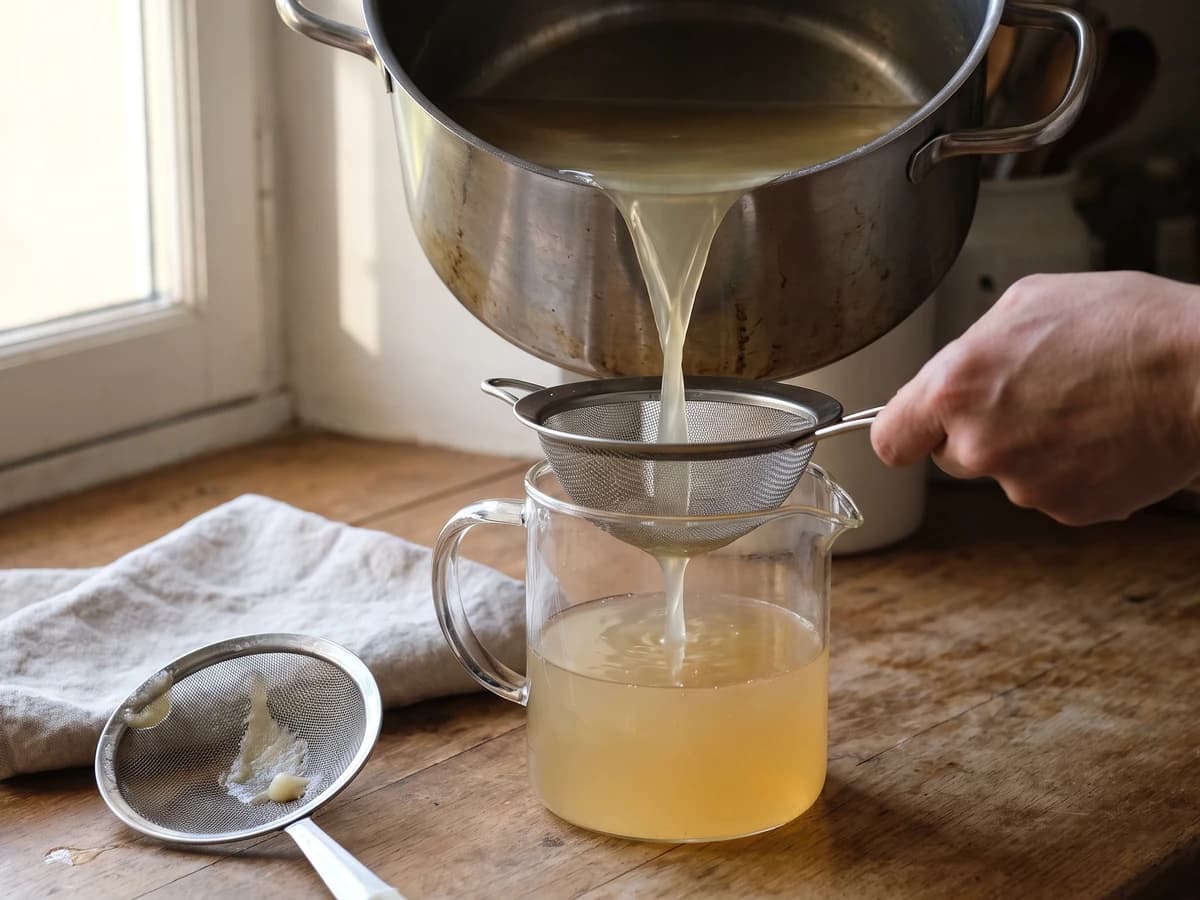
Break the veal bones small, then give them eight hours at a bare tremble. This pale, gelatinous fond becomes the quiet foundation beneath velouté, blanquette, and every sauce that must stay light.
Chef Juliette
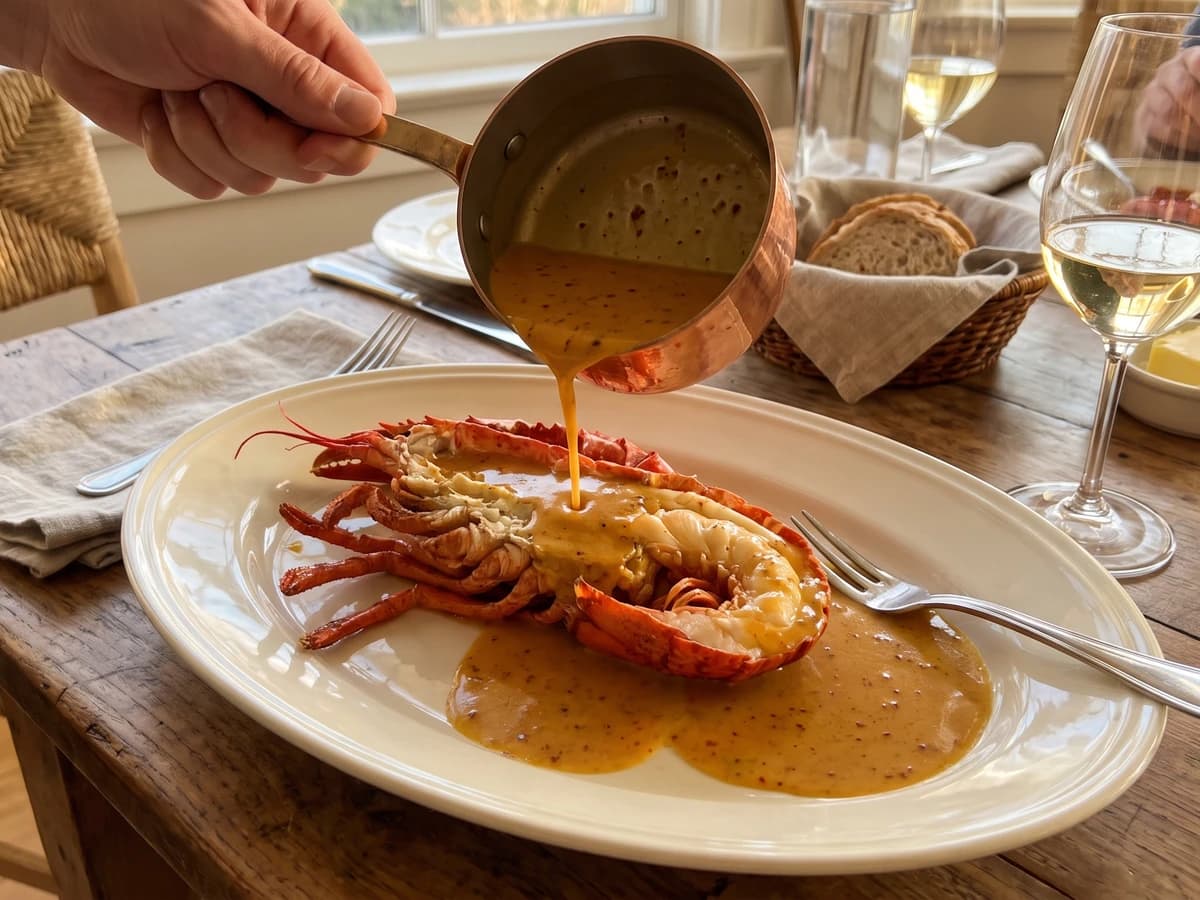
Sauce Orientale concentrates lobster-rich American Sauce with curry, then folds in cream away from the fire: a glossy, gently spiced derivative made for lobster, crayfish, and firm fish.
Chef Juliette
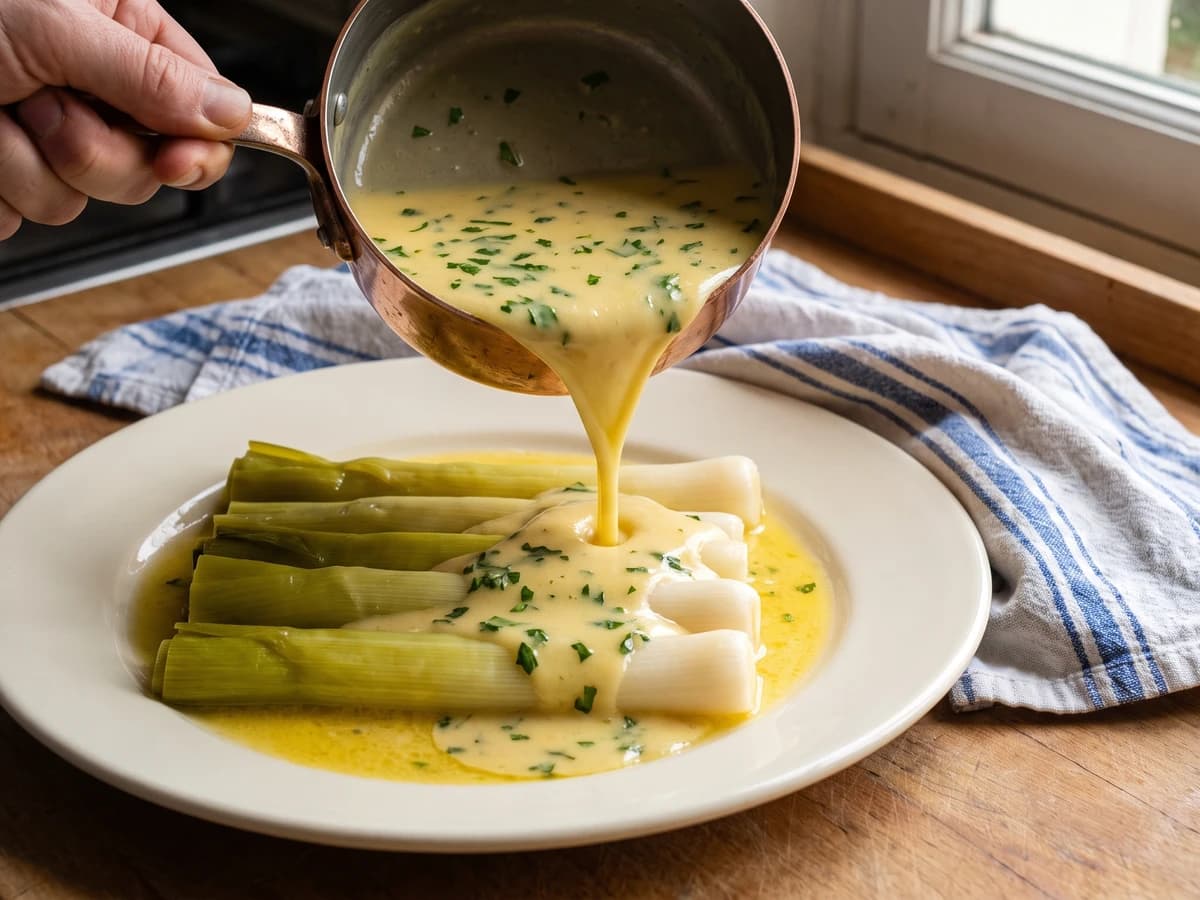
An old lesson in sauce families: Sauce Allemande takes mushroom liquor, then butter, lemon, and parsley, becoming a glossy Poulette for sheep's trotters, leeks, cauliflower, and anything needing gentle richness with a bright edge.