Chef Juliette
Ordinary or White Consommé
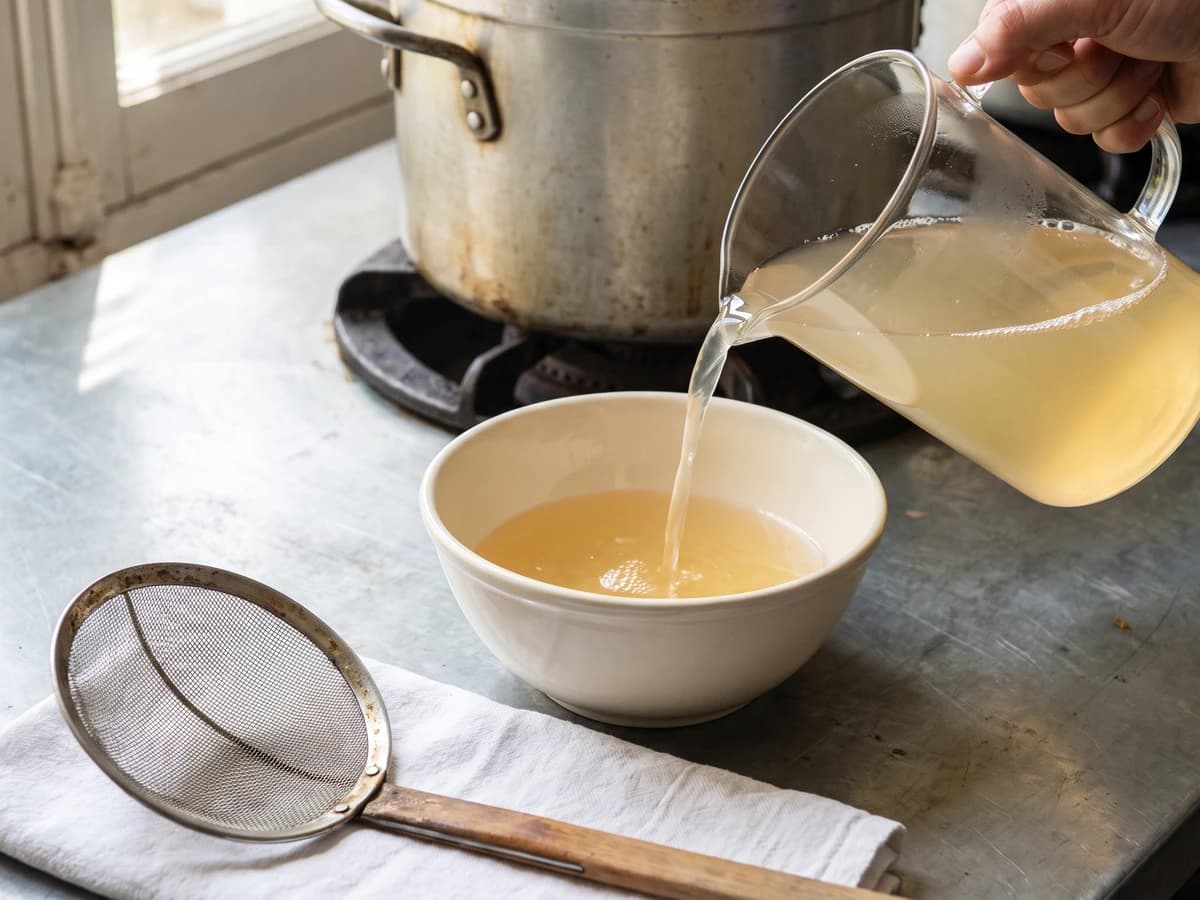
Beef shin, lean beef, and fowl begin in cold water and rise slowly toward a tremble. Skim before the boil, and you learn the quiet discipline that gives every clear French broth its backbone.
A cooking platform built around craft, culture, and the stories behind what we eat.
Created by Chef Juliette
Based on No. 177, Chervil, from Le Guide Culinaire (1907) by Auguste Escoffier
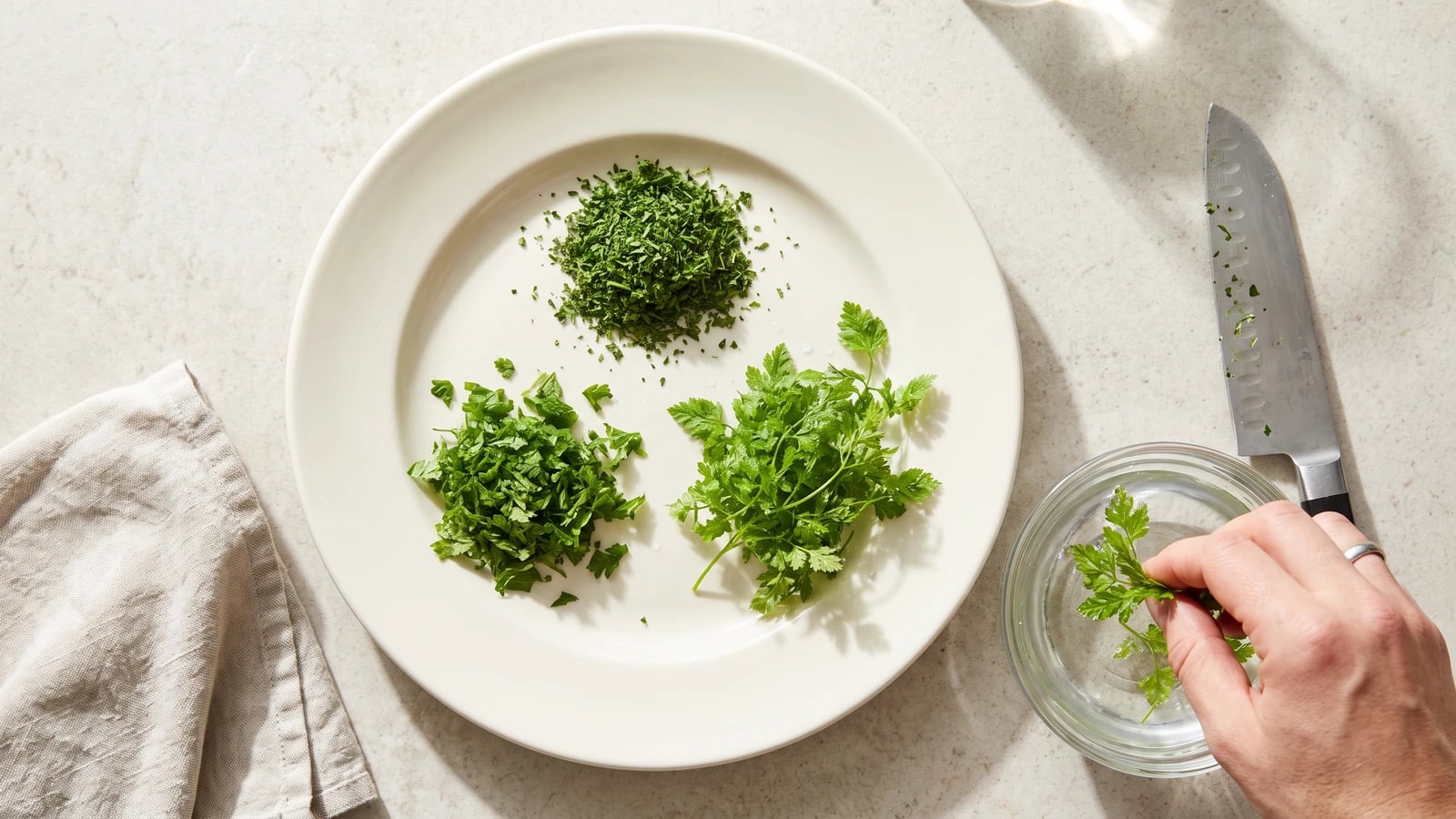
Three classical preparations, haché, concassé, and pluches, preserve chervil’s fleeting anise perfume for sauces, eggs, salads, soups, and consommés. Dry it well, cut it late, and keep it off the heat.
Cerfeuil haché, concassé et en pluches teaches one true thing: chervil’s perfume belongs to the final moment. The leaves should reach the table green, feathery, and quietly fragrant with anise. Heat and waiting steal that fragrance, so prepare the herb only when everything it will finish is ready.
The professional formula assumed a brigade hand available at service to strip, wash, dry, and cut separate trays for several stations. At home, one fresh bunch, a salad spinner or two towels, and a sharp knife do the work. The quantity has been reduced to what four bowls of soup or one family supper might need, because a large batch would fade before you could use it.
Separate plates for several stations are brigade scaffolding and can go. Complete drying and the last-second cut are the preparation itself, and both must stay. Before the knife touches the leaves, make certain no water remains.
At the Parisian table and across France, cerfeuil became a favored finish for potages, consommés, eggs, salads, and fines herbes, the traditional mixture of tender fresh herbs. Classical kitchens developed haché, concassé, and carefully torn pluches so one delicate herb could provide different textures without being cooked into dullness. Chervil may resemble parsley, but its faint anise perfume is more fragile, which is why generations of cooks have treated last-minute preparation as part of the seasoning itself.
Quantity
1 bunch, about 2 loosely packed cups (475 ml / 28 g)
stalks removed
| Ingredient | Quantity |
|---|---|
| fresh chervilstalks removed | 1 bunch, about 2 loosely packed cups (475 ml / 28 g) |
Inspect the chervil and discard any yellowed or crushed leaves. Pinch off the coarse stalks, keeping the tender serrated leaves and their finest stems. Use the whole bunch for one preparation, or divide it into three loose piles if you want haché, concassé, and pluches together.
Float the leaves in a large bowl of cold water and move them gently with your fingers. Lift them out rather than pouring away the water, leaving any grit on the bowl floor. Spin in short, gentle bursts, then toss the leaves lightly between clean towels until completely dry. If droplets remain, do not chop yet. Ça se rattrape: spread the leaves on a dry towel, cover them with another, and wait five minutes. Wet chervil bruises, clumps, and loses its perfume.
For haché, gather the chosen leaves into a loose mound and chop finely with a sharp knife, making measured passes rather than grinding the blade repeatedly through the herb. Stop when the pieces are fine but still green and dry. Use at once to finish eggs, salads, or a sauce after it has left the heat. If service is delayed by a few minutes, spread the haché on a cool plate and refrigerate it.
For concassé, compress the leaves lightly between your fingers and slice across them with close, parallel cuts, after the action of a chaff-cutter. Concass means to chop roughly, so leave narrow ribbons and visible fragments rather than making a mince. If the edges darken, stop pressing and use a sharper knife. Add the concassé at the last moment and off the heat wherever a slightly fuller herb texture is wanted.
For pluches, tear away only the serrated outer portions of each leaf, leaving no coarse central vein attached. Drop the delicate pieces into cold water as you work. At the last moment, lift them from the water, shake gently, and blot once if necessary. Add the pluches raw to bowls of soup or to boiling consommé just as it leaves the fire. Serve immediately. À table!
1 serving (about 28g)
Culinary guides, cultural storytelling, and the editorial depth that makes cooking meaningful.
Discover Culinary ExplorerChef Juliette
Beef shin, lean beef, and fowl begin in cold water and rise slowly toward a tremble. Skim before the boil, and you learn the quiet discipline that gives every clear French broth its backbone.
Chef Juliette
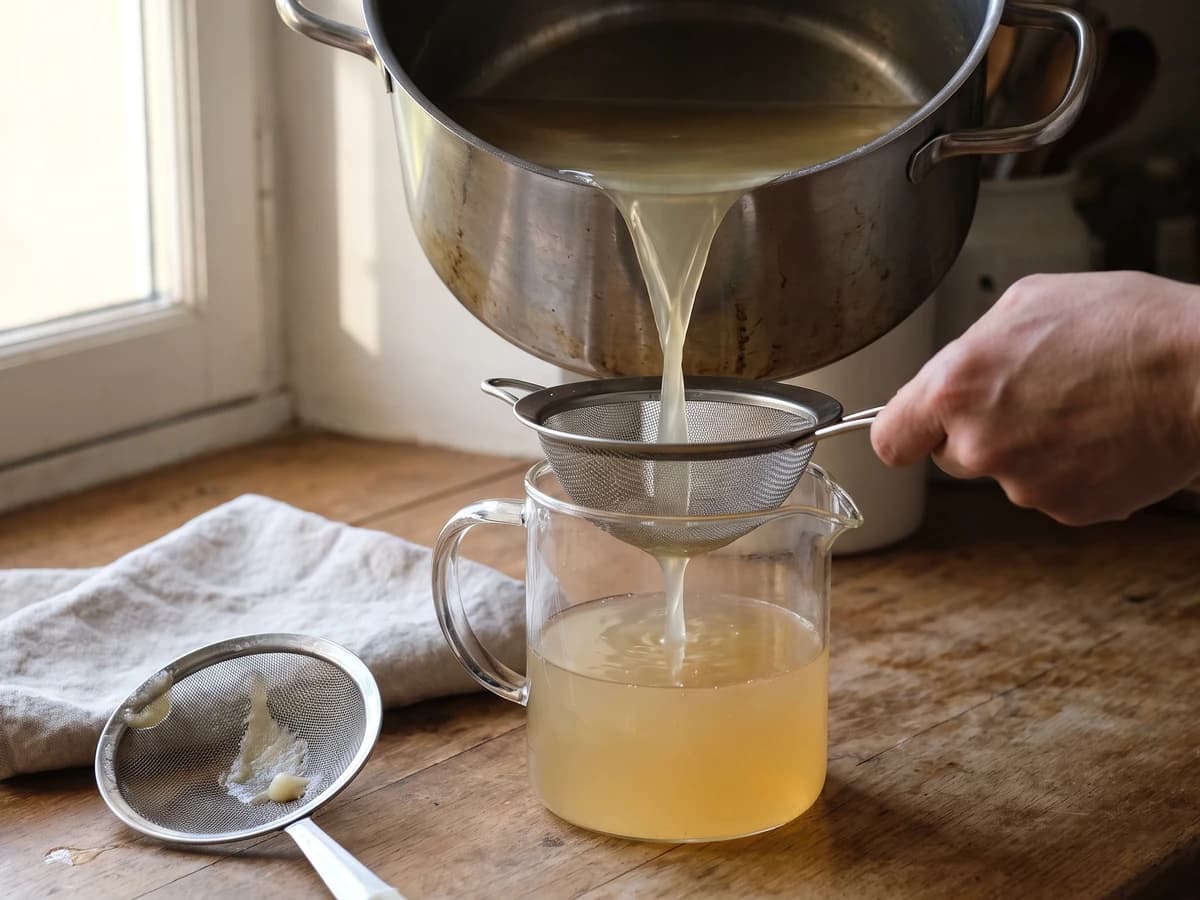
Break the veal bones small, then give them eight hours at a bare tremble. This pale, gelatinous fond becomes the quiet foundation beneath velouté, blanquette, and every sauce that must stay light.
Chef Juliette
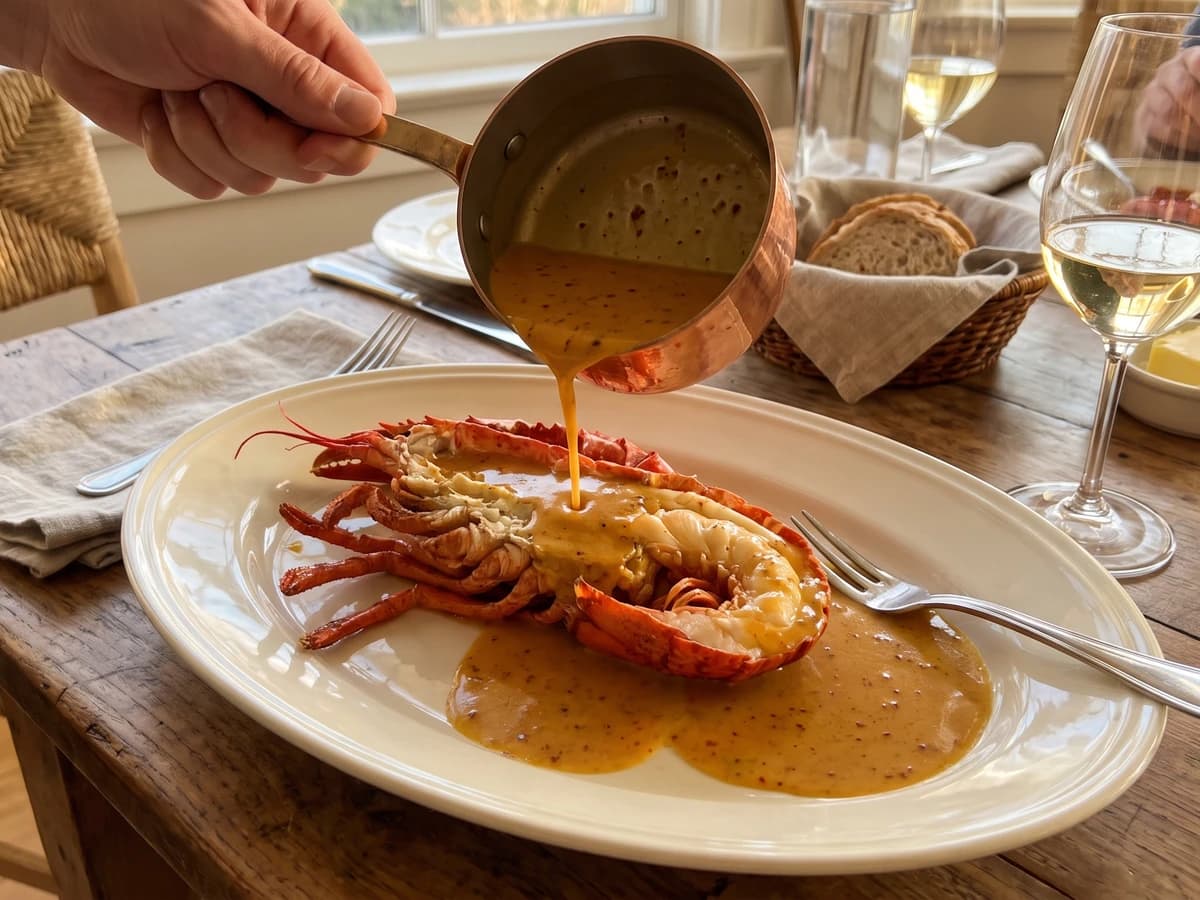
Sauce Orientale concentrates lobster-rich American Sauce with curry, then folds in cream away from the fire: a glossy, gently spiced derivative made for lobster, crayfish, and firm fish.
Chef Juliette
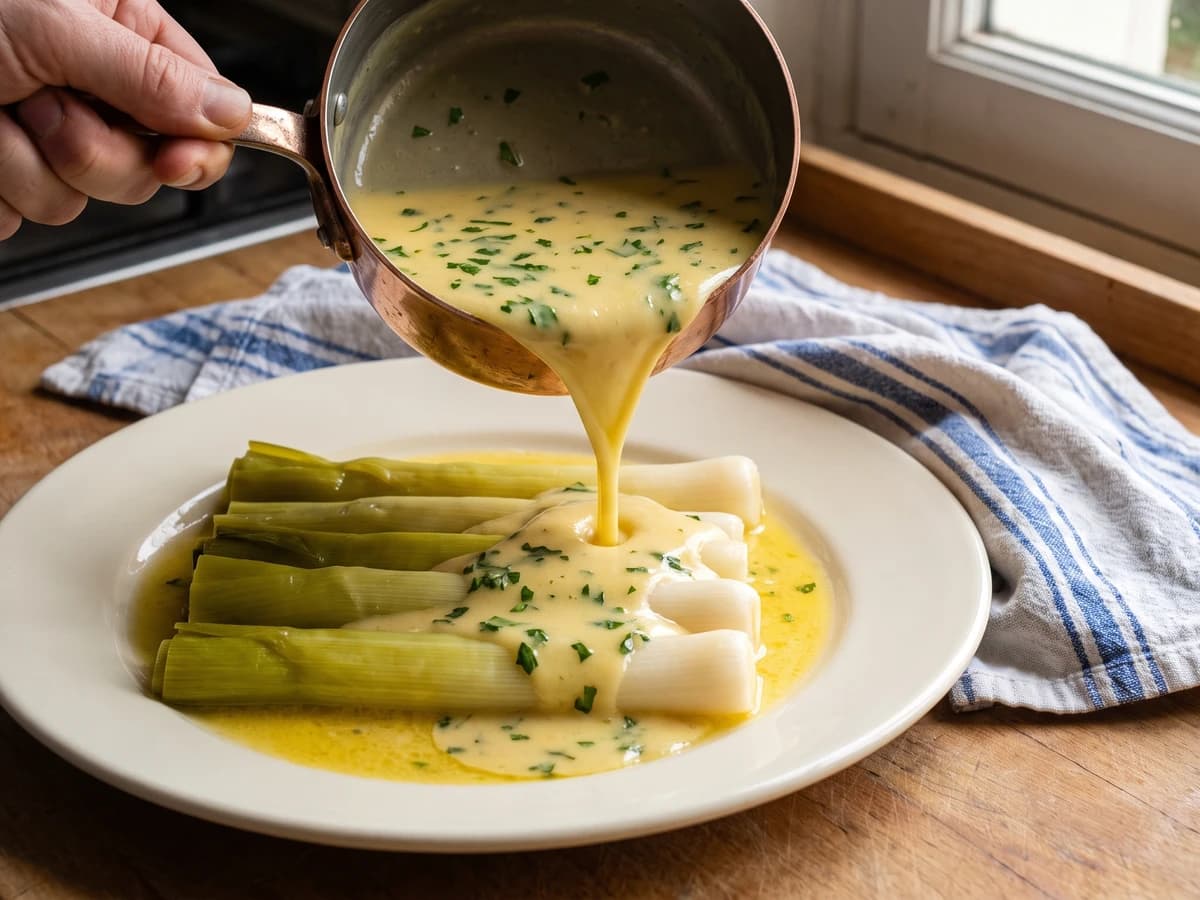
An old lesson in sauce families: Sauce Allemande takes mushroom liquor, then butter, lemon, and parsley, becoming a glossy Poulette for sheep's trotters, leeks, cauliflower, and anything needing gentle richness with a bright edge.