Chef Juliette
Ordinary or White Consommé
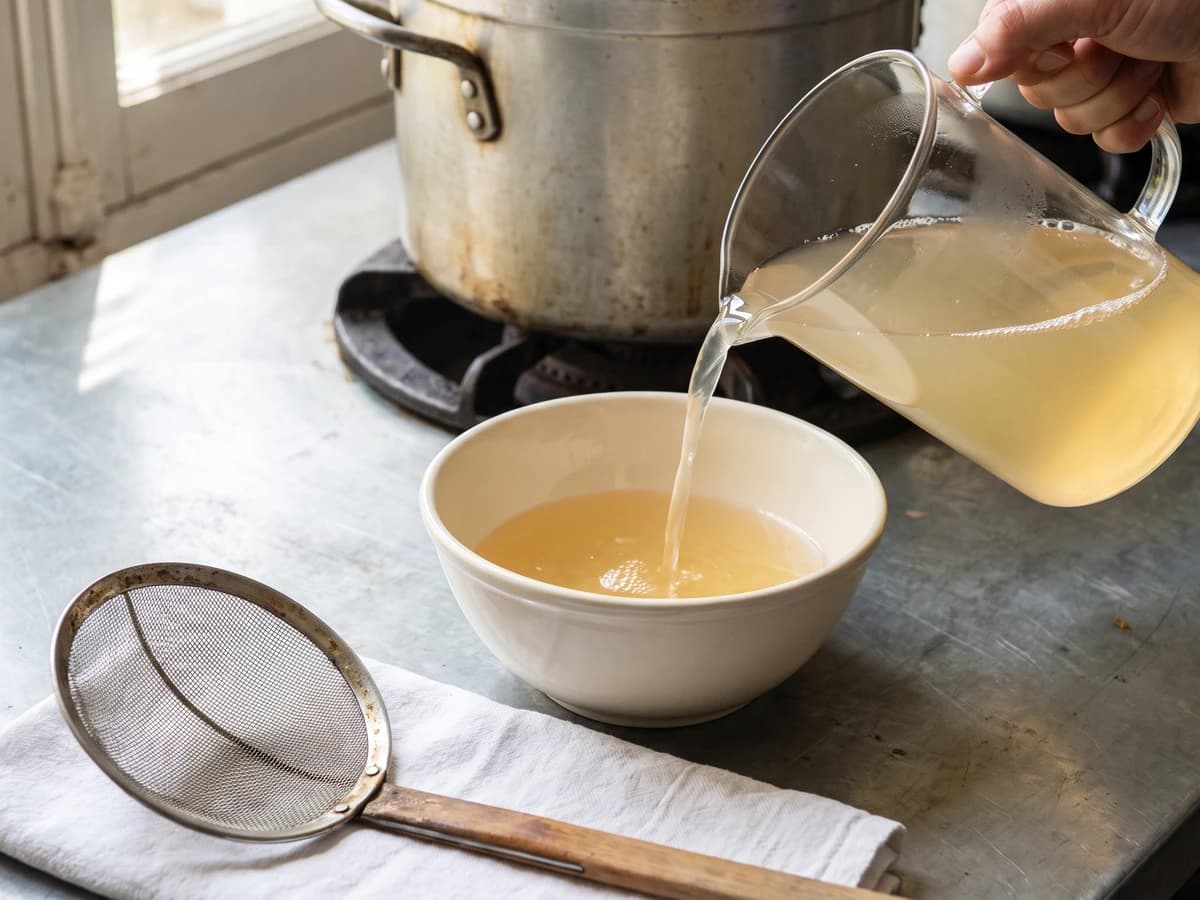
Beef shin, lean beef, and fowl begin in cold water and rise slowly toward a tremble. Skim before the boil, and you learn the quiet discipline that gives every clear French broth its backbone.
A cooking platform built around craft, culture, and the stories behind what we eat.
Created by Chef Juliette
Based on No. 176, Faggots (Bouquets Garnis), from Le Guide Culinaire (1907) by Auguste Escoffier
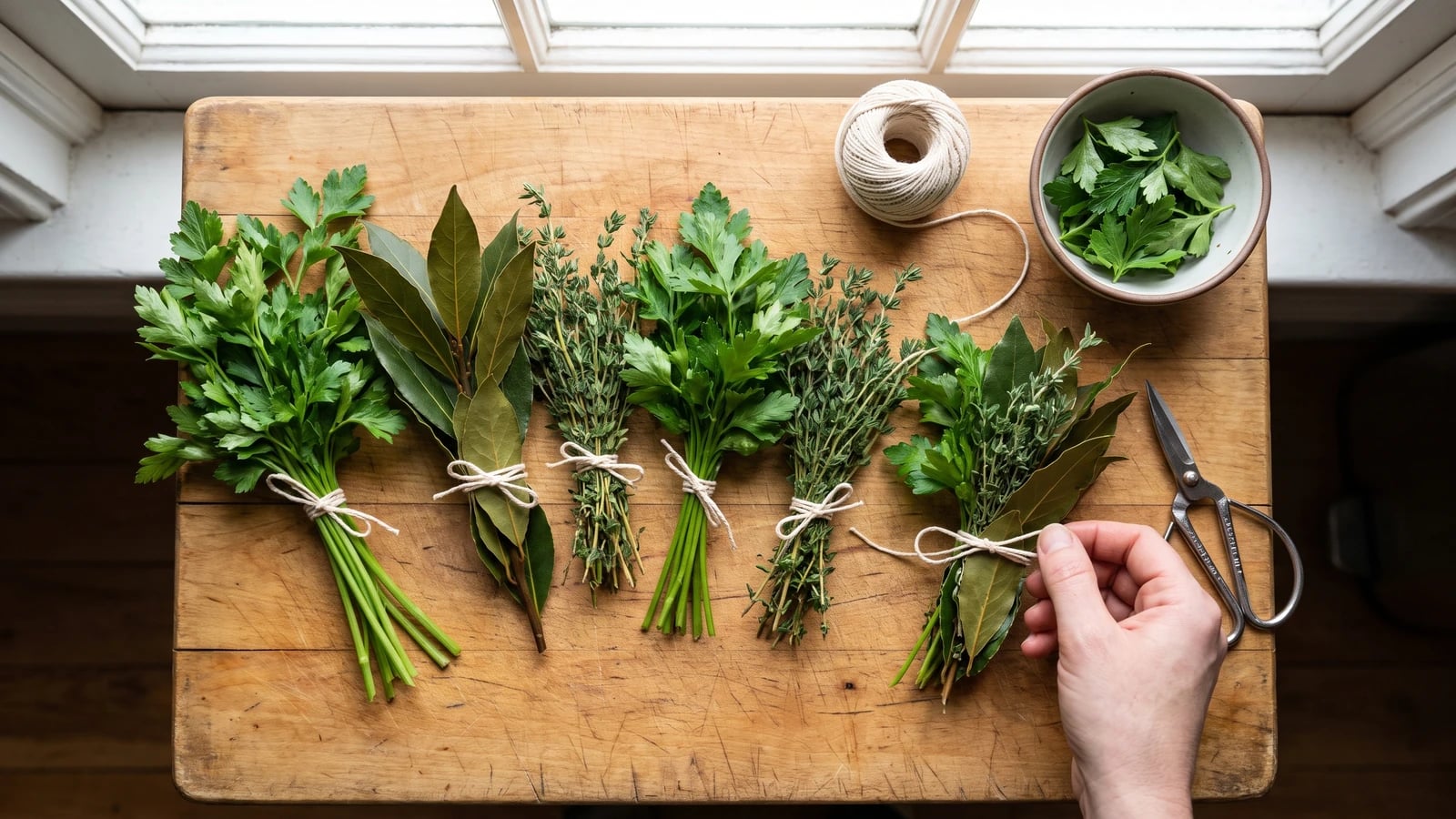
The classical 8:1:1 bundle of parsley stalks, bay, and thyme, tied tight for a clean pot and a clean finish. Make six now, then lift each spent bouquet garni with one pull.
Bouquets garnis, bound aromatic bundles traditionally called faggots in English, teach a small rule with a long reach: perfume the cooking liquid, then leave it clean. The one true thing to know before touching a pot is that loose herbs are not the same preparation. Tie them firmly enough to survive a long simmer, because retrieval is the technique.
The source formula makes a full ounce of aromatics in an exact 8:1:1 proportion, parsley stalks and roots first, with bay and thyme in supporting roles. That suited a professional stockpot and the hand preparing bundle after bundle. Your saucepan needs less, so I keep the original ounce and its proportions intact, then divide it into six home-sized bouquets garnis. Repeated weighing before every pot is brigade scaffolding and can go; orderly alignment and proper stringing are the preparation itself and must stay. One cook, one stove, one evening, though the stove gets this quarter hour off.
When the bundles are right, the thyme and bay sit protected inside the parsley stalks, every end is even, and the knot holds when tugged. The step that matters most is the last turn of the string: wrap twice, tie firmly, and leave nothing free to stray into the pot.
Bouquet garni belongs to the classical French sauce kitchen, particularly the Parisian professional pot and the cuisine bourgeoise saucepan, where herbs had to scent a stock, sauce, or braise without remaining loose in the finished liquid. The formula here is more exact than a casual handful: eight parts parsley stalks and roots to one part bay and one part thyme, bound for complete retrieval. In this culinary usage, faggot simply means a small tied bundle and not the British meat preparation bearing the same word.
Quantity
About 1½ loosely packed cups (355 ml / 22.7 g)
leaves reserved and roots scrubbed
Quantity
About ½ loosely packed cup (120 ml / 2.8 g)
Quantity
About ½ loosely packed cup (120 ml / 2.8 g)
Quantity
6 lengths, each 12 inches (30 cm)
| Ingredient | Quantity |
|---|---|
| flat-leaf parsley stalks and any fine roots attachedleaves reserved and roots scrubbed | About 1½ loosely packed cups (355 ml / 22.7 g) |
| whole bay leaves | About ½ loosely packed cup (120 ml / 2.8 g) |
| fresh thyme sprigs | About ½ loosely packed cup (120 ml / 2.8 g) |
| unbleached cotton kitchen twine | 6 lengths, each 12 inches (30 cm) |
Strip the parsley leaves and reserve them for another dish. Keep the stalks and any fine roots attached, scrubbing the roots carefully so no soil remains. Rinse the parsley, bay, and thyme only if needed, then dry them thoroughly. Damp herbs become slippery under the string and spoil quickly in storage; if they are still wet, spread them on a towel until their surfaces feel dry.
Weigh 22.7 g parsley stalks and roots, 2.8 g bay leaves, and 2.8 g thyme sprigs. This is the source formula reduced to its grammar: eight parts parsley, one part bay, one part thyme. Weight matters more than the number of sprigs because one bay leaf may be twice the size of another. If your scale cannot read such small amounts reliably, weigh the full quantities exactly as given before dividing anything.
Divide each kind of aromatic evenly among six groups. Lay the parsley stalks parallel in each group, place the bay and thyme in the middle, then cover them with the remaining stalks. Trim ragged ends so the aromatics are roughly 4 to 5 inches (10 to 13 cm) long and no thyme sprig or bay tip projects beyond the parsley. Do not chop the herbs, since cut fragments are exactly what the bundle is meant to keep from the liquid.
Slide one length of cotton twine beneath each bundle. Wrap it twice around the middle, pull until the herbs are held snugly without being crushed, and finish with a firm square knot. Leave one tail several inches long if you want to hook the bouquet garni easily from a deep pot. Tug the bundle once to test it. If the knot slips or a sprig escapes, do not rebuild everything. Ça se rattrape: add a second tie crosswise, tighten it, and trim the offending tip.
Use one bouquet garni for a 1½ to 2 quart (1.4 to 1.9 litre) saucepan of stock, sauce, marinade, soup, or braise. Add it whole as the liquid approaches a simmer, let the particular recipe determine the infusion time, then lift out the spent bundle before straining or serving. If a bundle ever opens in the pot, pass the liquid through a fine-mesh sieve. Never apologize at your own table; remove the evidence and carry on.
1 serving (about 5g)
Culinary guides, cultural storytelling, and the editorial depth that makes cooking meaningful.
Discover Culinary ExplorerChef Juliette
Beef shin, lean beef, and fowl begin in cold water and rise slowly toward a tremble. Skim before the boil, and you learn the quiet discipline that gives every clear French broth its backbone.
Chef Juliette
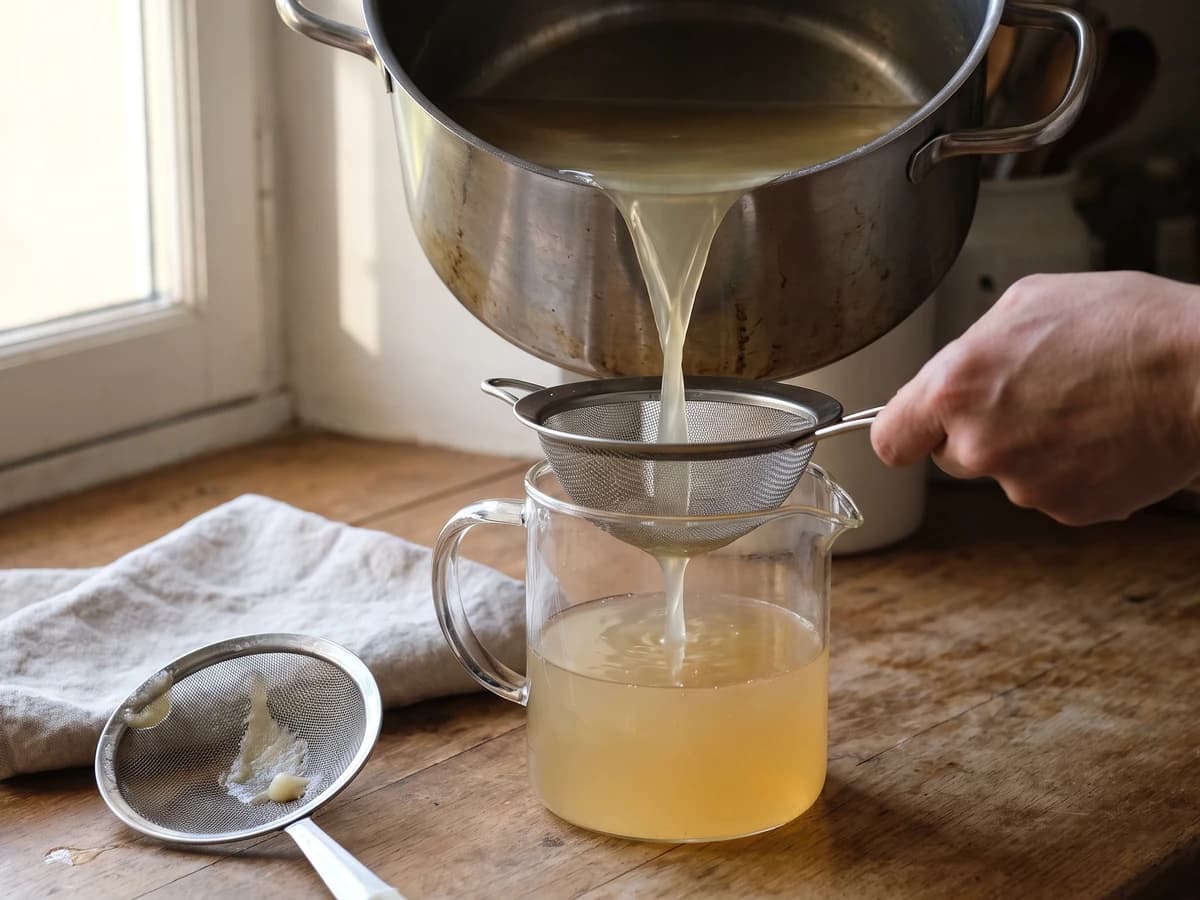
Break the veal bones small, then give them eight hours at a bare tremble. This pale, gelatinous fond becomes the quiet foundation beneath velouté, blanquette, and every sauce that must stay light.
Chef Juliette
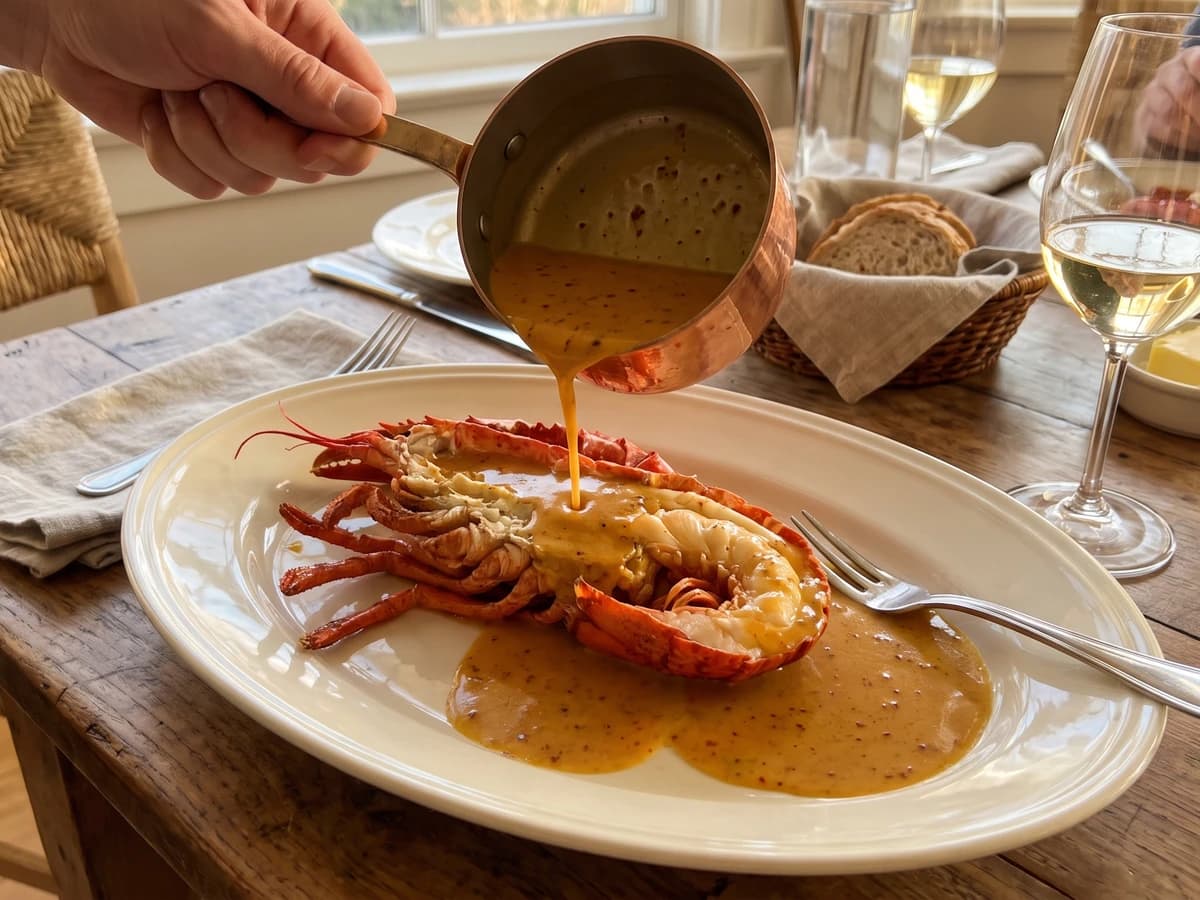
Sauce Orientale concentrates lobster-rich American Sauce with curry, then folds in cream away from the fire: a glossy, gently spiced derivative made for lobster, crayfish, and firm fish.
Chef Juliette
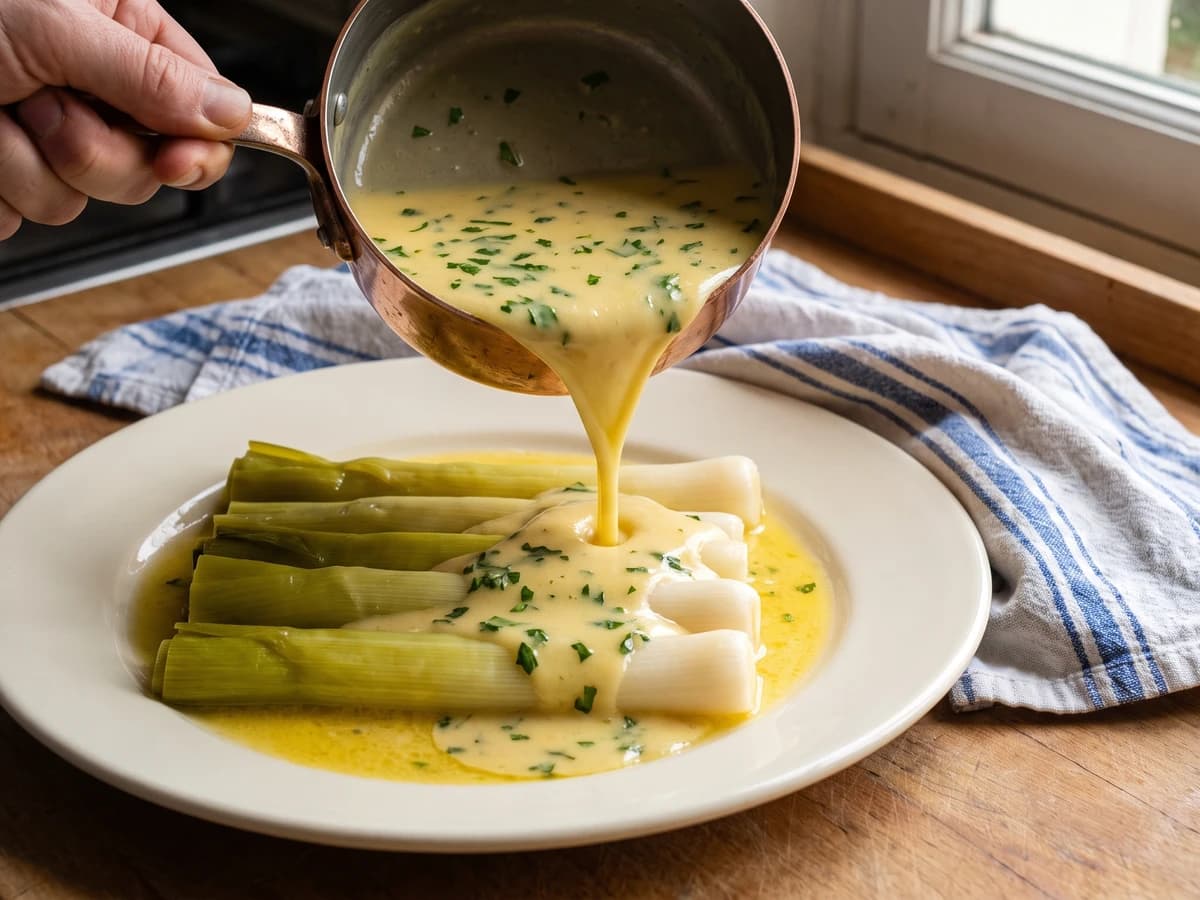
An old lesson in sauce families: Sauce Allemande takes mushroom liquor, then butter, lemon, and parsley, becoming a glossy Poulette for sheep's trotters, leeks, cauliflower, and anything needing gentle richness with a bright edge.