Chef Juliette
Ordinary or White Consommé
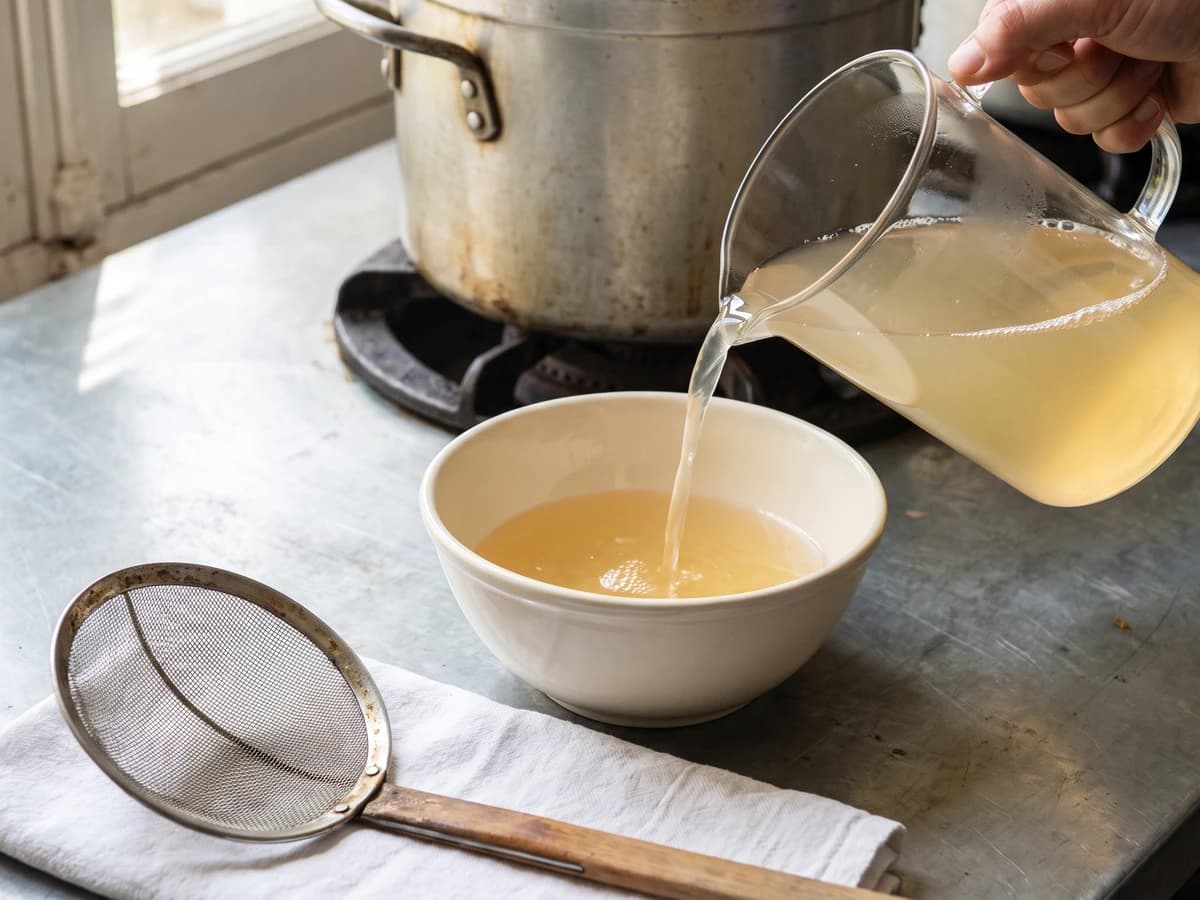
Beef shin, lean beef, and fowl begin in cold water and rise slowly toward a tremble. Skim before the boil, and you learn the quiet discipline that gives every clear French broth its backbone.
A cooking platform built around craft, culture, and the stories behind what we eat.
Created by Chef Juliette
Based on No. 174a, Aromatics, from Le Guide Culinaire (1907) by Auguste Escoffier
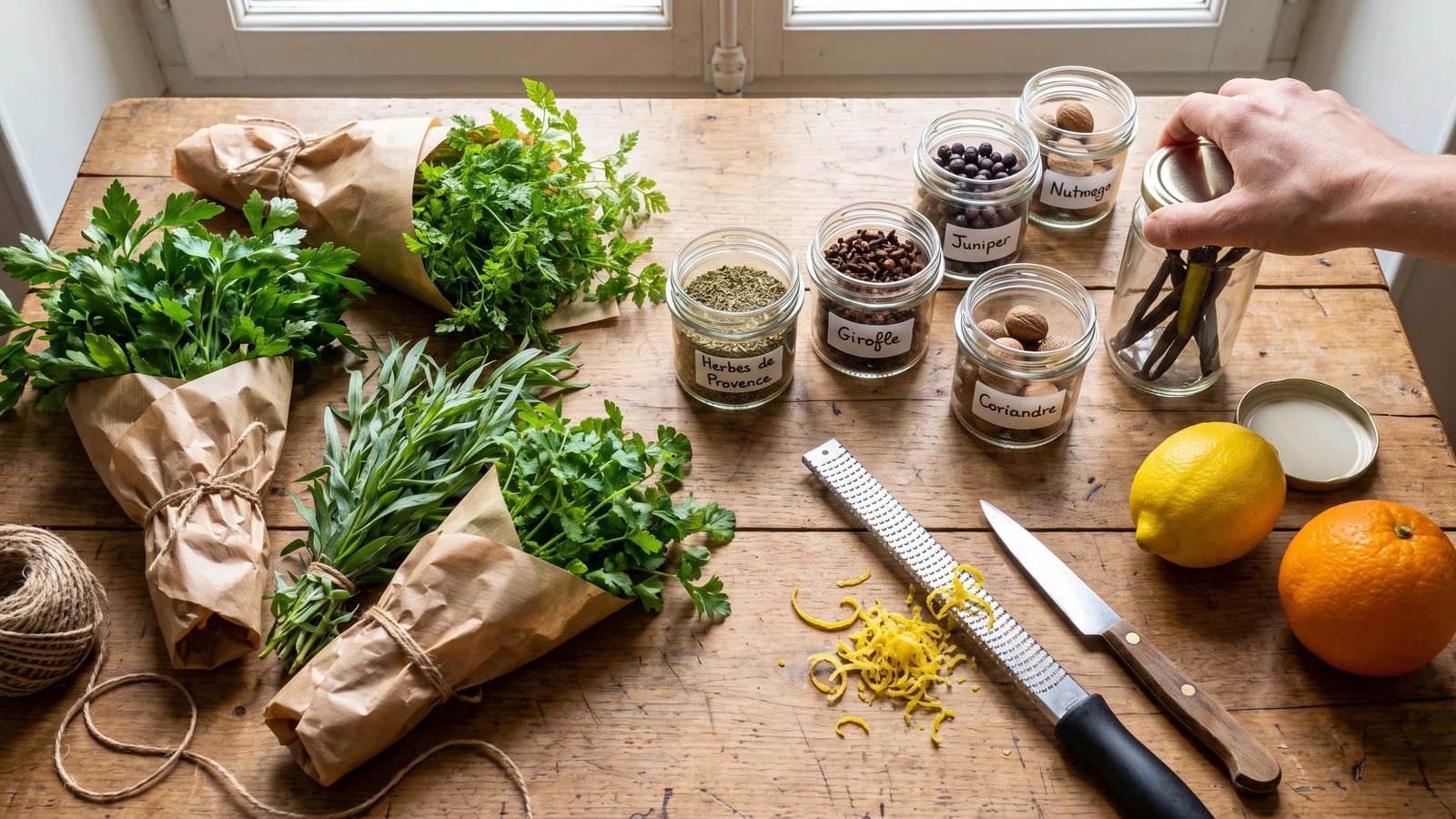
Aromates are the hidden structure behind a French sauce or marinade: a disciplined pantry of dry herbs and spices, fresh leaves, and bright zest, kept separately so each dish finds its own voice.
Aromates (aromatics) are not a universal seasoning blend. They are the hidden structure of cooking, chosen to throw the principal flavor into relief rather than bury it. The one truth to know before touching a pan is simple: keep them separate until the dish tells you what it needs.
The professional kitchen behind this entry assumed large dry-store tins, careful daily inspection, and fresh herbs arriving whenever service required them. Your honest equivalent is thirteen small jars, one shallow fresh-herb box, and three citrus packets. The quantities are smaller because one cook has no use for brigade stock; the original list and its division between dry and fresh remain intact. Bulk storage and daily sorting were scaffolding. Separation, freshness, and clean citrus rind are the work itself.
Properly kept, the dry aromates smell vivid when crushed, the fresh leaves remain cool and green, and the citrus gives perfume without bitterness. Before the first pan goes on, label every jar and keep every aromatic separate. That separation is the step that matters most.
The system of aromates belongs to the Parisian classical pantry, where ingredients arriving from regional markets and wider trade were organized by use rather than mixed into one supposed national herb blend. Professional and bourgeois kitchens kept sage, basil, rosemary, marjoram, thyme, bay, warm spices, and vanilla as permanent dry stock, while parsley, chervil, tarragon, pimprenelle, savory, and citrus rind arrived fresh from the market. Grimod de la Reynière called the union of aromatics and condiments the “hidden soul of cooking,” a useful correction to the familiar notion that French seasoning begins and ends with a bouquet garni.
Quantity
2 tablespoons (30 ml / 4 g)
Quantity
2 tablespoons (30 ml / 5 g)
Quantity
2 tablespoons (30 ml / 7 g)
Quantity
2 tablespoons (30 ml / 3 g)
Quantity
2 tablespoons (30 ml / 5 g)
Quantity
12 leaves (about 2 g)
Quantity
4 sticks (about 20 g)
Quantity
2 tablespoons (30 ml / 10 g)
Quantity
2 tablespoons (30 ml / 14 g)
Quantity
4 (about 20 g)
Quantity
2 tablespoons (30 ml / 13 g)
Quantity
2 tablespoons (30 ml / 6 g)
Quantity
2
Quantity
2 cups loosely packed (480 ml / 60 g)
Quantity
½ cup loosely packed (120 ml / 15 g)
Quantity
½ cup loosely packed (120 ml / 12 g)
Quantity
½ cup loosely packed (120 ml / 12 g)
Quantity
½ cup loosely packed (120 ml / 15 g)
Quantity
2 tablespoons (30 ml / 12 g), from 2 oranges
outer colored rind only
Quantity
2 tablespoons (30 ml / 12 g), from 2 oranges
outer colored rind only
Quantity
4 tablespoons (60 ml / 24 g), from 4 lemons
finely grated outer colored film only
| Ingredient | Quantity |
|---|---|
| dried sage | 2 tablespoons (30 ml / 4 g) |
| dried basil | 2 tablespoons (30 ml / 5 g) |
| dried rosemary | 2 tablespoons (30 ml / 7 g) |
| dried sweet marjoram | 2 tablespoons (30 ml / 3 g) |
| dried thyme | 2 tablespoons (30 ml / 5 g) |
| dried bay leaves | 12 leaves (about 2 g) |
| cinnamon sticks | 4 sticks (about 20 g) |
| ground dried ginger | 2 tablespoons (30 ml / 10 g) |
| dried juniper berries | 2 tablespoons (30 ml / 14 g) |
| whole nutmegs | 4 (about 20 g) |
| whole cloves | 2 tablespoons (30 ml / 13 g) |
| mace blades | 2 tablespoons (30 ml / 6 g) |
| whole vanilla beans | 2 |
| fresh flat-leaf parsley | 2 cups loosely packed (480 ml / 60 g) |
| fresh chervil | ½ cup loosely packed (120 ml / 15 g) |
| fresh tarragon | ½ cup loosely packed (120 ml / 12 g) |
| fresh pimprenelle, or culinary salad burnet | ½ cup loosely packed (120 ml / 12 g) |
| fresh common savory | ½ cup loosely packed (120 ml / 15 g) |
| common sweet-orange rindouter colored rind only | 2 tablespoons (30 ml / 12 g), from 2 oranges |
| Seville-orange rindouter colored rind only | 2 tablespoons (30 ml / 12 g), from 2 oranges |
| lemon zestfinely grated outer colored film only | 4 tablespoons (60 ml / 24 g), from 4 lemons |
Begin with thoroughly clean, bone-dry jars and label each one before filling it. Aromates borrow smells eagerly, so every herb and spice receives its own container; pouring the whole list into one grand mixture would erase the particular stamp the source intends. Set aside a shallow refrigerator box for the fresh herbs and three small freezer packets for the citrus.
Put the sage, basil, rosemary, sweet marjoram, thyme, and bay into separate labeled jars. Keep the leaves as intact as possible and crush them only when a preparation calls for them; their perfume disappears faster once broken. Store the jars away from the stove, direct light, and damp air. Permanent stock means continually replenished, not immortal: if a rubbed pinch smells dusty rather than vividly of the plant, replace it instead of adding twice as much.
Jar the cinnamon, ginger, juniper, nutmeg, cloves, mace, and vanilla separately. Keep the whole spices whole until use, when juniper and cloves can be crushed, nutmeg grated, and mace crumbled according to the preparation. Close the vanilla tightly and keep it apart from the other jars, because its perfume travels. This small-stock system replaces the professional dry store without changing its discipline.
Rinse the parsley, chervil, tarragon, pimprenelle, and savory briefly in cold water, then dry them completely without bruising the tender leaves. Wrap each kind separately in a barely damp cloth or paper and place them in the covered refrigerator box. Do not chop them ahead. If sound leaves have merely wilted, soak them in iced water for ten minutes and dry them again; ça se rattrape. Blackened or slippery herbs cannot be rescued and must go.
Scrub and dry the fruit. Use a sharp peeler to remove strips of common-orange and Seville-orange rind, taking only the colored surface, then use a fine rasp for the lemon zest. Zest is the outermost colored, glossy film of the rind; the white pith beneath it is bitter. If a strip carries pith, lay it colored-side down and shave the white layer away with a small knife. Ça se rattrape. Keep all three citrus preparations separate and freeze them flat in labeled packets.
Choose the aromates only when the preparation has declared its character. Bruise sturdy leaves before a long infusion, crush whole spices just before they enter a marinade, chop fresh herbs at the last responsible moment, and leave orange rind in removable strips when its perfume should be controlled. The source gives no universal ratio because this is a vocabulary, not a fixed sentence. C'est la même grammaire: if a removable aromatic grows too forceful, take it out; if chopped herbs overtake a sauce, strain it before further reduction and rebuild with a little unseasoned base. One cook, one stove, one evening. À table!
1 serving (about 17g)
Culinary guides, cultural storytelling, and the editorial depth that makes cooking meaningful.
Discover Culinary ExplorerChef Juliette
Beef shin, lean beef, and fowl begin in cold water and rise slowly toward a tremble. Skim before the boil, and you learn the quiet discipline that gives every clear French broth its backbone.
Chef Juliette
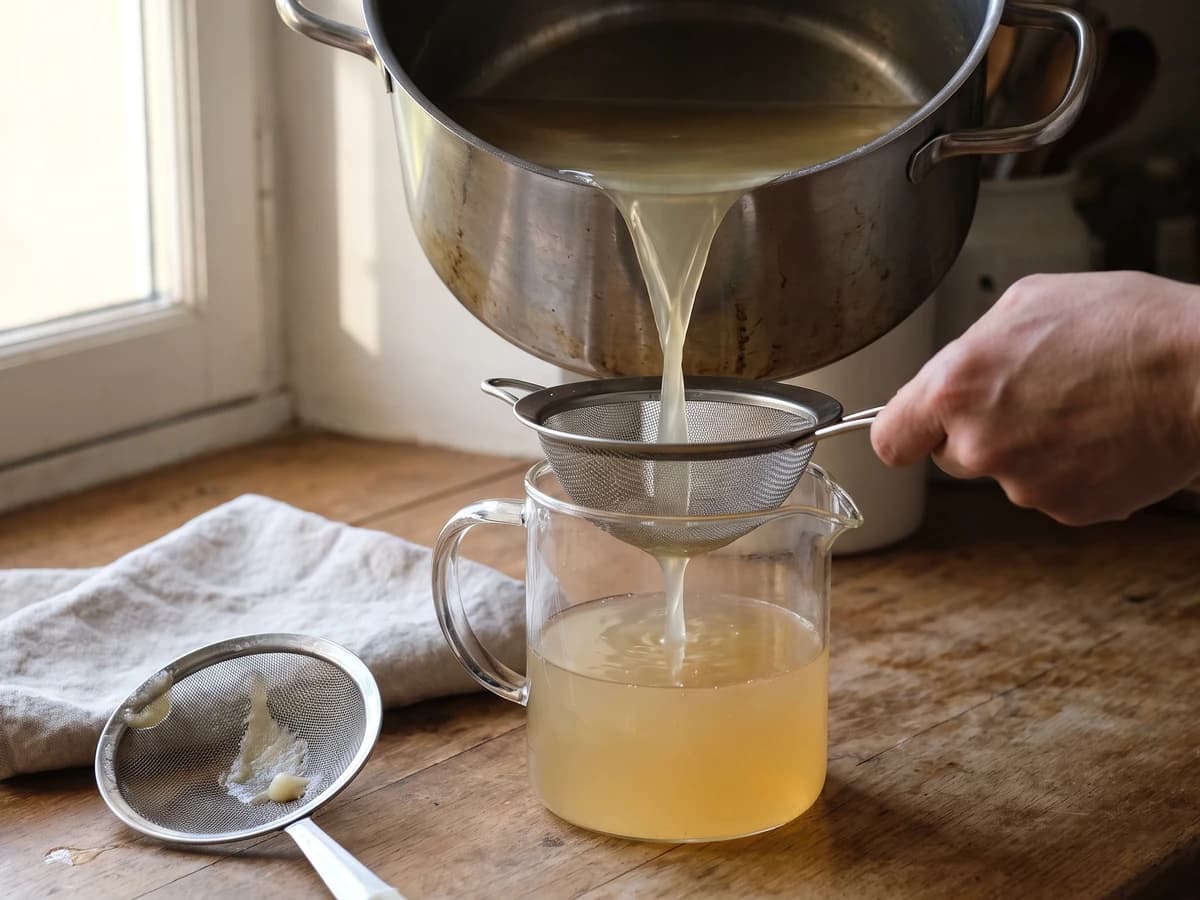
Break the veal bones small, then give them eight hours at a bare tremble. This pale, gelatinous fond becomes the quiet foundation beneath velouté, blanquette, and every sauce that must stay light.
Chef Juliette
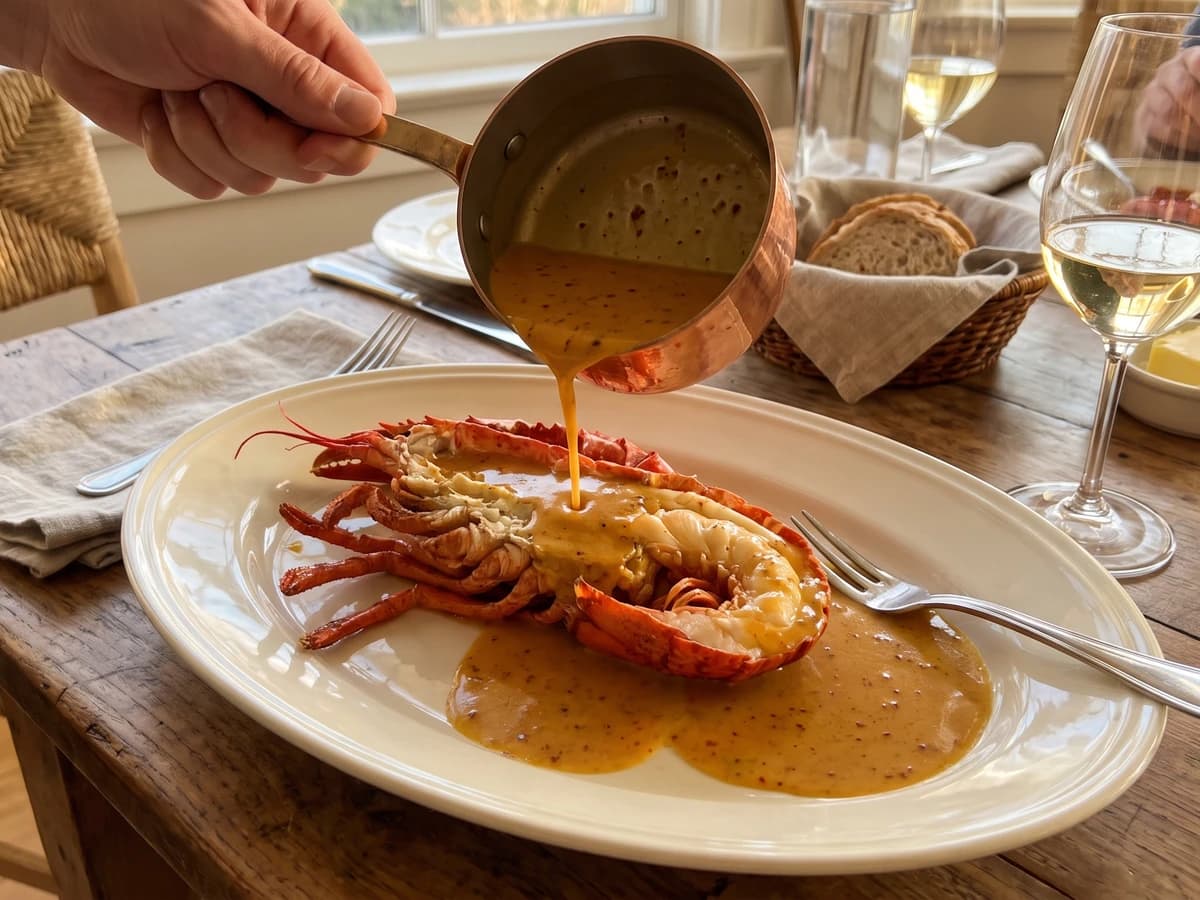
Sauce Orientale concentrates lobster-rich American Sauce with curry, then folds in cream away from the fire: a glossy, gently spiced derivative made for lobster, crayfish, and firm fish.
Chef Juliette
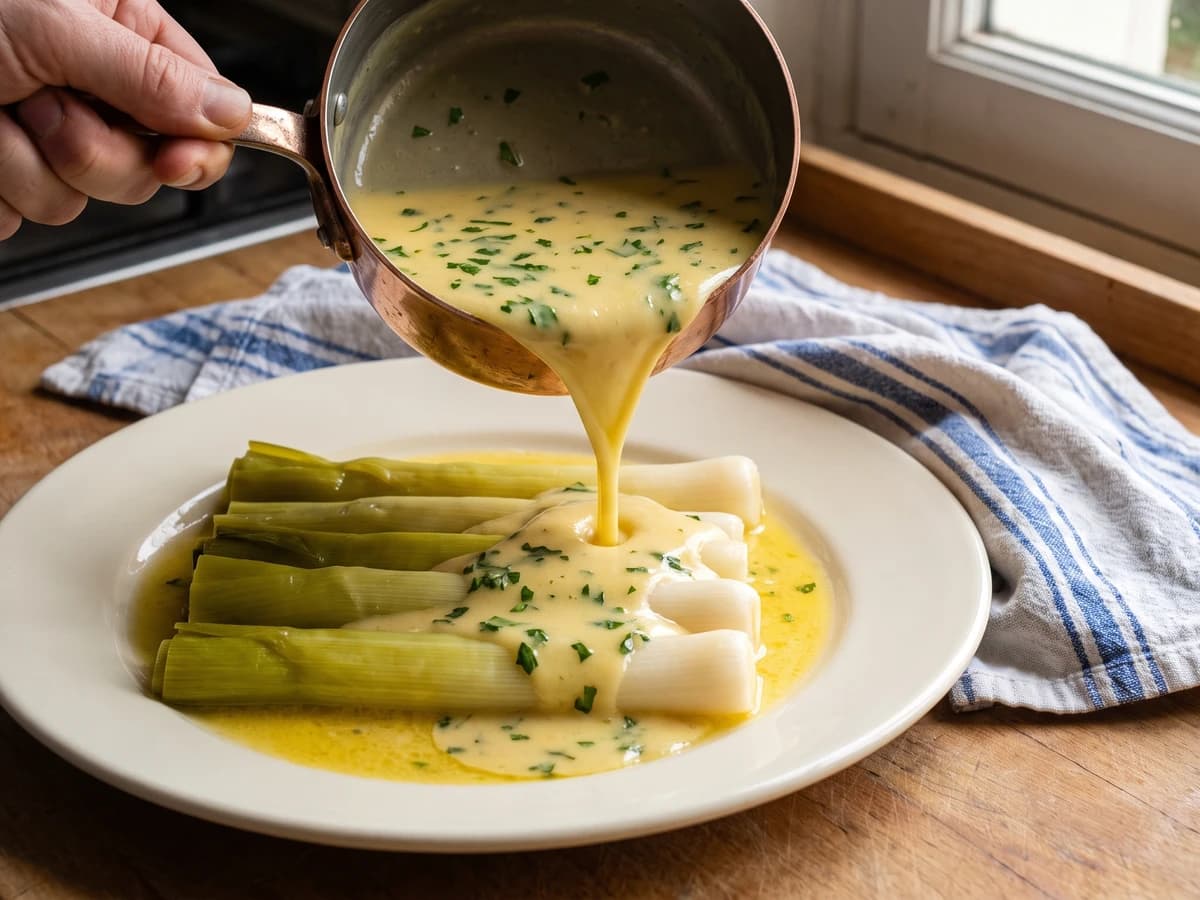
An old lesson in sauce families: Sauce Allemande takes mushroom liquor, then butter, lemon, and parsley, becoming a glossy Poulette for sheep's trotters, leeks, cauliflower, and anything needing gentle richness with a bright edge.