
Chef Juliette
Oison à l’Allemande
A small gosling, its breast boned and filled with buttered apples, braised under a faithful baste, then ringed with ruby-filled apples and served with a glossy roast gravy.
A cooking platform built around craft, culture, and the stories behind what we eat.
Created by Chef Juliette
Based on No. 1742, Parfait de Foie Gras, from Le Guide Culinaire (1907) by Auguste Escoffier
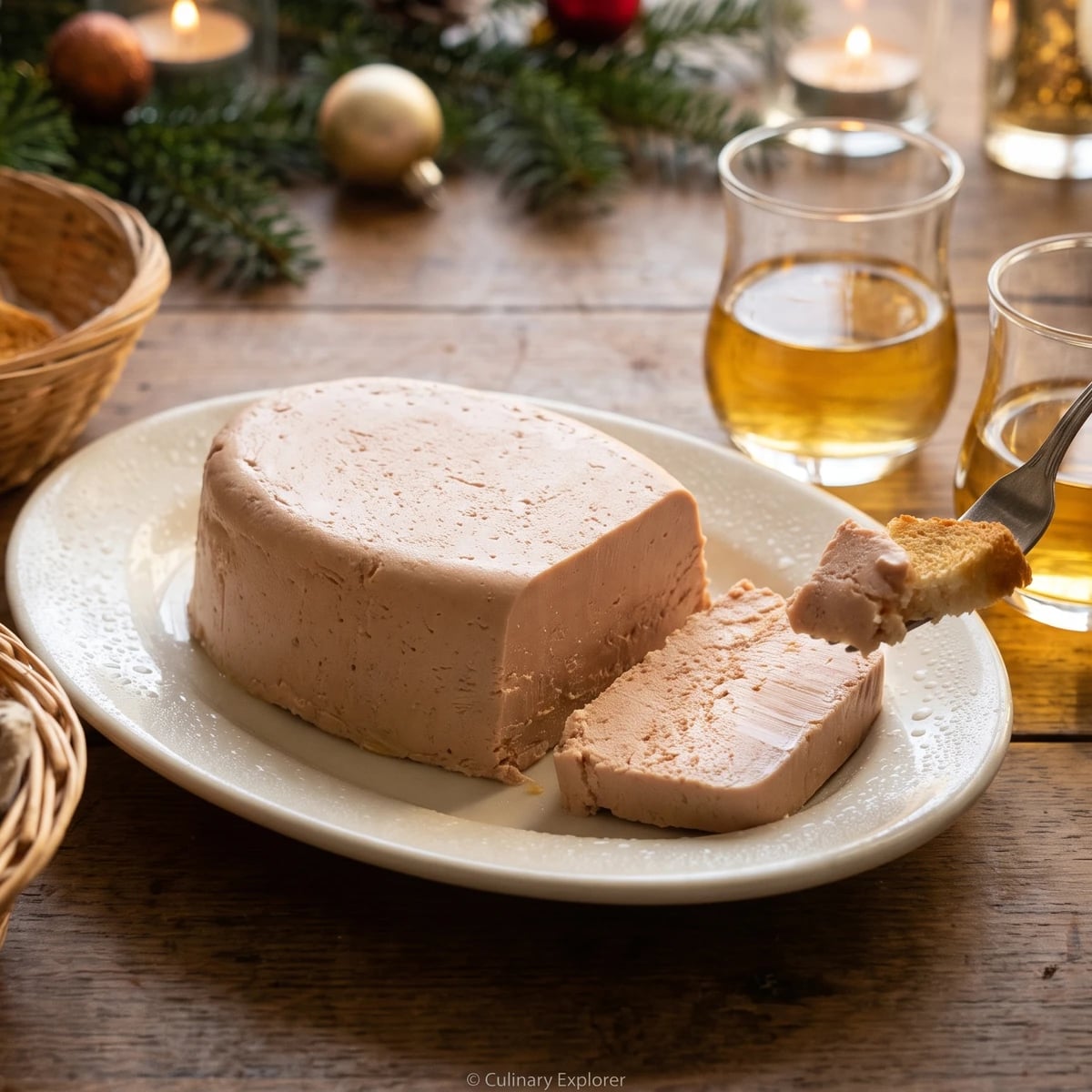
Parfait de Foie Gras proves that judgment is a technique: buy from a fine Southwest house, temper the crock with care, then serve cool, silken slices with warm toast.
Parfait de foie gras (smooth preserved duck or goose liver) teaches the rarest classical lesson: sourcing can be the technique. The one true thing to know before touching a pan is that the source tells you not to make it. Fresh foies gras suffered in transport, while the specialist preserving houses worked beside the supply and knew exactly how to handle it; the better result came sealed in its crock.
The book around this entry assumes a saucier, a stock never off the fire, a salamander, and quantities meant for a brigade. This entry calls on none of them. All that scaffolding goes, and what remains is its judgment: buy a fine ready-made parfait, then serve it properly. No formula, seasonings, or ratios are supplied, so none are invented here. One 6.3-ounce crock gives four generous appetizer portions, which changes only the scale of service. One cook, one stove, one evening, and the stove merely warms the bread.
Temperature decides the dish. Straight from the cold, the fat is mute and waxy; left out too long, the parfait slumps and smears. Give it fifteen minutes, use a warm dry blade, and serve while the center remains cool. That small act of attention is the cooking tonight.
Parfait de foie gras belongs to the preserving houses of France's foie-gras regions: Périgord and Gascony built their Southwest practice around duck and goose, while Alsace maintained its own strong goose-liver tradition. In charcuterie vocabulary, parfait names a smooth prepared product rather than an intact-lobe terrine, and preserving allowed these regional houses to send it safely to distant tables. The classical entry is strikingly candid: because fresh liver traveled poorly, it directed cooks toward a renowned maker instead of supplying another formula.
Quantity
1 sealed 6.3-ounce crock or jar (180 g)
Quantity
8 thin slices (about 4¼ ounces / 120 g)
cut about ¼ inch (6 mm) thick
| Ingredient | Quantity |
|---|---|
| Parfait de Foie Gras from a reputable Southwest producer | 1 sealed 6.3-ounce crock or jar (180 g) |
| brioche or pain de campagne (optional)cut about ¼ inch (6 mm) thick | 8 thin slices (about 4¼ ounces / 120 g) |
Buy a product clearly named Parfait de Foie Gras from a specialist Southwest house or a trusted fine-food merchant. Check that the seal is intact and that the product has been stored exactly as its maker directs. Do not replace it with fresh liver and invent a method around it; the entry's method is procurement, and a homemade preparation would be another recipe.
If the parfait is sold shelf-stable, chill it for at least twelve hours before serving. If it arrived refrigerated, keep it at 40°F (4°C) or below. Place the serving plate in the cold for twenty minutes as well; the chilled plate buys you time at the table without turning the parfait hard.
Heat the oven to 375°F (190°C). Arrange the brioche or pain de campagne on a small baking sheet and toast for five to seven minutes, turning once, until the surfaces are dry and lightly golden but the centers retain a little tenderness. Keep the toast warm. It should carry the parfait, not compete with it.
Take the parfait from the cold fifteen minutes before serving, then open it. If its crock is intended for table service, leave it there and lift four generous portions with a spoon dipped in hot water and wiped dry. If it can be unmolded, turn it onto the chilled plate and cut it with a thin knife, warming and drying the blade between slices. If the parfait cracks, wait another five minutes; if it smears or slumps, return it to the cold for ten minutes. Ça se rattrape.
Give each person about 1½ ounces (45 g) of cool parfait with two pieces of warm toast. Add no seasoning or sweet garnish to the parfait itself; the source supplies none, and the specialist house has already balanced it. Return any remainder to the cold promptly and follow the maker's instructions once opened. À table!
1 serving (about 75g)
Culinary guides, cultural storytelling, and the editorial depth that makes cooking meaningful.
Discover Culinary Explorer
Chef Juliette
A small gosling, its breast boned and filled with buttered apples, braised under a faithful baste, then ringed with ruby-filled apples and served with a glossy roast gravy.

Chef Juliette
A sausage-stuffed gosling, browned in butter and poêlé without one drop of cooking liquid, then set over goose-fat choucroute with lean bacon: Alsace’s generous lesson in dry covered roasting.

Chef Juliette
A burnished young goose filled with sage, dry-baked onion, and pressed bread, its rich pan gravy served around the bird and its lightly sweetened apples passed separately.

Chef Juliette
Oison en civet teaches the civet's final discipline: gosling braised in red wine, its sauce strained and bound with blood off the boil until wine-dark, satin-bodied, and ready for a generous table.