
Chef Juliette
Smelt (Éperlans)
Tiny éperlans, lightly floured and fried until their tails stand crisp, arrive in a generous heap on a napkin with fried parsley and grooved lemon, a weeknight lesson in heat and restraint.
A cooking platform built around craft, culture, and the stories behind what we eat.
Created by Chef Juliette
Based on No. 1664, Rognons de Coq Farcis pour Entrées Froides, Garnitures, etc., from Le Guide Culinaire (1907) by Auguste Escoffier
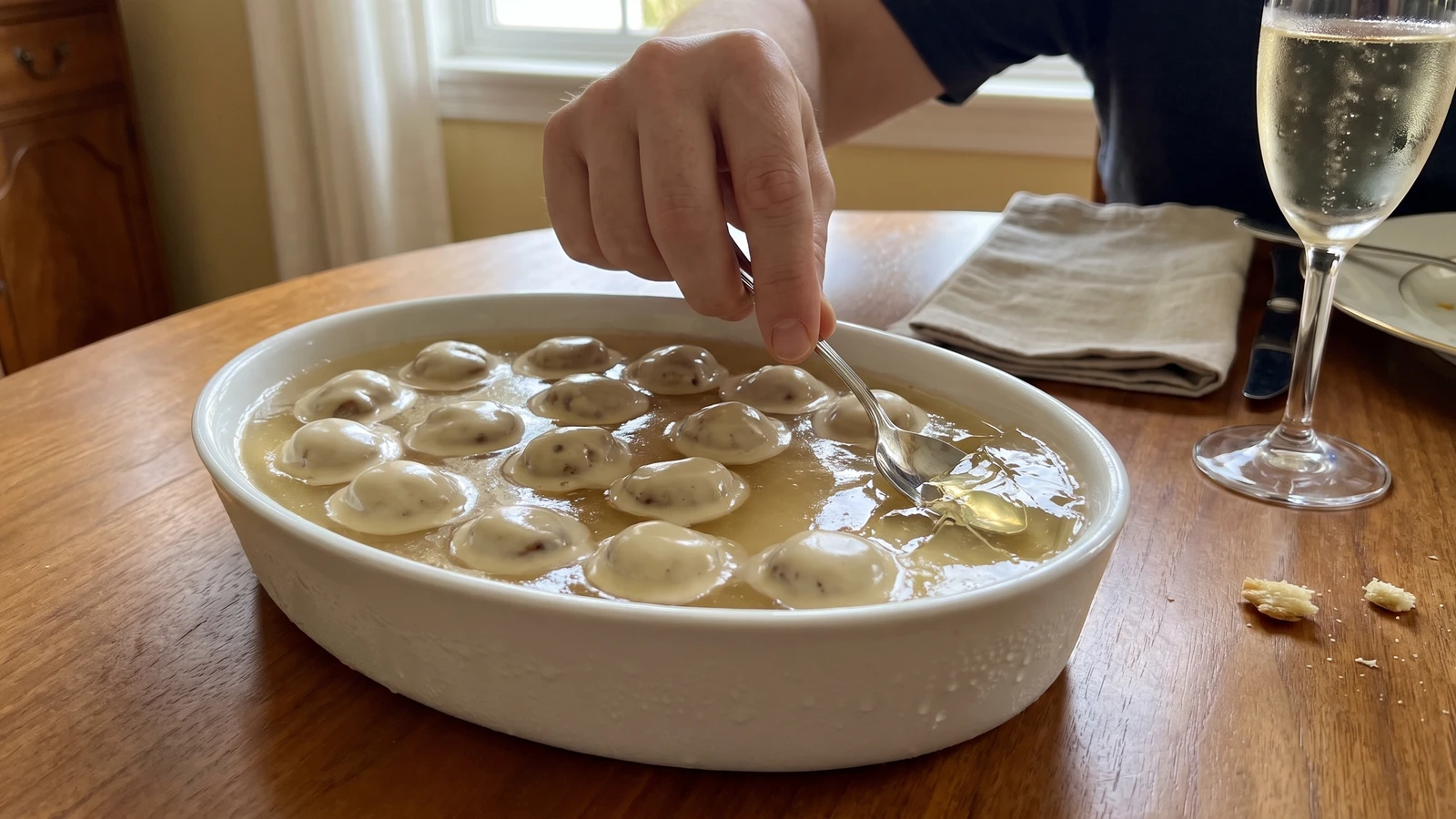
Foie gras butter fills these delicate cock’s-kidney halves before white chaud-froid and clear gelée seal them into gleaming cold bites, trimmed underneath so every one sits steady when the dish reaches the table.
Rognons de Coq Farcis pour Entrées Froides, Garnitures, etc. (stuffed rooster testicles for cold starters and garnishes) teach control of a cold coating. The one true thing is temperature: the rognons must be cold, the foie gras butter must be pipeable, the chaud-froid, a warm-applied sauce that sets cold, must be barely fluid, and the light gelée, a softly set savory jelly, must be cool enough not to wash the mask away.
The original assumed a garde-manger beside a saucier, cooked rognons ready, a stockpot never off the fire, and ranks of petits-fours moulds. The salamander, so useful elsewhere in that kitchen, has no work here; this is cold discipline. At home, one small saucepan, clear chicken stock strengthened with measured gelatin, a piping bag, and a shallow serving dish do the work. The individual molds and brigade quantities are scaffolding and go. The equal-weight foie gras butter, the flat trimming underneath, the full chaud-froid mask, and the cover of clear jelly are the dish and stay. One cook, one stove, one evening.
The finished pieces sit like small ivory ovals under pale gold glass. The foie gras is rich, the rognon is delicate, and the gelée supplies the clean, trembling finish the cold table requires. The decisive step is to let each layer become properly cold and firm before the next one touches it.
Rognons de coq belong to the Parisian banquet and grand-hotel cold table, where the garde-manger turned small poultry offal into molded entrées and garnishes for chilled birds. Despite the polite name, these are rooster testicles rather than kidneys, an anatomical euphemism preserved in French cookery. Their passage from split, stuffed morsel to chaud-froid mask and clear aspic shows how a thrifty piece of offal entered formal service, either gathered in a low timbale or set individually in petits-fours moulds.
Quantity
8, about 8 ounces (225 g) total
Quantity
4 cups (960 ml / 960 g)
Quantity
2 teaspoons (10 ml / 12 g)
divided
Quantity
2½ cups (600 ml / 600 g)
cold and divided
Quantity
1 tablespoon (15 ml / 9 g)
divided
Quantity
1½ tablespoons (22.5 ml / 21 g)
Quantity
2 tablespoons (30 ml / 16 g)
Quantity
¼ cup (60 ml / 60 g)
Quantity
⅓ cup (80 ml / 75 g)
passed through a fine sieve
Quantity
⅓ cup (80 ml / 75 g)
softened
Quantity
½ teaspoon (2.5 ml / 1 g)
divided
| Ingredient | Quantity |
|---|---|
| large cleaned raw cock's kidneys (rooster testicles) | 8, about 8 ounces (225 g) total |
| cold water | 4 cups (960 ml / 960 g) |
| fine sea saltdivided | 2 teaspoons (10 ml / 12 g) |
| clear, well-skimmed unsalted chicken stockcold and divided | 2½ cups (600 ml / 600 g) |
| unflavored powdered gelatindivided | 1 tablespoon (15 ml / 9 g) |
| unsalted butter for the chaud-froid | 1½ tablespoons (22.5 ml / 21 g) |
| all-purpose flour | 2 tablespoons (30 ml / 16 g) |
| heavy cream | ¼ cup (60 ml / 60 g) |
| plain cooked foie graspassed through a fine sieve | ⅓ cup (80 ml / 75 g) |
| fresh unsalted buttersoftened | ⅓ cup (80 ml / 75 g) |
| finely ground white pepperdivided | ½ teaspoon (2.5 ml / 1 g) |
Bring the water and 1 teaspoon of the salt to a bare simmer in a small saucepan. Lower in the cleaned rognons and hold the water between 180 and 185°F (82 and 85°C), with only an occasional bubble, until they feel firm and their centers reach 165°F (74°C), about 8 to 12 minutes depending on size. A hard boil toughens their delicate flesh. Lift them onto a clean tray, pat dry, and refrigerate until cold, about 30 minutes.
Measure 1½ cups (360 ml / 360 g) of the chicken stock. Sprinkle 2 teaspoons of the gelatin over ¼ cup (60 ml / 60 g) of that cold stock and leave it for 5 minutes. Warm the remaining stock until hot but not boiling, then stir in the softened gelatin and ¼ teaspoon of the salt until completely dissolved. Strain into a measuring jug and cool until it has the consistency of raw egg white but remains pourable. If it sets solid before you need it, stand the jug briefly in lukewarm water and stir. Do not boil it; boiling weakens its clean set.
From the remaining 1 cup (240 ml / 240 g) stock, reserve 1 tablespoon (15 ml / 15 g) and sprinkle the final teaspoon of gelatin over it. Melt the chaud-froid butter over gentle heat, stir in the flour, and cook this pale roux for 2 minutes without letting it color. Whisk in the rest of the stock gradually, scraping into every corner, then simmer gently for 6 to 8 minutes until the sauce coats the back of a spoon. Add the cream and simmer for 2 minutes more. Remove from the heat, dissolve the softened gelatin in the sauce, and season with ¼ teaspoon salt and ¼ teaspoon white pepper. Strain and cool, stirring occasionally, to 82 to 86°F (28 to 30°C), when it should flow like light cream. If it sets too firmly, warm the bowl over barely warm water; if it runs thin, chill and stir it for several minutes. Ça se rattrape.
Beat the sieved foie gras and softened fresh butter together until completely smooth. Their weights are equal, exactly as the source requires. Add the remaining ¼ teaspoon white pepper and the final ½ teaspoon salt in two additions, tasting a cold dab before adding the last of the salt because prepared foie gras varies. Cold food needs assertive seasoning, but it must still taste of foie gras first. Transfer the mixture to a piping bag fitted with a ½-inch plain tip. If it becomes greasy or slack, chill it for 5 to 10 minutes and beat again; if it is too firm to pipe, warm the filled bag between your hands.
Cut each cold rognon in half lengthwise. Lay each half cut-side up and shave the thinnest possible sliver from its rounded underside so it sits without rocking; trim sparingly, because this small correction is what keeps the finished pieces steady under the gelée. Pipe a smooth, rounded ridge of foie gras butter along each cut face, using about 2 teaspoons per half. Arrange the 16 filled pieces on a tray and refrigerate for 20 minutes, until the filling is firm.
Set the cold filled rognons on a wire rack over a tray. Stir the barely fluid chaud-froid, then spoon it from end to end over each piece, masking the filling and sides completely while leaving the trimmed underside free to stand. Let the excess drip away and refrigerate for 20 to 30 minutes, until the white coating feels firm and satin-smooth. If the mask slides off, either the rognons or the sauce was too warm. Scrape the loose coating back into the bowl, chill both for 10 minutes, gently rewarm the sauce only until it flows, and coat again.
Pour a thin layer of cool, fluid gelée into a shallow timbale or oval serving dish and refrigerate for 10 to 15 minutes, until tacky but not fully firm. Arrange the masked rognons filling-side up, close together without touching. Spoon just enough gelée around their bases to anchor them, chill for another 10 minutes, then pour the remaining gelée slowly down the side of the dish until the pieces are covered by about ¼ inch (6 mm). The gelée must be cool and fluid. If a piece floats, stop pouring, lift it out, chill the anchor layer until firmer, and reset it. If warm gelée clouds the white coating, spoon it away, rechill the rognons, and cool the remaining gelée further before continuing.
Cover the dish without touching the surface and refrigerate for at least 4 hours, preferably overnight, until the gelée trembles but holds a clean spoon mark. Serve directly from the low timbale while thoroughly cold, allowing four pieces per guest. Keep the dish chilled until it reaches the table and return leftovers to the refrigerator within 2 hours. À table!
1 serving (about 260g)
Culinary guides, cultural storytelling, and the editorial depth that makes cooking meaningful.
Discover Culinary ExplorerChef Juliette
Tiny éperlans, lightly floured and fried until their tails stand crisp, arrive in a generous heap on a napkin with fried parsley and grooved lemon, a weeknight lesson in heat and restraint.

Chef Juliette
Brandade de Morue turns salt cod, warm olive oil, and milk into a pale, silky emulsion: keep everything warm and add the oil slowly, then crown the generous dome with butter-fried bread.

Chef Juliette
Salt cod worked warm with cream, one patient spoonful at a time, until the rough flakes become a glossy Nîmes paste, domed generously and ringed with butter-fried croutons for the table.

Chef Juliette
Wine-poached char packed in its earthenware crock beneath butter gold: a make-ahead first course that turns careful cooling, thorough boning, and one unbroken seal into quiet abundance.