
Chef Juliette
John Dory (St. Pierre)
John Dory has the delicacy of sole and the firmness of turbot. A light flouring, a quick butter sauté, and nut-brown beurre noisette show exactly why looks never mattered.
A cooking platform built around craft, culture, and the stories behind what we eat.
Created by Chef Juliette
Based on No. 1643, Poulet de Grains aux Morilles, from Le Guide Culinaire (1907) by Auguste Escoffier
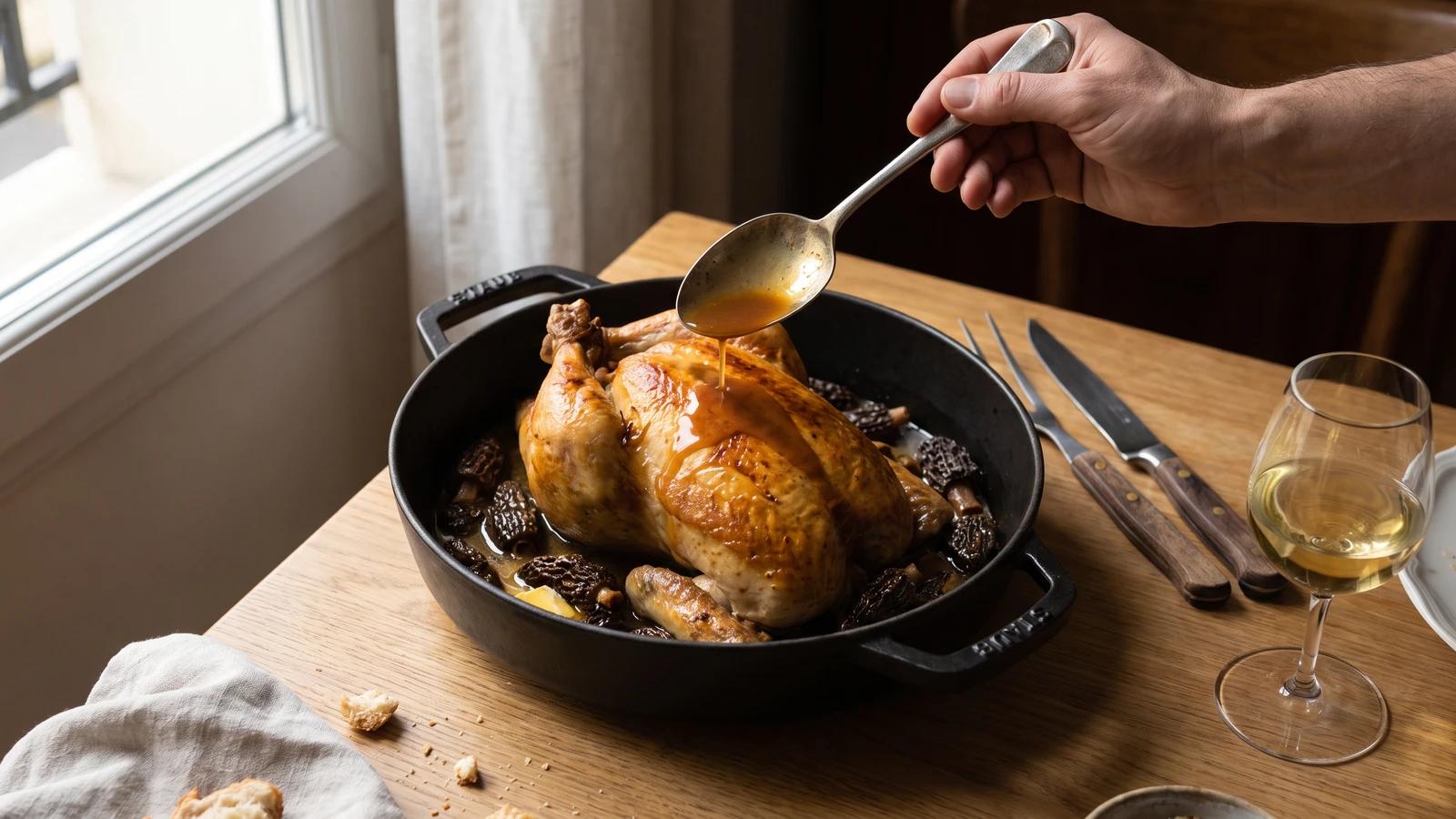
Poulet de Grains aux Morilles is covered butter-roasting at its clearest: a burnished chicken, spring morels, and one spoonful of veal gravy, with the mushroom's perfume held inside the pot.
Poulet de Grains aux Morilles (grain-fed chicken with morels) teaches poêler, to roast gently in butter under cover. The one true thing to know before touching the pan is this: do not moisten the chicken while it cooks. Stock in the pot would turn the method toward braising, while cream would make a different morel dish. Here the chicken's own juices, real butter, and the liquor released by the mushrooms form the sauce.
The original formula assumed a seasoned earthenware casserole, a saucier with veal stock never off the fire, and enough hands to baste, skim, and hold the bird. It did not rely on a salamander; its color came from butter and controlled heat. A heavy lidded cocotte, stovetop browning suited to a home oven, and one measured tablespoon of good veal gravy preserve that intent for one cook, one stove, one evening.
Poëlings (No. 250) supplies the en casserole grammar. The vegetable casing, pork-fat wrapping, and buttered paper of the fuller method are scaffolding for large pieces, and this en casserole branch deliberately leaves them behind. What must stay is the dish itself: chicken cooked in butter without added liquid, morels tossed in butter for only a moment, and the cooking completed under cover. The decisive step is the lid. Open it only long enough to baste and add the mushrooms, then close it at once; that perfume belongs in the sauce.
Poulet aux morilles belongs especially to the Jura table in Franche-Comté, where spring morels commonly meet fine poultry, vin jaune, and cream. This Poulet de Grains aux Morilles traveled through the classical grand-kitchen repertoire by another path: the en casserole branch of poëling, with butter, covered cooking, and a final spoonful of veal gravy rather than a cream sauce. The familiar creamy preparation is a regional cousin, not a correction to this distinct classical formula.
Quantity
1 whole, about 3½ lb (1.6 kg), for Poëlings (No. 250)
neck and giblets removed and dried well
Quantity
2 teaspoons (10 ml / 12 g)
Quantity
1 teaspoon (5 ml / 2 g)
Quantity
6 tablespoons (90 ml / 85 g)
divided
Quantity
8 ounces (225 g)
trimmed, cleaned, and dried thoroughly
Quantity
1 tablespoon (15 ml / 15 g)
| Ingredient | Quantity |
|---|---|
| whole grain-fed chickenneck and giblets removed and dried well | 1 whole, about 3½ lb (1.6 kg), for Poëlings (No. 250) |
| fine sea salt | 2 teaspoons (10 ml / 12 g) |
| freshly ground black pepper | 1 teaspoon (5 ml / 2 g) |
| unsalted butterdivided | 6 tablespoons (90 ml / 85 g) |
| fresh morelstrimmed, cleaned, and dried thoroughly | 8 ounces (225 g) |
| concentrated veal gravy | 1 tablespoon (15 ml / 15 g) |
Trim the dirty ends from the morel stems. Leave small mushrooms whole and halve large ones lengthwise so you can inspect their hollow centers. Swish them briefly in a large bowl of cold water, lift them out rather than pouring the gritty water over them, and repeat with fresh water until no sand remains. Spread them on towels and dry them thoroughly. Morels hold grit with remarkable determination, but they also hold washing water; wet mushrooms dilute the butter and surrender their perfume before they reach the chicken.
Heat the oven to 325°F (160°C). Season the chicken inside and out with the salt and pepper. Melt 3 tablespoons (45 ml / 43 g) of the butter in a snug, heavy cocotte over medium heat. When the foam subsides, lay in the chicken and brown it patiently on the breast, back, and both sides, turning with tongs until the skin is evenly golden. Keep the heat moderate because butter may brown but must not burn. If the milk solids turn black or smell acrid, lift out the bird and wipe the pot clean, then continue with unburnt butter from the measured amount. Ça se rattrape. Burnt butter does not.
Set the chicken breast-side up and spoon the hot butter over it. Add 1 tablespoon (15 ml / 14 g) more butter if the bottom of the cocotte looks bare, then cover tightly. This is the en casserole branch of Poëlings (No. 250): butter and the bird's own juices, with no stock, wine, or water during cooking. Transfer the cocotte to the oven for 30 minutes. Baste once, working quickly, and replace the lid at once. If the pot looks dry, add a small piece of the measured butter, never a splash of liquid; moistening would change the method and flatten the roasting flavor.
Melt the remaining 2 tablespoons (30 ml / 28 g) butter in a skillet over medium heat. Add the dry morels and toss them for 2 minutes, just until they glisten and begin to relax. They should not fry crisp or take heavy color. Open the cocotte, arrange the morels and their butter around the chicken, baste the bird once, and cover immediately. Return it to the oven for 30 to 40 minutes, until the thickest part of the breast reaches 165°F (74°C) and the inner thigh reaches about 175°F (80°C), without the thermometer touching bone.
Lift the chicken onto a warm platter or carving board, cover it loosely, and let it rest for 15 minutes. Leave the morels and cooking juices in the covered cocotte. The rest lets the juices settle inside the meat while the mushrooms remain protected in their butter-scented environment. Pour any juices that collect beneath the chicken back into the cocotte before finishing the gravy.
Set the cocotte over medium-low heat and add the 1 tablespoon (15 ml / 15 g) concentrated veal gravy. Stir gently through the morels and scrape up the golden fond, then simmer for 2 to 3 minutes so the gravy absorbs the aromas carried by the butter. Only now spoon off any excessive clear fat, leaving enough for a proud butter sheen. If the sauce becomes sticky or too salty, loosen it with the reserved resting juices, one spoonful at a time. If it remains watery, lift out the morels and reduce the liquid briefly before returning them. Ça se rattrape. Set the chicken back in the cocotte, surround it generously with the morels, and hold it warm without boiling until it reaches the table. À table!
1 serving (about 250g)
Culinary guides, cultural storytelling, and the editorial depth that makes cooking meaningful.
Discover Culinary ExplorerChef Juliette
John Dory has the delicacy of sole and the firmness of turbot. A light flouring, a quick butter sauté, and nut-brown beurre noisette show exactly why looks never mattered.

Chef Juliette
Fresh haddock proves its delicacy in the meunière pan: a fine flour crust, moist pearly flakes, and beurre noisette sharpened with lemon and parsley, ready from one skillet in half an hour.

Chef Juliette
Éperlans à l’Anglaise turns small fish into a lesson in disciplined coating: boned smelts under a close, crisp crumb, pan-fried in clarified butter and finished with bright, half-melted maître d’hôtel butter.

Chef Juliette
Tiny smelts, shallot, mushrooms, white wine, gratin sauce, and fine bread raspings meet a fierce oven, where the fish must turn tender in the same breath the buttered crust bronzes.