Chef Juliette
Ordinary or White Consommé
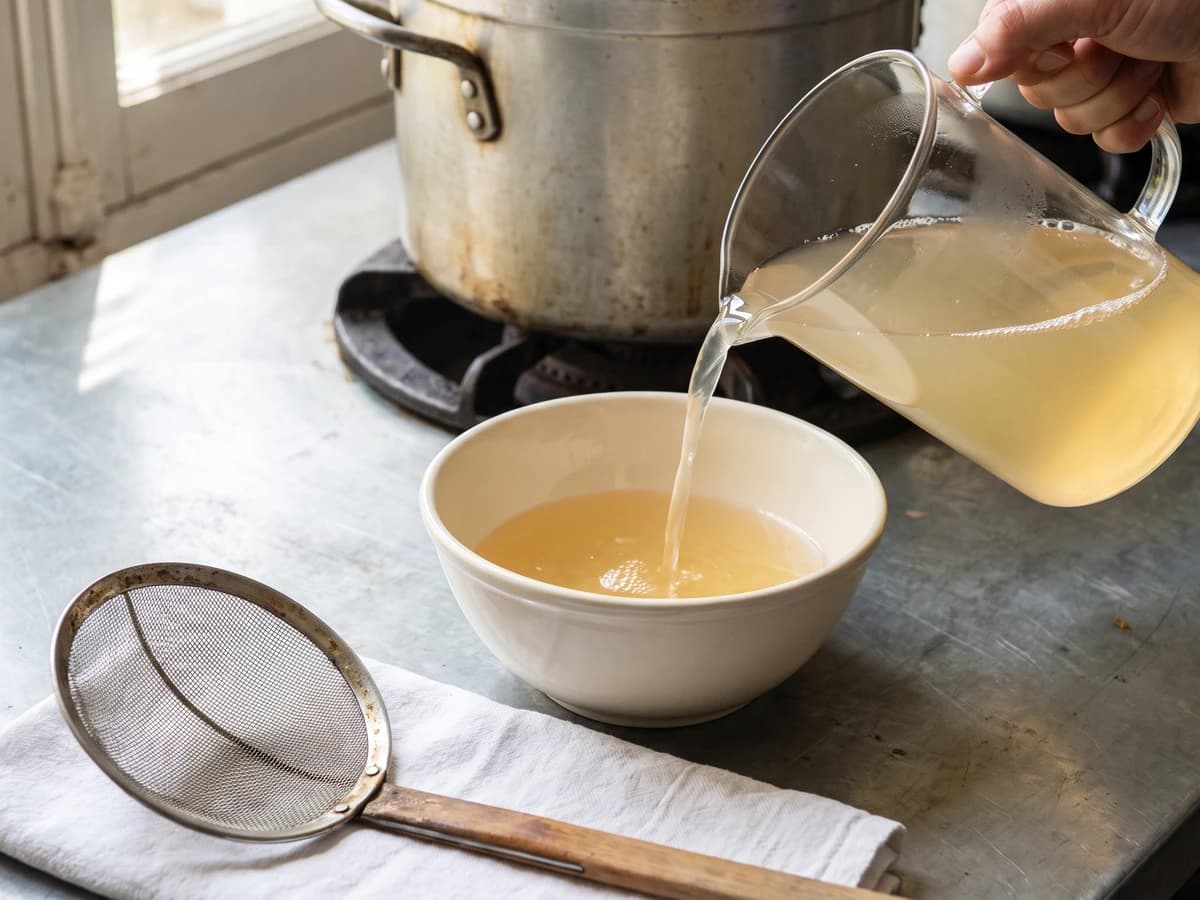
Beef shin, lean beef, and fowl begin in cold water and rise slowly toward a tremble. Skim before the boil, and you learn the quiet discipline that gives every clear French broth its backbone.
A cooking platform built around craft, culture, and the stories behind what we eat.
Created by Chef Juliette
Based on No. 163, Court-bouillon with Vinegar, from Le Guide Culinaire (1907) by Auguste Escoffier
The clear, sharp poaching liquor that teaches restraint: vegetables simmered gently with vinegar, then peppercorns held to the final twelve minutes so trout, salmon, and shellfish taste clean, never bitter.
Court-bouillon au vinaigre (vinegar poaching broth) teaches controlled extraction. The vegetables need the full hour, while the peppercorns need twelve minutes and not one lazy minute more. Add them at the beginning and their brightness turns bitter before the broth is ready.
The original formula assumed a five-quart service batch, a tammy for fine straining, and a cook available to mind another pot. A home kitchen needs about two quarts, a fine-mesh sieve lined with damp cloth, and one reliable timer. The large batch and tammy are brigade scaffolding, so every quantity has been scaled to two-fifths and the old cloth sieve replaced with its honest home equivalent. The hour of quiet simmering and the peppercorns' final twelve minutes are the dish itself, and they stay.
The finished court-bouillon should be clear and lightly golden, with vinegar sharpening the vegetables rather than overwhelming them. It is a cooking liquor, not a soup and not a reduction. Set the timer the moment the peppercorns enter; those final twelve minutes decide the pot.
Court-bouillon au vinaigre belongs to France's working fish table, from the shellfish kitchens of Brittany and Normandy to inland tables where trout were poached whole. Home cooks built it from water, garden aromatics, salt, and vinegar, while grand kitchens standardized the same liquor into measured, finely strained batches. Despite bouillon in the name, it is not a meat stock: court means short, and the preparation exists to cook delicate fish cleanly without covering its flavor.
Quantity
8 cups (1.9 L / 1.9 kg)
Quantity
6 tablespoons plus 1 teaspoon (95 ml / 95 g)
Quantity
1 tablespoon plus 1 teaspoon (20 ml / 23 g)
Quantity
1 cup plus 2 tablespoons (265 ml / 136 g)
finely minced
Quantity
1¼ cups (300 ml / 180 g)
finely minced
Quantity
1 loosely packed cup (240 ml / 23 g)
Quantity
4 sprigs
Quantity
1
Quantity
2½ teaspoons (12 ml / 5.7 g)
| Ingredient | Quantity |
|---|---|
| cold water | 8 cups (1.9 L / 1.9 kg) |
| unseasoned white wine vinegar, 5% acidity | 6 tablespoons plus 1 teaspoon (95 ml / 95 g) |
| fine gray sea salt | 1 tablespoon plus 1 teaspoon (20 ml / 23 g) |
| carrotsfinely minced | 1 cup plus 2 tablespoons (265 ml / 136 g) |
| yellow onionsfinely minced | 1¼ cups (300 ml / 180 g) |
| flat-leaf parsley stalks | 1 loosely packed cup (240 ml / 23 g) |
| fresh thyme | 4 sprigs |
| bay leaf | 1 |
| whole black peppercorns | 2½ teaspoons (12 ml / 5.7 g) |
Mince the carrots and onions evenly so they surrender their flavor within the hour. Gather the parsley stalks, thyme, and bay leaf into a small bouquet garni, meaning an herb bundle, and tie it with kitchen string. Keep the peppercorns completely separate; their turn comes at the end.
Combine the cold water, vinegar, gray salt, carrots, onions, and bouquet garni in a 4-quart nonreactive saucepan. Stir over medium-high heat until the salt dissolves, bring the liquid just to a full boil, then lower the heat immediately to a quiet simmer. Stainless steel or enamel is right here; vinegar has no business sitting against bare aluminum or unlined copper.
Hold the court-bouillon at a gentle, steady simmer for 48 minutes, with only a few bubbles breaking the surface. Skim away any coarse vegetable froth, but do not boil the liquor down as though it were a stock; this is a poaching bath, not a concentrate. If a hard boil has lowered the level sharply, add a little boiling water to return it close to its starting mark.
Add the peppercorns whole and start a timer for exactly 12 minutes. Keep the same quiet simmer and do not crush them, because broken pepper extracts faster and more harshly. When the timer rings, remove the pot from the heat at once. If they run a little long, strain immediately; mild bitterness can be diluted with hot water in ½-cup additions, then corrected with vinegar by the teaspoon and salt by the pinch. Ça se rattrape. A harsh medicinal bitterness means the pepper has gone too far, and the honest correction is a fresh small batch.
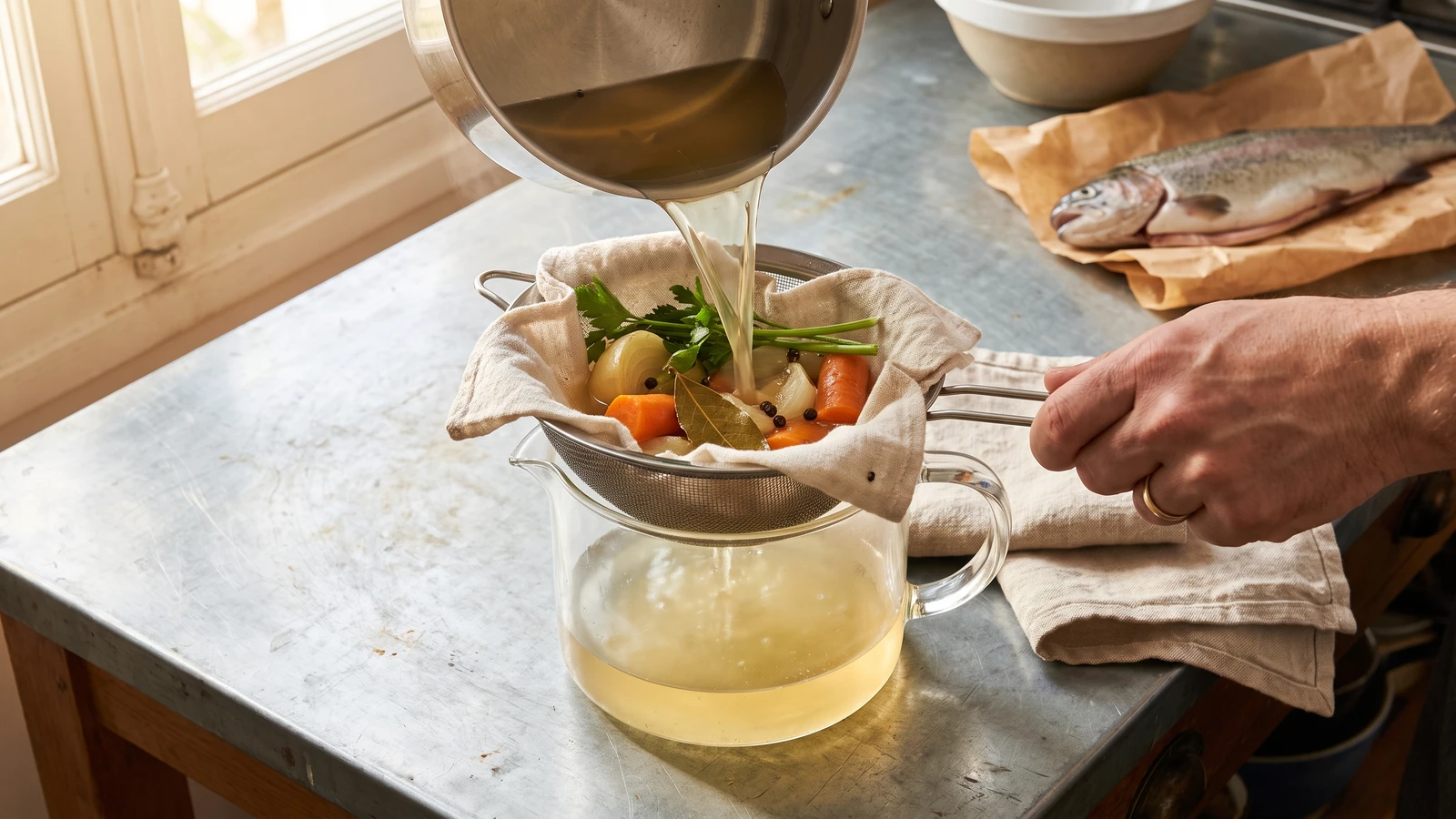
Set a fine-mesh sieve over a clean heatproof container and line it with damp cheesecloth or a lint-free kitchen cloth. Pour the court-bouillon through, then press the vegetables once, gently, with the back of a ladle to recover the liquor. Stop before pulp passes through. This replaces the old tammy without changing its purpose. If the broth becomes cloudy, let it settle for 10 minutes and filter it once more through clean damp cloth.
Taste the court-bouillon while warm. It should be clean and vegetal, decisively saline, and sharpened by vinegar without making the mouth pucker; remember that fish and shellfish will soften its apparent seasoning. Use it now, or cool it promptly by setting the container in an ice bath and stirring occasionally. Cover only when cold, then refrigerate. You should have close to 2 quarts, ready for one cook, one stove, one evening.
1 serving (about 240g)
Culinary guides, cultural storytelling, and the editorial depth that makes cooking meaningful.
Discover Culinary ExplorerChef Juliette
Beef shin, lean beef, and fowl begin in cold water and rise slowly toward a tremble. Skim before the boil, and you learn the quiet discipline that gives every clear French broth its backbone.
Chef Juliette
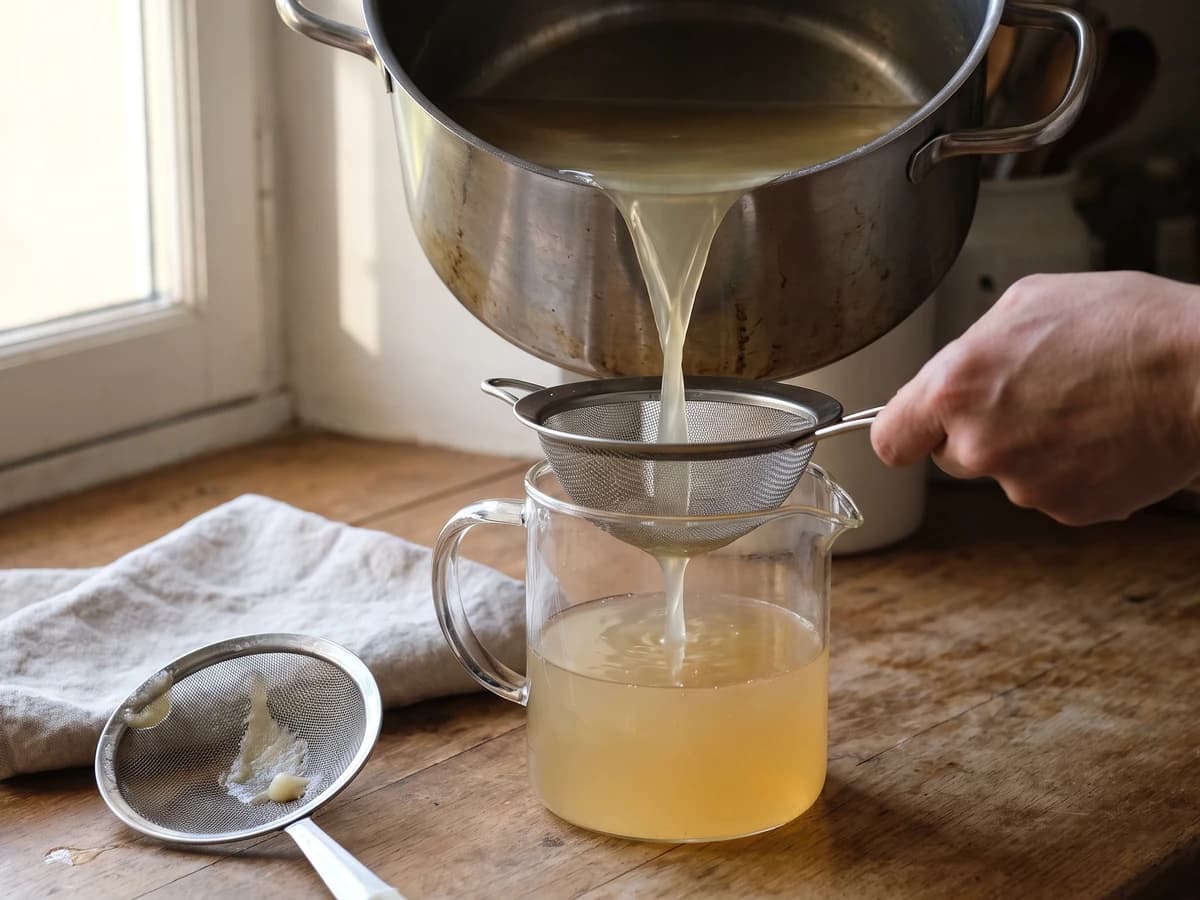
Break the veal bones small, then give them eight hours at a bare tremble. This pale, gelatinous fond becomes the quiet foundation beneath velouté, blanquette, and every sauce that must stay light.
Chef Juliette
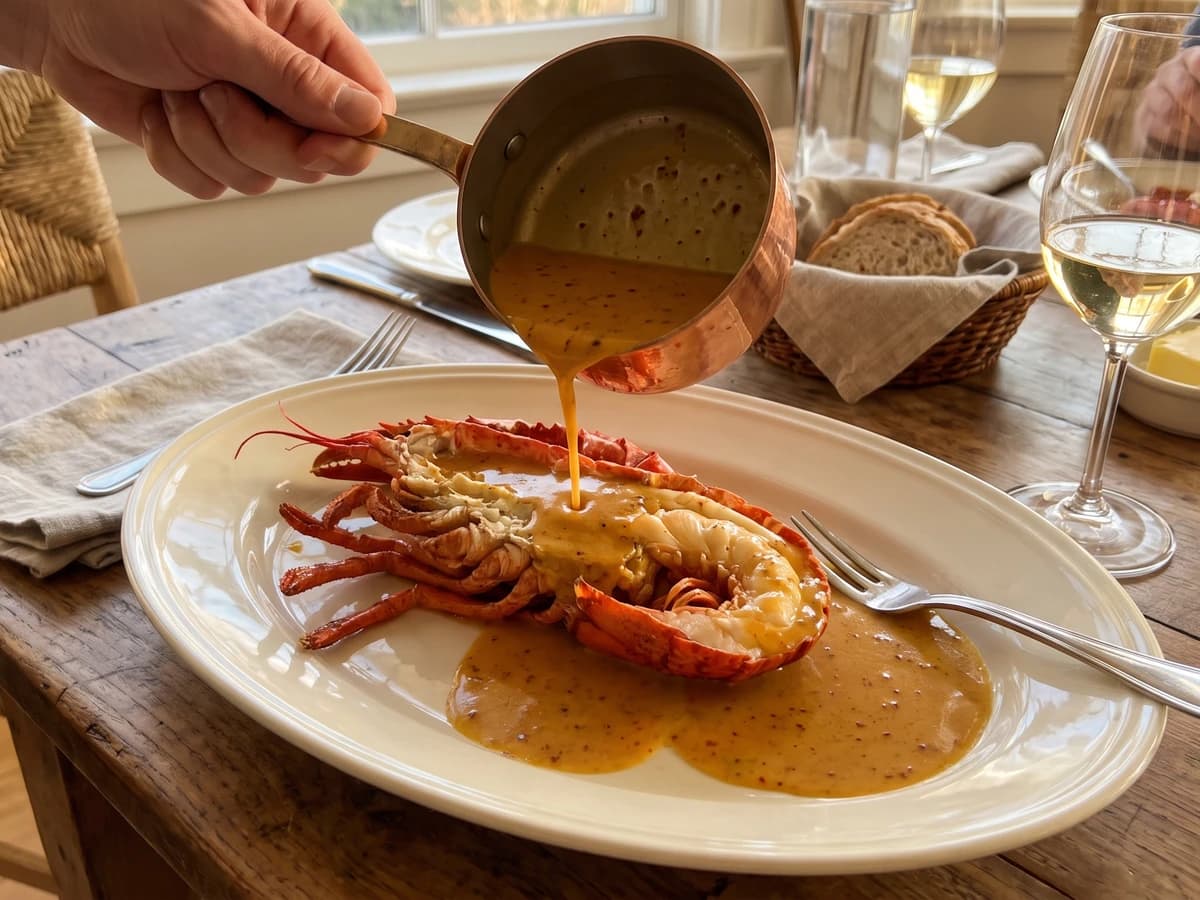
Sauce Orientale concentrates lobster-rich American Sauce with curry, then folds in cream away from the fire: a glossy, gently spiced derivative made for lobster, crayfish, and firm fish.
Chef Juliette
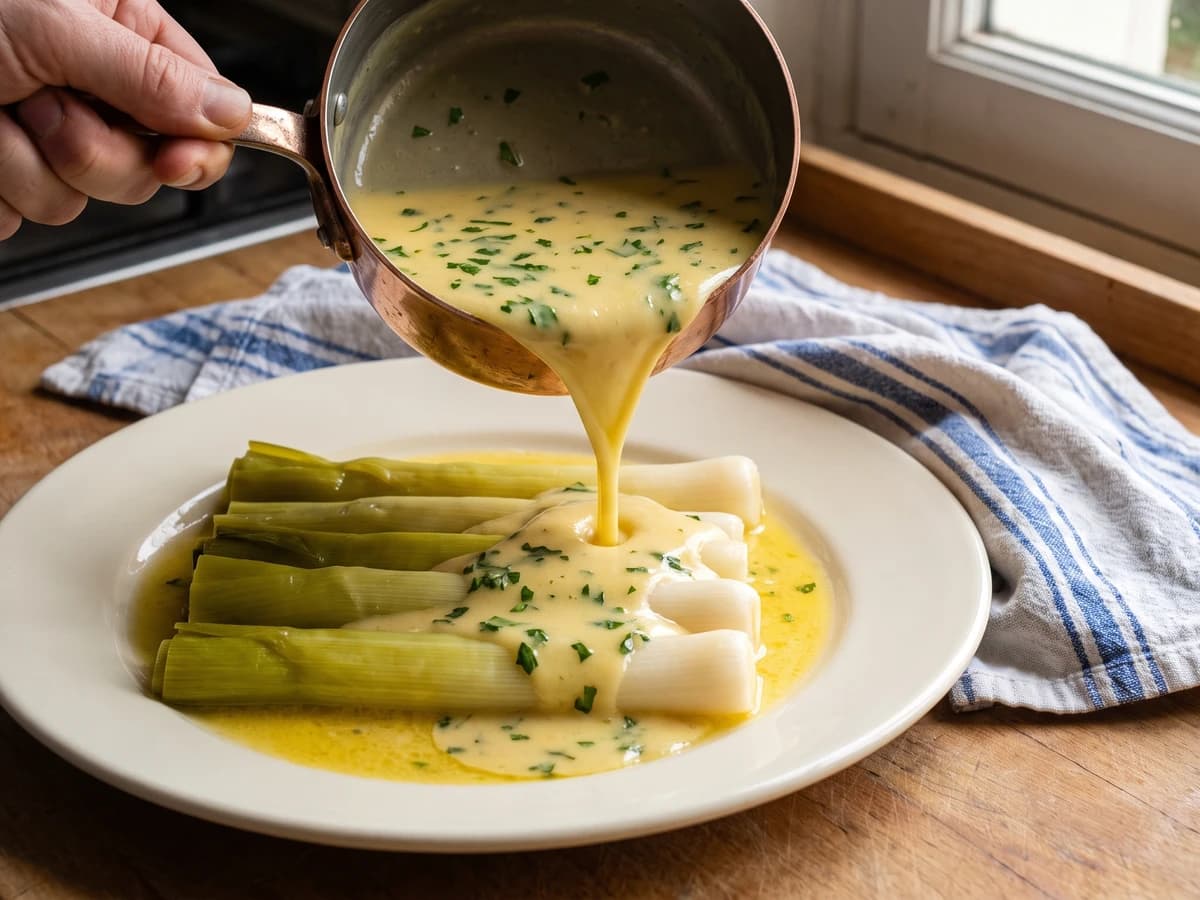
An old lesson in sauce families: Sauce Allemande takes mushroom liquor, then butter, lemon, and parsley, becoming a glossy Poulette for sheep's trotters, leeks, cauliflower, and anything needing gentle richness with a bright edge.