Chef Juliette
Ordinary or White Consommé
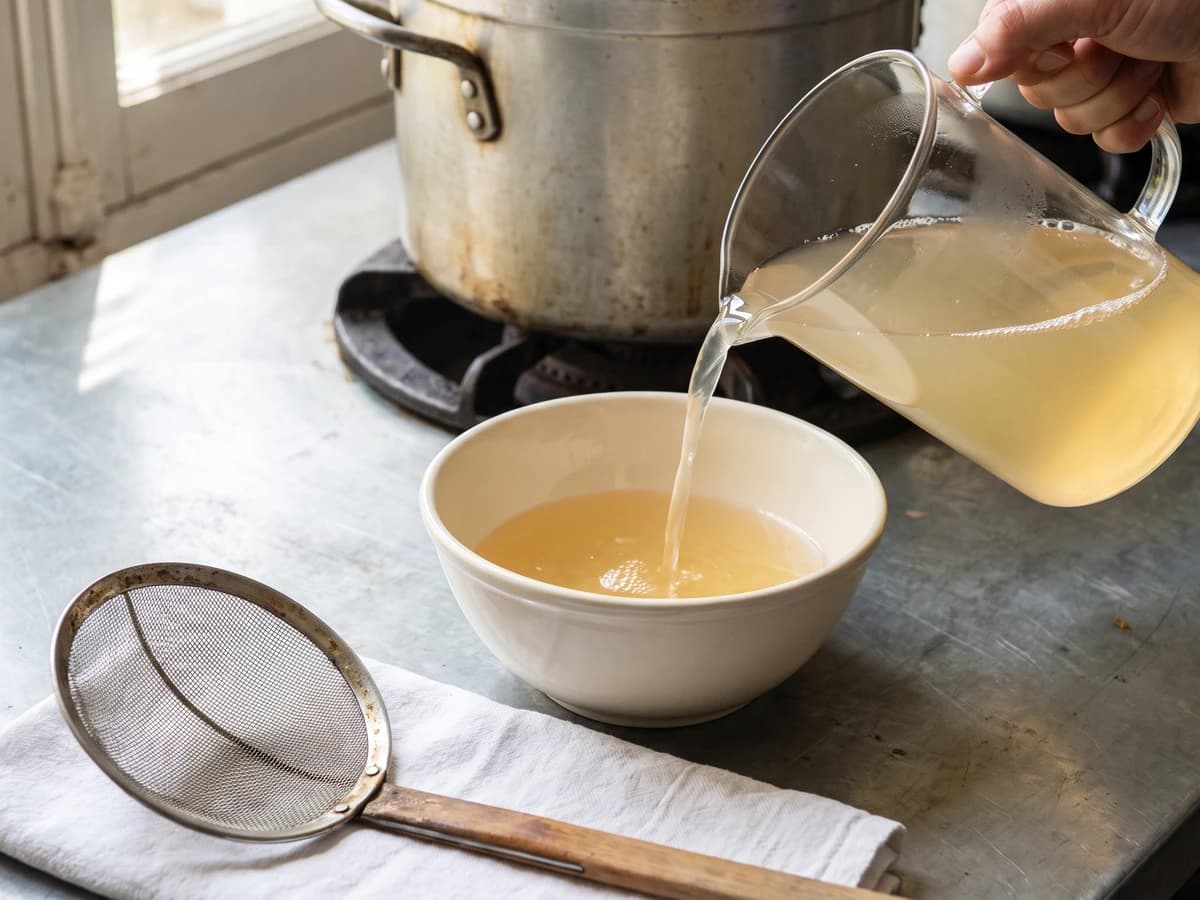
Beef shin, lean beef, and fowl begin in cold water and rise slowly toward a tremble. Skim before the boil, and you learn the quiet discipline that gives every clear French broth its backbone.
A cooking platform built around craft, culture, and the stories behind what we eat.
Created by Chef Juliette
Based on No. 162, Fish Aspic with Red Wine, from Le Guide Culinaire (1907) by Auguste Escoffier
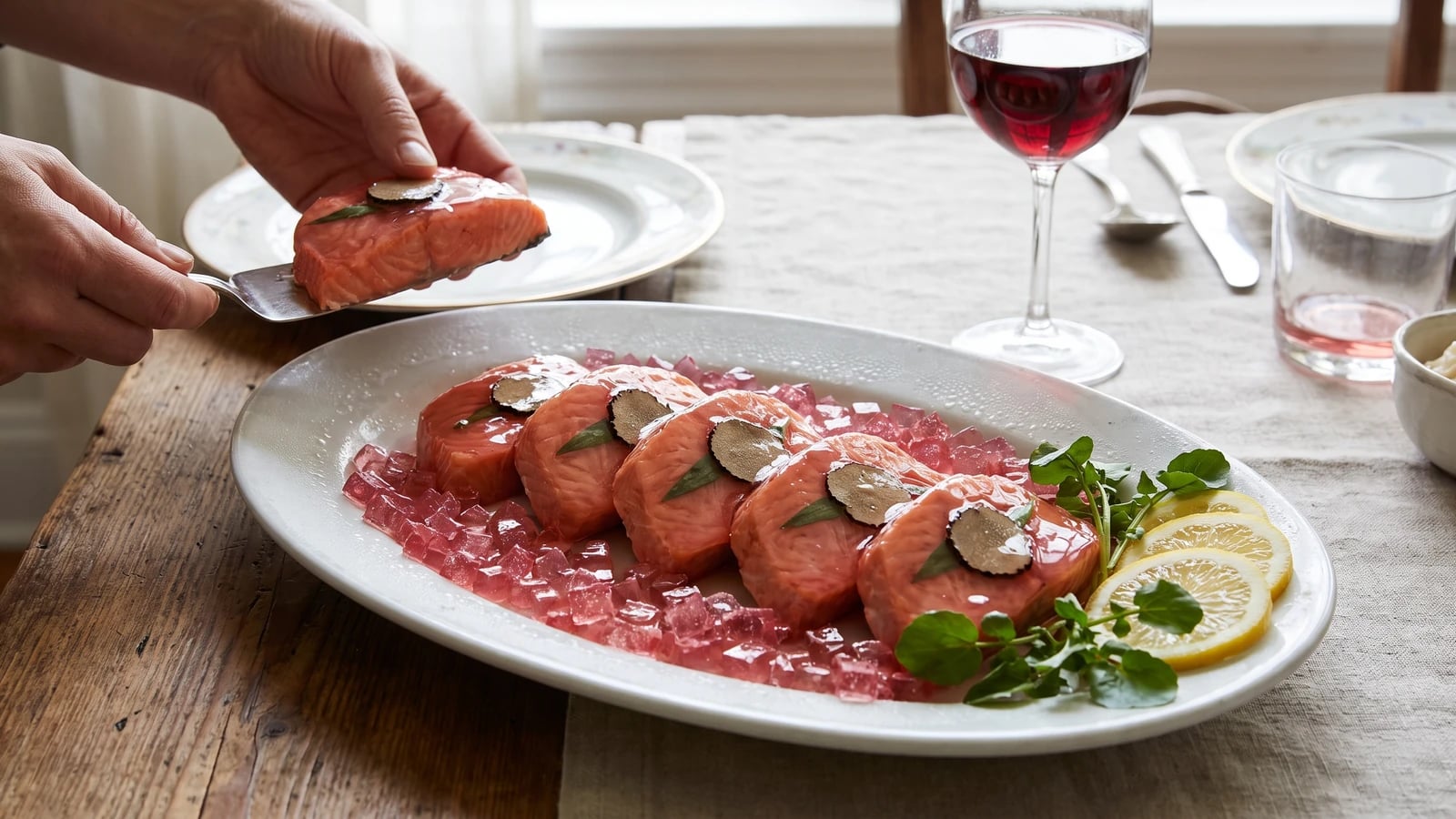
The spent red-wine court-bouillon becomes a tender, lucid aspic for salmon or trout, clarified with egg white and coloured no deeper than somber pink. The cold test, not bravado, decides the gelatin.
Aspic au vin rouge (fish aspic with red wine) teaches one truth before all others: gelatin is judged cold. The warm liquid tells you almost nothing, while one spoonful chilled over ice reveals whether the aspic will tremble delicately, slice cleanly, and melt readily on the tongue. It must never bounce like rubber.
The grand kitchen assumed a saucier on staff, a stockpot never off the fire, fish poached for another service, and a serviette stretched over an overturned stool. Your honest equivalents are chilled Court-bouillon with Red Wine (No. 165) that has already poached salmon or trout, one saucepan, and a damp muslin-lined sieve. The stool and brigade volume are scaffolding, so they go; thorough degreasing, test-setting, and egg-white clarification are the dish, so they stay. This version makes about two quarts, enough for one generous fish platter. One cook, one stove, one evening.
Clarification may pull the wine from garnet toward old rose as its tannins surrender their colour. That is expected. A drop or two of vegetable red may restore a somber pink, but anything wine-dark has gone too far. Before you clarify the whole pot, make the cold saucer test: that small chilled spoonful tells the truth.
Aspic au vin rouge belongs to the Parisian grand-kitchen garde-manger and the formal cold fish table rather than to a single provincial household larder. It turned thrift into display by returning the red-wine court-bouillon that had poached salmon, trout, carp, or pike as a clarified glaze around the same fish. Its colour is often misunderstood: clarification precipitates pigments carried by the wine's tannins, so the proper aspic is a restrained somber pink, never a dark red jelly.
Quantity
10 cups (2.4 L / 2.4 kg) Court-bouillon with Red Wine (No. 165)
previously used to poach salmon or trout and completely chilled
Quantity
2 to 4 packets (23 to 45 ml / 14 to 28 g)
divided
Quantity
2 (about 1/4 cup / 60 g)
half-whisked
Quantity
1 to 3 drops
| Ingredient | Quantity |
|---|---|
| Court-bouillon with Red Wine (No. 165)previously used to poach salmon or trout and completely chilled | 10 cups (2.4 L / 2.4 kg) Court-bouillon with Red Wine (No. 165) |
| unflavored powdered gelatindivided | 2 to 4 packets (23 to 45 ml / 14 to 28 g) |
| large egg whiteshalf-whisked | 2 (about 1/4 cup / 60 g) |
| liquid carmine or vegetable-red food coloring (optional) | 1 to 3 drops |
Keep the Court-bouillon with Red Wine (No. 165) thoroughly cold while you lift away every cap and bead of fat with a shallow spoon. Draw a strip of clean absorbent paper lightly across the surface to catch the final iridescent film, then decant the stock into a clean saucepan without disturbing sediment at the bottom. Reserve 1 cup for adjusting the set. Fat left behind makes the aspic cloudy and greasy; if it breaks into tiny droplets, chill the stock again until the fat hardens, then repeat. Patience, not warm skimming.
Taste a spoonful of the cold stock, then warm the remaining 9 cups gently. If its fish and wine character already tastes concentrated and complete, do not reduce it merely to obey a clock. If it tastes thin, simmer uncovered until about 8 1/2 cups remain, skimming any froth. Reduction concentrates salt as quickly as flavour, which is why the Court-bouillon with Red Wine (No. 165) should have been lightly salted when aspic was its destination.
Pour 1/2 cup of the reserved cold stock into a bowl and sprinkle 2 packets, 14 g, of gelatin evenly across the surface. Leave it for 10 minutes until swollen, then stir it into the hot stock off the boil until completely dissolved. Chill a tablespoon on a metal saucer set over ice for 5 to 8 minutes. The sample should hold together, quiver when nudged, and yield immediately beneath a spoon. If it remains syrupy, bloom another packet in 2 tablespoons of the reserved stock, dissolve it into the pot, and test again; add the fourth only if needed. If it sets too firmly, loosen the pot with reserved stock a little at a time. Ça se rattrape. Adjust and retest rather than trusting the packet.
Set a damp muslin-lined fine sieve over a clean saucepan before you begin. Cool the gelatin-enriched stock over an ice bath until cold but still liquid, then stir in the half-whisked egg whites. Place it over medium heat and stir continuously with a heatproof spatula, reaching across the bottom so nothing catches. The whites will gather the suspended particles into soft curds as the stock heats. At the first full boil, stop stirring and remove the pan immediately; prolonged boiling weakens the gelatin and breaks the clarifying raft.
Pour the hot aspic immediately through the damp muslin. Let gravity do the work and never squeeze the cloth, because pressure drives egg-white curd and grease back into the liquid. Return the first cloudy drippings to the sieve and pass them through again. If the aspic remains hazy after the second pass, let it settle for 5 minutes and filter it through fresh damp muslin. Clarity comes from patient filtration, not force.
Hold a spoonful of the clarified aspic over a white plate and judge its colour in natural light. Wine tannins often carry much of the red pigment into the egg-white curd, leaving the liquid pale or brownish pink. If needed, stir in one drop of liquid carmine or vegetable red, inspect it, then add another only if the colour still looks lifeless. Stop at somber pink. A garnet jelly is not the intention.
Pour the aspic into clean shallow containers, or cool it until slightly syrupy and spoon it in thin successive coats over the thoroughly chilled salmon or trout it was made to accompany. Refrigerate for at least 6 hours, until tenderly set, then cover. For unmolding, dip the outside of the mold into warm water for 3 to 5 seconds and invert onto a cold platter. If serving the aspic separately, cut it into generous cubes rather than fussy fragments. À table!
1 serving (about 120g)
Culinary guides, cultural storytelling, and the editorial depth that makes cooking meaningful.
Discover Culinary ExplorerChef Juliette
Beef shin, lean beef, and fowl begin in cold water and rise slowly toward a tremble. Skim before the boil, and you learn the quiet discipline that gives every clear French broth its backbone.
Chef Juliette
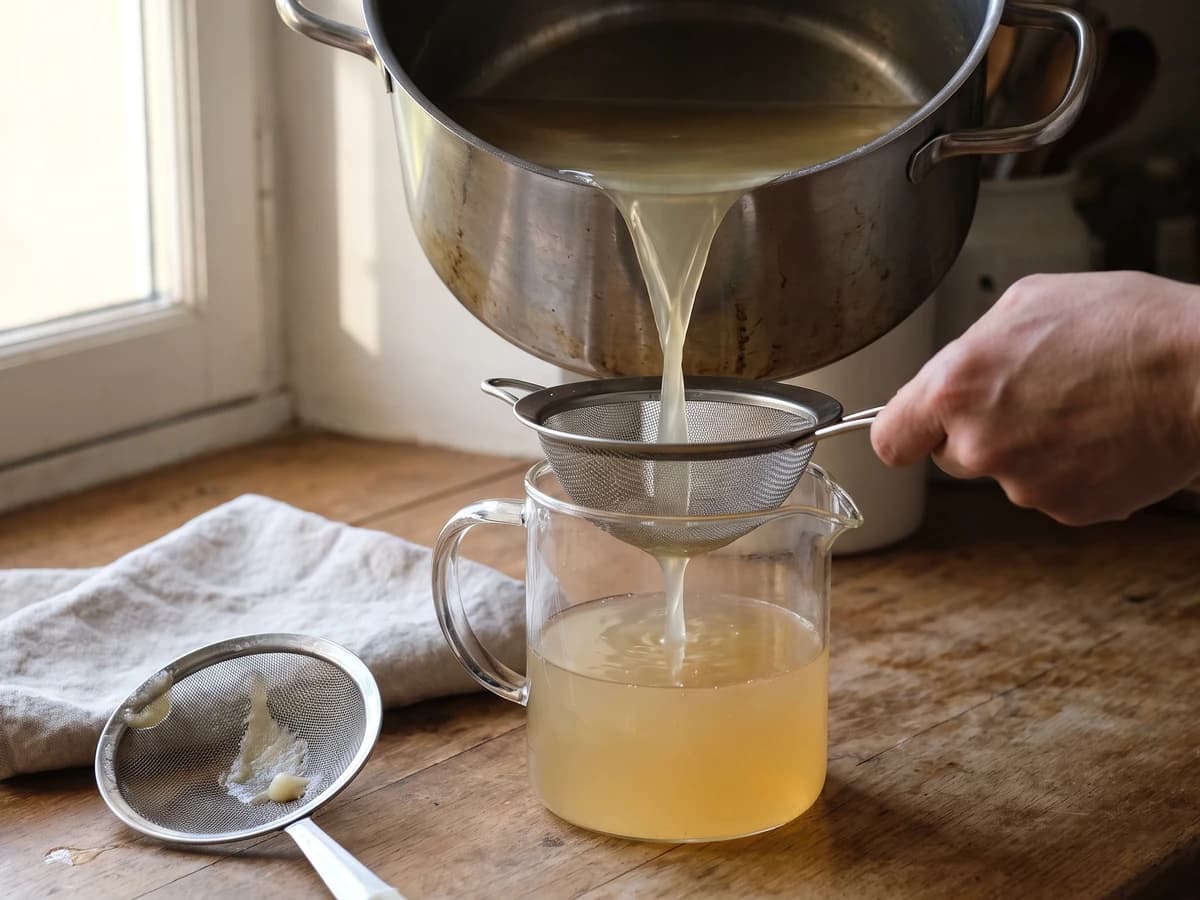
Break the veal bones small, then give them eight hours at a bare tremble. This pale, gelatinous fond becomes the quiet foundation beneath velouté, blanquette, and every sauce that must stay light.
Chef Juliette
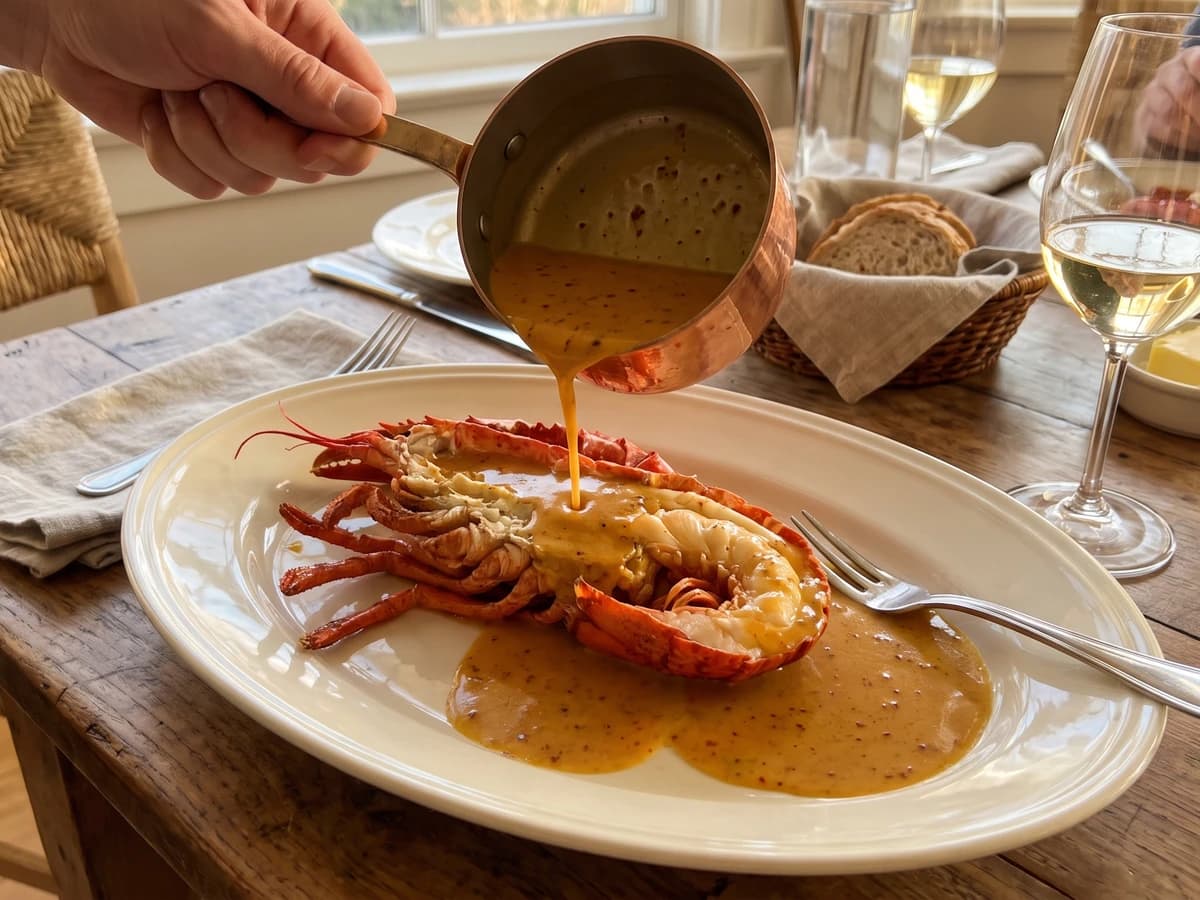
Sauce Orientale concentrates lobster-rich American Sauce with curry, then folds in cream away from the fire: a glossy, gently spiced derivative made for lobster, crayfish, and firm fish.
Chef Juliette
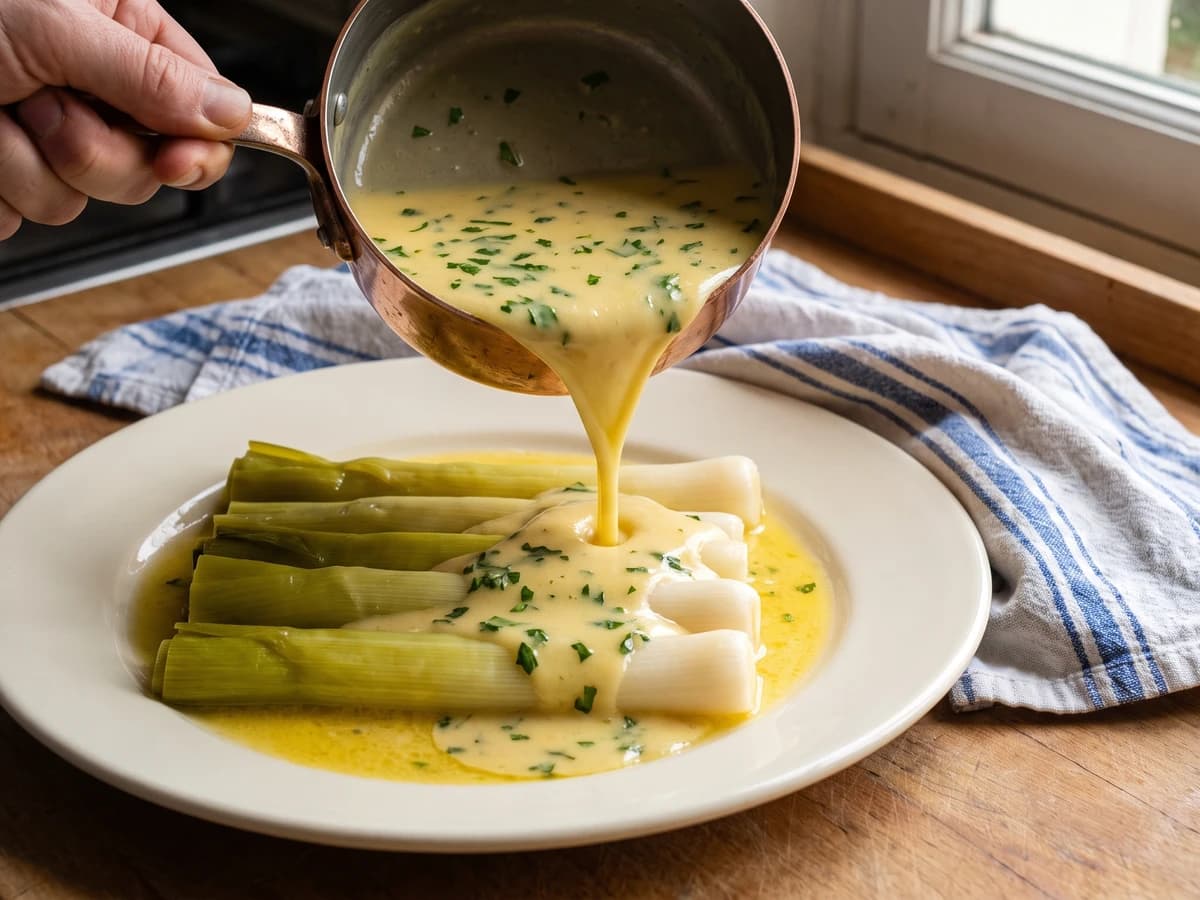
An old lesson in sauce families: Sauce Allemande takes mushroom liquor, then butter, lemon, and parsley, becoming a glossy Poulette for sheep's trotters, leeks, cauliflower, and anything needing gentle richness with a bright edge.