Chef Juliette
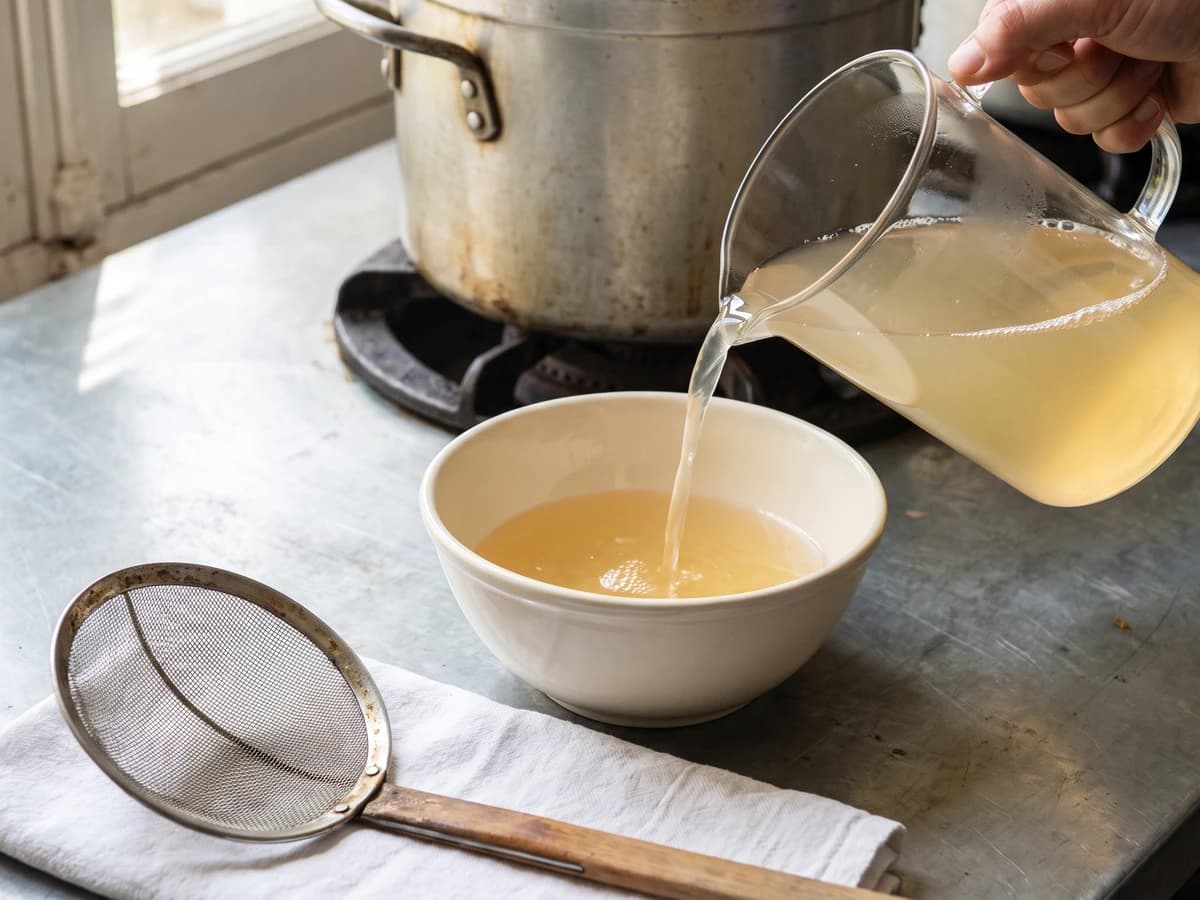
Ordinary or White Consommé
Beef shin, lean beef, and fowl begin in cold water and rise slowly toward a tremble. Skim before the boil, and you learn the quiet discipline that gives every clear French broth its backbone.
A cooking platform built around craft, culture, and the stories behind what we eat.
Created by Chef Juliette
Based on No. 159, Chicken Aspic, from Le Guide Culinaire (1907) by Auguste Escoffier
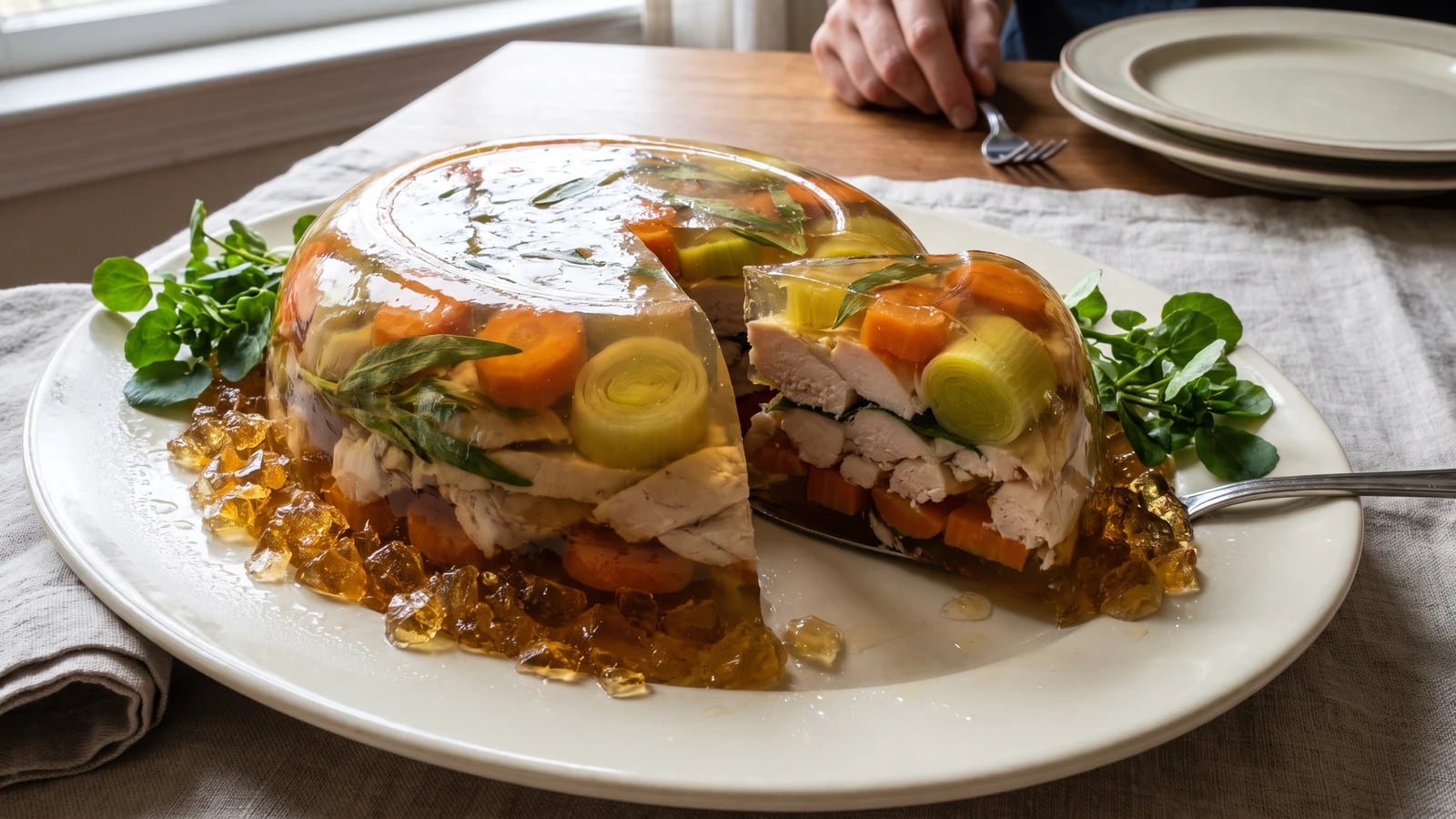
Clear amber aspic, built on an oven-browned hen and brightened through roasted-carcass clarification, with just enough gelatin to tremble on the plate and disappear on the tongue.
Aspic de volaille (chicken aspic) teaches one severe and useful lesson: strength of flavor and firmness are not the same thing. Build the deepest poultry stock you can, clarify it until it gleams, then use only enough gelatin to make it tremble. A rubbery aspic is not stronger or finer. It is simply overdone.
The original preparation assumed a saucier on staff, a stock never off the fire, two browned hens for a brigade batch, and roasted carcasses waiting for the clarification. Your home equivalent is one deeply browned stewing hen, gelatin-rich wings, and two butcher’s carcasses, scaled to about two quarts. A roasting tray and one stockpot replace the battery of pans, and the salamander has no work in this cold preparation. Repeated transfers and separate hands for every stage are brigade scaffolding and may go. The browned hen and giblets in the stock, the completely defatted roast carcasses in the clarification, and the restrained gel are the dish, so they stay. One cook, one stove, one evening, followed by a quiet night in the refrigerator.
Begin the clarification cold and raise the heat slowly. That is the step that matters most: once the raft forms, a hard boil will tear it apart and send its impurities back through the stock. If that happens, don’t pour anything away. Ça se rattrape, and the method below gives you a second raft.
Aspic de volaille belongs to the French garde-manger and the Parisian grande cuisine cold table, where clear savory jelly protected cooked foods, carried concentrated stock flavor, and glazed elaborate presentations. The poultry version turns ordinary meat aspic toward delicacy by building the stock with browned hen and bringing roasted, thoroughly defatted carcasses into the clarification, not by loading the finished liquid with gelatin. Its defining correction is textural: proper aspic trembles and melts promptly on the tongue, while a rubbery set is a failure however brilliant it looks.
Quantity
1, about 4 to 5 pounds (1.8 to 2.3 kg)
quartered; neck, heart, and gizzard reserved, liver omitted
Quantity
2 pounds (900 g)
joints separated
Quantity
2, about 2½ pounds (1.1 kg) total
cut into manageable pieces
Quantity
1 tablespoon (15 ml / 14 g)
Quantity
2 medium, about 2 cups (475 ml / 300 g)
quartered
Quantity
3 medium, about 2 cups (475 ml / 300 g)
2 cut into chunks and 1 finely chopped
Quantity
1 large, about 2 cups (475 ml / 180 g)
thoroughly washed; three-quarters cut into chunks and one-quarter finely chopped
Quantity
4, about 2 cups (475 ml / 240 g)
3 cut into chunks and 1 finely chopped
Quantity
1
Quantity
18 cups (4.25 liters / 4.25 kg)
Quantity
2 teaspoons (10 ml / 12 g), plus more as needed
Quantity
12 ounces (340 g)
Quantity
4
Quantity
2
Quantity
2¼ to 4½ teaspoons (11 to 22 ml / 7 to 14 g)
use only as required by the set test
Quantity
½ cup (120 ml / 120 g)
divided
| Ingredient | Quantity |
|---|---|
| stewing henquartered; neck, heart, and gizzard reserved, liver omitted | 1, about 4 to 5 pounds (1.8 to 2.3 kg) |
| chicken wingsjoints separated | 2 pounds (900 g) |
| raw chicken carcassescut into manageable pieces | 2, about 2½ pounds (1.1 kg) total |
| neutral oil | 1 tablespoon (15 ml / 14 g) |
| yellow onionsquartered | 2 medium, about 2 cups (475 ml / 300 g) |
| carrots2 cut into chunks and 1 finely chopped | 3 medium, about 2 cups (475 ml / 300 g) |
| leekthoroughly washed; three-quarters cut into chunks and one-quarter finely chopped | 1 large, about 2 cups (475 ml / 180 g) |
| celery stalks3 cut into chunks and 1 finely chopped | 4, about 2 cups (475 ml / 240 g) |
| bouquet garni of parsley stems, thyme, and bay leaf | 1 |
| cold water | 18 cups (4.25 liters / 4.25 kg) |
| fine sea salt | 2 teaspoons (10 ml / 12 g), plus more as needed |
| very lean ground chicken breast | 12 ounces (340 g) |
| egg whites | 4 |
| additional egg whites for reclarifying (optional) | 2 |
| unflavored powdered gelatin (optional)use only as required by the set test | 2¼ to 4½ teaspoons (11 to 22 ml / 7 to 14 g) |
| cold water for blooming gelatindivided | ½ cup (120 ml / 120 g) |
Heat the oven to 425°F (220°C). Rub the hen pieces lightly with the oil and arrange them on a rimmed roasting tray beside the carcass pieces, keeping enough space between everything for browning. Roast for 40 to 50 minutes, turning the carcasses once and removing them earlier if their thin edges threaten to burn. The hen should be a deep hazelnut gold, not merely beige. Cool the carcasses, remove every scrap of skin and visible fat, then refrigerate them for the clarification. Keep the roasted hen for the stock.
Put the browned hen, raw wings, neck, heart, and gizzard into an 8-quart stockpot. Add the onion, the chunked portions of carrot, leek, and celery, the bouquet garni, the salt, and all the remaining measured water. Deglaze the roasting tray with some of that water, scraping up its bronze fond, and pour every drop into the pot. Bring the stock up slowly, skimming the grey foam as it gathers. Once it reaches a bare tremble, lower the heat and cook uncovered for 3 hours. Never let it roll: boiling emulsifies fat into the liquid, and no clarification enjoys cleaning up that particular mess.
Ladle the stock through a fine sieve into a wide clean container, then pour the last of it gently. Do not press the poultry or vegetables, because pressure drives cloudy particles through the sieve. Set the container in an ice bath and stir the stock until it is no longer hot, then refrigerate until the fat has hardened on top, about 1 to 2 hours. Lift off the fat completely and wipe away the small beads around the rim. Measure the stock. If you have more than 10 cups (2.4 liters), simmer it gently in a clean pot until 10 cups remain.
Put the cold, defatted stock into the clean stockpot. Add the ground chicken, 4 egg whites, and the finely chopped carrot, leek, and celery, then whisk thoroughly while everything is still cold. Add the roasted, fully defatted carcasses. Set the pot over medium-low heat and stir slowly across the bottom as the liquid warms, preventing the chicken from sticking. After 20 to 30 minutes, the proteins will gather into a pale brown raft and begin rising. Stop stirring at once. Open a small chimney in the center with the handle of a spoon so the liquid can circulate without breaking the raft.
Hold the stock at the faintest tremble for 40 to 45 minutes, ladling liquid through the chimney once or twice without disturbing the raft. Line a fine sieve with damp cheesecloth and ladle the stock through it slowly into a clean pot. Never pour the whole pot at once and never squeeze the cloth. If the stock boiled hard or the raft tore and the liquid remains cloudy, cool it completely, whisk in the 2 optional egg whites, and repeat the slow heating without the carcasses. Ça se rattrape. The second raft will collect what the first one released.
Chill a saucer in the freezer, spoon a tablespoon of the hot clarified stock onto it, and return it to the cold for 8 to 10 minutes. Tip the saucer. If the stock forms a tender jelly that quivers and melts promptly in the mouth, add no gelatin. If it remains liquid, sprinkle 2¼ teaspoons (7 g) gelatin over ¼ cup (60 ml / 60 g) of the cold blooming water and wait 5 minutes, then dissolve it in the hot stock off the heat. Test again before adding the second measure in the same way. Stop as soon as the aspic holds. If the finished aspic later proves too firm, remelt it over the gentlest heat and dilute it with hot water, ¼ cup (60 ml / 60 g) at a time, testing and correcting the salt after each addition.
Chill a teaspoonful of aspic and taste it cold, because cold softens the perception of salt. Correct the seasoning while the stock is still liquid, taking care not to make it aggressively salty. Measure about 8 cups (1.9 liters) into shallow molds or covered containers. Cool them promptly in an ice bath, then refrigerate for at least 6 hours, preferably overnight, until the aspic is clear, softly set, and trembling.
To unmold the aspic, dip the outside of the mold briefly in warm water, loosen the edge with a fingertip, and invert it onto a cold platter. For glazing poultry, terrines, or other cold preparations, melt only what you need over low heat and let it cool until slightly syrupy before brushing. The finished aspic should cut cleanly, quiver when the platter moves, and vanish on the tongue rather than bounce under the teeth. À table!
1 serving (about 240g)
Culinary guides, cultural storytelling, and the editorial depth that makes cooking meaningful.
Discover Culinary ExplorerChef Juliette
Beef shin, lean beef, and fowl begin in cold water and rise slowly toward a tremble. Skim before the boil, and you learn the quiet discipline that gives every clear French broth its backbone.
Chef Juliette
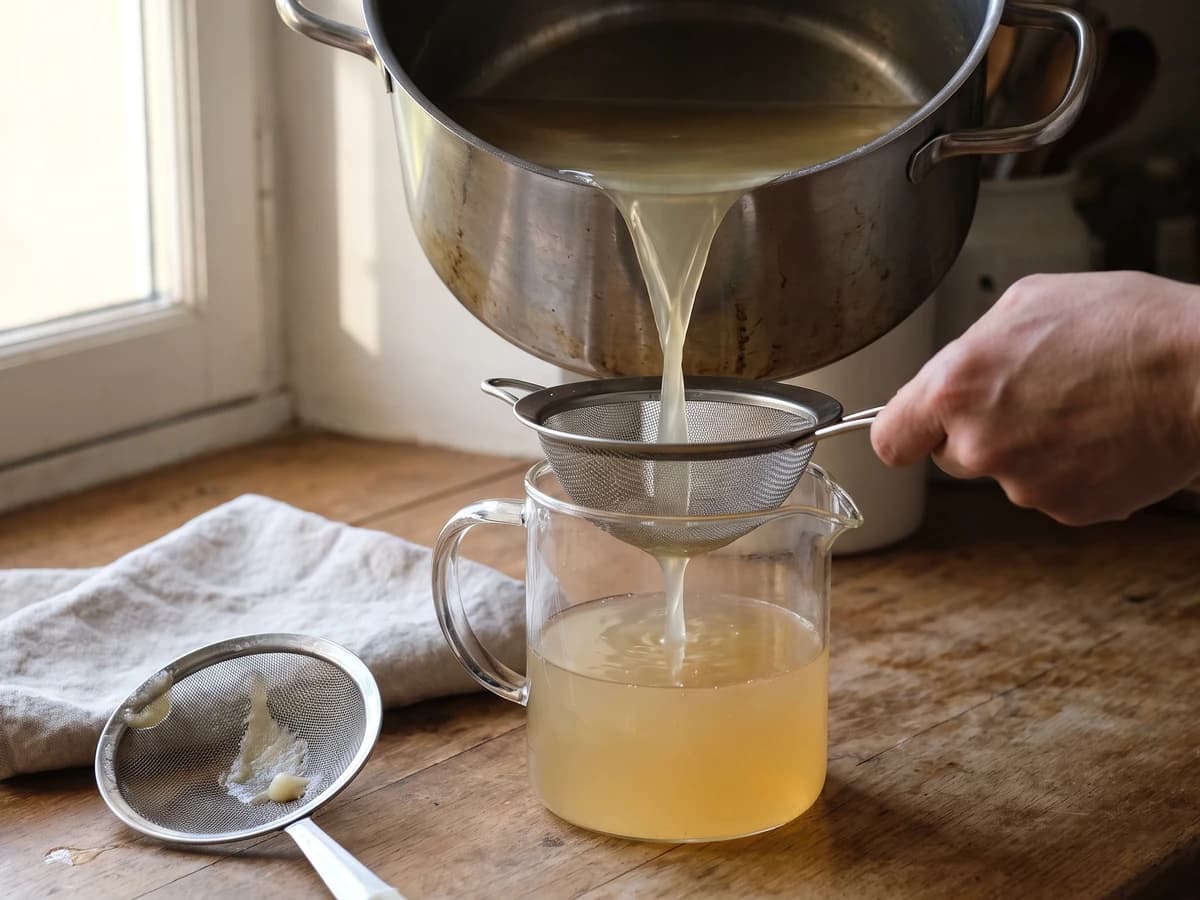
Break the veal bones small, then give them eight hours at a bare tremble. This pale, gelatinous fond becomes the quiet foundation beneath velouté, blanquette, and every sauce that must stay light.
Chef Juliette
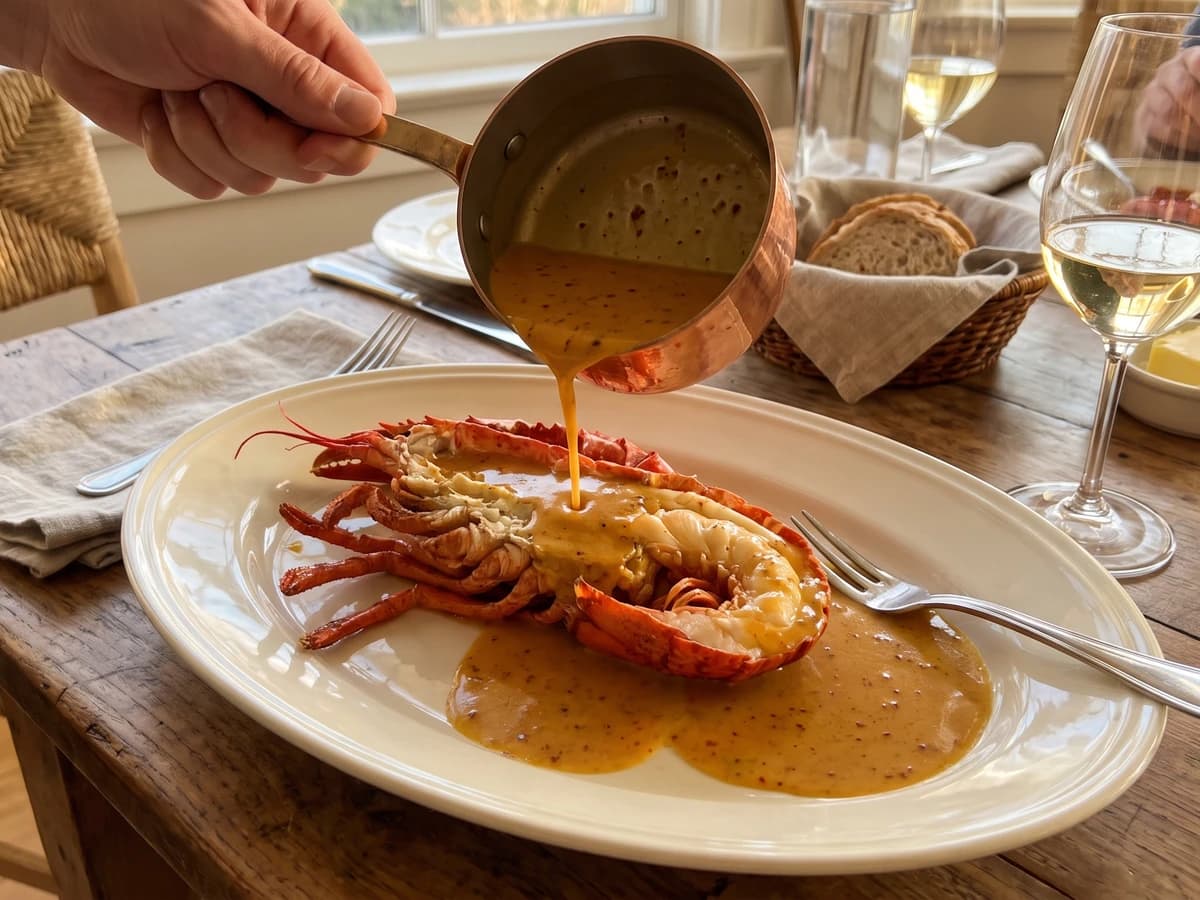
Sauce Orientale concentrates lobster-rich American Sauce with curry, then folds in cream away from the fire: a glossy, gently spiced derivative made for lobster, crayfish, and firm fish.
Chef Juliette
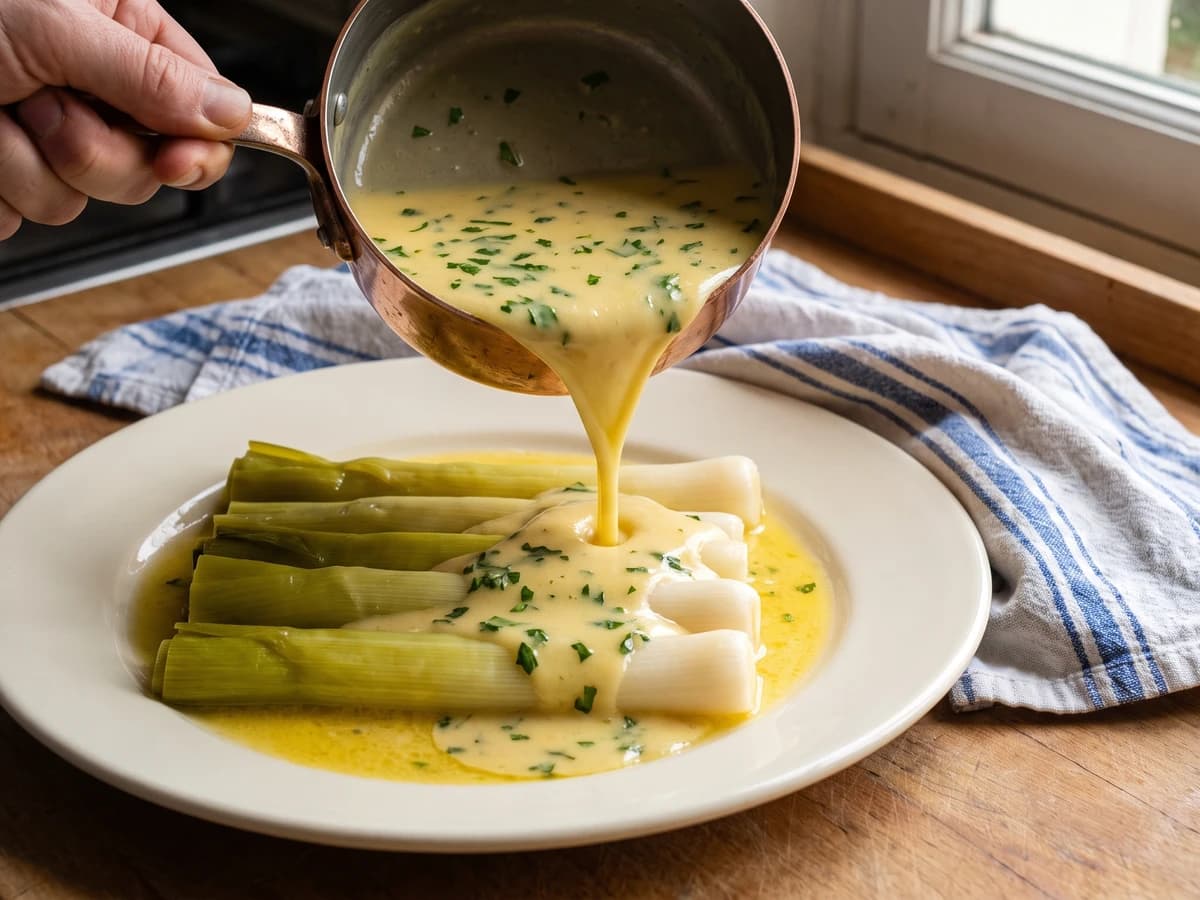
An old lesson in sauce families: Sauce Allemande takes mushroom liquor, then butter, lemon, and parsley, becoming a glossy Poulette for sheep's trotters, leeks, cauliflower, and anything needing gentle richness with a bright edge.