Chef Juliette
Ordinary or White Consommé
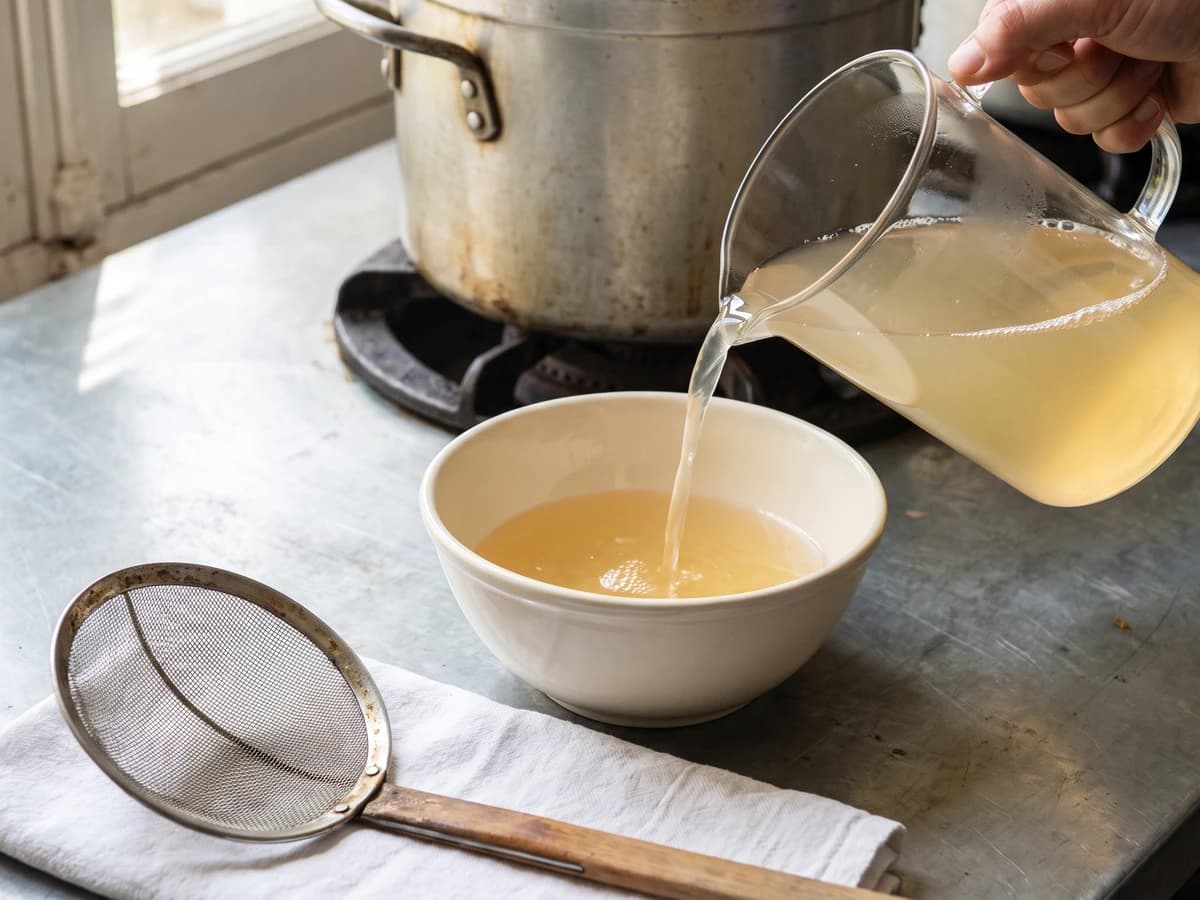
Beef shin, lean beef, and fowl begin in cold water and rise slowly toward a tremble. Skim before the boil, and you learn the quiet discipline that gives every clear French broth its backbone.
A cooking platform built around craft, culture, and the stories behind what we eat.
Created by Chef Juliette
Based on No. 14, Various Glazes, from Le Guide Culinaire (1907) by Auguste Escoffier
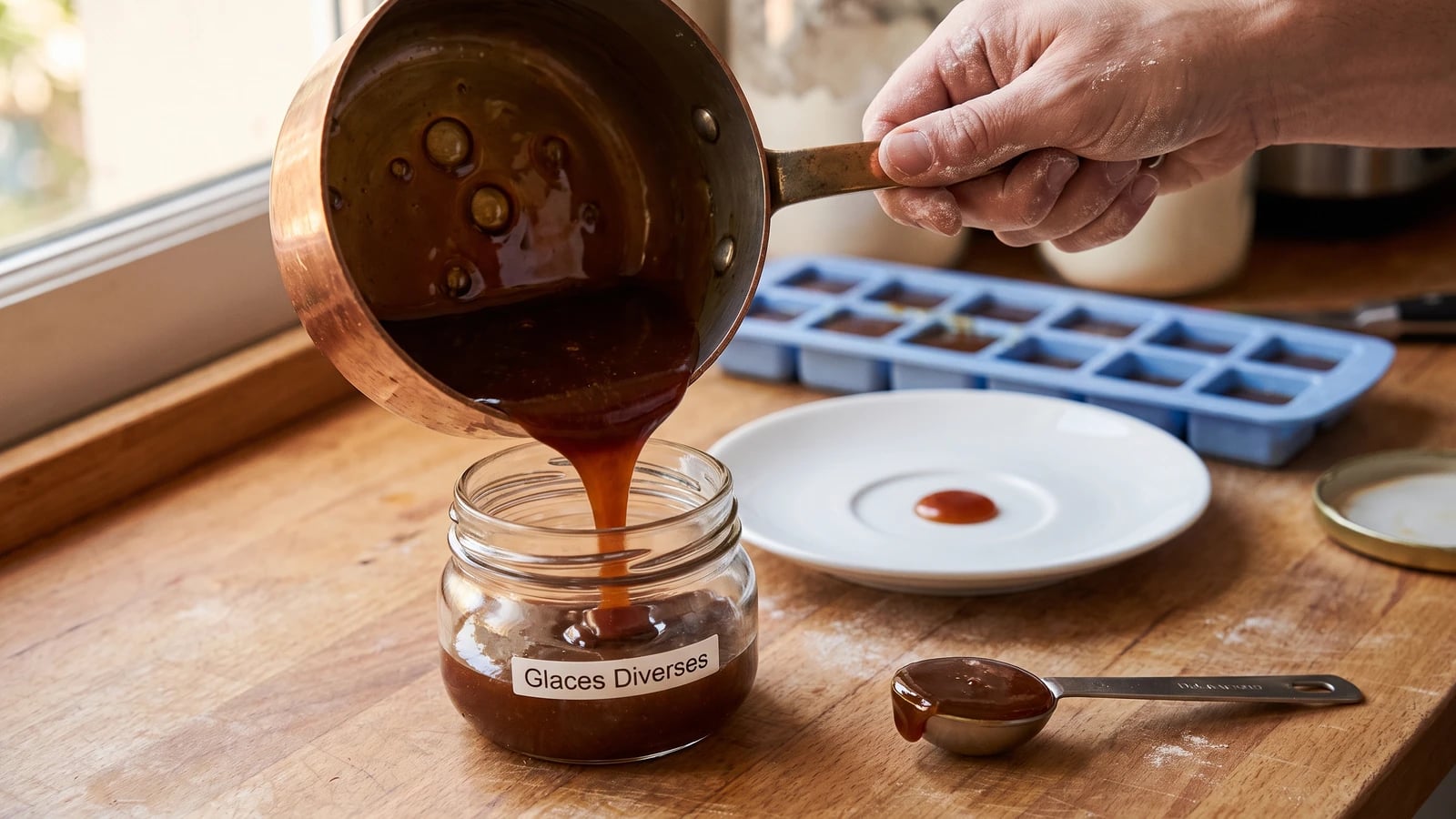
Stock reduced until its flavor, gelatin, and body become one glossy spoonful: glaze for burnishing a roast, strengthening a sauce, or becoming the sauce itself with cream or cold butter.
Glaces diverses (various glazes) teach the cleanest lesson at the sauce stove: reduction concentrates the whole stock, not merely its scent. Before you touch a pan, know this one thing: the stock must be unsalted and rich enough in gelatin to hold a soft wobble when cold. Salt becomes brutal under reduction, and a thin stock becomes only a smaller thin stock.
The original entry assumed a saucier watching several reductions and a stockpot never off the fire. The honest home translation starts with two quarts of finished stock, uses a wide pan for quick evaporation, then moves the final quantity into a small saucepan where one cook can control it. Repeated service pots were brigade scaffolding and can go. Careful skimming, patient concentration, and the proper finishing point are the dish itself and must stay. One cook, one stove, one evening.
A finished glace coats food with a brilliant, unctuous film, strengthens a sauce by the measured spoonful, or becomes a sauce when correctly creamed or buttered. The final cold-saucer test matters most: hot glace always looks looser than it will be cold, so judge a cooled drop, not your impatience.
Glaces diverses belong to the national classical sauce station rather than one region, with their most formal home in the grand kitchens of Paris where the saucier managed reductions for the whole service. Unlike an essence, which extracts aroma, a glace contains the reduced body of the stock itself, so savor, gelatin, and succulence remain together. Purists held that each dish should form its own glaze in the pan, but cuisine bourgeoise kept the prepared glace because a careful spoonful could strengthen a sauce without replacing the sauce's own foundation.
Quantity
2 quarts (1.9 L / about 1.9 kg)
Quantity
1/4 cup (60 ml / 60 g)
for loosening or service
Quantity
4 tablespoons (60 ml / 57 g)
cubed, for a buttered sauce
Quantity
1/2 cup (120 ml / 120 g)
for a creamed sauce
| Ingredient | Quantity |
|---|---|
| cold, unsalted, well-gelatinized finished stock, choosing meat, fowl, game, or fish | 2 quarts (1.9 L / about 1.9 kg) |
| hot water (optional)for loosening or service | 1/4 cup (60 ml / 60 g) |
| cold unsalted butter (optional)cubed, for a buttered sauce | 4 tablespoons (60 ml / 57 g) |
| heavy cream (optional)for a creamed sauce | 1/2 cup (120 ml / 120 g) |
Choose one finished stock and keep its identity clear: meat for a glace de viande, fowl for a glace de volaille, game for a glace de gibier, or fish for a glace de poisson. The stock must be cold and unsalted. It should wobble softly from its natural gelatin, except that fish stock may set more delicately. Taste it now. If it is already noticeably salty, reserve it for an ordinary sauce rather than reducing it to a harsh concentrate.
Lift every trace of solid fat from the chilled stock. Pour the stock through a fine-mesh sieve into a wide, heavy saucepan, leaving any sediment behind. Fat does not become glace when reduced; it separates into a greasy film and dulls the brilliant finish you are working toward.
Bring the stock just to a boil over medium-high heat, then lower it to a purposeful uncovered simmer. Skim off grey foam and stray fat as they gather, but don't stir yet. Let the stock reduce to about 1 quart, roughly half its starting volume, for 45 to 75 minutes. The wide pan supplies evaporation without the brigade's row of simmering pots. Keep the bubbles active but never violent, since splashing stock onto the sides encourages scorching later.
Strain the reduced stock into a smaller heavy saucepan. Continue simmering over medium-low heat until about 1 1/2 cups remain, skimming when necessary and stirring more frequently as the concentration rises. The bubbles will become larger and slower, the color will deepen, and a clean savory aroma will replace the lighter smell of ordinary stock. For fish glace, taste every few minutes at this stage and stop before its clean marine flavor turns bitter.
Lower the heat and stay beside the pan. Reduce toward 1 cup, stirring across the bottom with a flexible spatula. Dip in a cold spoon: the glace should leave a clear, glossy film at nappe, the coating consistency. Place a few drops on a chilled white saucer and wait one minute. They should cool into a tacky gel that holds its shape without becoming hard. If the glace has tightened into a rubbery paste, don't panic. Ça se rattrape: pull it off the heat and whisk in hot water, 1 tablespoon at a time, until it flows again. If it catches on the bottom, pour the clear upper portion immediately into a clean pan without scraping; taste it, and discard it only if bitterness has traveled through the batch.
Pass the finished glace through a clean fine-mesh sieve into a heatproof measuring jug. Set the jug in a shallow ice bath and stir occasionally until cool, then cover and refrigerate. Meat, fowl, and game glaces should set into a firm, glossy gel; fish glace is often softer. Portion the cold glace by the tablespoon for freezing so you can reach for exactly what a sauce needs.
To coat cooked meat, fowl, game, or fish, warm 1 tablespoon of the matching glace with 1 teaspoon hot water and brush on a thin, brilliant layer just before serving. To strengthen an existing sauce, add the glace 1 teaspoon at a time, tasting after each addition. For a buttered sauce, warm 1/4 cup glace with 1/4 cup hot water, remove it from the heat, and whisk in the cold butter cube by cube. For a creamed sauce, simmer 1/4 cup glace with the heavy cream until it coats the spoon. Season only after reducing. Glace is powerful, so use judgment, not the whole jar. À table!
1 serving (about 15g)
Culinary guides, cultural storytelling, and the editorial depth that makes cooking meaningful.
Discover Culinary ExplorerChef Juliette
Beef shin, lean beef, and fowl begin in cold water and rise slowly toward a tremble. Skim before the boil, and you learn the quiet discipline that gives every clear French broth its backbone.
Chef Juliette
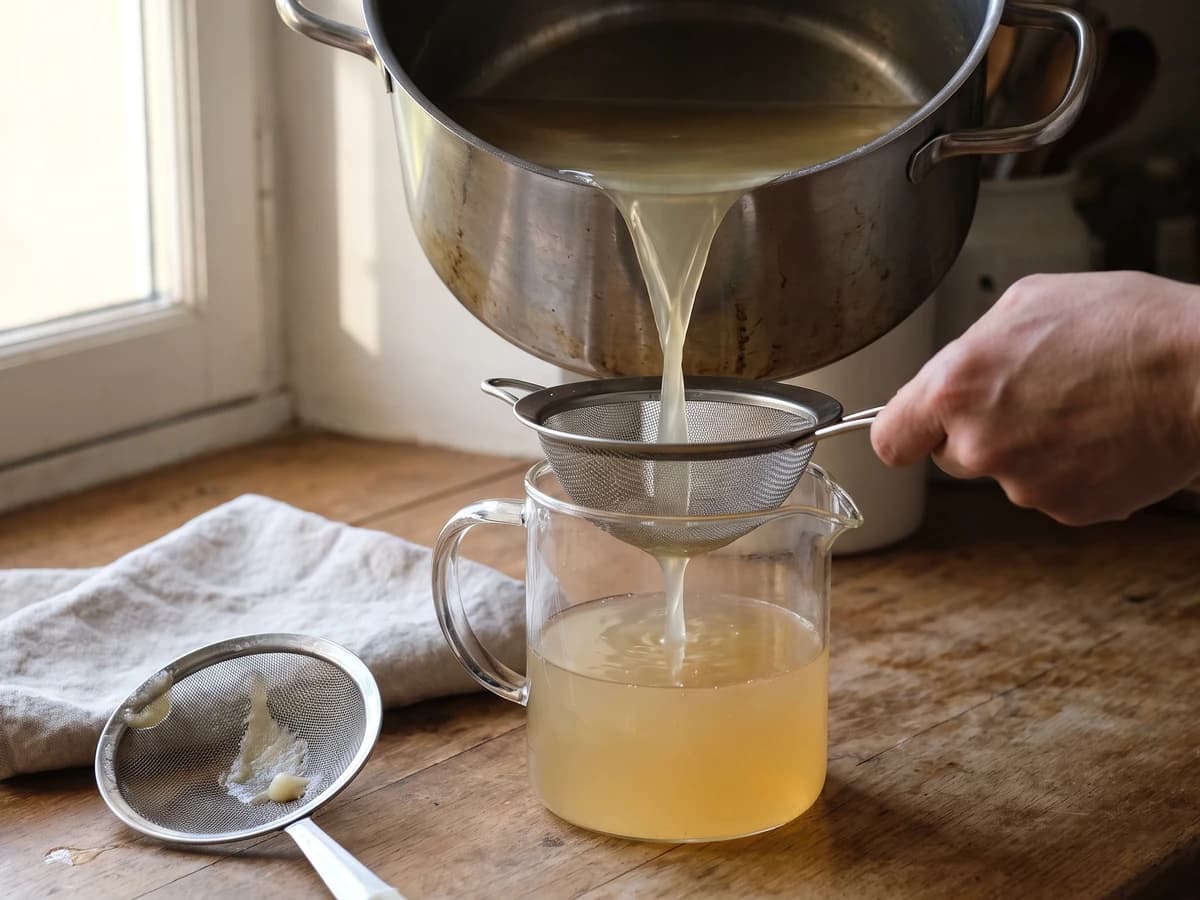
Break the veal bones small, then give them eight hours at a bare tremble. This pale, gelatinous fond becomes the quiet foundation beneath velouté, blanquette, and every sauce that must stay light.
Chef Juliette
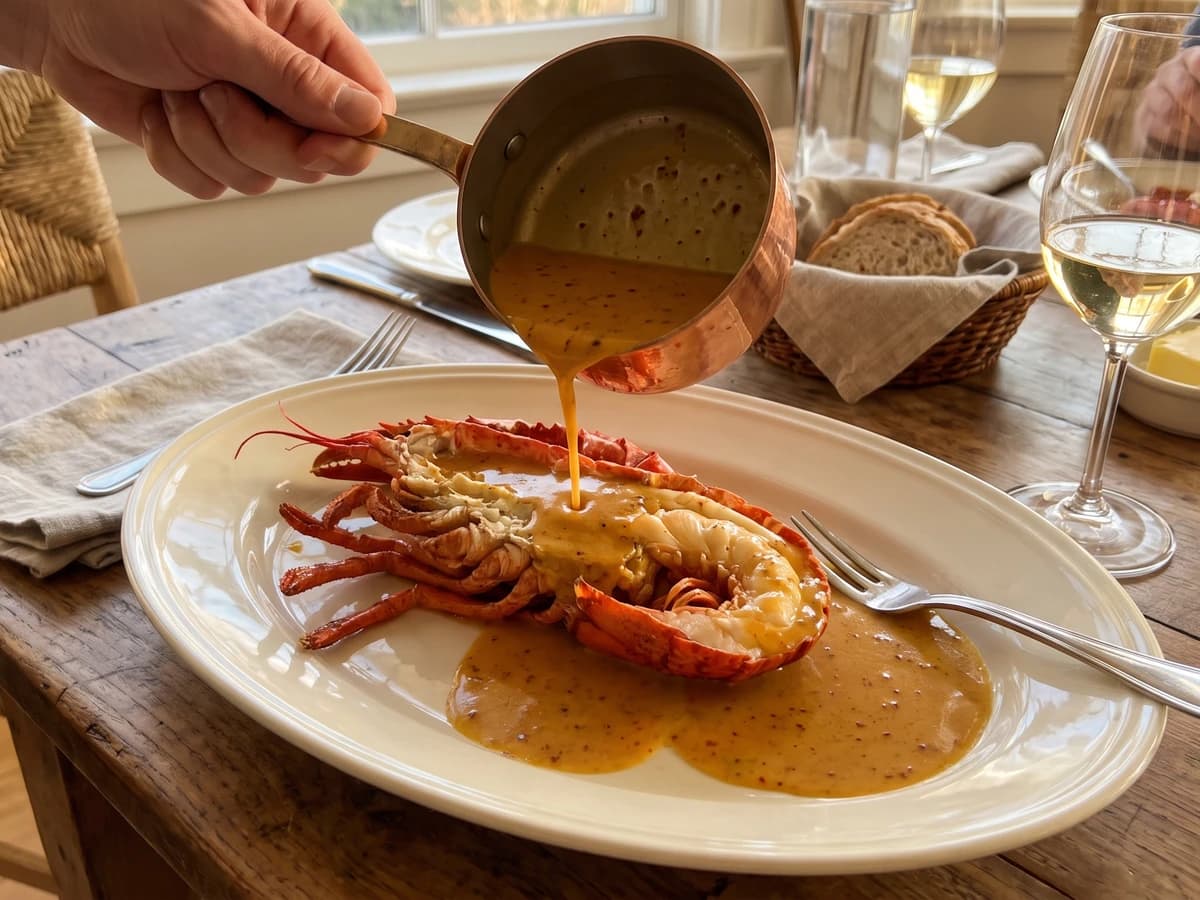
Sauce Orientale concentrates lobster-rich American Sauce with curry, then folds in cream away from the fire: a glossy, gently spiced derivative made for lobster, crayfish, and firm fish.
Chef Juliette
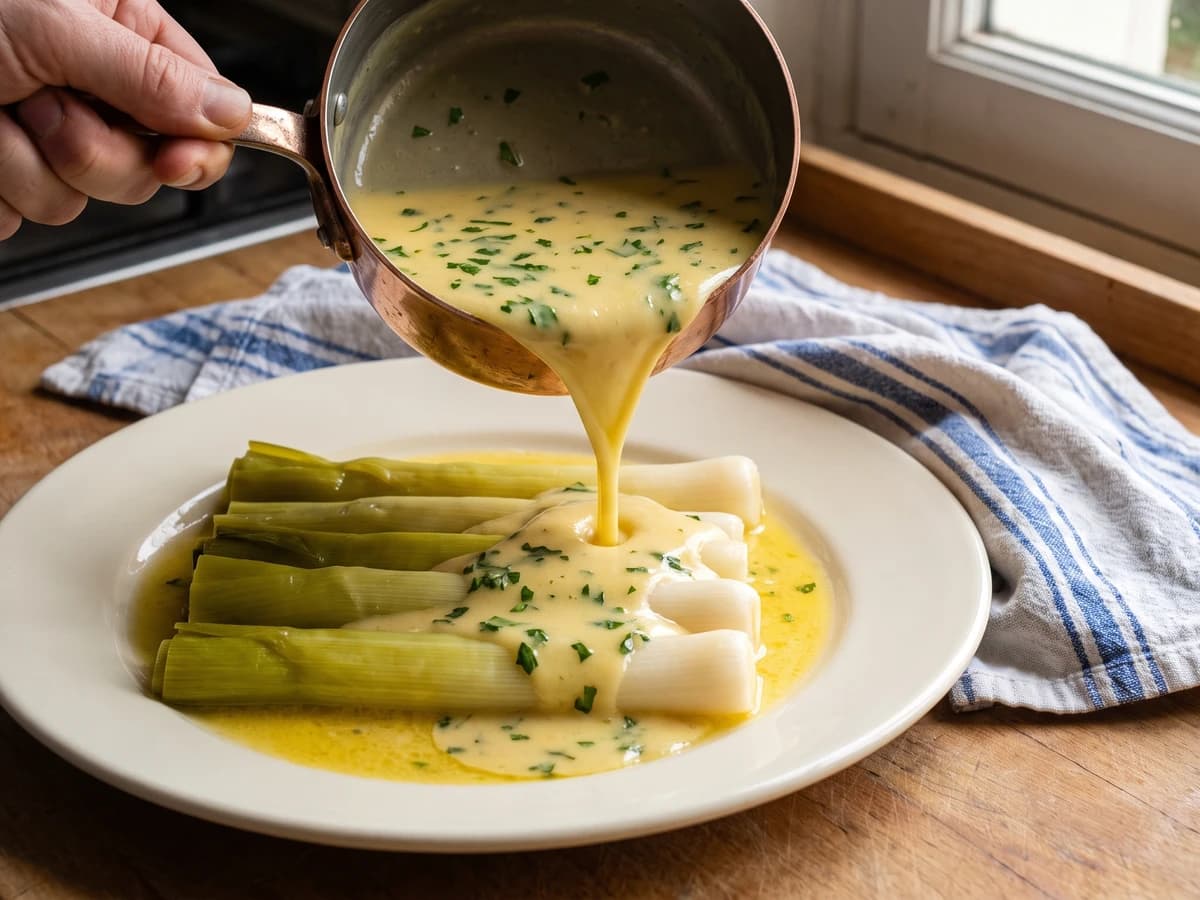
An old lesson in sauce families: Sauce Allemande takes mushroom liquor, then butter, lemon, and parsley, becoming a glossy Poulette for sheep's trotters, leeks, cauliflower, and anything needing gentle richness with a bright edge.