
Chef Juliette
John Dory (St. Pierre)
John Dory has the delicacy of sole and the firmness of turbot. A light flouring, a quick butter sauté, and nut-brown beurre noisette show exactly why looks never mattered.
A cooking platform built around craft, culture, and the stories behind what we eat.
Created by Chef Juliette
Based on No. 1314, Côtelettes à la Maintenon, from Le Guide Culinaire (1907) by Auguste Escoffier
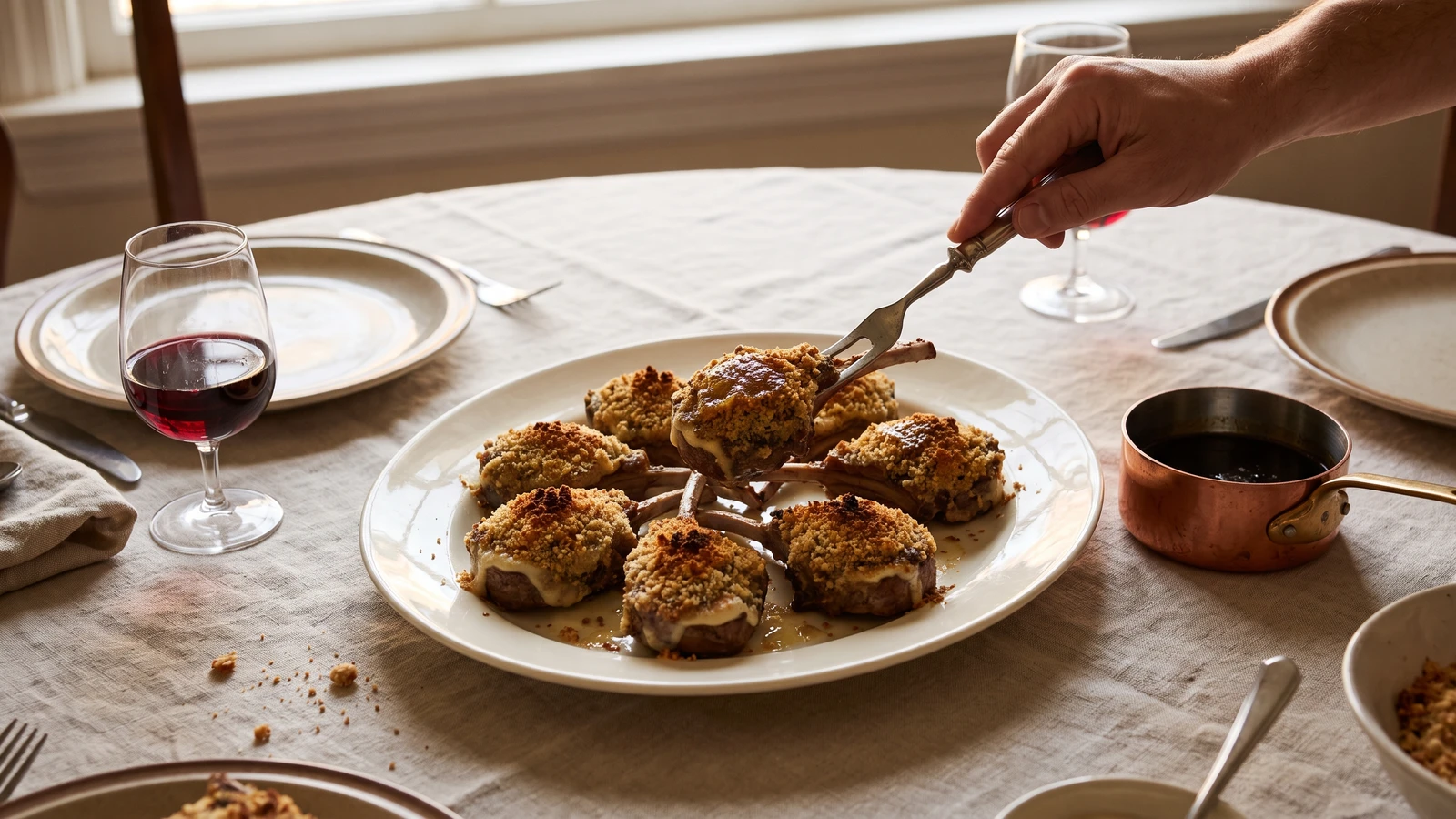
Côtelettes à la Maintenon turns a lamb cutlet into a lesson in sequence: sear one face, crown it with Maintenon, then gratiné the crumbs while the meat finishes beneath.
Côtelettes à la Maintenon (lamb cutlets domed with Maintenon and gratinéed) teaches sequence: fry each cutlet on one side only, crown that cooked face, then let the hot oven brown the crumbs while finishing the raw face beneath. Turn the chop in the pan from habit and the dish loses its design. The one true thing to know before touching the pan is this: mark one side, and only one side.
The original entry assumed a saucier with Maintenon (preparation used in stuffing preparations à la Maintenon) (No. 226) already reduced and cold, meat glaze made from stock never off the fire, enough hands to shape brigade portions, and a finishing oven backed by a salamander. At home, one small saucepan, a skillet, a fully heated oven, and the broiler for a final breath of colour do the same work. The crown is scaled to eight rib chops for four people, while every part that defines the dish remains: the one-sided fry, domed garnish, fine crumbs with melted butter, the seven-to-eight-minute gratin, and buttered glaze served apart. The relay between stations was scaffolding. These steps are the dish.
The finished cutlets should arrive in a crown, their crumbs butter-gold, the Maintenon still standing proudly, and the glaze glossy in its own sauceboat so the crust stays crisp. The shaping is the step that matters most: keep the Maintenon cold and smooth it with a knife dipped in tepid water. If the dome slips, stop and chill it before crumbing. Ça se rattrape.
À la Maintenon belongs to the Parisian grand-kitchen repertoire, its name tied to Madame de Maintenon and its character defined by a firm mixture of Béchamel and Soubise enriched with yolk and mushrooms. Across generations, the garnish traveled through the classical canon as a treatment for cutlets, spread over a cooked face and set beneath a gratin rather than poured as a sauce. The common misconception is that Maintenon is the sauce served at table; here it forms the topping, while the buttered meat glaze remains separate.
Quantity
8 chops, about 2½ lb (1.2 kg) total
French-trimmed and about 1 inch (2.5 cm) thick
Quantity
2 teaspoons (10 ml / 12 g)
Quantity
1 teaspoon (5 ml / 2 g)
Quantity
4 tablespoons (60 ml / 57 g)
divided
Quantity
8 heaped tablespoons (about ⅔ cup / 160 ml / 170 g) (No. 226)
well chilled
Quantity
¾ cup (180 ml / 55 g)
Quantity
3 tablespoons (45 ml / 43 g)
melted
Quantity
1 rapid oven finish (No. 268)
Quantity
½ cup (120 ml / 130 g)
Quantity
2 tablespoons (30 ml / 28 g)
cut into small cubes
Quantity
1 cup (240 ml / 240 g)
for dipping the shaping knife
| Ingredient | Quantity |
|---|---|
| bone-in lamb rib chopsFrench-trimmed and about 1 inch (2.5 cm) thick | 8 chops, about 2½ lb (1.2 kg) total |
| fine sea salt | 2 teaspoons (10 ml / 12 g) |
| freshly ground black pepper | 1 teaspoon (5 ml / 2 g) |
| unsalted butter for fryingdivided | 4 tablespoons (60 ml / 57 g) |
| Maintenon (preparation used in stuffing preparations à la Maintenon)well chilled | 8 heaped tablespoons (about ⅔ cup / 160 ml / 170 g) (No. 226) |
| fine fresh breadcrumbs from a plain white loaf | ¾ cup (180 ml / 55 g) |
| unsalted butter for the gratinmelted | 3 tablespoons (45 ml / 43 g) |
| Gratins | 1 rapid oven finish (No. 268) |
| prepared meat glaze | ½ cup (120 ml / 130 g) |
| cold unsalted butter for the glazecut into small cubes | 2 tablespoons (30 ml / 28 g) |
| tepid waterfor dipping the shaping knife | 1 cup (240 ml / 240 g) |
Set a rack in the upper third of the oven and heat it thoroughly to 475°F (245°C). Have a heavy rimmed baking sheet ready. Keep the finished Maintenon (preparation used in stuffing preparations à la Maintenon) (No. 226) cold enough to hold a ridge, melt the butter intended for the gratin, and place the tepid water beside a small knife. Pat the chops completely dry, then season both sides with the salt and pepper.
Heat a wide skillet over medium-high heat and add half the frying butter. When the foam subsides, lay in four chops without crowding them and fry one side for 2½ to 3 minutes, until deeply golden. Do not turn them. Transfer each chop to the baking sheet with its raw side against the metal and its cooked face uppermost, then repeat with the remaining butter and chops. If the butter blackens, wipe out the bitter specks before starting the second batch and add fresh butter.
Place one heaped tablespoon of the chilled Maintenon (preparation used in stuffing preparations à la Maintenon) (No. 226) on the cooked face of each chop. Dip the blade of the small knife in tepid water and shape the topping into a smooth dome, keeping it within the meat's edges. Sprinkle each dome evenly with the fine breadcrumbs, then spoon over the melted butter so every surface is lightly moistened. If the topping slumps, scrape it back into its bowl, chill it for 5 minutes, and apply it again before adding the crumbs. Ça se rattrape.
Slide the tray into the hot oven and use the rapid finish described by Gratins (No. 268), cooking for 7 to 8 minutes. The crumbs should become a deep butter-gold, the edge of the Maintenon should just begin to bubble, and the lamb should register 140 to 142°F (60 to 61°C) when probed horizontally away from the bone. If the meat is ready while the crumbs remain pale, use the broiler for 20 to 30 seconds instead of overcooking the lamb. If the topping colours first, shield it loosely with small pieces of foil, lower the tray one rack, and finish the meat.
While the chops finish, bring the meat glaze to a bare simmer in a small saucepan. Take it completely off the heat and whisk in the cold butter one cube at a time, adding each only after the previous piece disappears. The glaze should look dark, smooth, and glossy. If it turns oily, whisk in 1 teaspoon (5 ml / 5 g) cold water until the emulsion gathers again, then transfer it to a warm sauceboat.
Rest the chops for 3 minutes, during which their final temperature should reach at least 145°F (63°C). Arrange them in a loose crown on a warm oval platter, two per person, with the bones pointing outward and the domed faces visible. Send the buttered meat glaze separately and let each guest spoon it beside the lamb, never over the crisp gratin. À table!
1 serving (about 285g)
Culinary guides, cultural storytelling, and the editorial depth that makes cooking meaningful.
Discover Culinary ExplorerChef Juliette
John Dory has the delicacy of sole and the firmness of turbot. A light flouring, a quick butter sauté, and nut-brown beurre noisette show exactly why looks never mattered.

Chef Juliette
Fresh haddock proves its delicacy in the meunière pan: a fine flour crust, moist pearly flakes, and beurre noisette sharpened with lemon and parsley, ready from one skillet in half an hour.

Chef Juliette
Éperlans à l’Anglaise turns small fish into a lesson in disciplined coating: boned smelts under a close, crisp crumb, pan-fried in clarified butter and finished with bright, half-melted maître d’hôtel butter.

Chef Juliette
Tiny smelts, shallot, mushrooms, white wine, gratin sauce, and fine bread raspings meet a fierce oven, where the fish must turn tender in the same breath the buttered crust bronzes.