
Chef Juliette
John Dory (St. Pierre)
John Dory has the delicacy of sole and the firmness of turbot. A light flouring, a quick butter sauté, and nut-brown beurre noisette show exactly why looks never mattered.
A cooking platform built around craft, culture, and the stories behind what we eat.
Created by Chef Juliette
Based on No. 1209, Tête de Veau (Relevé and Entrée), from Le Guide Culinaire (1907) by Auguste Escoffier
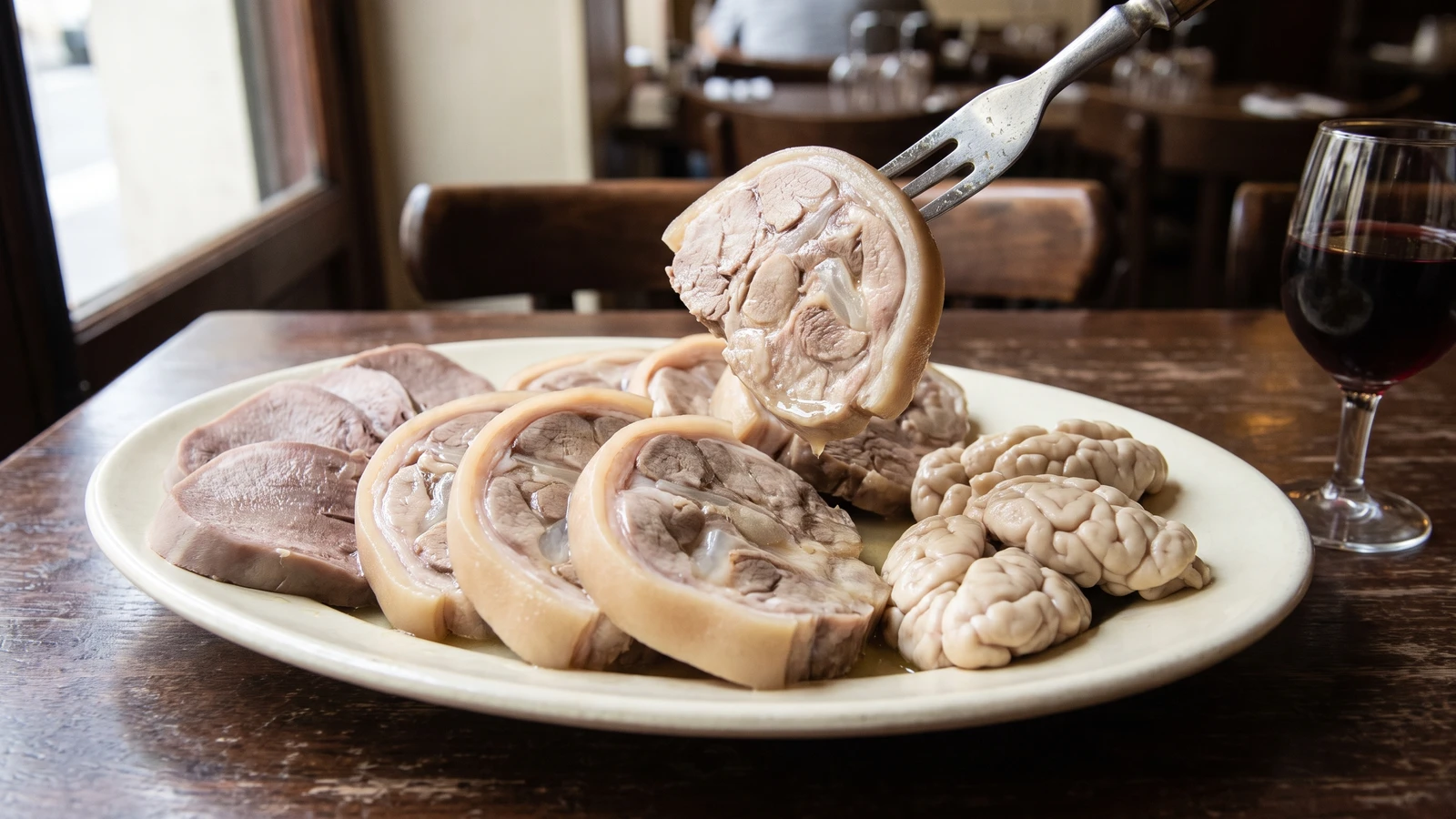
Tête de veau kept pale in a flour blanc, sliced tender with its tongue and delicate brain collops beside it: the classical luncheon platter made manageable for four without surrendering its method.
Tête de veau (calf's head) teaches one uncompromising lesson: once blanching ends, the meat must be protected from the air until cooking is complete. Exposed skin darkens, while a proper blanc (a flour-and-acid cooking bath) keeps it pale, supple, and clean-tasting. That vigilance, more than any flourish at service, decides the dish.
The original entry assumed a whole head, skilled hands to bone it, basins under running taps, and a boiler broad enough to hold everything beneath a napkin or chopped suet. At home, order a boned half head from the butcher, fold it into a compact bundle, and replace the suet seal with damp muslin and a parchment cartouche laid directly on the liquid. Boning the skull at your stove and managing a layer of suet are brigade scaffolding; soaking, blanching, the lemon rub, and cooking in blanc are the dish and must stay. One cook, one stove, one evening.
Done properly, the pale skin trembles around tender cheek meat, the tongue cuts into neat slices, and the brain supplies delicate collops beside them. Keep every surface submerged or closely covered from the moment the head leaves its cooling water. That is the step that matters most.
Tête de veau belongs to the Parisian bouillon and bourgeois luncheon table, where a whole-head presentation became a generous platter of cheek, skin, tongue, and brain. The title preserves two positions in classical service: presented substantially as a relevé or divided into smaller portions as an entrée, though generations of cooks found its clearest place at lunch. Its whiteness comes neither from cream nor from trimming away the skin, but from soaking, blanching, lemon, and an acidulated flour bath that shields the surface from air.
Quantity
1 half head, about 3½ lb (1.6 kg)
scalded, scraped clean, skin on, and left flat
Quantity
1 tongue, about 1¼ lb (570 g)
trimmed
Quantity
1 complete setup for Blanchings (No. 273), sufficient for the head and tongue
Quantity
1
halved
Quantity
1 gallon (3.8 L / approximately 3.9 kg) Special Court-bouillon, or Blanc (No. 167)
prepared
Quantity
1 brain, about 10 oz (285 g), for The Cooking of Brains (No. 1289)
| Ingredient | Quantity |
|---|---|
| boned half calf's headscalded, scraped clean, skin on, and left flat | 1 half head, about 3½ lb (1.6 kg) |
| calf's tonguetrimmed | 1 tongue, about 1¼ lb (570 g) |
| Blanchings | 1 complete setup for Blanchings (No. 273), sufficient for the head and tongue |
| lemonhalved | 1 |
| Special Court-bouillon, or Blancprepared | 1 gallon (3.8 L / approximately 3.9 kg) Special Court-bouillon, or Blanc (No. 167) |
| calf's brain | 1 brain, about 10 oz (285 g), for The Cooking of Brains (No. 1289) |
Keep the boned head flat and cold while you inspect every fold for bone splinters, stray bristles, or clotted blood. Remove only what shouldn't be there; the pale skin, cheek, and gelatinous connective tissue are precisely what you came to cook. Check that the folded head, tongue, and cooking liquid will fit in a tall, fairly narrow pot, because a broad pot makes complete submersion needlessly difficult.
Carry out the complete soaking and blanching operation prescribed in Blanchings (No. 273) for both the head and tongue. The soaking water must finish clear, and this entry directs a full 30-minute blanch for the calf's head before both meats are cooled thoroughly in plenty of fresh cold water. If dark blood remains trapped in a fold, return that section to fresh cold water until it clears. Ça se rattrape. The blanc cannot conceal blood that the soaking failed to remove.
Drain the cooled head well and immediately rub every surface with the cut lemon, working into the folds where air would otherwise darken the skin. Fold the head into a compact, evenly thick packet with the skin facing outward, wrap it firmly in damp food-safe muslin, and secure it with kitchen twine at 2-inch (5 cm) intervals. Keep the tongue separate so you can test and peel it without disturbing the head.
Bring the Special Court-bouillon, or Blanc (No. 167) to a full boil in the stockpot, stirring from the bottom so its suspended flour is evenly distributed. Lower in the wrapped head and tongue immediately, return the liquid just to the boil, then reduce it to a quiet simmer. Lay a parchment cartouche directly against the surface and cover the pot. Everything must remain beneath the liquid; if a corner appears, baste it at once and replace the cartouche snugly. If the pot is too broad, move to a narrower one rather than diluting the blanc with plain water.
Begin checking after 2 hours. A thin skewer should pass through the thickest part of the head with gentle resistance, while the skin remains coherent enough to slice; expect 2½ to 3 hours in all. Test the tongue through its thick end. When it yields, lift it out and peel away the coarse outer skin while it is still warm. If the skin clings, return the tongue to the blanc for 10 minutes and try again. Hold each finished piece submerged in strained cooking liquid off the heat if the other needs longer.
At the first tenderness check, complete The Cooking of Brains (No. 1289) exactly according to its own entry. Drain the cooked brain carefully, let it settle for 5 minutes, and cut it crosswise into collops about ½ inch (1.25 cm) thick. Use a thin, sharp knife and lift each collop from beneath with a small spatula; pressure from above crushes its delicate lobes.
Lift the head from the blanc, remove the twine and muslin, and carve it across the bundle into generous slices about ½ inch (1.25 cm) thick. Slice the peeled tongue on a slight diagonal. Arrange the head in the center of a warmed oval platter, place the tongue along one side and the brain collops along the other, following the rule that all three reach the table together. Carve only at the last moment so the surfaces stay moist and glossy. Serve immediately. À table!
1 serving (about 480g)
Culinary guides, cultural storytelling, and the editorial depth that makes cooking meaningful.
Discover Culinary ExplorerChef Juliette
John Dory has the delicacy of sole and the firmness of turbot. A light flouring, a quick butter sauté, and nut-brown beurre noisette show exactly why looks never mattered.

Chef Juliette
Fresh haddock proves its delicacy in the meunière pan: a fine flour crust, moist pearly flakes, and beurre noisette sharpened with lemon and parsley, ready from one skillet in half an hour.

Chef Juliette
Éperlans à l’Anglaise turns small fish into a lesson in disciplined coating: boned smelts under a close, crisp crumb, pan-fried in clarified butter and finished with bright, half-melted maître d’hôtel butter.

Chef Juliette
Tiny smelts, shallot, mushrooms, white wine, gratin sauce, and fine bread raspings meet a fierce oven, where the fish must turn tender in the same breath the buttered crust bronzes.