
Chef Juliette
Smelt (Éperlans)
Tiny éperlans, lightly floured and fried until their tails stand crisp, arrive in a generous heap on a napkin with fried parsley and grooved lemon, a weeknight lesson in heat and restraint.
A cooking platform built around craft, culture, and the stories behind what we eat.
Created by Chef Juliette
Based on No. 1167, Cold Salt Beef, from Le Guide Culinaire (1907) by Auguste Escoffier
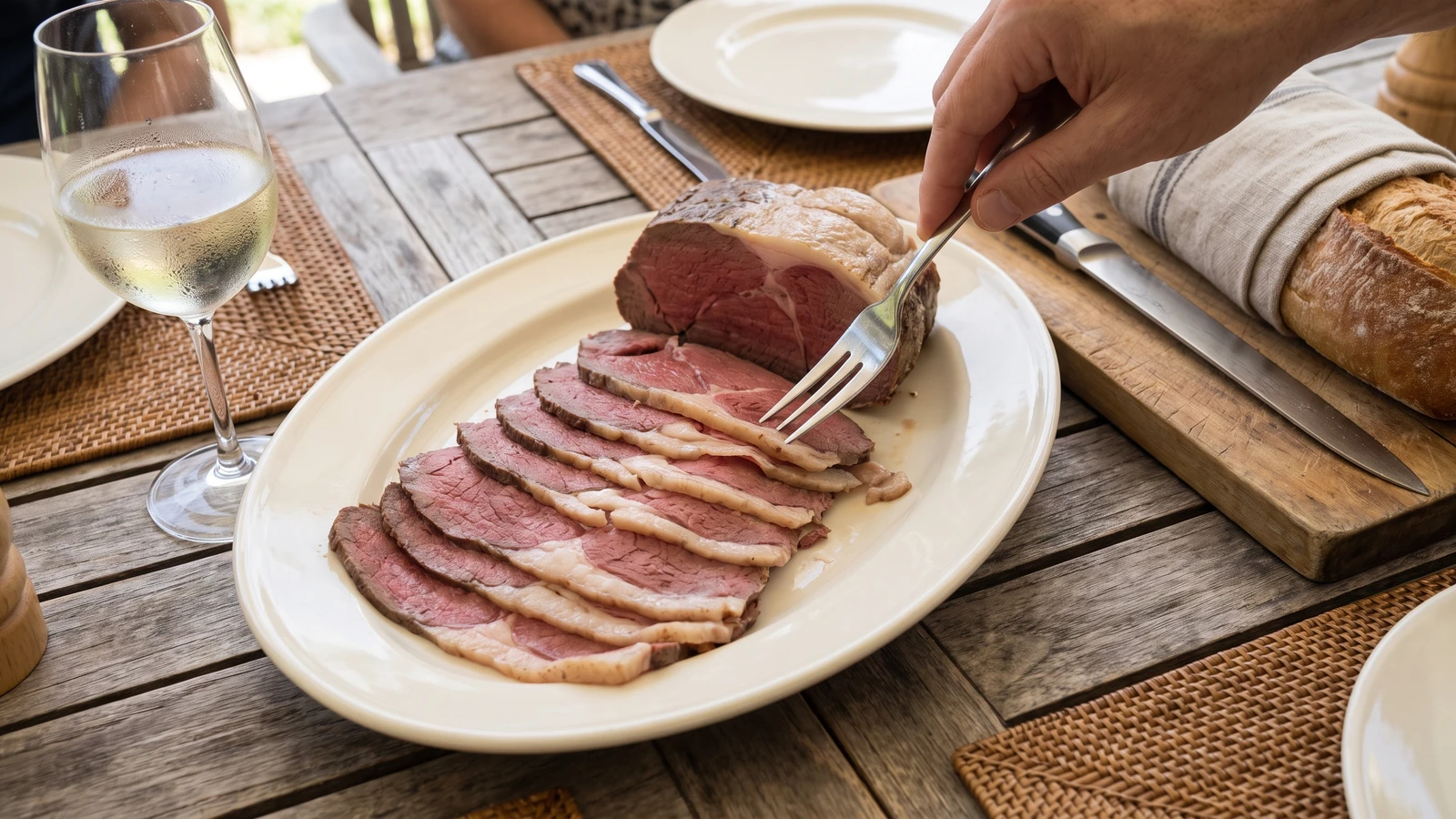
Bœuf Salé Froid turns a chilled piece of salt beef into a proper luncheon dish: trim only what is ragged, preserve every ribbon of fat, then carve thinly against the grain.
Bœuf Salé Froid (cold salt beef) teaches a plain but essential rule of charcuterie: fat is part of the slice, not waste to be tidied away. The lean brings salt and depth; the cold, creamy fat softens it under the teeth. Preserve the two together and a modest joint becomes a generous luncheon dish.
The original entry assumed a larder holding fully cooked salt beef, a carver at the sideboard, and perhaps a hatelet, an ornamental skewer, to fasten on an extra piece of prized fat. It needed no saucier and no stock kept on the fire, so neither is invented here. The honest home equivalents are a one-pound joint for four, a refrigerator, a long sharp knife, and plain cocktail picks if the extra fat is used. One cook, one stove, one evening, and here the stove stays cold.
The ornamental sideboard work is brigade scaffolding and may go. What must stay is the thorough chilling, the careful trimming all around without sacrificing fat, and the thin cut across the grain. Before the knife touches the beef, chill it until both meat and fat are firm. That cold set decides the dish.
Bœuf salé froid belongs to the French service de buffet and the luncheon sideboard rather than to one province, carrying preserved household beef into the more composed language of the grand kitchen. Neat trimming and the hatelet turned a useful cold joint into a presentation dish without changing its substance. The extra fat was displayed because it was prized, not concealed, and removing every pale edge for modern neatness reverses the dish's intent.
Quantity
1 piece (about 1 lb / 454 g)
cooled, with its fat intact
Quantity
1 strip (up to 2 oz / 55 g)
| Ingredient | Quantity |
|---|---|
| fully cooked salt beef brisketcooled, with its fat intact | 1 piece (about 1 lb / 454 g) |
| cold cooked salt-beef fat (optional) | 1 strip (up to 2 oz / 55 g) |
Set the cooled salt beef fat-side up on a rimmed plate, cover it closely, and refrigerate for at least 4 hours, preferably overnight. The meat must be cold through and the fat firm enough to cut cleanly. If the beef has just been cooked, get it under refrigeration within 2 hours and keep it at 40°F / 4°C or colder.
Unwrap the beef and blot away surface moisture. Examine the cut ends and establish the direction of the grain before trimming anything. Neaten ragged or dried edges all around, but preserve every natural layer and seam of fat. If a piece of fat loosens, do not discard it. Lay it back in place and secure it with a cocktail pick; ça se rattrape.
If using the additional cold salt-beef fat, lay it neatly over a lean face or beside a thin natural fat cap. Fasten it with one or two plain cocktail picks, the useful home equivalent of the ornamental hatelet. This extra fat is optional, exactly as in the source; the fat already belonging to the joint is not.
Using a long, very sharp slicing knife, carve the beef thinly across the grain with full, smooth strokes. Keep the fat attached to each slice rather than peeling it away. If the meat tears or the fat smears, stop and return the joint to the refrigerator for 20 minutes, or to the freezer for no more than 10 minutes, then continue. If the grain changes direction within the joint, turn the beef to remain across it.
Overlap the slices loosely on a chilled oval platter, showing the rosy lean and pale fat together. Leave the remaining joint intact at one end if guests will carve more. Cover and refrigerate until the table is ready, then uncover at the last moment. The entry adds no sauce or garnish; any accompaniments may stand separately. At a picnic, keep the platter over ice until serving. À table!
1 serving (about 125g)
Culinary guides, cultural storytelling, and the editorial depth that makes cooking meaningful.
Discover Culinary ExplorerChef Juliette
Tiny éperlans, lightly floured and fried until their tails stand crisp, arrive in a generous heap on a napkin with fried parsley and grooved lemon, a weeknight lesson in heat and restraint.

Chef Juliette
Brandade de Morue turns salt cod, warm olive oil, and milk into a pale, silky emulsion: keep everything warm and add the oil slowly, then crown the generous dome with butter-fried bread.

Chef Juliette
Salt cod worked warm with cream, one patient spoonful at a time, until the rough flakes become a glossy Nîmes paste, domed generously and ringed with butter-fried croutons for the table.

Chef Juliette
Wine-poached char packed in its earthenware crock beneath butter gold: a make-ahead first course that turns careful cooling, thorough boning, and one unbroken seal into quiet abundance.