
Chef Juliette
Châteaubriand, Fillet Steak, Tournedos
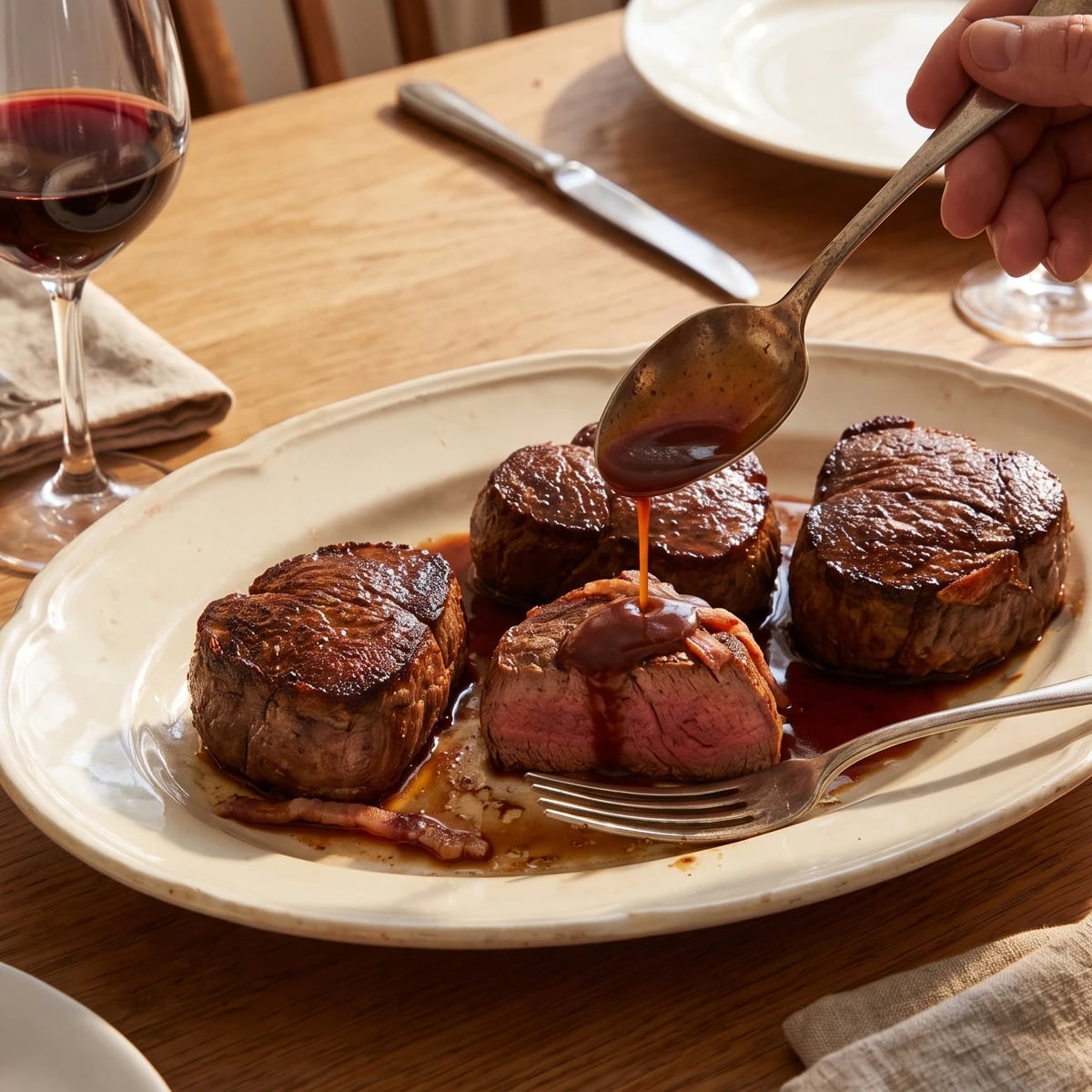
One tenderloin heart, three classical portions: roast Châteaubriand for carving, bifteck de filet for one, tournedos two to a plate, all with braised endives and a red-wine pan jus.
A cooking platform built around craft, culture, and the stories behind what we eat.
Created by Chef Juliette
Based on No. 1140, Filets en Chevreuil, from Le Guide Culinaire (1907) by Auguste Escoffier
Four bacon-larded beef fillets, sharpened by an aromatic marinade and quick-fried in smoking-hot oil, with glossy Sauce Poivrade. Dry them ruthlessly and the crust arrives before the centre overcooks.
Filets en chevreuil (beef fillets treated in the manner of roe deer) teach one unforgiving but useful principle: a marinade can season meat, but it cannot brown it. The fillets must reach the pan bone-dry. Wet meat steams in its own surface liquid; dry meat catches a quick bronze crust before the tender centre overcooks.
The brigade version assumed a larding needle, a cool pantry, oil managed over a fierce range, and a saucier holding Sauce Poivrade built from Cooked Marinade for Venison (No. 168) and a stockpot never off the fire. Your equivalents are a slim metal skewer, the refrigerator, a heavy skillet, and a finished sauce waiting on the lowest burner. A salamander has no work here; the crust belongs to the pan. Four three-ounce fillets preserve the book's exact portion while its five-quart preparations and staff choreography can go. One cook, one stove, one evening.
The larding and the active three-hour marinade are the dish, not brigade scaffolding, so keep them. At the stove, dry each fillet until fresh paper comes away clean. That is the step that decides the dish.
Filets en chevreuil belong to the Parisian classical repertoire, where cooks applied the aromatic, acid-sharp treatment of roe deer to small beef fillets when true game was not the point of the menu. The phrase does not mean the meat is venison: en chevreuil describes beef larded and marinated in the manner of game, then partnered with a forceful sauce such as Poivrade or Chasseur. The preparation moved easily from the grand kitchen to the bourgeois dinner table because its cooking is brief, while the marinade and sauce can be ready before the guests sit down.
Quantity
4 medallions, 3 ounces each (12 ounces / 340 g total)
trimmed
Quantity
2 ounces (55 g)
chilled firm and cut into 12 strips, each about 1/8 inch by 1/8 inch by 2 inches (3 mm by 3 mm by 5 cm)
Quantity
1 cup (240 ml / about 240 g) Raw Marinade for Butcher’s Meat or Venison (No. 169)
freshly prepared and cold
Quantity
3 tablespoons (45 ml / 41 g)
Quantity
1 cup (240 ml / about 250 g) Sauce Poivrade, prepared separately using Cooked Marinade for Venison (No. 168)
warmed
| Ingredient | Quantity |
|---|---|
| beef tenderloin-tip medallionstrimmed | 4 medallions, 3 ounces each (12 ounces / 340 g total) |
| unsmoked dry-cured streaky bacon or salt porkchilled firm and cut into 12 strips, each about 1/8 inch by 1/8 inch by 2 inches (3 mm by 3 mm by 5 cm) | 2 ounces (55 g) |
| Raw Marinade for Butcher’s Meat or Venisonfreshly prepared and cold | 1 cup (240 ml / about 240 g) Raw Marinade for Butcher’s Meat or Venison (No. 169) |
| refined grapeseed or sunflower oil | 3 tablespoons (45 ml / 41 g) |
| Sauce Poivradewarmed | 1 cup (240 ml / about 250 g) Sauce Poivrade, prepared separately using Cooked Marinade for Venison (No. 168) |
Flatten each trimmed fillet very lightly with the heel of your hand until it is about 1 inch (2.5 cm) thick. Do not pound it thin. Make three narrow tunnels through each fillet, following the direction of the meat, with a larding needle or the tip of a narrow paring knife. Thread one chilled bacon strip through each tunnel with a slim metal skewer, leaving the ends barely visible, then trim them flush. The cold makes the fat rigid enough to pass through the meat instead of folding inside it.
Arrange the larded fillets in a nonreactive dish just large enough to hold them. Spoon over the Raw Marinade for Butcher’s Meat or Venison (No. 169), working its aromatics around and over every piece. Cover and refrigerate for three hours, turning the fillets every forty-five minutes so each side meets the marinade. The refrigerator replaces the cool pantry and oil-paper of the brigade method. Do not leave these small pieces overnight; the active vinegar would cure their surfaces and make them mealy.
Warm the Sauce Poivrade prepared using Cooked Marinade for Venison (No. 168) over the gentlest heat, then cover it and hold it off the burner. Lift the fillets from the raw marinade, scrape away every aromatic, and discard the used marinade. Press the meat firmly between several changes of paper towel, set it on a clean rack for ten minutes, then blot it once more. Trim any protruding bacon flush because exposed ends burn before the beef browns.
Set a 12-inch (30 cm) heavy skillet over high heat for about three minutes, then add the oil. It is ready when the surface ripples freely and the first faint thread of smoke appears. Keep the pan attended and lower the meat away from you. The original calls for smoking oil because anything cooler lets the marinade's remaining moisture collect before the outside can set.
Lay the fillets in the oil with space between them. Fry without moving for 60 to 90 seconds, until the undersides are deeply bronzed, then turn and fry the second sides for another 60 to 90 seconds. Roll each briefly against the pan to colour its edges. If your skillet is smaller than 12 inches (30 cm), work in two batches. Remove at 126 to 130°F (52 to 54°C) for medium-rare or 140°F (60°C) for medium; cook to 145°F (63°C) when serving anyone who requires the conservative safety standard. If liquid beads around the meat and the fierce hiss goes dull, lift the fillets to a clean rack immediately. Turn off the heat, pour the liquid into a heatproof bowl, wipe the pan with paper held in tongs, then reheat it with a little fresh oil and blot the meat again. Ça se rattrape. A flooded pan is a warning, not a verdict.
Rest the fillets uncovered for five minutes so the crust stays firm. Stir any clear resting juices into the Sauce Poivrade, warming it gently without boiling; if it has tightened too far, whisk in a teaspoon of warm water at a time until it coats a spoon in a glossy film. Pool the sauce on a warmed oval platter and arrange the fillets over it rather than drowning their browned tops. Serve at once. À table!
1 serving (about 140g)
Culinary guides, cultural storytelling, and the editorial depth that makes cooking meaningful.
Discover Culinary Explorer
Chef Juliette
One tenderloin heart, three classical portions: roast Châteaubriand for carving, bifteck de filet for one, tournedos two to a plate, all with braised endives and a red-wine pan jus.

Chef Juliette
Tournedos Algérienne teaches timing: crisp sweet-potato croquettes and tender oil-stewed tomatoes must be ready before lean fillet meets clarified butter, sears fast, and goes straight to the table.

Chef Juliette
Tournedos crowned over crisp tartlets of wine-braised choucroute and lean ham: a hot, quick grill for the fillet, a dry, buttery foundation below, and Alsace carried through the whole plate.

Chef Juliette
Tender tournedos meet a Provençal ring of golden aubergine and sautéed tomato, each steak crowned with fried onion. The lesson is timing: prepare the garnish, then give lean fillet one hot, quick pan.