Chef Juliette
Ordinary or White Consommé
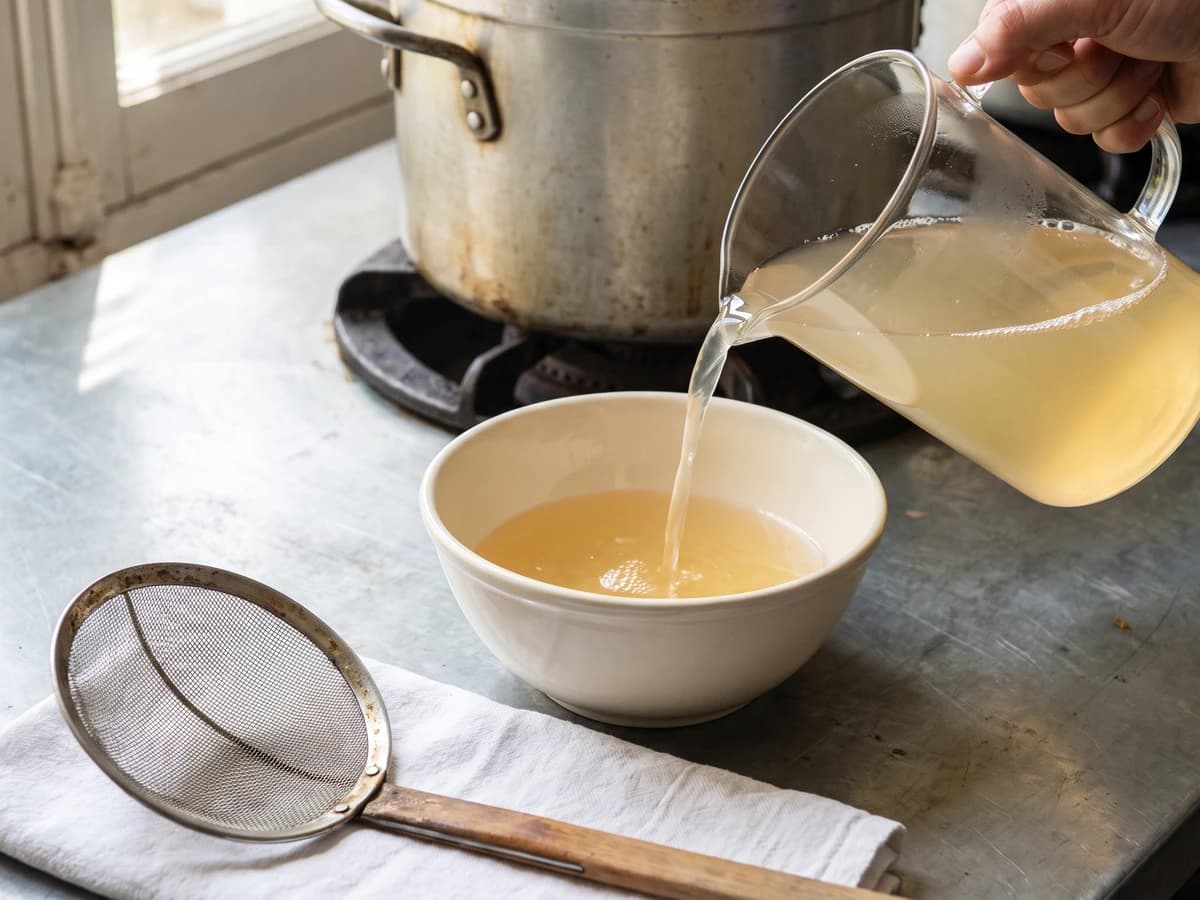
Beef shin, lean beef, and fowl begin in cold water and rise slowly toward a tremble. Skim before the boil, and you learn the quiet discipline that gives every clear French broth its backbone.
A cooking platform built around craft, culture, and the stories behind what we eat.
Created by Chef Juliette
Based on No. 107, Venetian Sauce, from Le Guide Culinaire (1907) by Auguste Escoffier
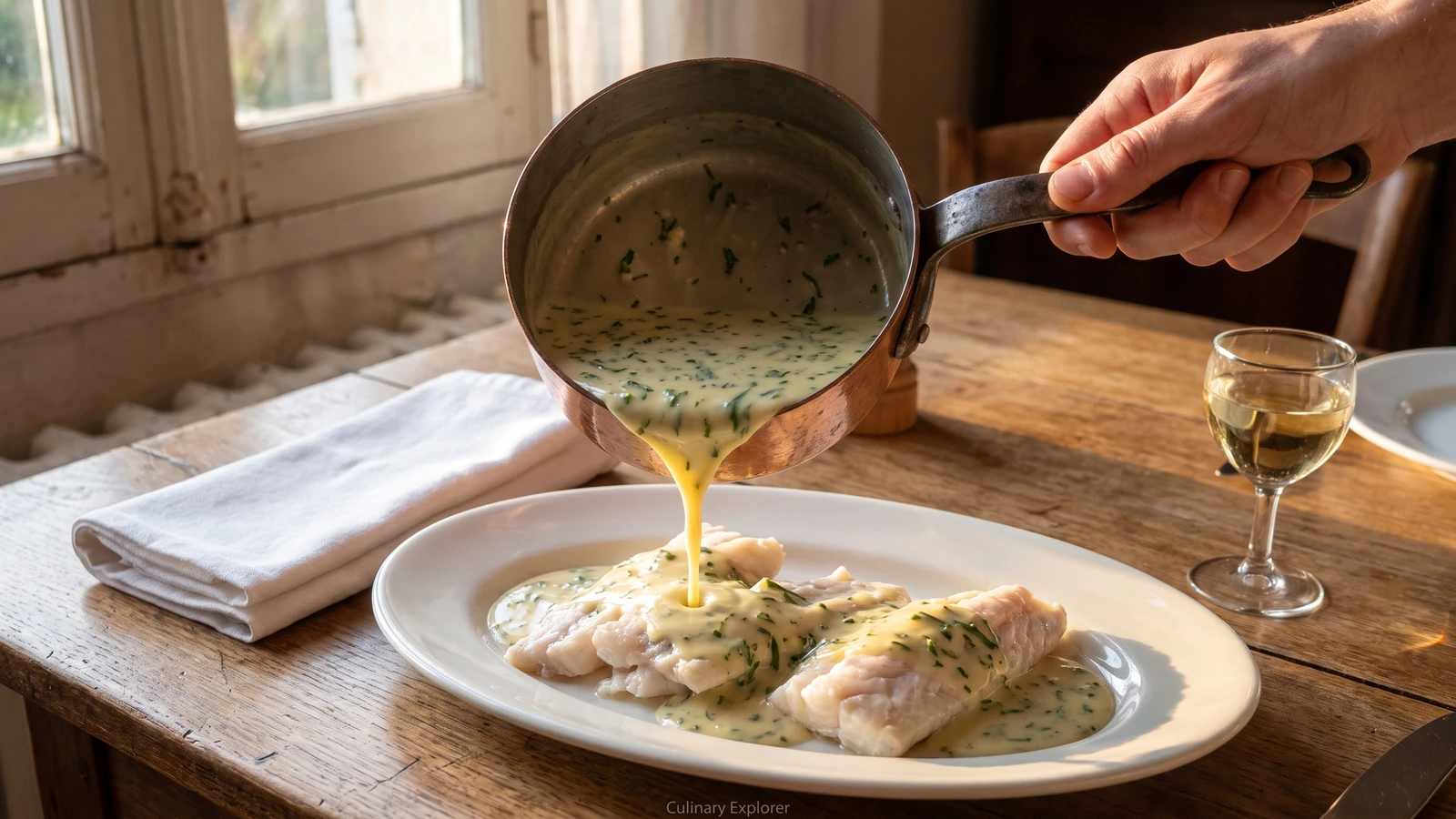
Sauce Vénitienne turns disciplined reduction into brightness: shallot, white wine, and tarragon vinegar sharpen a silken base, while herb juice and fresh leaves give poached fish its vivid green finish.
Sauce Vénitienne (Venetian sauce) teaches the order of a derivative sauce: reduce the acid first, join it to the finished base, then add the green finish away from hard heat. The one true thing to know before touching a pan is that vinegar cannot be rushed into a finished butter sauce and then bullied into balance. The reduction is the dish.
The original assumes a saucier on staff, a stockpot never cold, White Wine Sauce (No. 111) and Herb Juice (No. 183) already waiting, and a tammy for passing the finished sauce. At home, one wide saucepan and a fine-mesh sieve replace the separate station and the tammy. That is brigade scaffolding and can go. The four-to-one proportion of finished sauce to unreduced wine and vinegar, the measured reduction, and the cool herb finish must stay. The batch fits one four-quart pan and makes about two quarts: one cook, one stove, one evening.
When it is right, the sauce is nappant (silken enough to coat the back of a spoon), pale green rather than emerald, with shallot beneath the clean bite of tarragon vinegar and fresh herbs arriving last. Measure the reduction instead of trusting the clock. Two cups must become two-thirds of a cup before the White Wine Sauce (No. 111) goes in.
Sauce Vénitienne belongs to the Parisian grande cuisine repertory of derivative fish sauces, where a finished white base was altered at service with one concentrated garnish. Its name points toward Venice, but its grammar is French: White Wine Sauce (No. 111) sharpened with shallot, wine, and tarragon vinegar, then colored with Herb Juice (No. 183). The green finish became its identifying mark beside poached fish, not proof that the sauce began in a Venetian household kitchen.
Quantity
1/4 cup (60 ml / 40 g)
finely chopped
Quantity
1/4 cup (60 ml / 8 g)
finely chopped
Quantity
1 cup (240 ml / 240 g)
Quantity
1 cup (240 ml / 240 g)
Quantity
8 cups (1.9 L / 1,950 g) White Wine Sauce (No. 111)
Quantity
Up to 1/2 cup (120 ml / 120 g) Herb Juice (No. 183)
Quantity
4 teaspoons (20 ml / 5 g), mixed in equal quantities
finely chopped
| Ingredient | Quantity |
|---|---|
| shallotsfinely chopped | 1/4 cup (60 ml / 40 g) |
| fresh chervil for the reductionfinely chopped | 1/4 cup (60 ml / 8 g) |
| dry white wine | 1 cup (240 ml / 240 g) |
| tarragon vinegar | 1 cup (240 ml / 240 g) |
| White Wine Sauce | 8 cups (1.9 L / 1,950 g) White Wine Sauce (No. 111) |
| Herb Juice | Up to 1/2 cup (120 ml / 120 g) Herb Juice (No. 183) |
| fresh chervil and tarragon leavesfinely chopped | 4 teaspoons (20 ml / 5 g), mixed in equal quantities |
Have the White Wine Sauce (No. 111) warm and smooth, not boiling, and keep the Herb Juice (No. 183) cold until the finish. Chop the shallots and both measures of herbs just before cooking. Set a heatproof bowl beneath a fine-mesh sieve. The old kitchen had these preparations waiting at the sauce station; your mise en place does the same work without requiring another pair of hands.
Put the shallots, the chervil reserved for the reduction, the white wine, and the tarragon vinegar into a wide four-quart saucepan. Bring to a lively simmer and reduce the original 2 cups to 2/3 cup, stirring occasionally and watching closely near the end. It should smell rounded and aromatic, not like raw vinegar, and the shallots should be tender. If the pan nearly dries or the shallots begin to catch, pull it from the heat and add equal spoonfuls of wine and tarragon vinegar until you have 2/3 cup again. Ça se rattrape.
Lower the heat and whisk in the White Wine Sauce (No. 111) a ladleful at a time until the reduction is fully dispersed, then add the remainder. Bring the sauce just to a controlled boil and cook for 3 minutes, whisking across the bottom so nothing catches. The sauce should remain smooth and nappant. If it begins to look oily or grainy, remove it from the heat at once; whisk a ladleful vigorously in a cool bowl until smooth, then whisk the rest back into it gradually. Ça se rattrape, but boiling harder will not rescue it.
Pour the sauce through the fine-mesh sieve into the waiting bowl, pressing the shallot and cooked chervil firmly with a flexible spatula to extract the seasoned sauce caught among them. Scrape the underside of the sieve into the bowl. This replaces rubbing through a tammy, giving the same smooth body with equipment a home kitchen actually owns.
Return the strained sauce to the clean pan over the gentlest heat. Add the Herb Juice (No. 183) one spoonful at a time, whisking after each addition, until the sauce becomes a clear, natural herb green and tastes freshly aromatic without losing its body. Fold in the chopped chervil and tarragon, then remove the pan from the heat. Do not boil after the Herb Juice (No. 183) goes in or the green will turn dull. If the pan was too hot and the color has faded, cool the sauce briefly and whisk in another spoonful of the reserved Herb Juice (No. 183).
Taste for the balance already built into the White Wine Sauce (No. 111), the wine reduction, and the tarragon vinegar. The finished Sauce Vénitienne should be bright but not sour, smooth but not heavy, and green enough to announce the herbs without resembling paint. Spoon it generously over poached sole, turbot, pike, or another firm white fish, and send it to the table while the gloss is alive. À table!
1 serving (about 60g)
Culinary guides, cultural storytelling, and the editorial depth that makes cooking meaningful.
Discover Culinary ExplorerChef Juliette
Beef shin, lean beef, and fowl begin in cold water and rise slowly toward a tremble. Skim before the boil, and you learn the quiet discipline that gives every clear French broth its backbone.
Chef Juliette
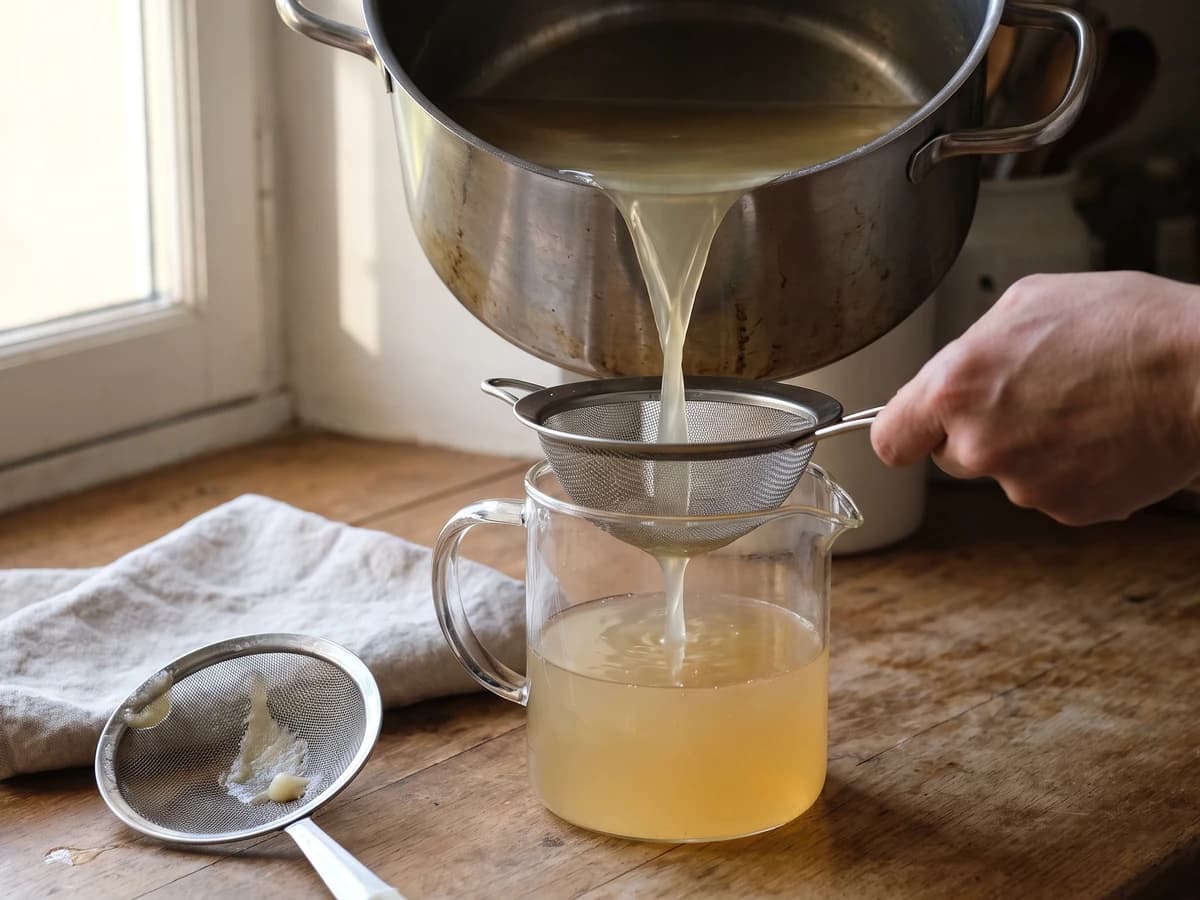
Break the veal bones small, then give them eight hours at a bare tremble. This pale, gelatinous fond becomes the quiet foundation beneath velouté, blanquette, and every sauce that must stay light.
Chef Juliette
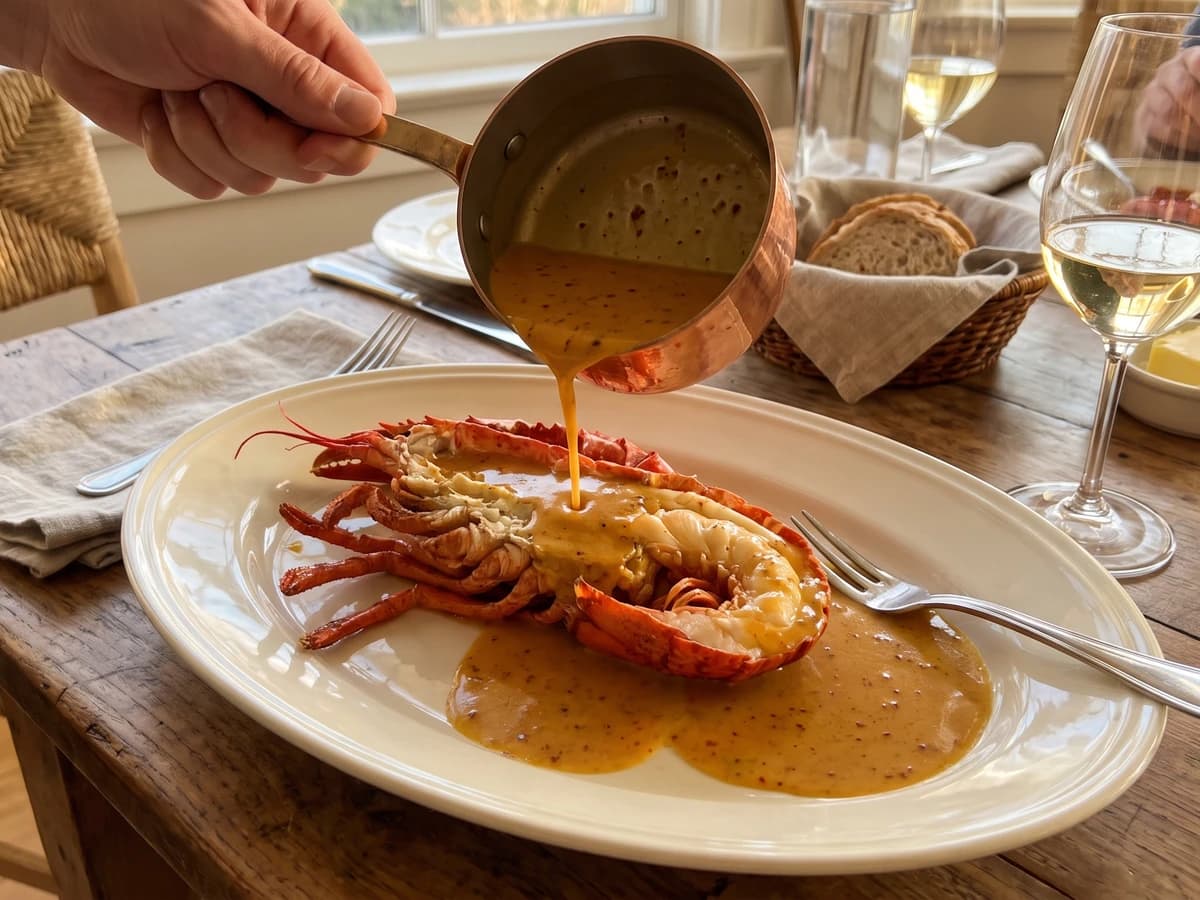
Sauce Orientale concentrates lobster-rich American Sauce with curry, then folds in cream away from the fire: a glossy, gently spiced derivative made for lobster, crayfish, and firm fish.
Chef Juliette
An old lesson in sauce families: Sauce Allemande takes mushroom liquor, then butter, lemon, and parsley, becoming a glossy Poulette for sheep's trotters, leeks, cauliflower, and anything needing gentle richness with a bright edge.