Chef Juliette
Ordinary or White Consommé
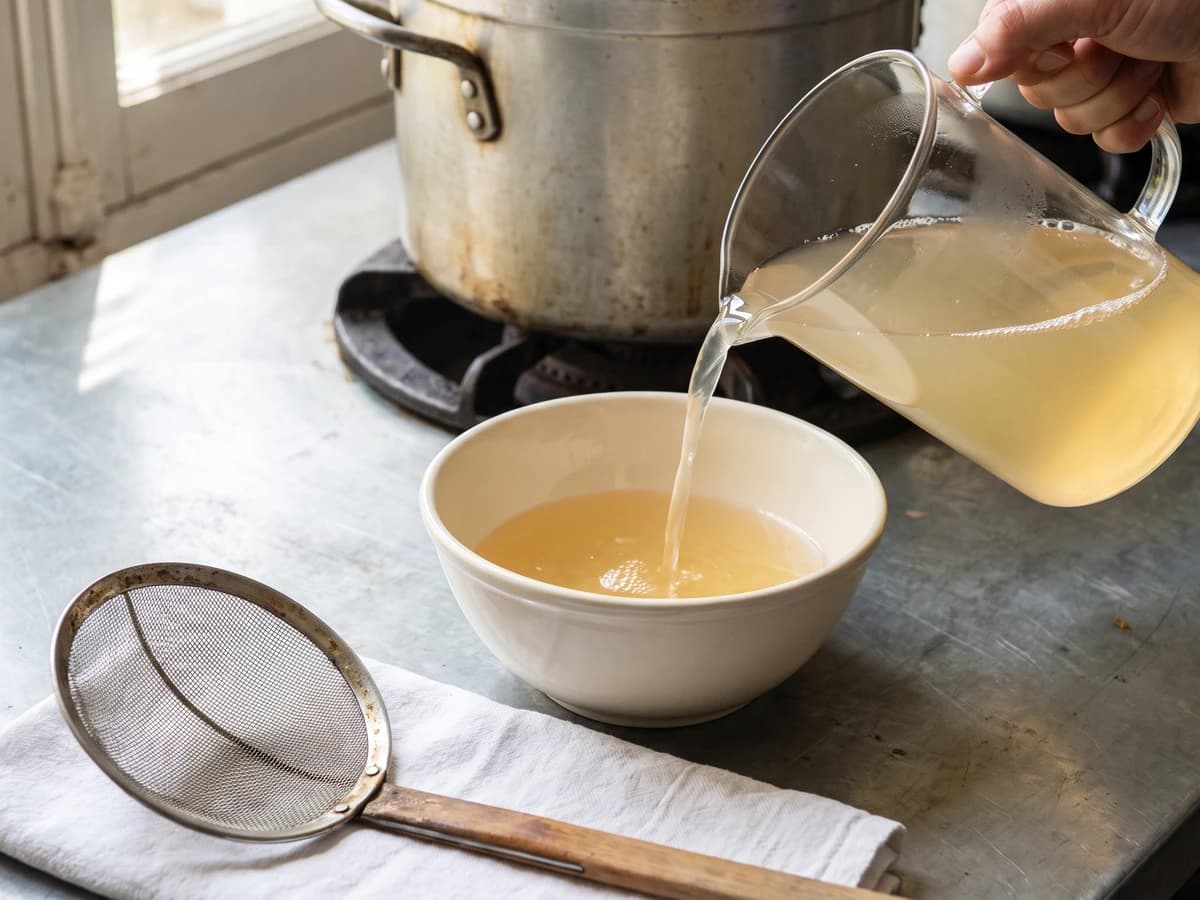
Beef shin, lean beef, and fowl begin in cold water and rise slowly toward a tremble. Skim before the boil, and you learn the quiet discipline that gives every clear French broth its backbone.
A cooking platform built around craft, culture, and the stories behind what we eat.
Created by Chef Juliette
Based on No. 111, White Wine Sauce, from Le Guide Culinaire (1907) by Auguste Escoffier
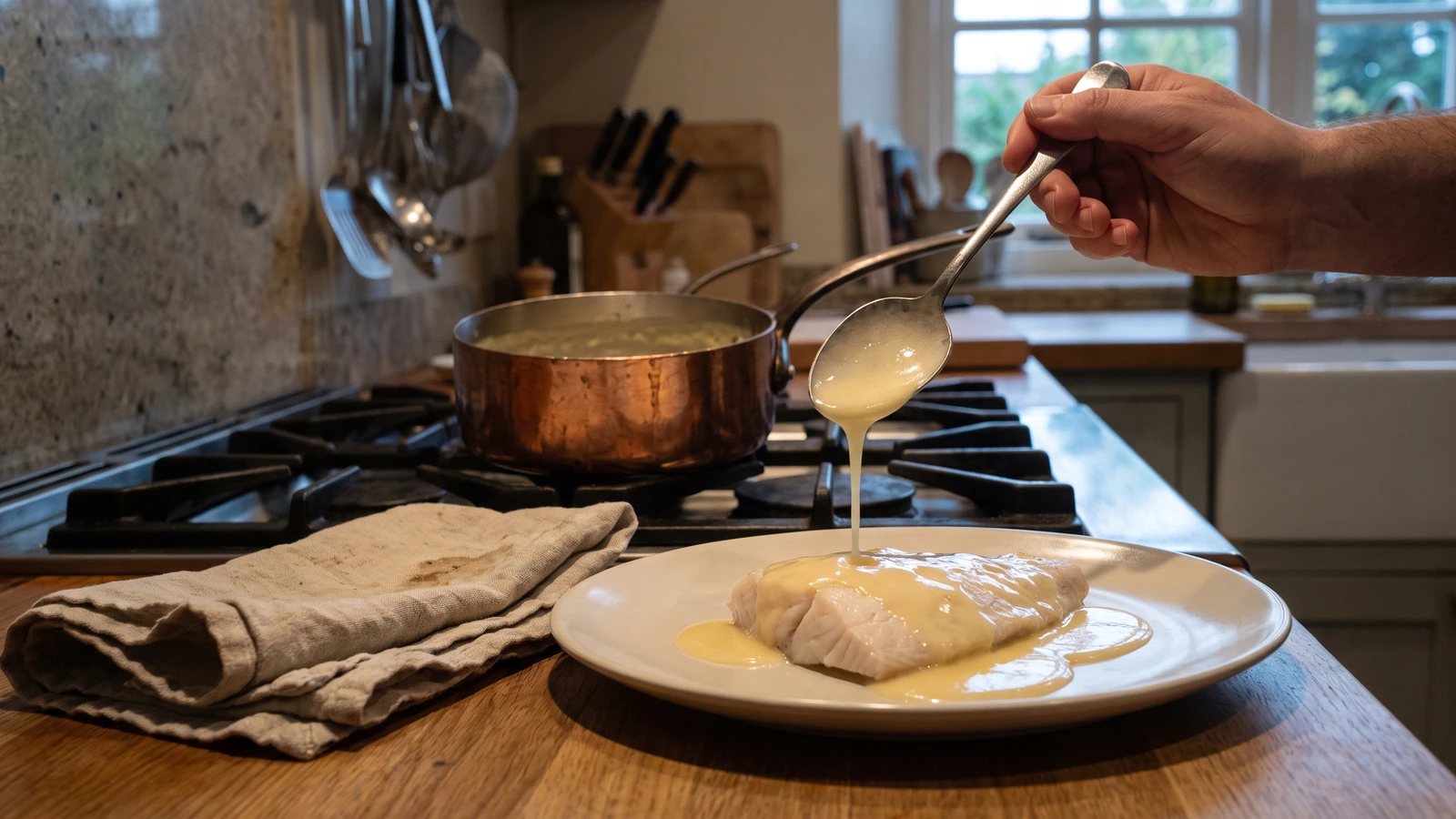
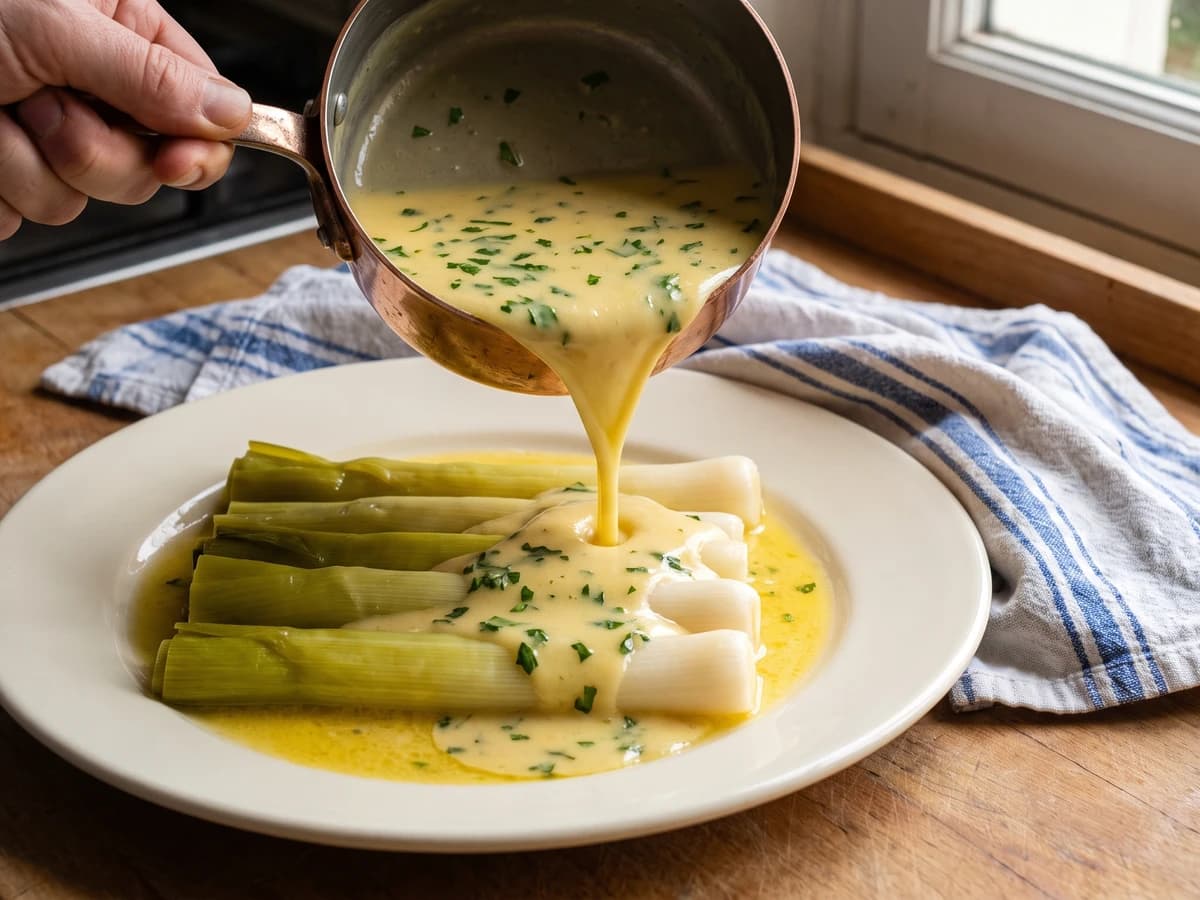
Sauce au Vin Blanc takes three classical roads to the same ivory gloss: Velouté reduced with fumet and mounted with butter, or two Hollandaise-style emulsions built on fish essence.
Sauce au Vin Blanc (white wine sauce) teaches that reduction and emulsion are branches of the same sauce family. The one true thing to know before touching the pan is this: concentrate the fumet before the butter arrives, then keep the heat gentle enough to preserve the emulsion. C'est la même grammaire, whether the foundation is Velouté or egg yolk.
The original gives three roads. The first reduces thickened Velouté, fish stock bound with a pale roux, with fumet, a concentrated fish essence, before mounting it with butter. The second reduces fumet almost to a glaze, then works in yolks and butter by the Hollandaise method. The third begins the yolks with cold fish stock in a bain-marie, a hot-water bath, and alternates butter with spoonfuls of fumet. A grand kitchen assumed a saucier at the stove, fumet always ready, a tammy for straining, and a salamander waiting to glaze the fish. Your equivalents are a steady saucepan, a bowl over barely simmering water, a fine sieve only when needed, and the home broiler for Method 1. The dedicated station and tammy are brigade scaffolding; the reduction, temperature control, and butter emulsion are the dish and must stay.
Each road has been normalized to one defined two-quart batch while preserving its original proportions, so choose one complete method rather than combining them. Method 1 is the steadier sauce and the source's choice for glazed fish; Methods 2 and 3 are richer, yolk-bound emulsions. Whichever road you take, the moment that matters is when butter meets the concentrated base. Watch the heat there, and the sauce will leave the spoon in a broad, shining ribbon.
Sauce au Vin Blanc belongs to the Parisian classical fish kitchen, where fumet, Velouté, egg yolks, and butter were organized into related sauce methods rather than treated as isolated recipes. From grand fish service it passed naturally to the bourgeois table, particularly with poached or glazed fish. Its name can mislead the modern cook: this formula adds no separate glass of wine at the stove, relying instead on the fish foundation and the sauce tradition attached to white-wine fish preparations.
Quantity
9½ cups (2.25 L / approximately 2.3 kg)
Quantity
2⅜ cups (560 ml / 560 g)
Quantity
2 cups (475 ml / 454 g)
cut into small cubes
Quantity
2⅛ cups (500 ml / 500 g)
Quantity
14, for the Hollandaise Sauce (No. 30) procedure
Quantity
7 cups (1.66 L / 1.59 kg)
melted and kept just warm
Quantity
15, for the Hollandaise Sauce (No. 30) procedure
Quantity
3 tablespoons (45 ml / 45 g)
Quantity
6 cups (1.42 L / 1.36 kg)
melted and kept just warm
Quantity
1⅛ cups (265 ml / 265 g)
| Ingredient | Quantity |
|---|---|
| Method 1: hot thickened Velouté | 9½ cups (2.25 L / approximately 2.3 kg) |
| Method 1: fish fumet | 2⅜ cups (560 ml / 560 g) |
| Method 1: cold unsalted buttercut into small cubes | 2 cups (475 ml / 454 g) |
| Method 2: fish fumet | 2⅛ cups (500 ml / 500 g) |
| Method 2: large egg yolks | 14, for the Hollandaise Sauce (No. 30) procedure |
| Method 2: unsalted buttermelted and kept just warm | 7 cups (1.66 L / 1.59 kg) |
| Method 3: large egg yolks | 15, for the Hollandaise Sauce (No. 30) procedure |
| Method 3: cold unsalted fish stock | 3 tablespoons (45 ml / 45 g) |
| Method 3: unsalted buttermelted and kept just warm | 6 cups (1.42 L / 1.36 kg) |
| Method 3: excellent fish fumet | 1⅛ cups (265 ml / 265 g) |
Choose one complete ingredient set. Do not combine the three methods. Use Method 1 when the sauce must stand beneath a brief broiler glaze or wait a few minutes for the fish. Choose Method 2 for the fullest fumet flavor in a yolk-and-butter emulsion. Choose Method 3 when you want the fumet introduced gradually, giving you finer control over consistency.
For Method 1, combine the hot thickened Velouté and fumet in a wide, heavy saucepan. Bring them to a controlled simmer and reduce by half, from just under 12 cups to approximately 6 cups, stirring frequently and scraping the corners where a thickened sauce catches first. The sauce is ready when it falls heavily from the spoon and leaves a clear trail across the pan floor for a moment. Reduction is the concentration here; a hard boil only scorches the roux before the fumet has time to deepen.
Take the pan completely off the heat. Monter au beurre means whisking in butter away from direct heat to give the sauce body and gloss. Add the cold butter a few cubes at a time, whisking each addition nearly smooth before adding the next. If oily beads appear, stop adding butter. Ça se rattrape: whisk in 1 tablespoon (15 ml / 15 g) of cold fumet to draw the emulsion together, then continue more slowly with the pan off the heat. The finished sauce should coat the back of a spoon in a smooth ivory layer.
For Method 2, put the fumet in a wide saucepan and boil it down until only about ¼ cup (60 ml / 60 g) remains. It should look syrupy and smell distinctly of fish without smelling scorched. Transfer the reduction to a large heatproof bowl and let it cool until warm rather than fiercely hot; yolks added to a boiling reduction become scrambled eggs, and no amount of butter can persuade them otherwise.
Whisk the yolks into the reduced fumet, then set the bowl over a saucepan of barely simmering water, making certain the bowl does not touch the water. Following the Hollandaise Sauce (No. 30) procedure, whisk continuously until the yolks become pale, creamy, and thick enough to hold the whisk's trace. Lift the bowl from the heat and add the warm melted butter in a thin stream, whisking without pause. If the sauce turns greasy or curdled, stop. Ça se rattrape: place 1 tablespoon (15 ml / 15 g) cold fumet in a clean warm bowl, whisk in one spoonful of the broken sauce until smooth, then incorporate the remainder gradually. Never return a finished emulsion to direct heat.
For Method 3, whisk the yolks with the cold fish stock in a large heatproof bowl. Set it over a bain-marie and whisk until the yolks thicken into a pale cream. Following the Hollandaise Sauce (No. 30) procedure, begin adding the warm melted butter gradually, alternating it with the fumet in small spoonfuls. Let each addition disappear before the next. This gradual fumet addition replaces the water used to regulate Hollandaise and keeps the sauce supple. If it tightens until the whisk leaves ridges, add another spoonful of fumet. If it begins to split, rebuild it in a clean bowl with 1 tablespoon (15 ml / 15 g) cold fumet and spoonfuls of the broken sauce. Ça se rattrape.
Taste the chosen sauce against the fish it will accompany, since the fumet and Velouté may already carry all the seasoning required. Pass it through a warm fine-mesh sieve only if you see bits of cooked yolk or roux; the brigade's tammy was useful scaffolding, not a ritual. Hold the sauce for no more than 30 minutes over warm water, never simmering. If it thickens, whisk in fumet 1 tablespoon (15 ml / 15 g) at a time. For glazed fish, spoon Method 1 over cooked fish and place it briefly under the broiler, the home salamander, just until the surface gleams and takes the faintest gold. À table!
1 serving (about 60g)
Culinary guides, cultural storytelling, and the editorial depth that makes cooking meaningful.
Discover Culinary ExplorerChef Juliette
Beef shin, lean beef, and fowl begin in cold water and rise slowly toward a tremble. Skim before the boil, and you learn the quiet discipline that gives every clear French broth its backbone.
Chef Juliette
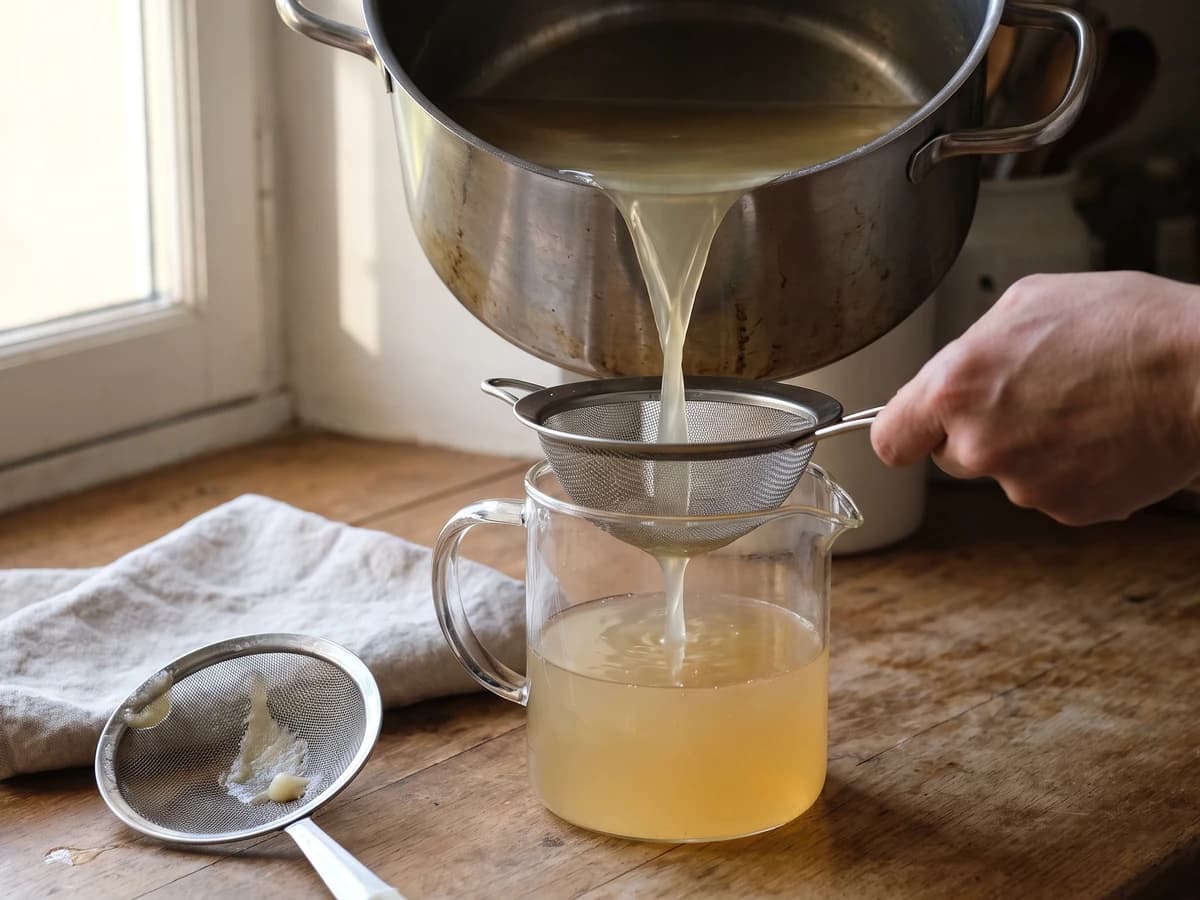
Break the veal bones small, then give them eight hours at a bare tremble. This pale, gelatinous fond becomes the quiet foundation beneath velouté, blanquette, and every sauce that must stay light.
Chef Juliette
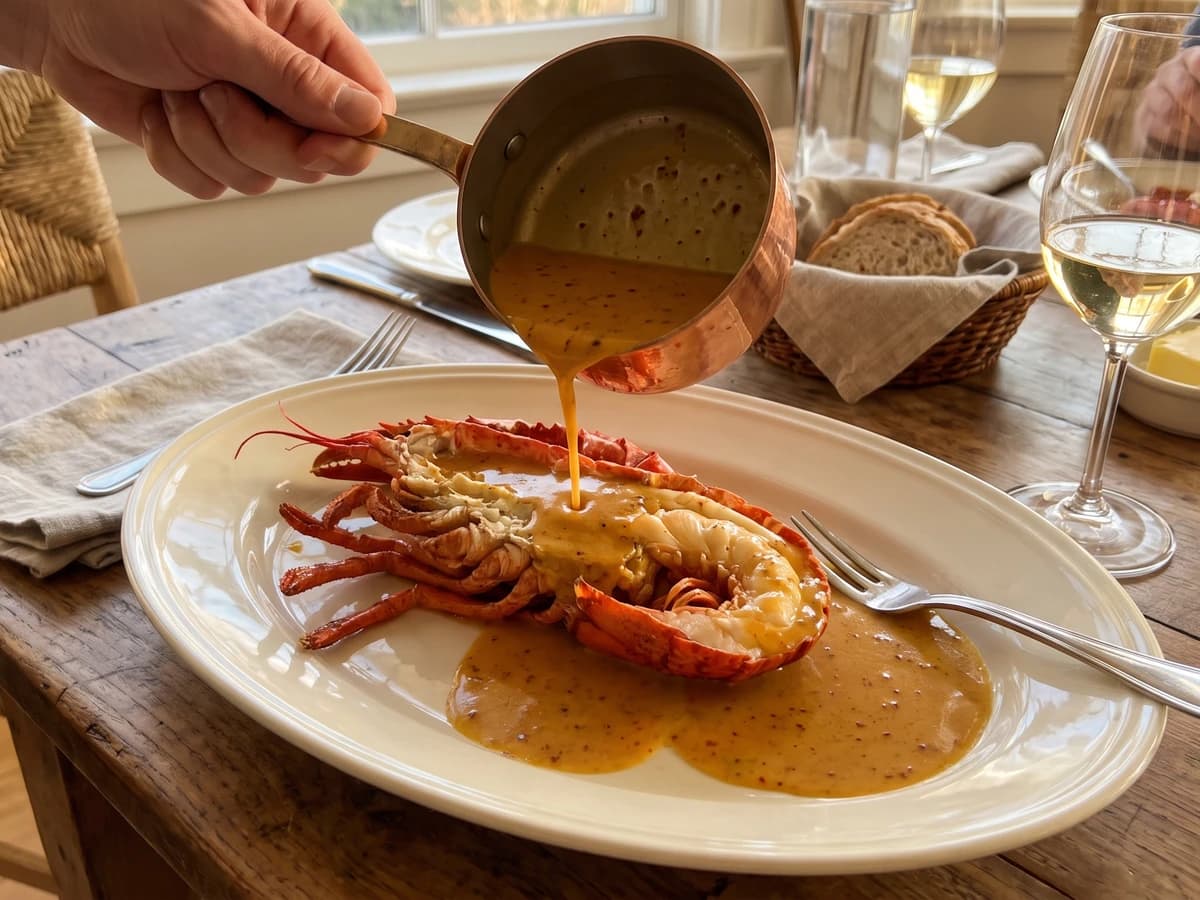
Sauce Orientale concentrates lobster-rich American Sauce with curry, then folds in cream away from the fire: a glossy, gently spiced derivative made for lobster, crayfish, and firm fish.
Chef Juliette
An old lesson in sauce families: Sauce Allemande takes mushroom liquor, then butter, lemon, and parsley, becoming a glossy Poulette for sheep's trotters, leeks, cauliflower, and anything needing gentle richness with a bright edge.