Chef Juliette
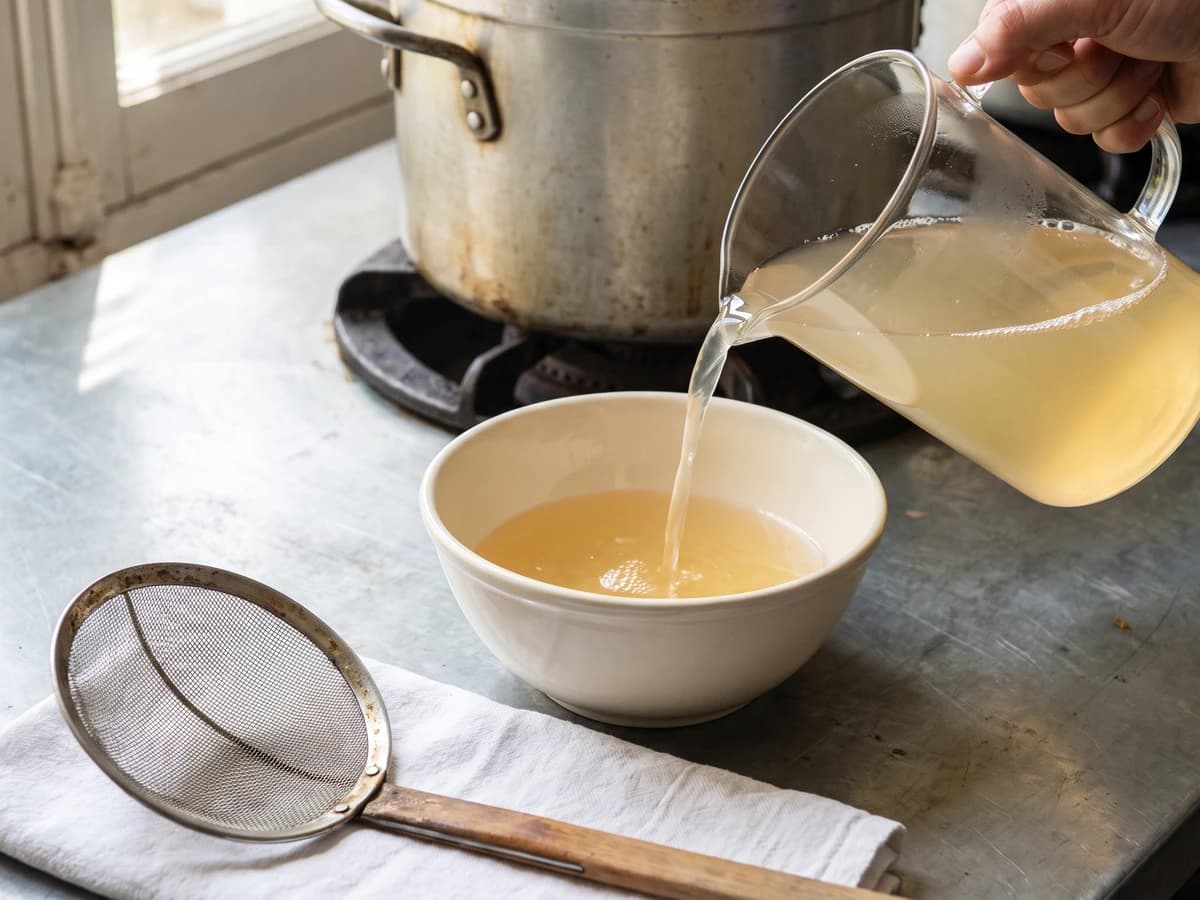
Ordinary or White Consommé
Beef shin, lean beef, and fowl begin in cold water and rise slowly toward a tremble. Skim before the boil, and you learn the quiet discipline that gives every clear French broth its backbone.
A cooking platform built around craft, culture, and the stories behind what we eat.
Created by Chef Juliette
Based on No. 30, Hollandaise Sauce, from Le Guide Culinaire (1907) by Auguste Escoffier
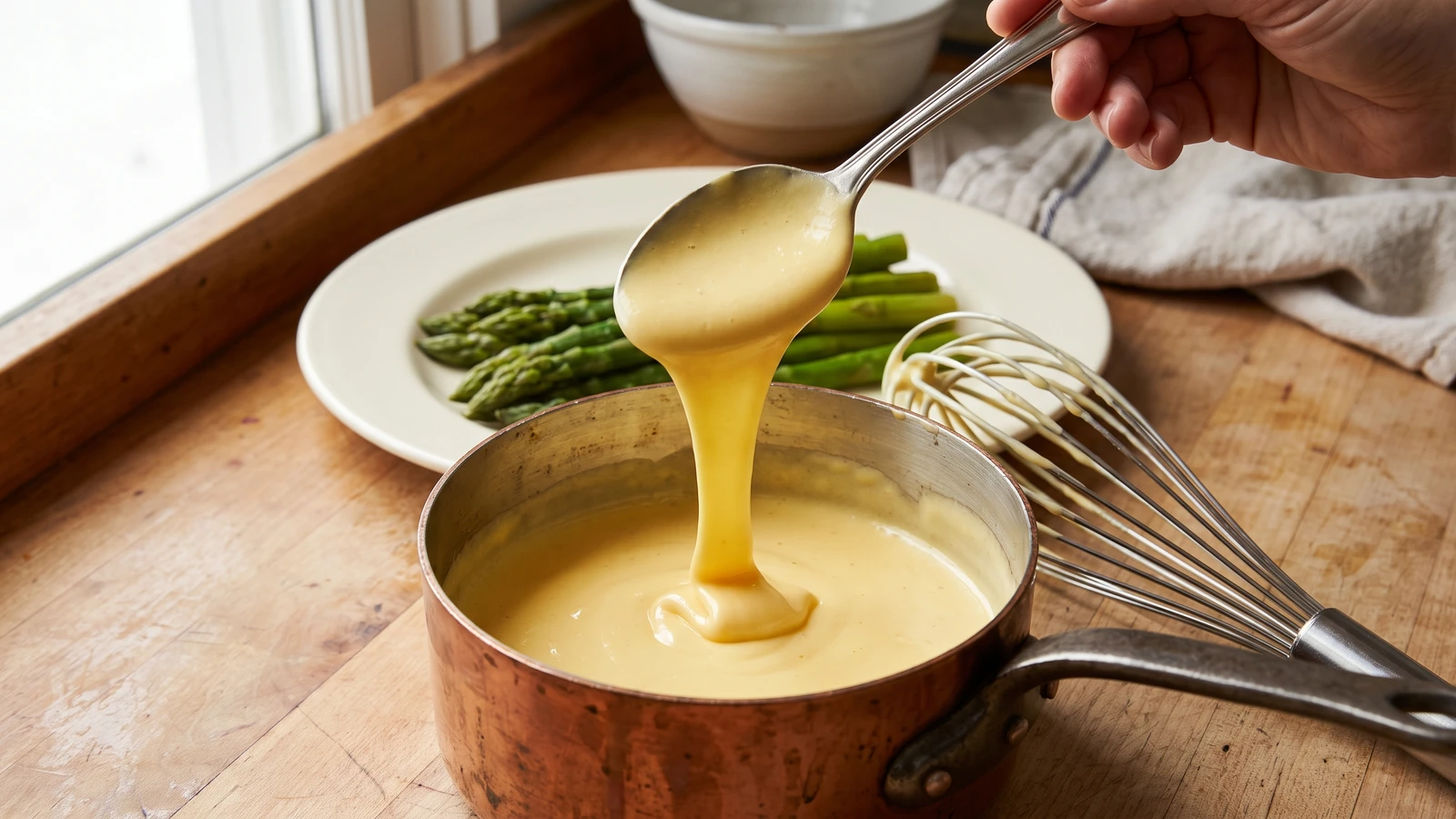
Sauce hollandaise is the warm emulsion that teaches every butter-mounted sauce: cook the yolks to a pale cream, keep the heat gentle, then give the butter time to become one with them.
Sauce hollandaise (warm butter-and-yolk emulsion) teaches one true thing: temperature makes the sauce, and temperature can undo it. The yolks must become warm enough to hold the butter, never hot enough to scramble; the butter must flow, never arrive so hot or fast that the emulsion loses its footing. C'est la même grammaire across the whole family of warm emulsions.
The source formula made a quart and assumed a saucier stationed beside a gentle corner of the range, with a bain-marie ready and a tammy waiting for the final polish. For one cook, one stove, one evening, the formula becomes one-third its original size: two yolks, eight ounces of butter, and every other quantity reduced in the same proportion. A heatproof bowl over barely simmering water supplies the bain-marie, a warm-water bath, while a fine-mesh sieve replaces the tammy. Sieving is brigade scaffolding and may go when the sauce is already perfectly smooth; the vinegar reduction, properly cooked yolks, and gradual mounting of the butter are the dish itself and must stay.
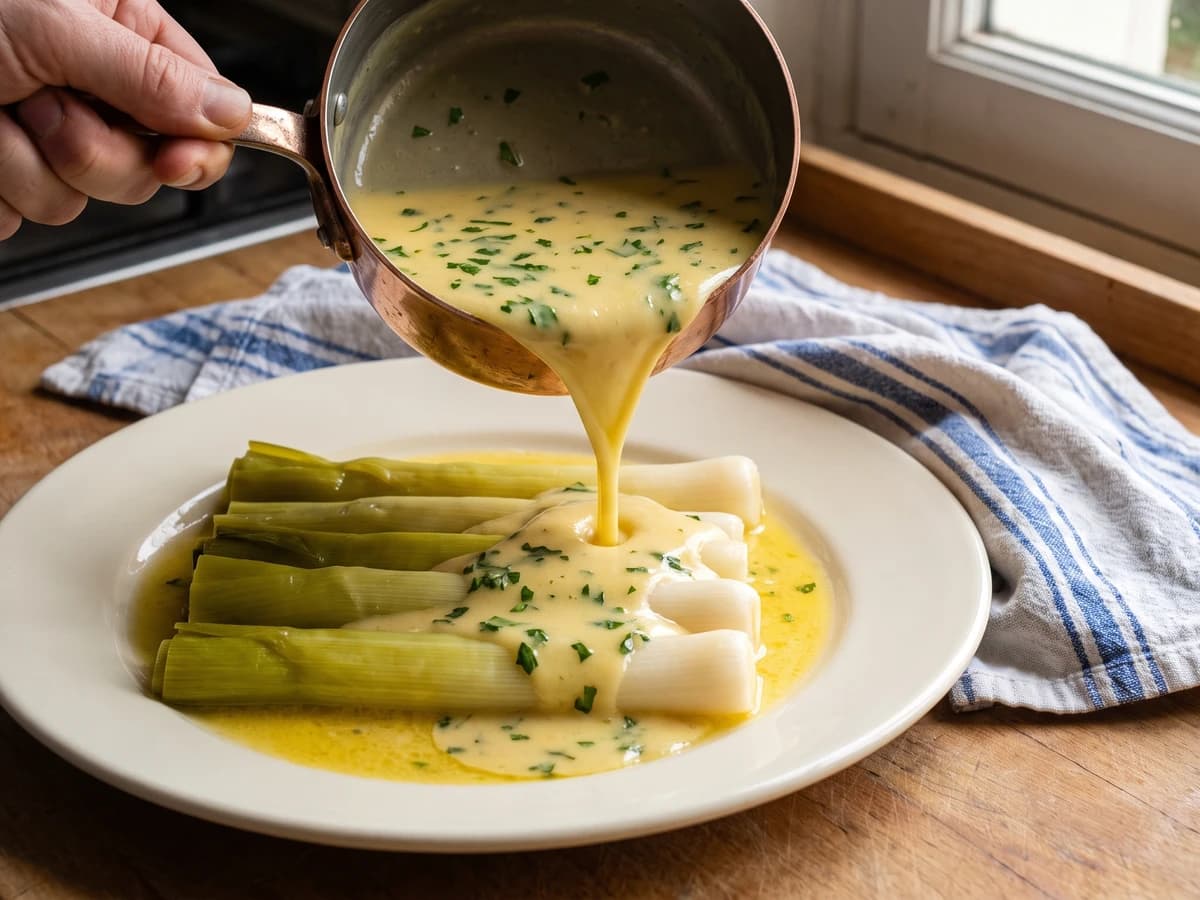
When hollandaise is right, it falls from the whisk in pale butter-gold ribbons, glossy but not greasy, with vinegar underneath and lemon arriving at the finish. Begin the butter drop by drop. Those first few additions matter most because they establish the emulsion that carries everything afterward.
Sauce hollandaise belongs to the Parisian grand-kitchen tradition that arranged French sauces into families, despite the Dutch name. The name is commonly linked to Holland's reputation for fine butter, though its precise origin remains debated; the method itself is firmly French, joining warmed yolks and butter into an emulsion. Hollandaise became the parent pattern for béarnaise, mousseline, and a long family of sauces whose character changes through reductions and finishing ingredients.
Quantity
1 tablespoon (15 ml / 15 g)
Quantity
2 tablespoons (30 ml / 30 g)
divided
Quantity
3/8 teaspoon (1.9 ml / 2.4 g)
Quantity
1 scant pinch (about 1/16 teaspoon / 0.1 g)
peppercorns coarsely crushed
Quantity
2
Quantity
1 cup (240 ml / 227 g)
melted and kept warm
Quantity
Up to 2 tablespoons (30 ml / 30 g)
Quantity
2 to 3 drops
| Ingredient | Quantity |
|---|---|
| good wine vinegar | 1 tablespoon (15 ml / 15 g) |
| fresh waterdivided | 2 tablespoons (30 ml / 30 g) |
| fine salt | 3/8 teaspoon (1.9 ml / 2.4 g) |
| mignonette pepperpeppercorns coarsely crushed | 1 scant pinch (about 1/16 teaspoon / 0.1 g) |
| large egg yolks | 2 |
| unsalted buttermelted and kept warm | 1 cup (240 ml / 227 g) |
| fresh water for loosening or rescuing (optional) | Up to 2 tablespoons (30 ml / 30 g) |
| fresh lemon juice | 2 to 3 drops |
Melt the butter over the lowest heat just until liquid, then pour it into a heatproof jug and keep it pleasantly warm, not hot. Set a heatproof bowl over a saucepan holding about 1 inch (2.5 cm) of barely simmering water, making certain the bowl never touches the water. This is the bain-marie: it softens the force of the heat so the yolks thicken gradually instead of catching against a hot pan.
Put the vinegar, 1 tablespoon (15 ml / 15 g) of the measured water, the salt, and the mignonette pepper in the smallest heavy saucepan you own. Bring them to a lively simmer and reduce the liquid by three-quarters, until about 1½ teaspoons remain and the pepper smells fragrant. Watch the final moments closely; this small quantity moves from reduced to scorched with very little ceremony.
Scrape the reduction into the bowl over the bain-marie, add the remaining 1 tablespoon (15 ml / 15 g) measured water and the yolks, then whisk without stopping. Lift the bowl off the heat every few seconds if necessary, whisking until the yolks turn pale, swell slightly, and become a smooth cream that holds the whisk's trace for a moment. If they tighten abruptly or show tiny curds, remove the bowl immediately and whisk in 1 teaspoon cool water. A few remaining specks can be removed by the final sieve, but fully scrambled yolks must be replaced. Gentle heat prevents the loss.
Set the bowl on a folded towel away from direct heat. Whisk in the warm butter drop by drop for the first 2 tablespoons, allowing each addition to disappear before the next. Once the sauce looks thick, glossy, and secure, continue in a slender stream while whisking steadily. If an oily rim appears or the sauce separates, stop pouring. Ça se rattrape: put 1 teaspoon cool water in a clean bowl, whisk in 1 tablespoon of the broken sauce until smooth, then rebuild the remainder spoonful by spoonful before returning to a thin stream.
When all the butter is absorbed, the hollandaise should be thick and firm yet still fall from the whisk in a soft ribbon. If it stands too stiffly, whisk in warm water 1 teaspoon at a time until it flows. Add the lemon juice, taste, and pass the sauce through a warm fine-mesh sieve into a warm bowl. The sieve supplies the source recipe's tammy finish, removing the mignonette and any flecks without changing the sauce.
Serve the hollandaise promptly, or hold it for no more than 30 minutes over the bain-marie with the heat turned off. Stir occasionally and keep the sauce warm rather than hot. If it thickens while waiting, whisk in a teaspoon of warm water; never return it to direct heat. Spoon it generously over poached fish, asparagus, artichokes, or eggs. À table!
1 serving (about 60g)
Culinary guides, cultural storytelling, and the editorial depth that makes cooking meaningful.
Discover Culinary ExplorerChef Juliette
Beef shin, lean beef, and fowl begin in cold water and rise slowly toward a tremble. Skim before the boil, and you learn the quiet discipline that gives every clear French broth its backbone.
Chef Juliette
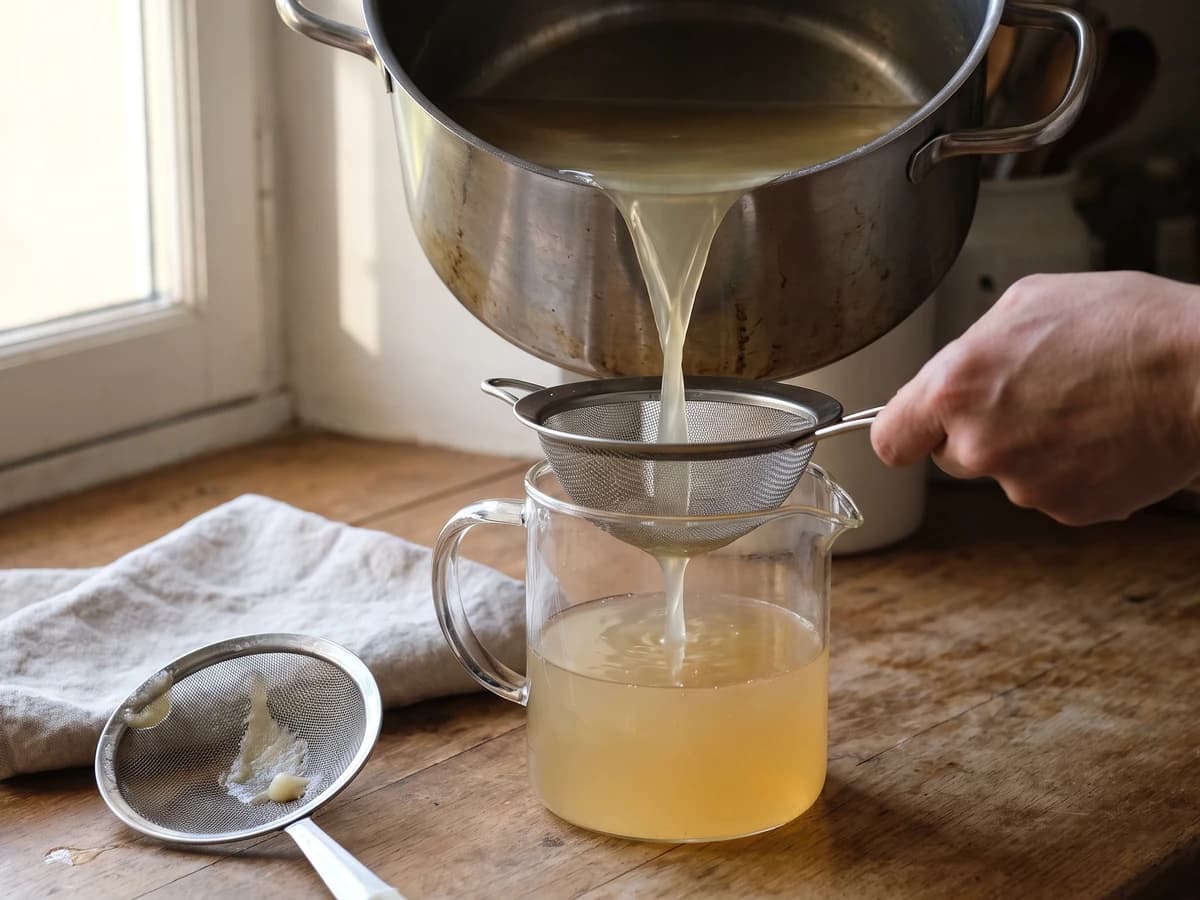
Break the veal bones small, then give them eight hours at a bare tremble. This pale, gelatinous fond becomes the quiet foundation beneath velouté, blanquette, and every sauce that must stay light.
Chef Juliette
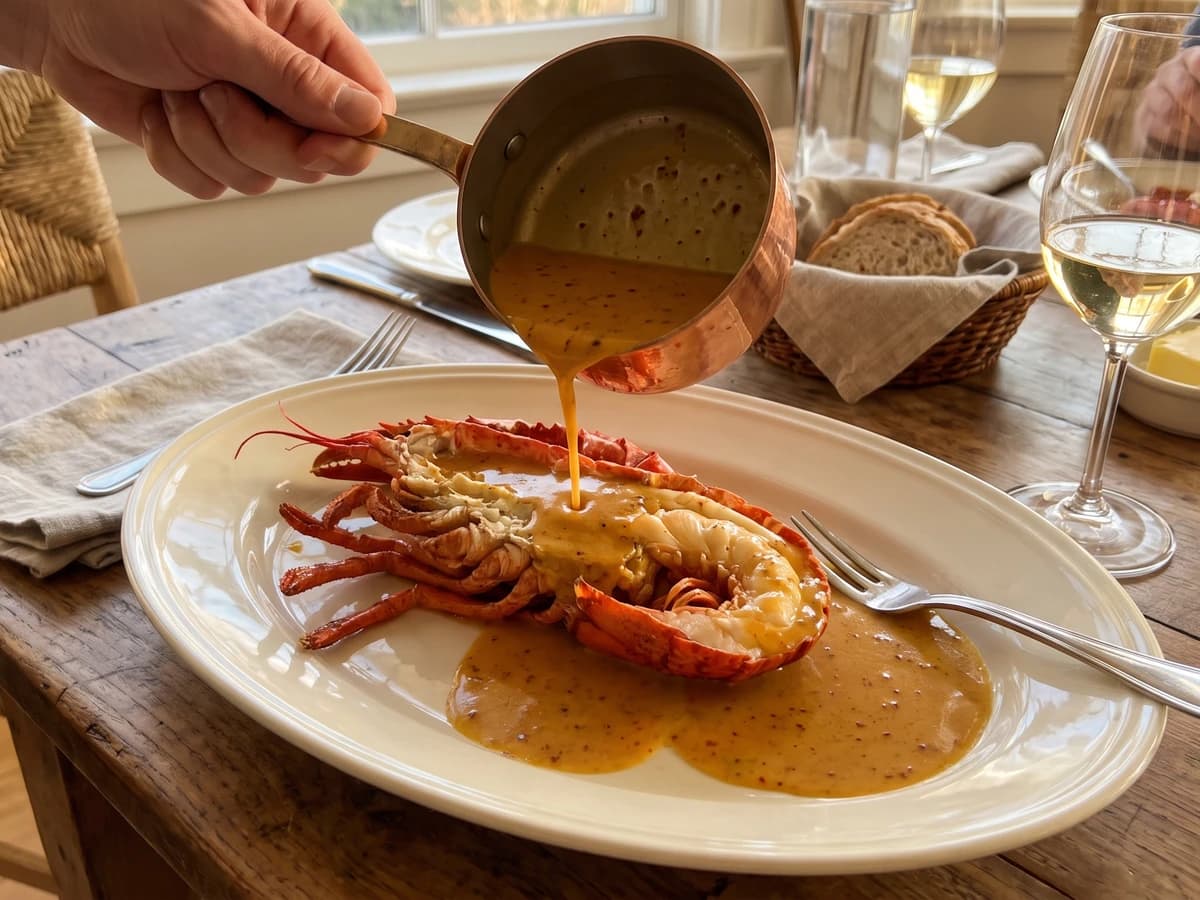
Sauce Orientale concentrates lobster-rich American Sauce with curry, then folds in cream away from the fire: a glossy, gently spiced derivative made for lobster, crayfish, and firm fish.
Chef Juliette
An old lesson in sauce families: Sauce Allemande takes mushroom liquor, then butter, lemon, and parsley, becoming a glossy Poulette for sheep's trotters, leeks, cauliflower, and anything needing gentle richness with a bright edge.